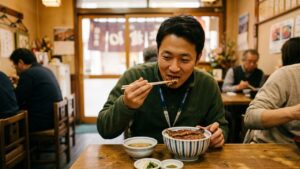
Nagoya Accessibility Food Guide 2026: Featuring Itadaki
 gotowp
Let me give you the answer upfront: yes, the rare wagyu at Itadaki is completely safe to eat — and there's a precise, verifiable reason why. If food safety concerns have been sitting at the back of your mind as you plan your Nagoya visit in September 2026, this guide is here to clear that up, and to walk you through what the experience actually looks like before and after you sit down at our table.
We know this concern is real. Visitors from North America, Europe, and Australia often arrive having read general health advisories about undercooked beef. That's a reasonable starting point — but "undercooked" and "rare-style wagyu prepared under Japan's food safety framework" are two very different things. Let me explain exactly what makes them different, and why guests who once hesitated now describe the meal as the best of their entire Japan trip.
Who This Is For
- ✅ Visitors to Nagoya during the 2026 Asian Games or Asian Para Games period who want an accessible, memorable lunch experience
- ✅ Travelers who have heard about rare wagyu but feel uncertain about food safety before committing to a reservation
- ✅ Wheelchair users or guests with mobility needs planning to dine in the Osu district
- ✅ International visitors seeking practical, honest guidance — not marketing language — about what to expect at Itadaki
- ✅ Foodies who want to understand the story behind the dish before they taste it
Before: The Moment of Hesitation at the Door
Picture this: you've found Itadaki on Google Maps, read a few reviews, and the dish looks extraordinary in every photo. But then you pause. "Rare wagyu beef bowl" — does that mean it's raw? Is it safe for me? What does "rare-style" actually mean in a Japanese context?
This is the exact moment many of our guests describe when they reflect on their visit. One guest put it simply:
"I discovered Itadaki through Google Maps and it became the best meal of our Japan trip."
— Guest review
That shift — from uncertainty to "best meal of the trip" — doesn't happen by accident. It happens because the dish itself is built on a foundation of genuine food safety science, not just culinary flair. Understanding that foundation is what converts hesitation into confidence.
In Western food safety culture, the concern with undercooked beef centers on bacteria like E. coli O157 and Salmonella, which can survive when beef is not cooked to a sufficient internal temperature. Health authorities in the US and EU recommend cooking beef to at least 63°C (145°F) internally for whole cuts. That's the framework most international visitors carry with them when they hear the word "rare."
Japan operates under its own Ministry of Health, Labour and Welfare standards — and those standards are exacting. What Itadaki has done is build a cooking method that satisfies both the desire for a tender, silky mouthfeel and the letter of Japan's food safety law.
You now know the science behind our two-stage cooking technique — but whether Itadaki is open on the specific day you're planning to visit during the 2026 Games period is a separate question. Our monthly business calendar, including any irregular closures during that period, is published on Instagram. Takes less than a minute to check before you finalize your itinerary.
After: What the Two-Stage Cooking Technique Actually Does
Itadaki's founder, Masayuki Goto — a Certified Food Sanitation Supervisor and Licensed Restaurant Operator — spent years developing what we call our proprietary two-stage cooking technique. The core principle is straightforward: the beef reaches over 70°C at its center during preparation, fully meeting Japan's Ministry of Health, Labour and Welfare food safety requirements.
What makes this remarkable is what it preserves. Despite reaching that temperature at the core, the technique produces a texture that feels unmistakably silky and tender — what Japanese food culture calls a "rare" mouthfeel. This isn't a compromise or a workaround. It's a precise, repeatable method that took genuine culinary research to develop, and it's one of the reasons Itadaki has been featured on eight major Japanese TV programs, including NHK.
Every piece of beef served at Itadaki — whether Horai Wagyu or Mikawa Beef — comes from farms in Aichi Prefecture operating under rigorous quality control. Horai Wagyu, produced by just three farms in Japan with only 300 heads raised annually, is fed on sake lees from Horaisen Sora, a renowned local premium sake. Mikawa Beef is raised on okara feed with lactic acid bacteria gut management. These are not commodity cattle. They are traceable, carefully managed animals from producers Goto knows personally through direct-supply partnerships.
The combination — controlled sourcing, proprietary cooking science, and Japan's strict regulatory oversight — is what allows us to say, without exaggeration: this dish is safe, and it was designed to be.
✓ Key Takeaways
- Itadaki's two-stage cooking technique heats the beef to over 70°C at the core, fully meeting Japan's Ministry of Health, Labour and Welfare food safety standards.
- Both Horai Wagyu and Mikawa Beef are sourced directly from traceable Aichi Prefecture farms under strict quality control — not from commodity suppliers.
- The "rare" texture is the result of culinary technique, not undercooking. The two terms are not interchangeable.
Horai Wagyu is limited to 10 bowls per day — and with Nagoya drawing significantly more visitors during the Asian Games and Para Games period, those 10 bowls will move faster than usual. If the date you're planning is already clear in your head, reserving now through Tabelog locks in your spot before the window closes.
Accessibility at Itadaki: What to Know Before You Arrive
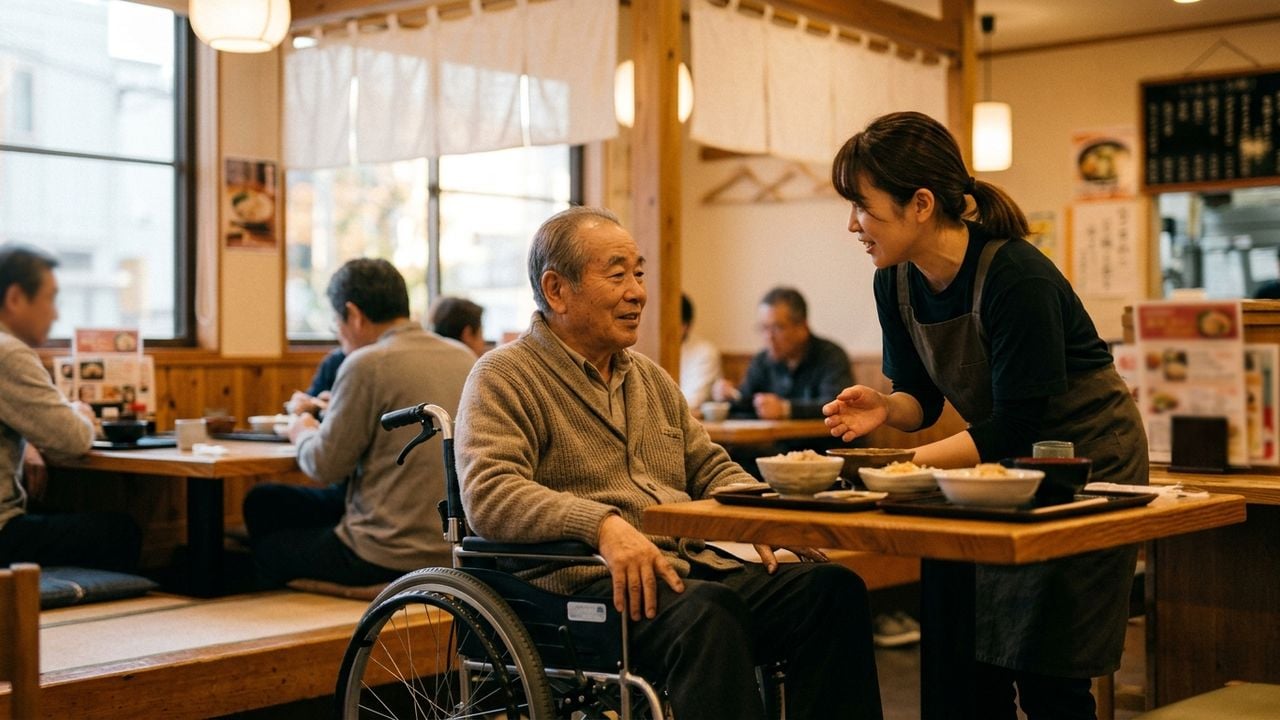
For guests with mobility considerations visiting Nagoya during the 2026 Asian Games or Asian Para Games period, planning ahead makes all the difference. Itadaki is located on the second floor of a building in Osu, accessed by staircase. There is no elevator in the building. We want to be honest about this — it is a limitation, and guests who use wheelchairs or have difficulty with stairs should factor this into their planning.
If you are a wheelchair user, we recommend reading our step-by-step guide to visiting Itadaki as a wheelchair user before making a reservation, so you can make an informed decision about your visit.
Inside the restaurant, all 18 seats feature sofa-style seating, which many guests — including those with fatigue-related conditions or those who simply appreciate a relaxed posture during a longer meal — find notably comfortable. The five counter seats work well for solo diners, while the sofa tables accommodate groups of two, four, or five. The seating layout was not designed as a formal accessibility feature, but the comfort it provides is genuine and consistently mentioned by guests.
Itadaki operates lunch-only: 11:00–15:00 on Mondays, Tuesdays, Saturdays, and Sundays, and 09:00–15:00 on public holidays. Last order is 30 minutes before closing. During the Asian Games and Asian Para Games period in September and October 2026, the restaurant will follow its regular scheduled business calendar — we recommend checking our monthly schedule on Instagram before you visit, as irregular closures can occasionally apply.
For a broader look at dining options across Nagoya during the Games period, the complete guide to Nagoya lunch during Asian Games 2026 covers the wider landscape, while our accessibility guide for Asian Para Games 2026 dining addresses accessibility considerations across multiple Nagoya venues.
The Experience, Step by Step: Before and After Sitting Down
Before your bowl arrives, you'll notice the table already offers something: complimentary condiments — pickled ginger from Kimura Farm in Inazawa, chopped seaweed from Mikawa Bay, chirimen jako (dried whitebait from Minamichita), Itadaki's original 8-spice blend, and our original wasabi. These are part of the experience, not an afterthought.
The bowl arrives with a raw Nagoya Cochin egg from Yamada Poultry Farm sitting alongside the wagyu, a small serving of miso soup made with Hatcho miso from Okazaki City, and traditional Atsumi Ichō-zuke pickles from the Atsumi Peninsula. Every ingredient on that tray comes from Aichi Prefecture — a commitment that is easier to say than to actually execute, and one Goto has maintained since Itadaki opened in April 2022.
Our printed menu — available in English, Simplified Chinese, and Korean — includes a five-step guide to enjoying the dish in the way it was designed to be experienced. Step one: separate the egg, white into the miso soup, yolk atop the wagyu. Step two: taste the wagyu first, as it is, before any additions. Step three: mix the yolk through. Step four: explore the condiments. Step five: finish with wasabi.
Guests who follow those five steps consistently describe the meal differently afterward than they expected beforehand. The food safety question, which felt large before they arrived, tends to dissolve entirely once they understand — and taste — what the technique actually produces.
Planning Your Visit: Practical Details
Itadaki is a four-minute walk from Yabacho Station Exit 4 on the Meijo Subway Line. From Nagoya Station, the journey takes approximately ten minutes: take the Higashiyama Line to Sakae, transfer to the Meijo Line, and get off at Yabacho. No dedicated parking is available, but coin parking is within a one-to-three-minute walk in the surrounding Osu area.
Horai Wagyu is limited to 10 bowls per day and can sell out during peak hours. If you are visiting Nagoya during the 2026 Asian Games or Asian Para Games period — when the city will see significantly higher visitor numbers — reserving in advance via Tabelog is strongly recommended. Mikawa Beef gyudon is always available without a reservation, starting from ¥1,800 for the standard Fumoto size.
The average spend per guest is approximately ¥3,000. Itadaki operates entirely à la carte — there are no set menus or fixed packages. You order what you want, in the size that suits you.
For our complete menu, access details, and store information, visit our official page at itadaki8.com/english/.
The hesitation that many guests feel before visiting Itadaki is understandable — and it's one we take seriously. What we can tell you, honestly, is that the cooking method was built specifically to address it. The story behind every bowl at Itadaki begins with that commitment: to do something genuinely new, with ingredients and techniques that deserve to be trusted.
The food safety question that brought you to this article has an answer — and the dish itself is the clearest proof of it. If September 2026 is when you're coming to Nagoya, this is the meal worth planning around. Tabelog reservations are open now, and Horai Wagyu is strictly 10 bowls per day.