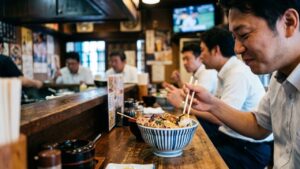
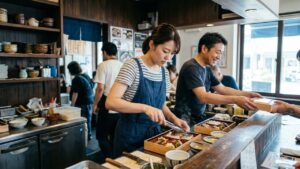
The Complete Guide to Nagoya Lunch During Asian Games 2026
 gotowp
You've spent weeks planning every detail of your Asian Games 2026 trip — the venues, the transportation, the hotels. But somewhere between confirming your tickets and downloading the event schedule, a quiet question crept in: Is there a meal on this trip that I'll still be talking about ten years from now?
It's a feeling many visitors to Nagoya share. You've come for the sport, but Japan has a way of making food the unexpected centrepiece of any journey. The challenge isn't finding something to eat — Nagoya is full of options. The challenge is finding the one meal that rises above the rest and becomes part of your story.
The voices below belong to guests who faced exactly that question. Their answers led them to a small second-floor restaurant in Osu — and they haven't stopped talking about it since.
Who This Is For
- ✅ Asian Games 2026 visitors who want at least one unforgettable meal during their Nagoya stay
- ✅ Wagyu enthusiasts ready to discover a rare Aichi beef experience beyond Kobe or Matsusaka
- ✅ Travelers who have already read general Nagoya lunch guides and want a more specific, story-driven recommendation
- ✅ Anyone wondering whether a gyudon — Japan's humble beef bowl — can genuinely qualify as a once-in-a-lifetime dish
- ✅ Guests concerned about practical details: Is it safe? Do they have English menus? Will it sell out?
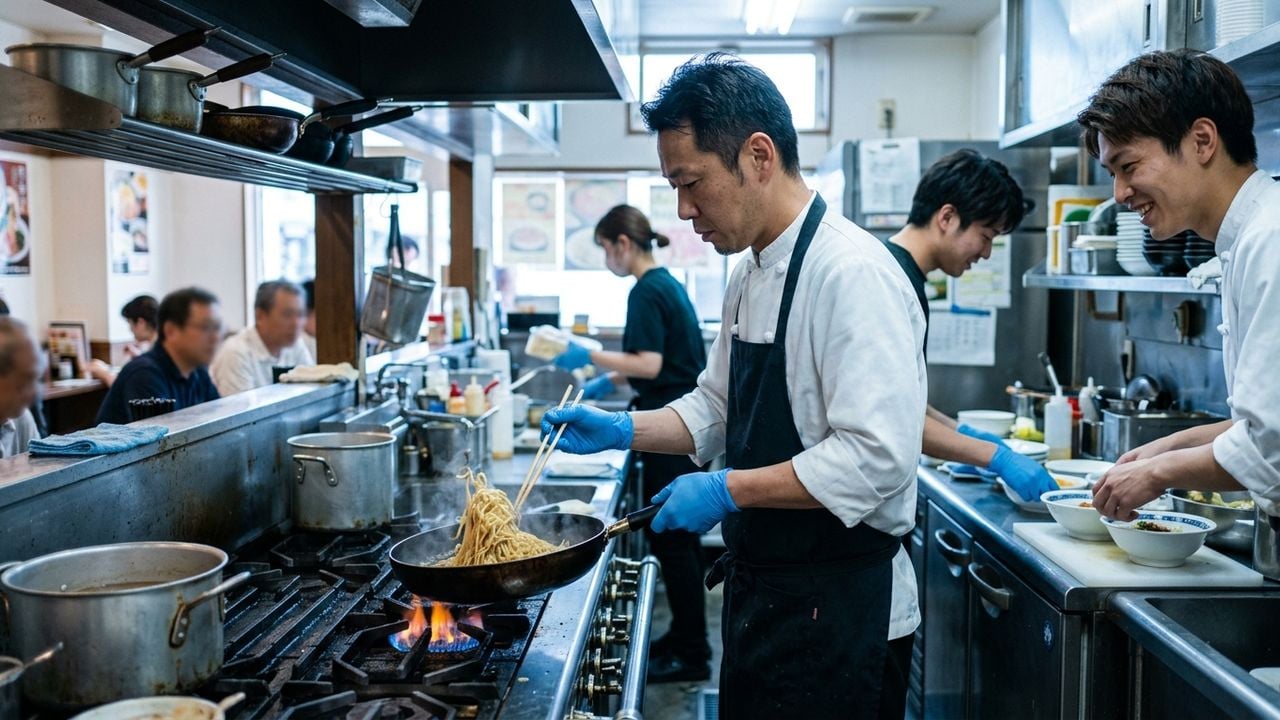
"I Discovered It Through Google Maps — And It Became the Best Meal of Our Japan Trip"
That line was written by a guest who stumbled across Itadaki entirely by accident. No recommendation from a travel blog. No friend who had been before. Just a search on Google Maps during a Nagoya afternoon, a decision made on instinct, and a bowl of Rare Wagyu Gyudon that they describe as the meal that defined their entire trip.
It's the kind of discovery that Nagoya is quietly famous for among seasoned Japan travelers — the city has a habit of exceeding expectations precisely because fewer people arrive with preconceived ideas about what to find here. During Asian Games 2026, with Nagoya welcoming visitors from across Asia and beyond, that spirit of discovery is more alive than ever.
What makes Itadaki the restaurant guests keep describing in these terms? The short answer is that it offers something genuinely impossible to find anywhere else: the world's only Rare Wagyu Gyudon specialty restaurant, built entirely around ingredients sourced from Aichi Prefecture, and anchored by one of Japan's most scarce wagyu breeds.
The longer answer involves a founder named Masayuki Goto, a pandemic-era decision to support struggling local farmers, and a culinary question that nobody had thought to ask before: Why does gyudon — Japan's beloved beef bowl — not have a premium version?
You now know the Horai Wagyu is limited to 10 bowls a day — and the Asian Games period is one of Nagoya's busiest lunch seasons. Itadaki publishes its exact opening days each month, including any irregular closures during the Games period, on its official Instagram. A quick check before you finalise your plans takes less than a minute.
The Story Behind the Bowl — Why This Meal Stays with You
Goto spent 18 years in the food and beverage industry before opening Itadaki in April 2022. During the COVID-19 pandemic, the Aichi Prefecture farmers he sourced from — small producers of premium local ingredients — found themselves with unsold harvests and no clear path forward. He felt a responsibility to act, and that responsibility became a restaurant concept.
He chose the gyudon as his format for practical reasons: minimal space, minimal staff, lower operating costs. But the vision was anything but modest. Goto asked why katsudon, oyakodon, and kaisendon all had prestigious high-end versions while gyudon remained exclusively the territory of fast-food chains. His answer was Itadaki — a restaurant that would reimagine the beef bowl as a culinary journey using ultra-rare Aichi wagyu, a proprietary cooking technique, and every single ingredient sourced from within Aichi Prefecture.
The centrepiece of that vision is Horai Wagyu, a Japanese black wagyu raised in Okumikawa, Aichi Prefecture. Only three farms in Japan produce it. Only 300 heads are raised annually — compared to approximately 500,000 wagyu cattle raised across Japan each year. The cattle are fed on sake lees from Horaisen Sora, a renowned local premium sake, which contributes to the beef's distinctive character: a combination of light marbling and lean meat flavour that is genuinely rare even within the wagyu world.
Goto's proprietary two-stage cooking technique heats the beef to over 70°C at the core — fully meeting Japan's Ministry of Health, Labour and Welfare food safety standards — while preserving the texture that guests describe as "unlike any wagyu I've had." This is not a marketing phrase. It is the result of a technical process developed specifically for this restaurant, and it is the reason Itadaki has been featured on eight major Japanese television programmes, including NHK.
"I've had Kobe beef and Matsusaka beef, but Horai Wagyu at Itadaki was on another level."
A guest visiting Nagoya for the first time
✓ Key Takeaways
- Itadaki invented the "Rare Wagyu Gyudon" concept — no other restaurant in the world offers this specific experience.
- Horai Wagyu is limited to just 300 heads per year across three farms in Japan, with only 10 bowls served at Itadaki per day.
- The two-stage cooking technique delivers a rare-style mouthfeel while fully meeting Japan's food safety standards — no compromises on either side.
The five-step eating guide and the story of Horai Wagyu are compelling on the page — but 300 heads per year means those 10 daily bowls disappear faster than most guests expect during event season. Tabelog online reservation is the only way to secure your bowl before you make the trip to Osu.
What Guests Who Visited During Major Nagoya Events Have Said
The Asian Games period brings a particular kind of visitor to Nagoya — someone who has arrived for a specific purpose but is quietly open to discovering what the city has to offer beyond the venues. Those guests, in particular, tend to leave Itadaki with something they didn't expect: a meal that competes with the sporting memories for prominence in their travel story.
One guest described finding Itadaki as a turning point in how they thought about Nagoya itself. "The lunch was the highlight of my Nagoya trip — I'm telling all my friends about it." Another noted the practical ease of the experience: "The English menu with clear serving instructions made the experience stress-free." For international visitors navigating an unfamiliar city, that combination — extraordinary food and genuine hospitality for non-Japanese speakers — matters enormously.
"The five-step eating guide made the dish even more enjoyable and memorable."
A visitor from overseas, dining solo during a Japan trip
That five-step guide is worth understanding before you arrive. The Rare Wagyu Gyudon is designed to be eaten in a specific sequence that reveals different dimensions of the dish at each stage: beginning with the wagyu in its purest form, then incorporating the raw Nagoya Cochin egg yolk, then exploring the complimentary condiments — pickled ginger from Inazawa, dried seaweed from Mikawa Bay, chirimen jako from Minamichita — before finishing with wasabi for a clean, refreshing close. The white of the Cochin egg, meanwhile, goes directly into the miso soup. Every detail has a purpose.
Itadaki is located in Osu, a 4-minute walk from Yabacho Station (Meijo Subway Line Exit 4). If you are staying near Nagoya Station, the subway journey takes approximately ten minutes with one transfer at Sakae. The Osu district itself — home to Osu Kannon Temple, the 1,200-shop Osu Shopping Street, and Hisaya-odori Garden Flarie just three minutes from the station — gives you a full morning of sightseeing before sitting down for lunch. It is the kind of neighbourhood that rewards an unhurried half-day, and Itadaki sits naturally at the centre of it.
For visitors planning their Nagoya days around the Asian Games schedule, the restaurant's lunch-only hours (11:00–15:00 on Saturdays, Sundays, Mondays, and Tuesdays, with last order 30 minutes before closing) fit naturally around morning events or an afternoon at the venues. On public holidays, including those that fall during the Games period, opening time moves to 09:00. Please check the official Instagram for the monthly business calendar, as irregular closures may apply.
If you are thinking about how to build a fuller Nagoya itinerary around your Games visit, 5 reasons Itadaki makes the perfect Asian Games lunch stop goes deeper into the logistics of combining a visit here with the event schedule. And if you are arriving in Nagoya with a broader curiosity about the city's food culture, the complete guide to Nagoya lunch for second-time Japan visitors offers useful context on what makes Aichi's food scene worth exploring seriously.
Practical Details for Asian Games 2026 Visitors
A few things worth knowing before you plan your visit:
Reservations are strongly recommended for Horai Wagyu. The Shinkoccho (standard size, 100g beef, 200g rice, ¥2,700) and its larger variants are limited to 10 bowls per day. During peak hours — which are reliably busy during major event periods — these sell out. Reservation via Tabelog is the recommended method. If Horai Wagyu is unavailable, the Mikawa Beef Rare Wagyu Gyudon (starting from ¥1,800) is always available and offers its own distinctive Aichi experience.
English-language support is in place. Printed menus are available in English, Simplified Chinese, and Korean. The photographic five-step eating guide is included. Staff are accustomed to welcoming international guests, and you do not need to speak Japanese to have a complete experience here.
The restaurant is on the 2nd floor. Access is via staircase. There is no dedicated parking — coin parking is available nearby in the Osu area — and public transport is the most practical approach for Asian Games visitors arriving from central Nagoya.
Solo diners are genuinely welcome. Five counter seats are available specifically for solo visitors and couples, and the atmosphere is relaxed rather than formal. Many business travellers and solo sightseers have made Itadaki a regular lunch stop during Nagoya visits.
For the full menu, current opening hours, and access information, visit the official English page at https://itadaki8.com/english/.
A Meal Worth Planning Around
The guest who discovered Itadaki through Google Maps and called it the best meal of their Japan trip was not exaggerating for effect. They were describing something that this restaurant — uniquely — is positioned to deliver: a dish invented at this specific location, using ingredients so rare that only a handful of establishments in Japan can source them, prepared by a technique developed by one founder over years of careful refinement.
The Asian Games 2026 will give Nagoya one of its biggest moments on the international stage. But the city's greatest discoveries have always been the quiet ones — found by guests who looked a little further than the obvious, followed an instinct, climbed a flight of stairs in Osu, and sat down to something they genuinely had not expected.
That experience is available for lunch, on the days the restaurant is open, for as long as the Horai Wagyu lasts. Ten bowls a day. Plan accordingly.
You've read the story, you know what makes this bowl irreplaceable, and you have a Nagoya itinerary that deserves a meal to match it. Horai Wagyu availability during Asian Games 2026 cannot be guaranteed for walk-ins — reserving now through Tabelog is the one step that turns this from a plan into a certainty.