Why Foreign-Friendly Nagoya Restaurants Now Include Itadaki
 gotowp
October in Nagoya has a particular kind of energy. The Asian Games have just wrapped up, the city is still buzzing with visitors from across the region, and the streets of Osu are alive with a mix of languages you rarely hear this far from Tokyo or Kyoto. If you're reading this in the days or weeks after the Games, chances are you've already collected your fair share of travel moments — stadium photos, castle backdrops, street food snapshots. But here's the question a lot of visitors ask themselves toward the end of a Japan trip: Do I have a story that no one else has told yet?
That question is exactly what led one of our guests to write this after their visit: "The lunch was the highlight of my Nagoya trip — I'm telling all my friends about it." Not the castle. Not the shrine. The lunch. And not because it was the fanciest thing they'd ever eaten — but because no one back home had ever heard of anything like it.
This article is about why a growing number of foreign visitors are now specifically seeking out Itadaki in Osu, and what it is about this particular restaurant that turns a lunch stop into a story people keep telling.
Who This Is For
- ✅ Travelers who want their Japan trip content to stand out beyond sushi in Tokyo and Kobe beef in Osaka
- ✅ Foreign visitors looking for a truly English-friendly dining experience in Nagoya with no language stress
- ✅ Food lovers who value a unique backstory as much as the taste on the plate
- ✅ Anyone exploring Osu district and wondering where to eat something genuinely memorable
- ✅ Repeat Japan visitors ready to discover an ingredient and a dish they've never encountered before
The Real Reason Travel Content Falls Flat — And What Actually Makes It Stick
Think about the last time someone showed you their Japan trip photos. Ramen, teamLab, Fushimi Inari, matcha soft serve. Beautiful, yes. But how many of those posts made you stop scrolling and ask: Wait — what exactly is that?
The most shareable travel moments share one thing in common: they combine a visual that demands attention with a narrative that earns it. A plate that photographs well is a good start. But a plate that photographs well and comes with a story about 300 cattle raised annually in a mountain valley in Aichi Prefecture, fed on sake lees from one of Japan's most respected breweries? That's the kind of thing you explain over dinner back home for the next six months.
This is the gap that most restaurant experiences — even genuinely good ones — leave unfilled. And it's the gap that Itadaki was designed, from its very first day, to close.
Masayuki Goto, who founded Itadaki in Osu in April 2022, spent years running MAX'S BAR before he ever opened a restaurant. During the pandemic, watching the small Aichi farmers he sourced from struggle with unsold harvests, he asked himself a question that most restaurateurs never bother with: Why is there no premium version of gyudon? Every other beloved Japanese rice bowl — katsudon, oyakodon, kaisendon — has an elevated interpretation. The beef bowl alone had been left entirely to fast-food chains. Goto decided that was a gap worth filling, and that the story of Aichi's finest ingredients deserved to be the foundation.
You're piecing together a Japan trip story that goes beyond the usual highlights — and the question of which restaurants to actually plan around is harder to answer than it looks. Itadaki's Instagram shows the monthly business calendar so you can confirm which days are open before you finalize your itinerary. One quick check saves a wasted journey.
What "Foreign-Friendly" Actually Means at Itadaki
"Foreign-friendly" is one of those phrases that can mean almost anything — or almost nothing. At some restaurants it means a laminated English menu with questionable translations. At others it means a staff member who can answer one question in English before politely retreating.
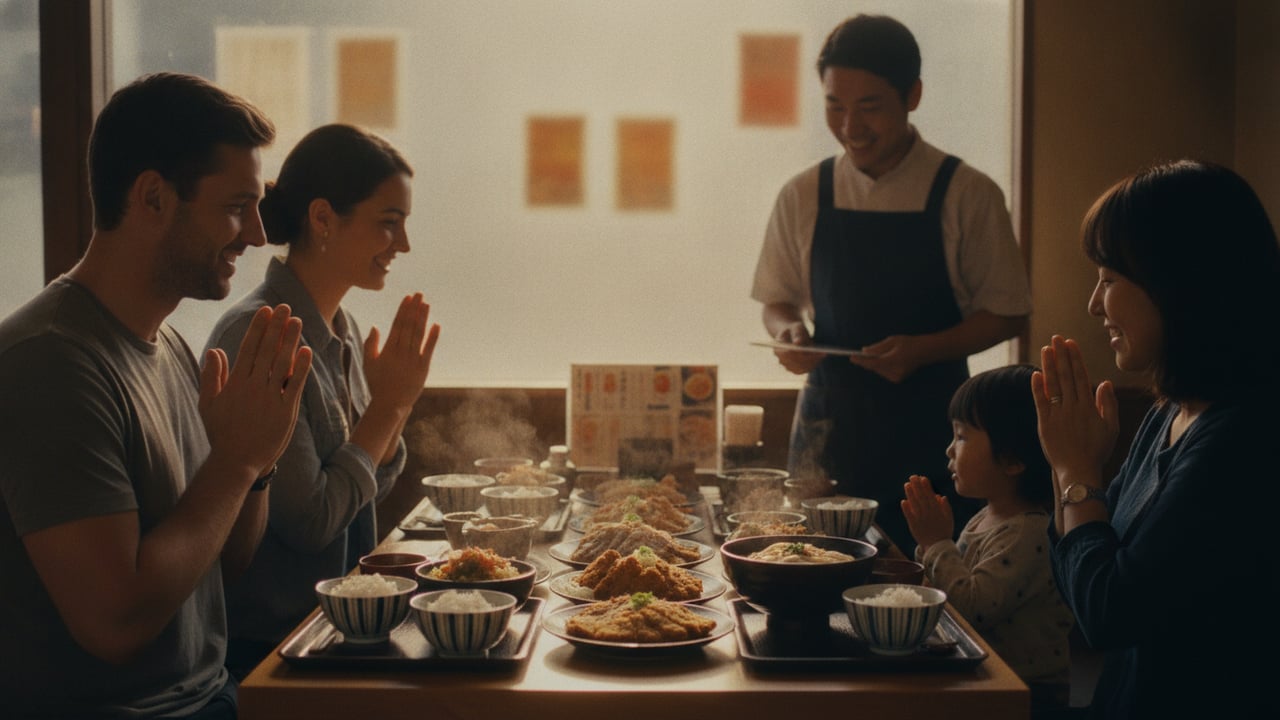
At Itadaki, it means something more considered. Printed menus are available in English, Simplified Chinese, and Korean. More importantly, every menu comes with a photographic five-step guide to eating the dish — because the Rare Wagyu Gyudon is meant to be experienced in a specific sequence, and knowing that sequence is the difference between a good bowl and an exceptional one.
The five steps matter. You start by separating the Nagoya Cochin egg — the white goes into the miso soup, the golden yolk rests on top of the beef. You taste the wagyu first in its purest form. Then you mix the yolk through for a richer, silkier texture. Next, you introduce the complimentary condiments: pickled ginger from Inazawa, dried seaweed from Mikawa Bay, chirimen jako, and Itadaki's own eight-spice blend. Finally, you finish with wasabi for a clean, refreshing close. Each step is a different dish, in a sense. The guide ensures that international guests never feel lost — and that the Instagram shot of that golden yolk resting on marbled beef gets taken at exactly the right moment.
If you're curious how this compares to the broader landscape of finding English-menu restaurants in Nagoya, the short answer is: options exist, but few are built around this level of intentional international hospitality.
✓ Key Takeaways
- Itadaki was built from the beginning around a story worth telling — not just a dish worth eating.
- Multilingual menus and a five-step eating guide mean foreign visitors experience the dish as it was intended, without language barriers.
- The visual presentation — golden egg yolk, marbled wagyu, traditional ceramic bowl — is designed to be photographed and shared.
Horai Wagyu is limited to ten bowls a day — the same rarity that makes it story-worthy is also what makes it sell out. Securing your bowl in advance means you arrive knowing it's already yours, not hoping the timing works out.
The Ingredient Story That Travels Better Than a Souvenir
Horai Wagyu is the kind of ingredient that sounds invented until you learn the details. Of the approximately 500,000 wagyu cattle raised in Japan each year, only 300 are Horai Wagyu — produced by just three farms in the Okumikawa region of Aichi Prefecture. These cattle are fed on sake lees from Horaisen Sora, a premium local sake with a following of its own. The result is a beef with a flavor profile that is genuinely distinct: lighter marbling than the rich fat-forward style many wagyu enthusiasts expect, with a clean, nuanced lean-meat character that Kobe and Matsusaka simply don't replicate.
And here's the element of the story that tends to land hardest: Itadaki serves a maximum of ten bowls of this beef per day. Not ten per hour. Ten total. Which means that if you're seated at one of those eighteen spots in Osu before the bowl sells out, you're eating something that perhaps nine other people in the world will eat that day.
This is what turns a lunch into a story. Not scarcity for its own sake — but genuine rarity, earned through farming practices that prioritize quality over volume, sourced directly by a founder who built his entire concept around the idea that Aichi's ingredients deserve a stage they haven't had before.
"The lunch was the highlight of my Nagoya trip — I'm telling all my friends about it."
— A guest at Itadaki
That reaction isn't unusual. It's actually the most common thing guests say when they reflect on the meal afterward. And it's worth noting: the person writing that wasn't comparing it to a conveyor belt sushi lunch. They were comparing it to everything else Nagoya had offered them — the castle, the temples, the shopping streets. The lunch won.
For travelers who've already read up on why wagyu enthusiasts consistently choose Itadaki over other wagyu restaurants, this might already make sense. For first-time visitors, it often takes eating here once to understand why.
Getting Here from Osu, Sakae, or Wherever Your Day Takes You
Itadaki is on the second floor of a building in Osu — four minutes on foot from Yabacho Station Exit 4 on the Meijo Subway Line, and within easy walking distance from Sakae Station, Kamimaezu Station, and Osu Kannon Station. From Nagoya Station, the journey takes roughly ten minutes by subway: Higashiyama Line to Sakae, transfer to the Meijo Line, off at Yabacho.
The surrounding area practically builds your day for you. Osu Kannon Temple is a five-minute walk. Hisaya-odori Garden Flarie — a free-admission urban garden featured in major English travel guides — is three minutes from the same station. The 1,200-shop Osu Shopping Street winds through the neighborhood in every direction. A morning exploring the district, followed by lunch at Itadaki, is a natural sequence that many of our guests plan before they even arrive in Japan.
Itadaki operates for lunch only, Tuesday through Monday (Wednesday, Thursday, and Friday are closed), from 11:00 to 15:00, with last orders at 14:30. On public holidays the doors open at 9:00. Because business days can vary, checking the monthly calendar on Instagram before you visit is always worth the thirty seconds it takes.
All seating is sofa-style table seating — comfortable, unhurried, designed for guests who want to settle in rather than rush through. Counter seats are available for solo visitors. There's no separate dinner service, and no takeout — the experience is entirely dine-in, entirely lunch, and entirely worth planning around.
Why the Story Outlasts the Trip
Travelers collect experiences the same way they used to collect postcards — except now those experiences get shared in real time, and the best ones keep generating conversations long after you're home. The question isn't whether you'll eat well in Japan. You will. The question is whether you'll eat something that becomes part of your Japan story — the kind of thing you still bring up two years later when someone mentions they're planning a trip.
Itadaki was built for exactly that. A gyudon that was invented here, in Osu, in 2022. An ingredient that fewer than ten other people in the world will taste on the same day as you. A five-step ritual that makes you feel like you're doing something, not just consuming something. And a small restaurant run by a team that genuinely cares whether you understand what you're eating and why it matters.
If your Nagoya itinerary has room for one lunch that will still be worth talking about when you're back home, this is the one to plan around. Reservations are available via Tabelog, and given that Horai Wagyu is limited to ten bowls daily, booking ahead is the most reliable way to make sure your bowl is waiting for you.
For our complete menu, access details, and store information, visit our official page at https://itadaki8.com/english/
You've read the story behind the bowl — the 300 cattle, the sake-lees feeding, the ten daily servings. The next step is making sure you're one of those ten. Reservation via Tabelog takes only a few minutes and guarantees your Horai Wagyu bowl is waiting when you arrive.