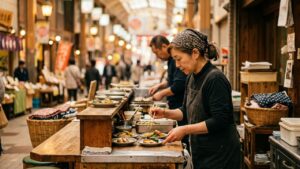
How I Made Osu My Favorite Nagoya Neighborhood
 gotowp
You've done your research. You've bookmarked the temples, mapped the shopping streets, and roughly plotted how many hours you have in Nagoya before your train to Shirakawa-go the next morning. But there's still that one question nagging at you: Where should I actually eat? Not just something convenient — something that earns a spot in the story you'll tell when you get home.
Or maybe you're standing in Osu right now, surrounded by incense drifting from Osu Kannon Temple, vintage synths in a shop window, and the smell of something delicious you can't quite identify, wondering where to even begin.
I've been there. And after spending time in this neighborhood — really spending time in it — I can tell you that Osu rewards the people who look a little closer. This is my attempt to share what I've found, starting with the experience that changed how I think about this district entirely.
Who This Is For
- ✅ Travelers with one day (or less) in Nagoya who want to make every hour count
- ✅ Anyone planning a morning in Osu before heading to Shirakawa-go or Takayama the following day
- ✅ Wagyu enthusiasts looking for a beef experience that goes beyond the brands they already know
- ✅ Repeat Japan visitors who feel like they've "done" the Golden Route and want something genuinely new
- ✅ Foodies who care more about the story behind a dish than the size of the restaurant
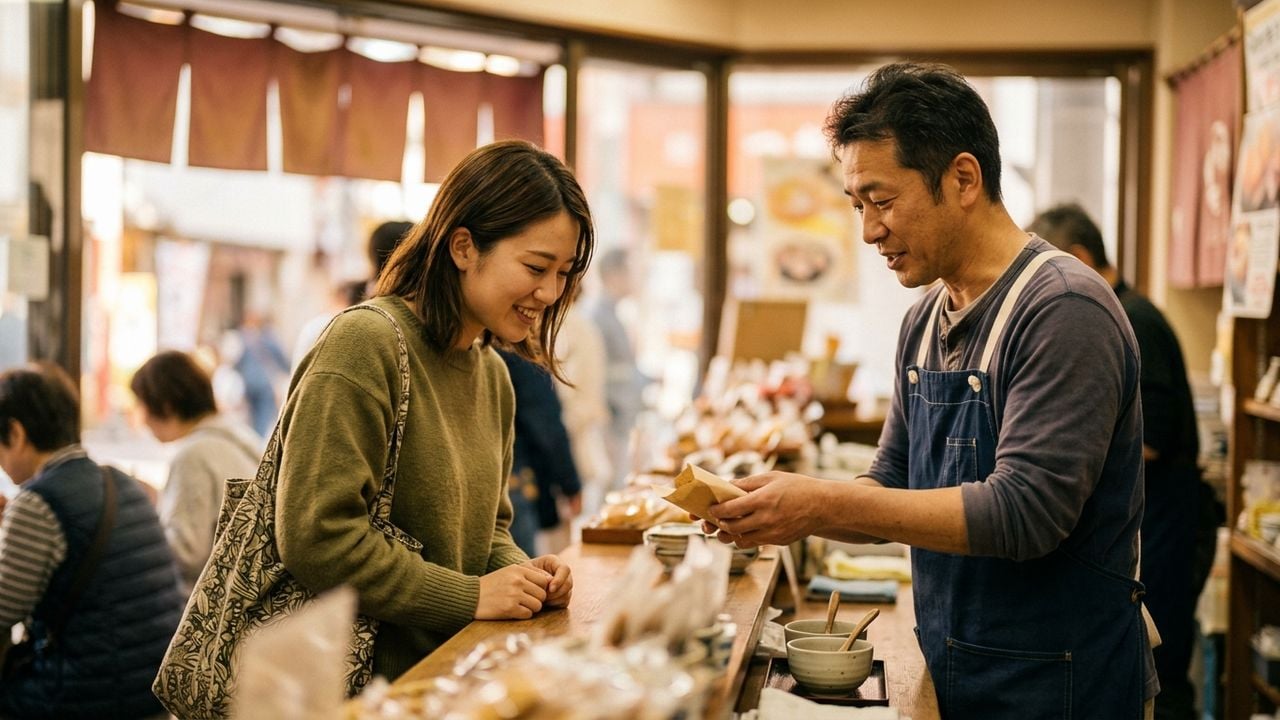
Why Osu Keeps Drawing Me Back
Osu doesn't announce itself. It doesn't have a single iconic image the way Kyoto's Fushimi Inari does, or a famous skyline shot. What it has instead is texture — the kind that only comes from 400 years of layered history still living alongside the present.
Osu Kannon Temple anchors the neighborhood with a quiet gravity. Even on busy weekday mornings, you can stand in the courtyard and feel the contrast between the incense smoke rising above you and the anime merchandise shop visible through the temple gate. That tension — ancient and contemporary, sacred and playful — is what Osu is. It's not ironic. It just coexists, and somehow it works.
The 1,200-shop Osu Shopping Street stretches in every direction from the temple. You'll pass maid cafés, a shop selling nothing but vintage calculators, a Taiwanese egg tart bakery with a line down the block, and a store dedicated entirely to military surplus gear — sometimes all within the same block. If you have a specific subculture interest, Osu probably has a shop for it. If you don't, you'll still find something you didn't expect to want.
And three minutes from Yabacho Station — the same station that connects you to all of this — is one of Osu's most satisfying lunch destinations, tucked on the second floor of a building on Osu's quieter eastern edge.
You're planning a Nagoya day that actually means something — not just sightseeing, but a sequence of experiences worth remembering. Itadaki's monthly business calendar tells you exactly which days the restaurant is open, so you can build your Osu itinerary around it with confidence. One quick check on Instagram is all it takes.
The Lunch That Became the Highlight of My Nagoya Day
Here's what I've noticed about memorable meals: they're rarely the most expensive ones. They're the ones where something happens that couldn't have happened anywhere else. A dish that exists only in one place, made from ingredients you won't find outside a specific region, prepared using a technique that took years to develop — that's what stays with you.
Itadaki — The Original Rare Wagyu Gyudon — fits that description precisely. It's a lunch-only restaurant serving a culinary concept that didn't exist before founder Masayuki Goto invented it in 2022: the Rare Wagyu Gyudon. Not wagyu served over rice in the way a chain restaurant does it. Something fundamentally different.
The signature dish features Horai Wagyu, a Japanese black wagyu produced in Okumikawa, deep in Aichi's mountainous interior. Only 300 heads are raised annually across three farms in Japan. The cattle are fed on sake lees from Horaisen Sora, a premium local sake — a practice that produces beef with a flavor profile unlike anything I've encountered in wagyu before: genuinely light marbling with a clean, expressive lean-meat taste.
What makes the preparation remarkable is the two-stage cooking technique Goto developed, which heats the beef to over 70°C at the core — fully meeting Japan's food safety standards — while preserving a texture that reads as rare. It's a technical achievement that took real effort to build, and it's the kind of thing you appreciate more once you understand what went into it.
The bowl arrives at the table with a striking visual presence: pale, silky wagyu slices fanned across Aichi-grown rice, a golden Nagoya Cochin egg yolk resting in the center, shiso leaves cut from Toyohashi farms laid alongside. Everything on the table — the white soy sauce sauce base, the pickled radish from Atsumi Peninsula, the chirimen jako from Minamichita, the pickled ginger from Kimura Farm in Inazawa — comes from Aichi Prefecture. Not as a marketing claim, but as a genuine commitment Goto made when he founded the restaurant.
The eating experience unfolds in five steps, described on the English-language guide at each table. You start with the wagyu on its own, then introduce the yolk, then gradually layer the condiments — each stage shifting the flavor in a new direction. By the time you reach the final note of wasabi, you realize you've been on a journey that lasted about twenty minutes and felt nothing like eating a beef bowl.
"Perfect lunch during our Nagoya stay before our Shirakawa-go trip the following day."
— Guest visiting Nagoya en route to Shirakawa-go
That review resonates with me because it captures something true about how Itadaki fits into a Nagoya day. It's not a destination that demands a full afternoon. It's a two-hour lunch window — the kind you have before catching a train or after a morning at Osu Kannon — that ends with you feeling like you experienced something genuinely rare.
✓ Key Takeaways
- Osu's value lies in its layered contrasts — temple culture, subculture, and local food culture all within walking distance of the same station
- Itadaki serves a culinary concept invented here in Osu: the Rare Wagyu Gyudon, using Horai Wagyu produced by only 3 farms in Japan with 300 heads annually
- The experience works beautifully as a standalone Nagoya lunch — especially before or after visiting Osu Kannon or on a day trip itinerary to Shirakawa-go
Horai Wagyu is limited to 10 bowls a day — and if your Nagoya visit is timed around Shirakawa-go or another day trip, you won't have a second chance to come back. A Tabelog reservation locks in your bowl before you arrive, so the lunch you're planning becomes the lunch that actually happens.
How to Build a Full Osu Day Around Lunch
The most satisfying Osu days I've had follow a loose rhythm. Start at Hisaya-odori Garden Flarie, the free-admission urban garden just a three-minute walk from Yabacho Station. In October, the garden's seasonal plantings are at their quieter, more contemplative best — a good way to ease into the morning before the shopping street gets busy.
From there, walk toward Osu Kannon Temple. The approach along the covered arcade is one of the most enjoyable fifteen-minute walks in Nagoya — you'll want to stop at least twice. After the temple, loop back through the eastern edge of the shopping street. By the time you've done all of this, you'll be ready for lunch.
Itadaki is open Tuesday through Sunday (and Monday) from 11:00 to 15:00, with last order at 14:30. Because Horai Wagyu is limited to 10 bowls per day and does sell out during peak hours, a reservation through Tabelog is the most reliable way to secure it. If you're planning a Nagoya day before a Shirakawa-go trip the following morning, this is exactly the kind of lunch that anchors the day.
If you're curious about what makes Osu Shopping Street the most distinctive district in Nagoya, the neighborhood's combination of subculture depth and traditional anchors is genuinely unlike anywhere else in the city. It's worth building time for, even on a tight itinerary.
The Practical Side: What to Know Before You Go
Itadaki is a four-minute walk from Yabacho Station Exit 4 on the Meijo Subway Line. From Nagoya Station, it's roughly ten minutes total — Higashiyama Line to Sakae, transfer to the Meijo Line, one stop to Yabacho. The restaurant is on the second floor, and the entrance is easy to spot once you're on the right street.
Menus are available in English, Simplified Chinese, and Korean, and the five-step eating guide is printed in English at the table. Staff are accustomed to welcoming international guests and will make you feel comfortable even if your Japanese is limited to a confident itadakimasu.
The restaurant has 18 seats across a mix of counter seats and sofa-style table seating, which makes it genuinely comfortable for solo travelers, couples, and small groups alike. If you're visiting as a family, the sofa tables work well for groups of four or five.
For the most current business schedule — including any irregular closures — Itadaki posts a monthly calendar on Instagram. Because the restaurant operates on scheduled days (Saturday, Sunday, Monday, and Tuesday in a given week, plus public holidays from 9:00), it's worth a quick check before your visit.
For our complete menu, access details, and store information, visit our official page at itadaki8.com/english/.
What Makes a Neighborhood Worth Coming Back To
I've thought about what makes Osu different from other urban districts that mix old and new — and I keep coming back to the same answer: it doesn't try to be curated. The temples and the maid cafés and the vintage shops and the wagyu lunch spot on the second floor all coexist without anyone deciding they should. That authenticity is harder to find than most travel guides suggest.
The meal at Itadaki fits that quality. It wasn't designed to look like a special occasion. It was designed to be one — built from ingredients that are genuinely scarce, prepared using a technique developed over time, and served in a way that invites you to slow down and pay attention. Out of 500,000 wagyu cattle raised in Japan each year, Horai Wagyu accounts for roughly 300. That's not a marketing number. It's just the reality of working with something that rare.
If your Japan trip has one slot for a meal that becomes a story, this is the kind of place that earns it.
You've mapped out the Osu morning, understood what makes the Horai Wagyu experience different from anything else in Nagoya, and decided this is the kind of lunch your Japan trip deserves. The next step is straightforward: secure your seat through Tabelog before the 10 daily Horai Wagyu bowls are gone.