7 Facts About Itadaki That Family Travelers Love
 gotowp
The short answer: yes, Itadaki is genuinely family-friendly — and yes, the Horai Wagyu really does sell out. Here's everything you need to know before you arrive, so your family's lunch in Osu goes exactly as planned.
Families traveling through Nagoya often face the same dilemma: you have one or two days, a lot of ground to cover (Osu Kannon Temple, Nagoya Castle, maybe a day trip to Shirakawa-go the following morning), and a long list of places everyone in the group wants to try. The last thing you need is to walk up four flights of stairs — or in this case, one flight — only to hear that the dish you came for is already gone.
This article is built around real scenarios from families who've visited Itadaki: what worked, what caught them off guard, and exactly how to make sure your experience goes smoothly from the moment you leave your hotel.
Who This Is For
- ✅ Families with young children traveling through Nagoya who want a relaxed, comfortable lunch
- ✅ Parents worried about whether ultra-rare Horai Wagyu will sell out before they arrive
- ✅ Travelers unfamiliar with Japanese reservation platforms like Tabelog who want a clear step-by-step guide
- ✅ Families visiting Osu Kannon Temple, Ghibli Park, Legoland, or Nagoya Port Aquarium who are planning a lunch stop
- ✅ Anyone combining Nagoya sightseeing with a Shirakawa-go or Takayama day trip and fitting in a memorable meal
Fact 1: The Horai Wagyu Is Limited to 10 Bowls a Day — and Families Are Often the Ones Who Miss It
Let's start with the thing that worries most families the most: availability. Horai Wagyu — the ultra-rare Aichi black wagyu produced by only 3 farms in Japan with just 300 heads raised annually — is strictly limited to 10 bowls per day at Itadaki. That limit isn't a marketing device. It's a direct result of how little of this beef actually exists in Japan at any given time.
Families tend to arrive later than solo travelers. Getting everyone ready, navigating the Osu shopping arcade with young children, and stopping for photos at Osu Kannon Temple along the way all take time. By the time a family of four walks through the door at 12:30 or 1:00 PM, the Horai Wagyu is frequently gone. It's the most common source of disappointment we hear from family visitors — and it's entirely preventable.
You now know that Horai Wagyu sells out at 10 bowls a day — but Itadaki's business days follow a monthly schedule that changes each month. Our Instagram account is where we post the confirmed calendar each month, so you can match your family's travel dates before making any plans. Takes thirty seconds to check.
Fact 2: You Can Reserve Horai Wagyu in English — Here's Exactly How
Many foreign visitors assume that Japanese reservation platforms require Japanese-language proficiency. Tabelog Online, where Itadaki accepts reservations, is actually navigable in English. The process takes only a few minutes.
Once you've selected your date and time, look for the notes or special requests field during the booking process. Copy and paste the following Japanese phrase into that field:
鳳来牛希望
This tells us that you'd like to reserve the Horai Wagyu bowl. That single line of text — which you can copy directly from this article onto your phone — is all that's needed to secure your family's bowls before you even leave your hotel room.
Itadaki opens for lunch at 11:00 AM on its scheduled business days (Saturday, Sunday, Monday, and Tuesday). Arriving right at opening is also a reliable strategy for walk-in guests who want to maximize their chances without a reservation — but for families coordinating schedules with young children, advance booking removes the uncertainty entirely.
Fact 3: The Sofa Seating Was Designed With Families in Mind
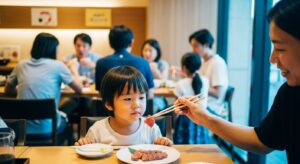
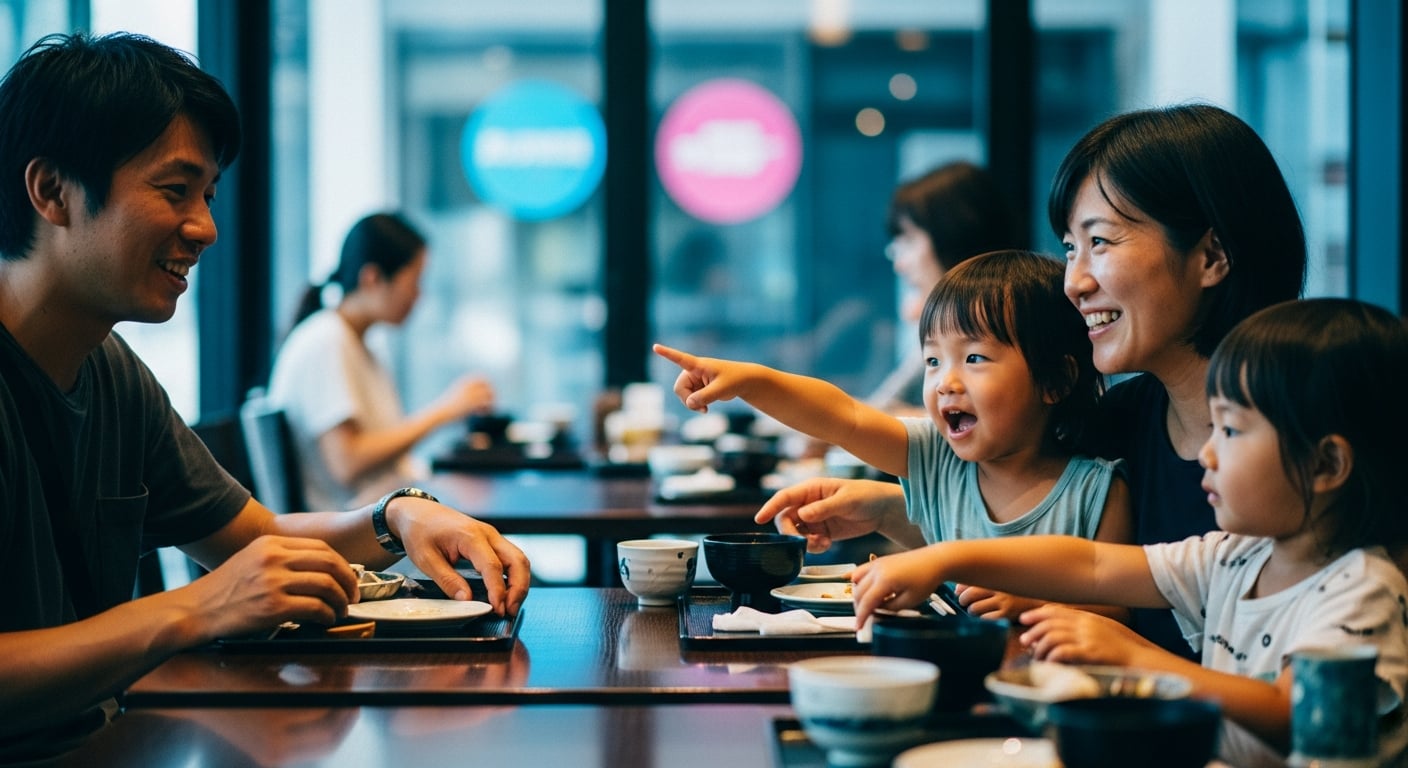
Itadaki has 18 seats in total, and almost all of the table seating is sofa-style. Past guests have brought infants and used the sofa seats for bottle feeding; others have let toddlers nap while parents finished their meal at a comfortable pace. There's a table that seats up to five — ideal for a family group — and two additional sofa tables that work well for smaller configurations.
This isn't the kind of restaurant where you feel rushed or cramped. Founder Masayuki Goto designed the space to feel unhurried — partly because the Rare Wagyu Gyudon is meant to be experienced in stages, not consumed in five minutes, and partly because he genuinely wants every guest to feel at home. For families with young children who need a little extra time and space, that intentionality matters.
✓ Key Takeaways
- Horai Wagyu is limited to 10 bowls daily and frequently sells out during peak lunch hours — families arriving after 12:30 PM face the highest risk of missing it.
- Reservations via Tabelog Online can be made in English. Paste 鳳来牛希望 into the notes field to request Horai Wagyu.
- Sofa seating throughout the restaurant makes Itadaki one of the more comfortable lunch options in Osu for families with young children.
You've just read that pasting 鳳来牛希望 into the Tabelog notes field is all it takes to secure the Horai Wagyu for your family — the reservation itself is done in English. Confirming your date now means your family won't be the group that arrives at 12:30 only to find those 10 bowls already claimed.
Fact 4: If You're Walking In, Mikawa Beef Is Always Available
Here's a scenario that plays out regularly: a family discovers Itadaki through Google Maps while exploring Osu, walks in without a reservation around noon, and asks about the Horai Wagyu. If it's already sold out that day, the answer is the Mikawa Beef Rare Gyudon — and almost without exception, they leave just as happy.
Mikawa Beef is sourced from Aichi's Mikawa region, raised on an okara-based feed with lactic acid bacteria gut management, and prepared using the exact same proprietary two-stage cooking technique that gives the Horai Wagyu its signature rare texture. The beef is heated to over 70°C at the core, fully meeting Japan's Ministry of Health, Labour and Welfare food safety standards. The experience of eating it — the mouthfeel, the way the Nagoya Cochin egg yolk enriches each bite, the interplay with the magic sauce made from Hekinan City white soy sauce — is complete in its own right.
The Mikawa Beef Fumoto (standard size: 100g beef, 200g rice) starts at ¥1,800 and is available every business day without reservation. For families with younger children, this size is often the most practical starting point.
"I discovered Itadaki through Google Maps and it became the best meal of our Japan trip."
— Guest review
That review came from a visitor who hadn't planned the stop in advance — proof that even a walk-in visit, with the right expectations, delivers something genuinely memorable. If you want to read more about what makes Itadaki's wagyu worth seeking out, this guide to Japan's rarest wagyu and what sets Horai Wagyu apart goes into the full story behind those 300 heads per year.
Fact 5: The Five-Step Eating Guide Takes the Guesswork Out of the Experience
One of the things families with children consistently appreciate is Itadaki's printed multilingual menu, which includes a visual step-by-step guide — in English, Simplified Chinese, and Korean — showing exactly how to enjoy the Rare Wagyu Gyudon. The guide walks through five stages: separating the Nagoya Cochin egg (white into the miso soup, yolk atop the beef), tasting the wagyu on its own first, mixing the yolk in, layering in the complimentary condiments from the tabletop, and finishing with a touch of wasabi.
For children who are curious about the dish and adults who've never encountered anything quite like it, this guide transforms what could feel like an unfamiliar experience into an interactive one. Several guests have mentioned that the guide itself became part of the memory — a small piece of theater that made the meal more engaging for the whole table.
Fact 6: The Location Fits Naturally Into a Full Day of Osu Sightseeing
Itadaki is located on the 2nd floor at 4-1-20 Osu, Naka-ku — a 4-minute walk from Yabacho Station Exit 4 on the Meijo Subway Line, and within walking distance from Osu Kannon Temple and the main Osu Shopping Street entrance. Look for the sign reading 元祖レア牛丼 頂 at street level and take the stairs up.
A common family itinerary: arrive at Osu Kannon Temple in the late morning, explore the shopping arcade, stop at Itadaki for lunch, and continue to Hisaya-odori Garden Flarie — the free-admission urban garden just three minutes from Yabacho Station — before heading back to your hotel or onward to a theme park. For families who have a Shirakawa-go trip the following day, that rhythm fits cleanly into a single Nagoya afternoon. This article on planning a Nagoya lunch stop before a Shirakawa-go day trip has more on how to structure that kind of itinerary.
From Nagoya Station, the journey takes roughly 10 minutes: Higashiyama Line to Sakae, transfer to the Meijo Line, get off at Yabacho.
Fact 7: Everything on the Table Comes From Aichi — and That's a Story Worth Telling Your Children
Masayuki Goto founded Itadaki in April 2022 with a specific intention: to show what Aichi Prefecture produces, and to support the local farmers who grow it. Every ingredient served at Itadaki — the rice, the miso, the pickles, the shiso leaves, the egg, the beef — comes from within Aichi Prefecture. The Horai Wagyu is fed on sake lees from Horaisen Sora, one of the region's finest breweries. The Nagoya Cochin eggs come from Yamada Poultry Farm. The pickled radish is a traditional variety from the Atsumi Peninsula.
For families traveling with older children or teenagers, the story behind the bowl is genuinely interesting — not in the abstract way that menus sometimes describe ingredients, but in the concrete way that good food always has a traceable origin. Goto's vision was never to create a trendy restaurant. It was to create something honest: a place where the ingredients speak for themselves, and where the person who raised the beef matters as much as the person who cooked it.
The name "Itadaki" comes from "itadakimasu" — the Japanese expression of gratitude spoken before meals. For children encountering this phrase for the first time, it's a natural moment to explain one of Japan's most quietly meaningful food traditions.
Bringing It All Together: How to Plan Your Family Visit
If your family has Horai Wagyu on the list, reserve in advance via Tabelog and paste 鳳来牛希望 into the notes field. If you're planning to walk in, arrive at 11:00 AM when the doors open. If you arrive mid-afternoon and the Horai Wagyu is gone, the Mikawa Beef Rare Gyudon is waiting — and it's prepared with the same care, the same technique, and the same commitment to Aichi's ingredients.
Itadaki is open on Saturdays, Sundays, Mondays, and Tuesdays for lunch only (11:00 AM to 3:00 PM, last order at 2:30 PM). On public holidays, doors open at 9:00 AM. Irregular closures do occur — the monthly business calendar is posted on the official Instagram account, so it's worth checking before you set out.
For families combining Nagoya sightseeing with a broader Japan itinerary, this behind-the-scenes look at how Itadaki serves travelers on tight schedules may help you plan your visit down to the detail.
For our complete menu, access details, and store information, visit our official page at https://itadaki8.com/english/.
Your family has one or two days in Nagoya, and the Horai Wagyu is limited to 10 bowls a day — those two facts together make advance reservation the clearest next step. Securing your spot takes just a few minutes on Tabelog in English, and it's the one thing that turns a "we almost made it" story into the meal your family talks about for years.