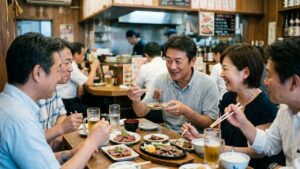
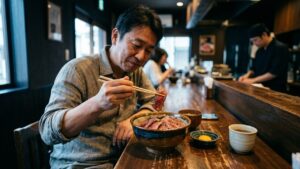
How I Discovered Horai Wagyu After Kobe and Matsusaka
 gotowp
Late August in Nagoya carries a particular kind of heat — the kind that makes you grateful for a cool, quiet restaurant and a bowl of something extraordinary. For many repeat visitors to Japan who arrive in this city, the summer crowds haven't thinned yet, and the familiar pull of Tokyo, Kyoto, and Osaka feels increasingly distant. They've already ticked off the classics. They've stood in line for Kobe beef. They've tracked down Matsusaka in Mie Prefecture. And then someone — a local friend, a fellow foodie, a thread buried in a Japan travel forum — mentions a name they've never heard: Horai Wagyu.
That's usually how it starts.
Who This Is For
- ✅ Repeat visitors to Japan who feel they've already "done" the well-known wagyu circuit and want to discover what comes next
- ✅ Travelers in Nagoya — or adding Nagoya to a Golden Route itinerary — looking for the kind of meal locals actually talk about
- ✅ Foodies who value the story behind the dish as much as the taste itself
- ✅ Anyone who has searched "wagyu beyond Kobe" and wanted an honest, specific answer
- ✅ Visitors curious about what the Osu district in Nagoya is hiding beyond its famous shopping street
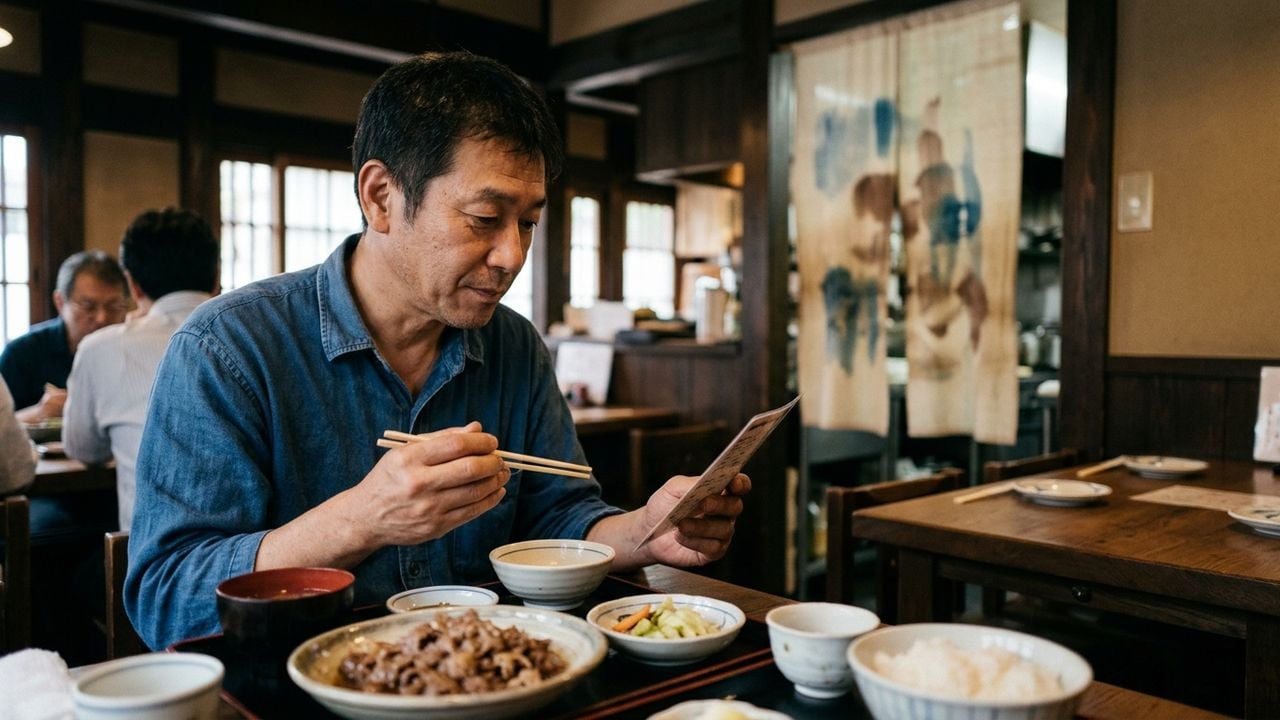
Before: The Feeling That You've Already Seen Everything
There's a particular moment that many seasoned Japan travelers recognize. You've visited the country four, five, maybe eight times. Each trip has been carefully curated — better than the last, deeper than the one before. But somewhere between your third Kobe beef dinner and your second Matsusaka course, you start to wonder whether the most memorable food experiences are still ahead of you, or whether you've already found the ceiling.
For wagyu specifically, most international travelers follow the same path. Kobe is famous worldwide. Matsusaka has prestige. Omi, if you're well-researched. Beyond that, the English-language information tends to thin out quickly. The guidebooks loop back to the same brands. The tourism websites repeat the same rankings.
What most English-language resources don't cover — because Nagoya rarely gets the depth of coverage it deserves — is that Aichi Prefecture is home to one of Japan's most remarkable, and genuinely rare, wagyu breeds. Not rare in a marketing sense. Rare in the sense that only three farms in Japan raise it, with just 300 heads produced each year out of an estimated 500,000 wagyu cattle nationwide. That's Horai Wagyu, from the Okumikawa mountains of Aichi.
If you want to understand what makes this beef so distinctive — and why so few farms in Japan even attempt to raise it — this piece on why only 3 farms in Japan raise Horai Wagyu explains the full picture behind its scarcity.
You've just read about a wagyu that exists nowhere in most English guidebooks — only 300 heads a year, three farms, and a restaurant in Osu that's open just four days a week. Because availability shifts monthly, the best way to know which days Itadaki is open before you build your itinerary is to check the monthly business calendar directly. It takes only a moment to look.
The Turning Point: A Walk Through Osu
Osu is not the kind of neighborhood that announces itself. It doesn't appear in many English-language travel apps as a "must-see." But for anyone who wanders in — past Osu Kannon Temple, into the labyrinth of covered shopping streets, past vintage electronics stalls and Taiwanese bakeries and quietly excellent specialty restaurants — something shifts. It feels like a place where people actually live, not just visit.
That's the context in which most guests first discover Itadaki. Not through a famous blog post or a TV segment (though Itadaki has been featured on eight major Japanese television programs, including NHK), but through the specific alchemy of exploration: turning a corner, spotting something that doesn't fit the usual pattern, and following curiosity.
Itadaki sits on the second floor of a building in Osu. It opened in April 2022, founded by Masayuki Goto — who has spent 18 years in the food and beverage industry and who created what is now recognized as an entirely new culinary category: Rare Wagyu Gyudon. The concept grew from a very specific question Goto asked himself during the COVID-19 pandemic: why does every classic Japanese rice bowl have a premium version — katsudon, oyakodon, kaisendon — except gyudon? Why had the beef bowl, Japan's most iconic comfort food, never been reimagined at the level it deserved?
The answer became Itadaki. The name itself comes from "itadakimasu" — the Japanese expression of gratitude spoken before every meal. That philosophy is baked into every detail of the restaurant.
✓ Key Takeaways
- Horai Wagyu is produced by only 3 farms in Japan, with 300 heads annually — genuine scarcity, not a marketing claim
- Itadaki in Osu, Nagoya is the originator of "Rare Wagyu Gyudon" — a culinary concept that exists nowhere else in the world
- The restaurant is a discovery, not a landmark — the kind of place repeat travelers to Japan describe as their most memorable find
The Horai Wagyu bowl is limited to 10 servings per day — and now that you know the five-step guide turns the experience into something genuinely structured and memorable, arriving to find it sold out would be a real loss. Reserving your spot via Tabelog is the only way to guarantee you get the bowl you came for.
After: What Changes When You Eat Here
Here is where the before-and-after becomes concrete.
Before: a vague sense that you've explored Japanese wagyu thoroughly. After: the realization that you'd only explored the part of the map that English-language guidebooks had drawn for you.
Horai Wagyu has a flavor profile that distinguishes it from the heavily marbled wagyu that most international visitors have encountered. Raised in the Okumikawa highlands of Aichi and fed on sake lees from "Horaisen Sora" — a renowned local premium sake — the cattle develop a beef that carries both delicate marbling and genuine lean meat character. It's a combination that's unusual in Japanese wagyu, where intense marbling is often the defining feature.
At Itadaki, that beef is prepared using a proprietary two-stage cooking technique developed under Goto's direction. The process heats the beef to over 70°C at the core — fully meeting Japan's Ministry of Health, Labour and Welfare food safety standards — while preserving the texture that guests describe as "rare-style." The result is something technically precise and sensory memorable at the same time.
What guests often mention, alongside the beef itself, is the structure of the experience. Every bowl comes with a five-step guide — printed in English — that walks you through the dish from first bite to final note: separating the Nagoya Cochin egg, placing the golden yolk over the beef, tasting the wagyu in its purest form first, then layering in condiments, and finishing with wasabi for a clean, refreshing close.
"The five-step eating guide made the dish even more enjoyable and memorable."
— A guest at Itadaki
That detail — a guide that shapes how you eat, not just what you eat — is one of the things that distinguishes Itadaki from a restaurant that simply serves good food. It's a considered experience, designed for guests who want to understand what they're eating, not just consume it.
Every ingredient on the table comes from Aichi Prefecture: the "Aichi no Kaori" rice, the Hatcho miso in the soup, the Atsumi Ichō-zuke pickles, the Aikei No.1 shiso from Toyohashi, the complimentary pickled ginger from Kimura Farm in Inazawa, and the dried whitebait from Minamichita. The white soy sauce base for the signature sauce comes from Hekinan City. The Nagoya Cochin egg from Yamada Poultry Farm crowns the bowl. Not one ingredient is imported from outside the prefecture.
For guests who want to understand the full scope of what makes Horai Wagyu distinct — including how it compares to the wagyu brands they already know — this detailed look at what Horai Wagyu is and why it's so rare is worth reading before your visit.
Practical Notes for Planning Your Visit
Itadaki is open for lunch only — 11:00 to 15:00 — on Saturdays, Sundays, Mondays, and Tuesdays (with last order 30 minutes before closing). On public holidays, hours begin at 09:00. Wednesday through Friday, the restaurant is closed. The Horai Wagyu bowls are strictly limited to 10 per day, and they do sell out during busy periods. Reservation via Tabelog is the most reliable way to secure your preferred time.
The restaurant is a four-minute walk from Yabacho Station Exit 4 on the Meijo Subway Line, and also within walking distance from Sakae Station, Kamimaezu Station, and Osu Kannon Station. From Nagoya Station, the journey takes approximately 10 minutes by subway.
Menus are available in English, Simplified Chinese, and Korean. The five-step guide is printed in English. For guests who have questions about specific allergens or ingredients before arriving, the monthly business calendar is posted on Itadaki's official Instagram.
For guests who have already explored the wagyu landscape and want to understand how Horai Wagyu fits into the wider picture of Japan's rare breeds, this piece on why wagyu enthusiasts choose Itadaki offers a considered comparison worth reading.
The Story You'll Bring Home
The most consistent thing guests say after visiting Itadaki isn't about the price, or even the flavor alone — it's about the story. The fact that this beef comes from three farms. That only 300 animals are raised each year across all of Japan. That the restaurant that serves it invented an entirely new culinary category, in a neighborhood most international visitors walk past without stopping.
That's the shape of the discovery: small, specific, earned. The kind of meal you describe to friends not as "the best wagyu I've had" — which invites argument — but as "the most surprising thing I found in Japan this trip." Which is a different kind of value entirely.
If you're in Nagoya this August, or planning to pass through on your way to Shirakawa-go or Takayama, Osu is worth a morning. And if you're there on a Saturday, Sunday, Monday, or Tuesday before 15:00, the second floor of that building in Osu is worth finding.
For our complete menu, access details, and store information, visit our official page at https://itadaki8.com/english/.
You came looking for the meal that other travelers haven't found yet — and Horai Wagyu at Itadaki fits that description precisely. The last step is simply securing your seat before those 10 daily bowls are spoken for. Reservation is available now through Tabelog.