Why I Now Choose Itadaki Over Every Other Wagyu Restaurant
 gotowp
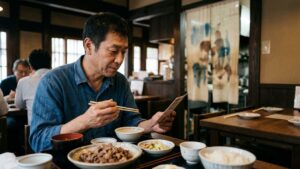
Have you ever found yourself standing outside a restaurant, menu in hand, genuinely excited — and then suddenly hesitating? That happened to a guest from the United States who visited Itadaki in Osu not long ago. She had researched Nagoya's food scene thoroughly, added us to her itinerary weeks in advance, and made the walk from Yabacho Station on a bright summer morning. But the moment she sat down and read the words "rare wagyu" on the menu, a familiar voice in the back of her head started asking questions she couldn't quite silence.
"Is rare beef actually safe to eat? Back home, they always say to cook beef through completely."
She ordered. She ate. And at the end of the meal, she said something I think about often: "The rare wagyu was unlike anything I've ever tasted — a life-changing culinary experience."
But what made it possible for her to take that first bite with confidence? That's exactly what this article is about.
Who This Is For
- ✅ Travelers who are curious about rare wagyu but uncertain whether it's safe to eat
- ✅ Visitors from Western countries where undercooked beef is a known food safety concern
- ✅ Food enthusiasts who want to understand how a rare-style beef dish can be both safe and extraordinary
- ✅ Anyone who has hesitated at a Japanese restaurant menu and wished someone would just explain it clearly
- ✅ Repeat Japan visitors ready to go deeper than well-known wagyu brands and discover something genuinely rare

Why Western Visitors Hesitate — And Why It Makes Complete Sense
If you grew up in the United States, the United Kingdom, Australia, or most of Western Europe, you were almost certainly taught that beef needs to be cooked to a safe internal temperature — typically 71°C (160°F) or higher — to eliminate risks like E. coli and salmonella. That's not paranoia. That's public health guidance that exists for a reason.
So when you arrive in Japan and encounter dishes described as "rare beef," the hesitation is natural. You're not being overly cautious. You're applying knowledge that has served you well your entire life.
The challenge is that Japan has a different culinary tradition around beef — one that involves careful sourcing, strict farm-to-table traceability, and, in Itadaki's case, a cooking method specifically engineered to meet Japan's Ministry of Health, Labour and Welfare food safety standards while preserving that distinctive soft texture. The gap isn't in the food. It's in the explanation.
I founded Itadaki in April 2022 with this specific challenge in mind. My background is in food safety — I hold a Certified Food Sanitation Supervisor qualification — and I spent considerable time developing a technique that didn't ask guests to simply "trust us." It asked us to actually solve the problem.
The cooking technique and sourcing story answer the "is it safe?" question in detail — but the one thing this article can't show you is whether a specific date is actually open. Our business calendar changes monthly and irregular closures do apply. Checking our monthly schedule before you finalize your Nagoya plans takes less than a minute.
The Two-Stage Cooking Technique: What It Is and Why It Matters
Here is the honest answer to the question every cautious visitor deserves: our wagyu is cooked to over 70°C at the core.
That sentence is worth pausing on. Japan's Ministry of Health, Labour and Welfare requires food service operators to heat beef to at least 75°C at the surface and manage core temperatures carefully in rare-style preparations. Our proprietary two-stage cooking process is built around exactly this standard — not as a workaround, but as its foundation.
In the first stage, the beef is subjected to a precise initial heat treatment that targets bacterial risk at the surface and works its way inward, reaching the required temperature at the core. In the second stage, the beef is finished in a way that preserves the soft, yielding texture that makes rare wagyu so distinctive — without reversing the safety achieved in the first stage.
What you receive in your bowl looks and feels like rare beef. The color, the tenderness, the way it parts gently — all of that is real. But the internal temperature history of that piece of wagyu has already satisfied the standards that Japan's national food safety authority requires. We are not asking you to accept risk. We engineered the risk out of the equation.
This technique took time to develop, and it is specific to Itadaki. It is, frankly, one of the main reasons this restaurant exists as a distinct concept rather than simply another wagyu dining experience. If you're curious about what makes Horai Wagyu so rare and how it differs from other wagyu, that context also helps explain why the sourcing side of our food safety approach matters as much as the cooking side.
✓ Key Takeaways
- Western concerns about rare beef are legitimate — and Itadaki addresses them directly through a certified, standards-compliant cooking method, not by asking guests to simply trust appearances.
- The two-stage cooking technique heats the beef to over 70°C at the core, fully meeting Japan's Ministry of Health, Labour and Welfare food safety standards.
- The rare-style texture and the food safety outcome coexist — this is the technical achievement at the heart of what Itadaki offers.
You now know the two-stage technique reaches over 70°C at the core and that the sourcing is as carefully controlled as the cooking — but the Horai Wagyu is limited to 10 bowls per day. Confirming your bowl before you arrive in Osu is the one step this article can't do for you. Reservation is handled through Tabelog, and the process is straightforward.
Why the Sourcing Side of Safety Is Equally Important
Cooking technique alone doesn't complete the picture. Where the beef comes from matters enormously when it comes to rare-style preparation.
At Itadaki, every piece of wagyu begins in Aichi Prefecture. Our Horai Wagyu comes from Okumikawa — a mountainous region in northern Aichi — where only three farms in Japan raise this breed, producing roughly 300 heads annually. These cattle are fed on sake lees from Horaisen Sora, a premium local sake, alongside their regular feed. The farming operation is small enough that traceability is genuine rather than a marketing claim: we know exactly where each animal came from, how it was raised, and what it ate.
Our Mikawa Beef follows a similarly careful path — raised in Aichi's Mikawa region on a diet that includes okara (soybean pulp) and managed with lactic acid bacteria to support gut health. We use the uchimomo cut specifically: a lean, clean section of the hindquarter that suits our rare-style preparation.
Why does this matter for safety? Because rare-style preparation of beef is only as trustworthy as the system behind it. Sourcing from farms with rigorous quality control, maintaining direct supply relationships, and knowing the full history of each animal are prerequisites — not optional extras. This is the "everything from Aichi" commitment that shapes every decision we make, not just a slogan. If you'd like to go deeper into why only 3 farms in Japan raise Horai Wagyu, that context reveals just how seriously this sourcing philosophy is taken at every level of production.
"The rare wagyu was unlike anything I've ever tasted — a life-changing culinary experience."
Guest from the United States
That reaction — and many like it — comes not from abandoning caution, but from discovering that the caution was already built into the process before the bowl ever reached the table.
What to Expect When You Sit Down at Itadaki
Our printed menu is available in English, and the five-step eating guide — included with every bowl — walks you through the experience in clear, illustrated steps. You don't need to read Japanese or guess at anything. The serving instructions are straightforward, and our team is trained to explain the cooking method to any guest who wants to understand it before eating.
If you want to know more before you visit, that's exactly what our menu explanations and English-language information are designed for. The goal was never to make you take a leap of faith. The goal was to give you enough information to make a genuinely confident, genuinely enjoyable choice.
One practical note: our Horai Wagyu gyudon is limited to 10 bowls per day. During peak periods — especially summer, when Nagoya sees significant visitor numbers — these can sell out before afternoon. Reserving in advance via Tabelog is the most reliable way to ensure your bowl is waiting for you when you arrive. We're open for lunch only (11:00–15:00) on Saturdays, Sundays, Mondays, and Tuesdays, with last order at 14:30.
If you're already exploring what a Nagoya lunch itinerary might look like — perhaps before or after a day trip deeper into Aichi or Gifu — you might find our thoughts on how to include Itadaki in a Shirakawa-go travel itinerary useful for timing your visit.
The Question Behind the Question
After four years of running Itadaki, I've come to understand that "is rare wagyu safe?" is rarely just a question about food safety. It's a question about trust. It's a traveler asking: can I trust that this experience was designed with me in mind?
The answer, I hope, is yes — and it's yes because of specific decisions, not reassurances. It's yes because of a two-stage cooking technique built around Japanese national safety standards. It's yes because of three farms in Okumikawa where 300 wagyu are raised annually under strict quality control. It's yes because the English menu exists, the five-step guide exists, and the staff is trained to explain — not dismiss — your questions.
When that guest from the United States took her first bite, she wasn't choosing to ignore her concerns. She was choosing to trust a system that had already addressed them. That distinction matters to me deeply.
For our complete menu, access details, and store information, visit our official page at https://itadaki8.com/english/
You came to this article with a real concern about food safety, and that concern now has a real answer rooted in Japanese national standards and a farming system that produces just 300 heads a year. The next step is making sure the bowl is actually there when you walk through the door. Tabelog reservations are the most reliable way to secure your spot.