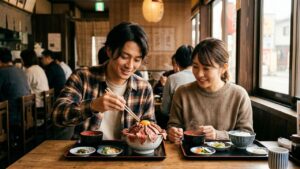
What Must I Eat in Nagoya as a First-Time Foreign Visitor?
 gotowp
Here's something most first-time visitors to Nagoya don't realize: over 60% of foreign travelers who pass through this city spend less than half a day here — and leave without eating a single dish that's actually from Nagoya. They grab something near Nagoya Station, hop back on the Shinkansen, and move on. That's a significant missed opportunity, because Nagoya sits at the center of one of Japan's most underexplored food cultures.
If you're visiting Nagoya for the first time — whether as part of a broader Japan itinerary, a stop before heading to Shirakawa-go or Takayama, or simply because you're curious — this guide answers the questions first-time visitors actually ask, starting with the most practical one: where do I go, and how do I get there?
Who This Is For
- ✅ First-time visitors to Nagoya wondering what local food is actually worth seeking out
- ✅ Travelers planning a lunch stop in the Osu or Sakae area and feeling unsure about navigation
- ✅ Japan visitors who have already tried well-known wagyu brands and want to discover something genuinely rare
- ✅ Anyone staying in Nagoya for one night and wanting to make the most of a single lunch
- ✅ Visitors heading to Shirakawa-go, Takayama, or Gifu the next day who want a memorable Nagoya meal first
Why Is Nagoya's Food Scene Different From Tokyo or Kyoto?
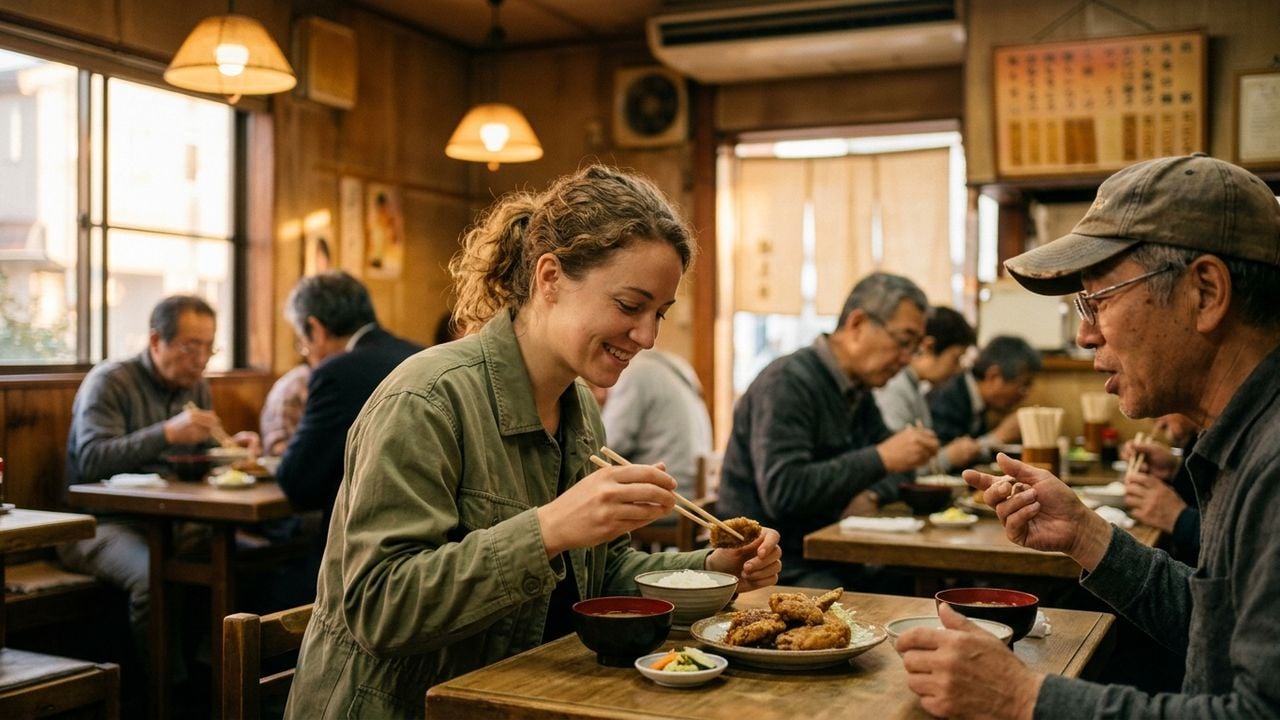
Nagoya occupies a quietly confident place in Japanese food culture. It's not trying to compete with Tokyo's scale or Kyoto's refinement — it's doing something more specific: preserving and evolving distinctly local ingredients, techniques, and traditions that haven't been widely exported to the rest of Japan, let alone the world.
Aichi Prefecture, which surrounds Nagoya, is home to ingredients that rarely appear on menus elsewhere: Hatcho miso aged in centuries-old wooden vats in Okazaki City, Nagoya Cochin eggs from heritage-breed chickens, white soy sauce from Hekinan City, and wagyu breeds raised on deeply local feed traditions. The food here tells you exactly where you are — and that specificity is what makes a first visit to Nagoya's food scene feel so rewarding.
For first-time visitors, the Osu district is one of the best starting points. It's a neighborhood that holds 400 years of shopping street history alongside subculture shops, a working Buddhist temple, and some of Nagoya's most interesting restaurants. It's also, it has to be said, genuinely easy to get turned around in.
Itadaki is open only four days a week, and the monthly schedule can shift with irregular closures. The official Instagram is where the current calendar lives — including any holiday or event-week changes that could affect your Nagoya lunch plan. Takes less than a minute to confirm before you set out.
What Should I Actually Eat on My First Visit to Nagoya?
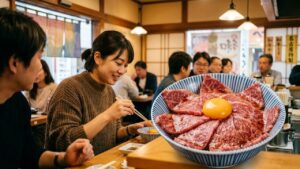
Every food guide will tell you about miso katsu and kishimen noodles — and both are absolutely worth trying. But if you're asking what experience is genuinely unique to Nagoya and not available anywhere else in Japan, the answer in 2026 points clearly to one place: Itadaki, the originator of the Rare Wagyu Gyudon, located in the Osu district of Naka-ku.
Itadaki was founded in 2022 by Masayuki Goto, who spent years sourcing directly from Aichi Prefecture farms before conceiving a dish that could carry their story: a wagyu beef bowl using rare-style preparation, sourced entirely from within the prefecture. The beef, the rice, the sauce, the egg, the pickles, the miso soup — every element traces back to a specific farm or producer in Aichi. It's a dish that couldn't exist anywhere else.
The headliner is Horai Wagyu, raised in Okumikawa on a diet that incorporates sake lees from a local premium sake called Horaisen Sora. Only three farms in Japan produce this breed, with just 300 heads raised annually across the entire country. On any given day at Itadaki, only 10 bowls of Horai Wagyu are served. That's not a marketing phrase — it reflects the genuine scarcity of the ingredient itself.
For visitors who are curious about the broader Osu food scene, this guide to eating on Osu Shopping Street covers the full picture of what the neighborhood has to offer at lunchtime.
✓ Key Takeaways
- Nagoya's food culture is built on specific Aichi Prefecture ingredients — not a regional variation of Tokyo cuisine
- Itadaki's Rare Wagyu Gyudon is the only dish of its kind in Japan, using ingredients exclusive to Aichi
- Horai Wagyu is limited to 10 bowls per day — first-time visitors should plan ahead
You now know the route from Yabacho Exit 4 and what to look for on the 2nd floor — but with only 10 Horai Wagyu bowls served each day, arriving at the right time matters as much as finding the right street. Securing your bowl in advance through Tabelog takes care of that last piece of uncertainty before you travel.
Is the Osu District Hard to Navigate for First-Time Visitors?
Honestly — yes, it can be. The Osu Shopping Street is one of Japan's largest covered shopping arcades, with over 1,200 shops spread across a dense network of interconnecting passages. Streets double back on themselves, Google Maps can lose precision in the covered sections, and many of the most interesting spots are on upper floors behind unmarked staircases. It's the kind of neighborhood that rewards slow exploration — but can feel overwhelming when you're trying to find a specific address for lunch.
Here's what actually works.
The clearest route from Nagoya Station to Itadaki:
- Take the Higashiyama Subway Line from Nagoya Station toward Fujigaoka.
- Get off at Sakae Station (two stops, approximately 4 minutes).
- Transfer to the Meijo Subway Line (follow signs for the purple line).
- Ride one stop to Yabacho Station (1 minute).
- Use Exit 4. Total journey from Nagoya Station: approximately 10 minutes.
- Walk straight from the exit for approximately 4 minutes.
Itadaki is on the 2nd floor of a building at 4-1-20 Osu, Naka-ku. At street level, look for the Japanese sign that reads 「元祖レア牛丼 頂」 (pronounced "Ganso Rea Gyudon Itadaki" — meaning "The Original Rare Wagyu Gyudon, Itadaki"). Take the staircase up to the 2nd floor. If you walk past it, you're not alone — the 2nd-floor location catches many first-time visitors off guard. The nearby landmarks to orient yourself: Osu Kannon Temple is a short walk away, and the main covered entrance to Osu Shopping Street is within sight.
You can also reach Itadaki from Sakae Station, Kamimaezu Station, and Osu Kannon Station — all within walking distance. But Yabacho Exit 4 gives you the most direct, least confusing route.
One more practical note: if you're visiting on a weekday, check the schedule first. Itadaki is open on Saturdays, Sundays, Mondays, and Tuesdays (11:00–15:00), and on public holidays from 9:00. Wednesday through Friday are regular closure days, and irregular closures do occasionally happen. The monthly schedule is posted on the official Instagram — worth checking before you travel across the city.
"The lunch was the highlight of my Nagoya trip — I'm telling all my friends about it."
— A visitor to Itadaki
Do I Need a Reservation, or Can I Just Walk In?
Walk-ins are welcome, but there's a real consideration for first-time visitors: the Horai Wagyu is limited to 10 bowls per day and can sell out during peak lunch hours. If you've traveled specifically to try it — and given that Nagoya may be a one-time stop on your Japan itinerary — it's worth securing your bowl in advance rather than arriving to find it gone.
Reservations are available through Tabelog online. The process is straightforward and takes only a few minutes. If you'd prefer to walk in and take your chances on a Mikawa Beef bowl (Itadaki's other wagyu option, always available, and equally rooted in Aichi Prefecture), that works perfectly well too — the restaurant seats 18 guests across counter seats and comfortable sofa-style tables.
For visitors attending the Asian Games Nagoya 2026 this September and October, lunchtime in Osu will be busier than usual. This guide for spectators visiting Nagoya during the Games has more detail on planning around event schedules.
What's the Best Way to Enjoy the Meal Once I'm There?
The dish arrives with a five-step guide — printed in English — that walks you through the intended sequence: separating the Nagoya Cochin egg yolk and white, enjoying the wagyu on its own first, then building through the condiments toward a wasabi finish. It sounds structured, but it's genuinely useful for understanding why the dish is composed the way it is. The tableside condiments — pickled ginger from Inazawa, dried seaweed from Mikawa Bay, chirimen jako from Minamichita, and Itadaki's own 8-spice blend — each pull from a different corner of Aichi Prefecture and change the character of the bowl as you go.
First-time visitors often describe the experience as a kind of culinary orientation to the prefecture — not just a meal, but an introduction to what Aichi actually produces. That's exactly what founder Masayuki Goto had in mind when he opened Itadaki in 2022: a place where the food does the talking, and every element earns its place on the bowl.
For a fuller picture of what makes the Osu district worth spending time in beyond lunch, this article on Osu Shopping Street's character and history is a useful read before your visit.
What Should I Know Before I Go?
A few practical points for first-time visitors:
- Hours: 11:00–15:00 (Sat, Sun, Mon, Tue); 09:00–15:00 on public holidays. No dinner service. Last order 30 minutes before closing.
- Access: 4-minute walk from Yabacho Station Exit 4 (Meijo Line). Approximately 10 minutes from Nagoya Station via Sakae transfer.
- Finding it: Look for 「元祖レア牛丼 頂」 at street level and climb the stairs to the 2nd floor.
- Reservations: Recommended for Horai Wagyu (10 bowls/day). Available via Tabelog online.
- Menus: Available in English, Simplified Chinese, and Korean.
- Payment: Credit cards, Apple Pay, and Google Pay are accepted.
- Solo dining: Counter seats are available and genuinely comfortable for solo visitors.
- Schedule: Monthly calendar is posted on the official Instagram — worth a check before your visit.
Nagoya rewards the visitors who slow down and look a little further. The food in Osu district — and specifically at Itadaki — represents the kind of discovery that doesn't appear on every Japan travel itinerary yet. That's precisely what makes it worth finding.
For our complete menu, access details, and store information, visit our official page at https://itadaki8.com/english/
You've got the route, the landmarks, and the context for what makes this bowl unlike anything else in Nagoya — now the only remaining step is making sure it's waiting for you when you arrive. Horai Wagyu sells out on busy days, and September in Nagoya is a particularly active season.