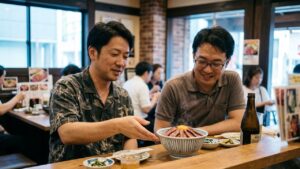
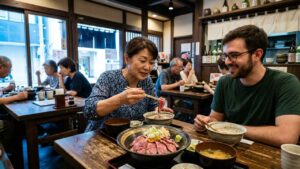
Behind the Scenes: The Warlord Heritage of Aichi Wagyu Culture
 gotowp
Nagoya's Osu district carries centuries of history beneath its bustling arcades — this is, after all, the city where Japan's three great warlords were born, where the Sengoku era was shaped, and where a distinct food culture grew independently from Tokyo and Kyoto. Visiting Osu today, you sense that layered past in every corner: Osu Kannon Temple standing where it has for hundreds of years, preserved merchant streets, and a community still proud of its local identity. It's the kind of place where an Aichi-born culinary tradition doesn't feel like marketing — it feels like a natural continuation of something much older.
That context is exactly what drew me to build Itadaki here in 2022. Everything we serve — every grain of rice, every drop of sauce, every cut of beef — comes from Aichi Prefecture. The same land that shaped Japan's warlord history is still producing extraordinary ingredients today. Horai Wagyu, raised in Okumikawa's deep valleys. White soy sauce brewed in Hekinan. Hatcho miso from Okazaki City, the castle town of Tokugawa Ieyasu himself.
But here's something I hear often — and I want to address it directly: "I'd love to try a place like that, but I'm worried I won't be able to understand the menu or communicate with the staff." That concern is completely valid. And for this article, I want to walk you through exactly what we've done at Itadaki to make sure language is never the barrier between you and a genuinely memorable lunch.
Who This Is For
- ✅ Foreign visitors who feel anxious about ordering at authentic Japanese specialty restaurants without speaking Japanese
- ✅ Travelers who have passed up local restaurants due to language barriers and later regretted it
- ✅ First-time visitors to Nagoya researching whether Itadaki is accessible to international guests
- ✅ Wagyu enthusiasts curious about dishes that go beyond standard restaurant formats — and need guidance on how to eat them
- ✅ Anyone planning a Nagoya lunch stop and wondering whether they can walk in comfortably without any Japanese
Why Language Anxiety Costs Travelers Their Best Meals
I've traveled internationally myself — it's one of the things I care about most outside of this restaurant. And I know firsthand what it feels like to stand outside a restaurant that looks extraordinary, but hesitate at the door because the signage is entirely in a language you don't read. You do a quick mental calculation: Is this worth the risk of confusion? What if I can't ask about ingredients? What if I accidentally order the wrong thing?
That calculation happens dozens of times a day for foreign visitors in Japan. And the result is often the same — travelers retreat to an international chain where they feel safe, and miss the most interesting meal they could have had.
At Itadaki, we've thought carefully about this. When I opened in April 2022, my vision was always that our guests would include visitors from around the world — people who had come to Nagoya curious about its local food culture, not just its castle. Building language access into the restaurant from day one wasn't an afterthought. It was part of what Itadaki is supposed to be.
You're reading this because you want to know whether the language barrier is actually a problem at Itadaki — not just in theory. Horai Wagyu is limited to 10 bowls a day, and knowing our exact open days before you travel matters. Our monthly business calendar is posted on Instagram so you can confirm the schedule before you make the trip.
The Multilingual Menu: What's Actually in It
Our printed menu is available in English, Simplified Chinese, and Korean. But I want to be specific about what that means in practice, because "we have an English menu" can mean very different things at different restaurants.
At Itadaki, the multilingual menu includes:
- Photos of every dish — so you can see exactly what you're ordering before you decide
- Prices clearly listed — no guessing, no surprises at the till
- Ingredient explanations — including the names and origins of key Aichi ingredients, so you understand the story behind what's in the bowl
- Common allergen notes — covering soy, wheat, egg, and sesame, so you can make informed decisions
- A clear size guide — Fumoto (standard), Oka (medium), and Daichi (large) for Mikawa Beef; Shinkoccho, Cho-ten, and Zettcho for Horai Wagyu, with gram weights for both beef and rice at each size
You can point directly to what you want. No Japanese needed. Our staff understands that, and they're genuinely happy to serve international visitors — not as an inconvenience, but as a part of what this restaurant was built to do.
If you want to use a translation app on your phone during your visit, that works perfectly well too. The restaurant's atmosphere is relaxed — there's no rush, no pressure to decide quickly.
The 5-Step Guide: Understanding a Dish That Has No Direct Comparison
Here's where I think Itadaki goes further than most restaurants with multilingual menus: we don't just translate — we teach.
Rare Wagyu Gyudon isn't a dish most visitors have encountered before. It's not ramen, not sushi, not a dish you intuitively know how to approach. The Nagoya Cochin egg arrives raw, separated from the yolk on top of the beef. The miso soup has aosa seaweed from Atsumi and black nori floating in it. There are complimentary condiments on the table — pickled ginger from Inazawa, dried whitebait from Minamichita, our original 8-spice blend — and no instruction manual telling you what to do with them.
So our menu includes a photographic, step-by-step visual guide titled "How to Enjoy Rare Gyudon." Five clear steps:
- Separate the raw Nagoya Cochin egg — the white goes into your miso soup, the golden yolk rests on top of the beef
- Try the wagyu first, on its own, before mixing anything — this is when you experience the rare texture and the clean flavor of Horai or Mikawa beef at its purest
- Mix the yolk into the beef for a richer, silkier bite
- Add condiments gradually — the pickled ginger, the nori, the chirimen jako — and discover how each changes the flavor
- Finish with wasabi for a clean, refreshing final note
The guide transforms what could be an uncertain moment into something genuinely enjoyable. Several guests have told us that following the five steps made the meal feel like a ritual — which is exactly what we intended. The name Itadaki comes from itadakimasu, the Japanese expression of gratitude before eating. That spirit of mindful attention to each bite is what we want every visitor to experience, regardless of what language they speak.
"The rare wagyu was unlike anything I've ever tasted — a life-changing culinary experience."
— A guest visiting Nagoya as part of their Japan itinerary
✓ Key Takeaways
- Itadaki's fully multilingual printed menu (English, Simplified Chinese, Korean) includes photos, prices, allergen notes, and size comparisons — no Japanese required to order confidently.
- The 5-step visual guide walks you through how to eat Rare Wagyu Gyudon — a dish with no direct parallel elsewhere — so you enjoy it exactly as it was designed to be experienced.
- Staff are welcoming to international guests, and translation apps work comfortably in the relaxed dining environment.
You now know the 5-step guide exists and that the multilingual menu covers everything you need to order confidently — but Horai Wagyu sells out during peak lunch hours. Securing your bowl in advance means you arrive knowing it's waiting for you, not hoping it hasn't already gone. Reservation is available online via Tabelog.
Planning Your Visit: The Practical Details That Matter
A few things worth knowing before you arrive, because good preparation is part of a stress-free experience.
When we're open: Itadaki is a lunch-only restaurant, open on Saturdays, Sundays, Mondays, and Tuesdays from 11:00 to 15:00 (last order at 14:30). On public holidays, we open earlier at 9:00. We are closed on Wednesdays, Thursdays, and Fridays. Irregular closures do happen — our monthly business calendar is posted on our official Instagram, so it's worth checking before you travel across the city.
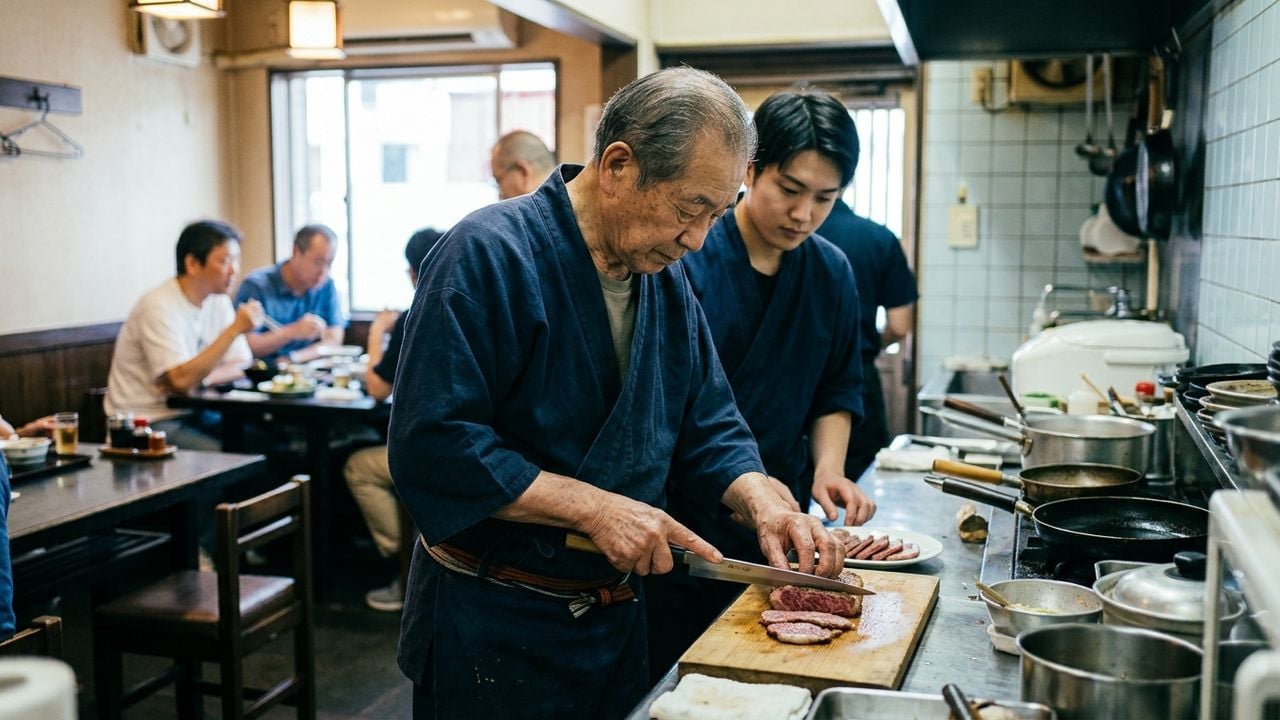
About Horai Wagyu availability: This is the most important logistical note for wagyu enthusiasts. Horai Wagyu — raised across only 3 farms in Aichi, with just 300 heads produced annually across all of Japan — is limited to 10 bowls per day at Itadaki. During busy periods, it sells out before the lunch service ends. If trying Horai Wagyu specifically is part of your plan, I strongly recommend making a reservation via Tabelog in advance. What it looks like to serve those 10 bowls in a single lunch service gives a sense of how quickly the day moves.
Getting here: We're a 4-minute walk from Yabacho Station Exit 4 on the Meijo Subway Line, and within walking distance from Sakae, Kamimaezu, and Osu Kannon stations. From Nagoya Station, the journey is roughly 10 minutes by subway. There's no dedicated parking, but coin lots are plentiful in the Osu area within a few minutes' walk.
Payment: We accept credit cards, Apple Pay, and Google Pay — no need to carry cash if that's your preference.
Solo dining: Itadaki has 5 counter seats specifically suited for solo visitors, in addition to sofa tables for groups. Solo dining is completely comfortable here, and a significant portion of our guests visit alone.
If you're visiting Osu Kannon Temple, strolling the shopping street, or stopping at Hisaya-odori Garden Flarie near Yabacho Station before your meal, Itadaki fits naturally into a half-day of Osu exploration. For visitors coming from further afield — those using Nagoya as a base before a Shirakawa-go or Takayama trip, for instance — a lunchtime reservation at Itadaki is a meaningful way to anchor the day. How Itadaki fits into a tight Japan travel schedule might be useful if you're planning around a packed itinerary.
A Final Thought on What Language Access Really Means
There's a difference between a restaurant that tolerates international visitors and one that genuinely welcomes them. We've tried to build the latter — not just by translating a menu, but by making sure every element of the experience is designed so that a first-time visitor, arriving alone, without a word of Japanese, can sit down and have a lunch that they'll still be talking about weeks later.
The Aichi ingredients, the warlord-era food culture, the 18 years of hospitality experience behind this concept — none of that matters if a guest felt too uncertain to walk through the door. The multilingual menu and the 5-step guide exist so that the story of Horai Wagyu, the craft behind our two-stage cooking technique, and the gratitude embedded in the name Itadaki can reach every guest who chooses to visit — wherever in the world they've come from.
If you'd like to go deeper into the culinary background of what makes Aichi's wagyu culture distinctive — separate from the language access question — our wagyu discovery guide explores Aichi's regional beef traditions beyond the well-known brands.
For our complete menu, access details, and store information, visit our official page at https://itadaki8.com/english/
You've seen exactly how Itadaki handles the language barrier — the printed multilingual menu, the 5-step visual guide, the welcoming staff. The one thing that can't wait is Horai Wagyu: only 10 bowls a day, and no rain check once they're gone. If this lunch is part of your Nagoya plan, now is the moment to lock it in.