Why Do Only 3 Farms in Japan Raise Horai Wagyu?
 gotowp
You've done your research, planned your Nagoya itinerary carefully, and Horai Wagyu is at the top of your list — only to wonder: What if it's already sold out when I get there? That anxiety is completely understandable, and it's one of the most common questions we hear from visitors before they walk through our door. The short answer is: Horai Wagyu is limited to 10 bowls per day at Itadaki, and yes, it does sell out. But there's a clear, simple way to make sure you're not left disappointed — and that's exactly what this article covers.
Who This Is For
- ✅ Travelers who have Horai Wagyu on their Japan bucket list and can't afford to miss it during a short Nagoya stay
- ✅ Visitors unfamiliar with Japanese reservation platforms like Tabelog who want step-by-step guidance in English
- ✅ Anyone curious about why Horai Wagyu is so scarce — and what makes the 10-bowl daily limit a genuine constraint, not a marketing gimmick
- ✅ Walk-in guests wondering whether they still have a chance without a reservation
- ✅ Wagyu enthusiasts who want to understand what separates Horai from other well-known wagyu brands
Why Are There Only 3 Farms Raising Horai Wagyu in Japan?
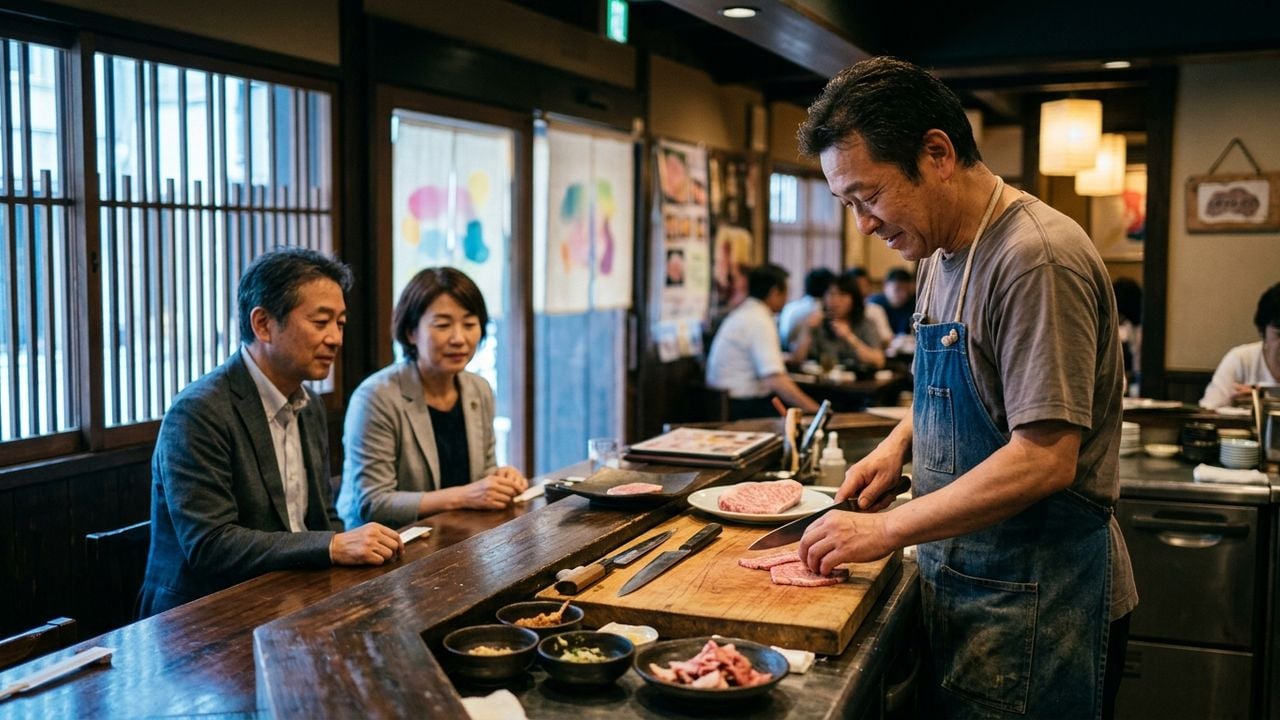
The rarity of Horai Wagyu begins long before the beef reaches any kitchen. Of the roughly 500,000 wagyu cattle raised across Japan each year, only 300 are Horai Wagyu — produced by just three farms in Okumikawa, the mountainous interior of Aichi Prefecture. That number isn't a branding decision. It's a direct consequence of what these farms actually do.
Horai Wagyu cattle are fed on sake lees from Horaisen Sora, a premium local sake produced in the same region. Sake lees — the fermented rice solids left after sake brewing — are rich in amino acids and natural yeasts, and they impart a distinctive flavor profile to the beef: a clean, nuanced marbling that sits somewhere between the robust fat of Kobe beef and the lean intensity of grass-fed cattle. The result is a wagyu with character that's genuinely difficult to describe until you've tasted it.
The problem? Horaisen Sora sake is itself produced in limited quantities, and the lees available for cattle feed are finite. Scaling up production isn't simply a matter of adding more farms or more cows. The feed supply, the land, and the traditional farming practices in Okumikawa all set a natural ceiling. That ceiling, right now, is 300 heads per year across three farms. To understand the full picture of how these farms operate and what makes the Okumikawa terroir so specific, the story of Horai Wagyu farmers in Okumikawa goes deep into the people and practices behind every bowl.
This is why, when Itadaki founder Masayuki Goto decided to build a restaurant around Horai Wagyu, the daily limit wasn't a choice — it was simply the reality of sourcing this beef responsibly through a direct-supply partnership with those three farms. Ten bowls per day is what honest sourcing looks like when the ingredient is this rare.
You now know that irregular closures apply and the monthly schedule isn't fixed — which means checking before you travel to Osu isn't optional. Our official Instagram is where we post the monthly business calendar, so you can confirm your target date is actually open before you plan around it. No account required to view the schedule.
Why Does the 10-Bowl Daily Limit Actually Matter for Your Visit?
Itadaki is open for lunch only, four days a week (Saturday, Sunday, Monday, and Tuesday), from 11:00 to 15:00. Last order is 30 minutes before closing. Within that window, 10 portions of Horai Wagyu Rare Gyudon are available — and during peak lunch hours, particularly on weekends, those bowls move quickly.
For foreign visitors staying in Nagoya for just one or two days, this creates a real problem. You can't easily come back the next day if your target dish is gone. And unlike many cities where you might stumble upon the same experience at another restaurant down the street, Horai Wagyu and what makes it genuinely rare isn't something you'll find replicated elsewhere in Nagoya. Itadaki is one of the very few restaurants with a direct sourcing relationship with these farms, and the Rare Wagyu Gyudon preparation — using our proprietary two-stage cooking technique — is available nowhere else.
There's also an element that catches many visitors off-guard: Itadaki's schedule isn't fixed to a standard weekly calendar. Irregular closures apply, and the monthly business calendar is posted on our official Instagram. What looks like an open Tuesday from the outside might be a closure day in a given month. Checking the schedule before you travel to Osu is not optional — it's essential.
✓ Key Takeaways
- Horai Wagyu is limited to 300 heads per year across 3 farms in Okumikawa, Aichi — the 10-bowl daily limit at Itadaki reflects genuine supply constraints, not artificial scarcity
- Itadaki is open lunch-only, four days per week; irregular closures apply — always check the monthly Instagram calendar before visiting
- Walk-in guests arriving during peak weekend hours face a real risk of missing Horai Wagyu; early arrival or advance reservation removes that risk entirely
You have the reservation phrase — 鳳来牛希望 — and you know exactly where to paste it in the Tabelog notes field. The next step is locking in your date before those 10 daily portions are claimed by someone who moved first. Tabelog's reservation form is available in English.
How Do You Actually Reserve Horai Wagyu as a Foreign Visitor?
This is where many international travelers feel stuck. Tabelog — Japan's most widely used restaurant reservation platform — isn't particularly well known outside Japan, and the thought of navigating a Japanese-language website to secure a dish at a small specialty restaurant in Nagoya sounds like exactly the kind of friction that leads people to just show up and hope for the best.
Here's the good news: Tabelog's reservation system is available in English, and the process is straightforward once you know the one crucial step that makes all the difference.
When completing your Tabelog reservation, there is a notes field for any special requests. To confirm that Horai Wagyu will be set aside for you, copy and paste the following Japanese phrase into that field exactly as written:
鳳来牛希望
This phrase means "Horai Wagyu requested" in Japanese, and it's how our team knows to hold one of those 10 daily portions for your party. You don't need to write anything else in Japanese — the rest of your reservation can be completed entirely in English. That single line of text is what connects your visit to the bowl you've come for.
If you're traveling as a couple or small group and everyone wants Horai Wagyu, include the number of portions you need alongside the phrase — for example: 鳳来牛希望 ×2.
"The English menu with clear serving instructions made the experience stress-free."
— Guest review
That sense of ease extends to the reservation process itself. We've tried to make every step navigable for international visitors, because the last thing we want is for the logistics to get in the way of the meal.
What If You Can't Reserve — Is There Still a Reason to Visit?
Absolutely. If your travel schedule doesn't allow for advance planning, or if Horai Wagyu is already fully reserved on your target date, Itadaki's second signature offering — the Mikawa Beef Rare Gyudon — is always available for walk-in guests and requires no reservation.
Mikawa Beef is raised in Aichi's Mikawa region on a diet that includes okara (soybean pulp) and is managed with lactic acid bacteria for digestive health — a farming practice that produces lean, flavorful beef with its own distinctive character. The same proprietary two-stage cooking technique used for Horai Wagyu is applied here, delivering the signature rare-style texture that defines the Itadaki experience. Starting from ¥1,800 for the Fumoto (standard size, 100g beef and 200g rice), it's a dish that stands fully on its own merits. If you'd like to understand more about what sets these wagyu apart from the brands most travelers already know, a comparison of Horai Wagyu and Kobe Beef lays out the differences clearly.
For walk-in guests hoping for Horai Wagyu without a reservation, arriving right at 11:00 when we open gives you the best chance. On weekdays — Monday and Tuesday — the pace is typically slower than weekends, and early arrivals often find Horai Wagyu still available well into the lunch service.
What Should You Know Before You Arrive at Itadaki?
A few practical notes for planning your visit:
Getting there: Itadaki is located on the 2nd floor at 4-1-20 Osu, Naka-ku, Nagoya. The most direct route is a 4-minute walk from Yabacho Station Exit 4 on the Meijo Subway Line. From Nagoya Station, take the Higashiyama Line to Sakae, transfer to the Meijo Line, and get off at Yabacho — around 10 minutes total. The Osu Kannon Temple and the Hisaya-odori Garden Flarie (a free-admission garden just 3 minutes from Yabacho Station) are both nearby and make for a natural pairing with a lunch visit.
English support: Printed menus are available in English, Simplified Chinese, and Korean. A photographic five-step guide walks you through exactly how to enjoy the dish — which is particularly useful for first-time visitors experiencing rare-style wagyu for the first time. If you have questions about food safety and how our two-stage cooking technique works, a detailed explanation of rare wagyu safety in Japan covers everything you need to know before visiting.
Checking the schedule: Before finalizing your Nagoya plans, confirm that Itadaki is open on your target date by checking our official Instagram for the monthly business calendar. Irregular closures do happen, and a quick check saves a wasted journey.
The 10-bowl limit exists because Horai Wagyu exists in quantities that can't be stretched. That's not a limitation we apologize for — it's the honest reality of sourcing one of Japan's rarest beef breeds directly from the farmers who raise them. Planning ahead is simply how you meet that reality on your own terms.
For our complete menu, access details, and store information, visit our official page at https://itadaki8.com/english/
You've read everything you need to visit with confidence — the rarity is real, the daily limit is 10 bowls, and one copied phrase (鳳来牛希望) in the notes field is what stands between you and a guaranteed seat. Secure your reservation now on Tabelog before your Nagoya date fills up.