7 Instagrammable Osu Kimono Spots With Nearby Lunch Options
 gotowp
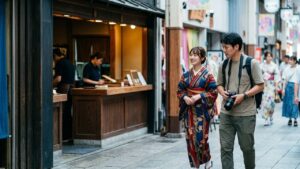
A guest messaged me on Instagram a few weeks ago. She and her sister had spent the morning in kimono, walking through Osu, and they'd had a wonderful time photographing at the temples and the covered shopping arcade. "But," she wrote, "we completely missed your restaurant. We walked around for 20 minutes looking, and eventually just gave up and went somewhere else. I was devastated."
That message stuck with me. Because it's not the first time I've heard it — and every time, the frustration is completely understandable. Osu is a beautiful, layered neighborhood, but it is genuinely a maze. For a visitor in kimono, navigating unfamiliar streets while trying not to trip on a cobblestone is stressful enough without the added pressure of finding a second-floor restaurant with Japanese-only signage at street level.
So I wanted to write a proper guide — not just about Itadaki, but about the whole morning. The kimono spots worth knowing, the order that makes sense geographically, and then a clear, honest answer to the question I get most often: "How do I actually find you?"
Who This Is For
- ✅ Visitors planning a kimono rental day in Osu and wondering where the most photogenic spots are
- ✅ Travelers who want a logical walking route that doesn't feel like a scavenger hunt
- ✅ Anyone who has ever felt overwhelmed navigating Osu's small streets and passages
- ✅ Kimono explorers looking for a meaningful, unhurried lunch after a morning of photography
- ✅ Visitors arriving from Nagoya Station who want clear subway directions before they set out
Why Osu Makes Sense for Kimono — and Why It Can Also Feel Confusing
Osu is often described as Nagoya's most layered district — and that's exactly what makes it such a rewarding kimono destination. Within a 15-minute walk, you move between a 400-year-old Buddhist temple, a covered shopping arcade filled with vintage shops and Taiwanese street food, a quiet samurai-era alley, and a plaza where cosplayers set up on weekends. The visual contrasts are extraordinary, and for kimono photography, that variety is a genuine gift.
But that same layered quality is also why people get lost. Unlike Kyoto's Higashiyama district — where the photo route is essentially one long stone-paved street — Osu is a web of covered arcades, small lanes, and passages that don't follow any obvious grid. Google Maps sometimes struggles here too, particularly around the shopping arcade sections where GPS signal can be imprecise.
If you're visiting in kimono — especially if you've rented from one of the shops near Osu Kannon — it helps to think of the district in three zones: the temple precinct, the main shopping arcade, and the quieter back streets toward Yabacho. Each has its own photographic character, and planning your morning around that structure will save you a lot of aimless wandering.
Planning a kimono morning in Osu is one thing — knowing whether Itadaki is actually open on the day you're visiting is another. Our business days follow a monthly schedule that occasionally shifts, and irregular closures do apply. Our Instagram shows the confirmed calendar for each month, so you can check your specific date before committing to the route above.
7 Kimono Photo Spots Worth Planning Around
Here are the spots I'd personally guide a first-time kimono visitor through, roughly in the order that makes geographic sense for a morning that ends with lunch near Yabacho Station.
1. Osu Kannon Temple (大須観音)
The natural starting point. The main hall and the red-orange pagoda offer the classic temple backdrop that photographs beautifully in kimono. Arrive before 10:30 to beat the afternoon crowds. The stone lanterns along the approach are particularly good in soft morning light.
2. The Main Covered Arcade Entrance Gate
The arched entrance to Osu Shopping Street, just south of the temple, frames a kimono figure beautifully against the traditional shopfront architecture. Best photographed from a slight distance, looking back through the arch.
3. Mandarake and the Vintage Arcade Section
This sounds counterintuitive, but the contrast of a kimono against Osu's subculture shop displays — retro game consoles, anime figures, neon signage — creates striking, genuinely unexpected images that stand apart from every other kimono photo in Japan. It's become a recognizable Osu signature. You can read more about how this visual tension between tradition and subculture makes Osu a uniquely compelling backdrop for kimono photography.
4. Banshoji Temple Side Lane
A quieter spot that most visitors walk past. The moss-covered stone walls and the narrow path leading to the temple's side entrance offer an intimate, atmospheric frame that feels genuinely off the tourist path.
5. Osu Shotengai Covered Arcade (Mid-Section)
The mid-section of the covered arcade, away from the main temple crowds, has a warmer afternoon light quality and more photogenic shopfront displays. The painted-tile flooring sections are particularly popular as a kimono backdrop.
6. Hisaya-odori Garden Flarie
A 3-minute walk from Yabacho Station (the same station as Itadaki), this free-admission urban garden features six themed areas — including a European-style Harmony Garden and a Crystal Garden greenhouse — that provide an elegant, quieter backdrop for kimono photography. It's featured in major English-language travel guides and sees a fraction of the foot traffic of the main temple area. Perfect for the second half of the morning, once you've worked through the busier Osu spots.
7. The Quiet Streets Between Yabacho and Kamimaezu
The residential and small-shop streets between these two subway stations are largely undiscovered by international visitors. Traditional awnings, small shrines, and old shopfronts appear around corners without warning. This is genuinely where locals walk — and the lack of crowds makes it far easier to photograph without strangers in the frame.
✓ Key Takeaways
- Osu's best kimono spots span three distinct zones — temple precinct, main arcade, and the quieter streets near Yabacho — and planning your morning around that geography saves significant time.
- The area between spots 6 and 7 (Hisaya-odori Garden Flarie and the Yabacho back streets) naturally positions you for lunch without backtracking.
You've now mapped out the morning — but Horai Wagyu is limited to 10 bowls a day, and kimono visitors arriving after a full morning of photography often find peak lunch hour already underway. Securing your bowl in advance means the route ends exactly as planned, not with a sold-out sign. Tabelog reservations can be made in English, and take only a few minutes.
After the Morning: Getting to Itadaki Without Getting Lost
By the time you've finished photographing at spots 6 and 7 above, you're already in the right neighborhood. Itadaki is located at 4-1-20 Osu, 2nd Floor, Naka-ku — a 4-minute walk from Yabacho Station Exit 4 on the Meijo Subway Line.
If you're coming directly from Nagoya Station at the start of your day: take the Higashiyama Line from Nagoya Station to Sakae (3 stops), transfer to the Meijo Line, and ride one stop to Yabacho. Total journey: approximately 10 minutes. From Yabacho Exit 4, walk straight and follow the landmark signs for Osu Shopping Street.
The most common reason people miss us is this: Itadaki is on the second floor, and the street-level signage is written in Japanese. Look for the sign that reads 「元祖レア牛丼 頂」 (pronounced: Ganso Rea Gyudon Itadaki). That's your landmark. Take the stairs just inside the entrance up to the second floor.
A few practical notes that have saved guests from frustration:
- Google Maps can be imprecise inside the covered arcade sections of Osu. Once you're at Yabacho Station Exit 4, switch to walking with the GPS rather than inside the arcade.
- We open at 11:00 Tuesday, Saturday, Sunday, and Monday (and at 9:00 on public holidays). Wednesday through Friday we are closed. Please check our monthly schedule before you plan your visit, as irregular closures do apply.
- Horai Wagyu — our ultra-rare wagyu produced by only 3 farms in Japan with just 300 heads raised annually — is limited to 10 bowls per day and often sells out during peak hours. If you specifically want Horai Wagyu, reserving in advance via Tabelog is strongly recommended. When adding notes to your reservation, copy and paste 「鳳来牛希望」 to request Horai Wagyu by name.
- If you're arriving as a walk-in, coming right at 11:00 opening gives you the best chance of catching the Horai Wagyu without a reservation.
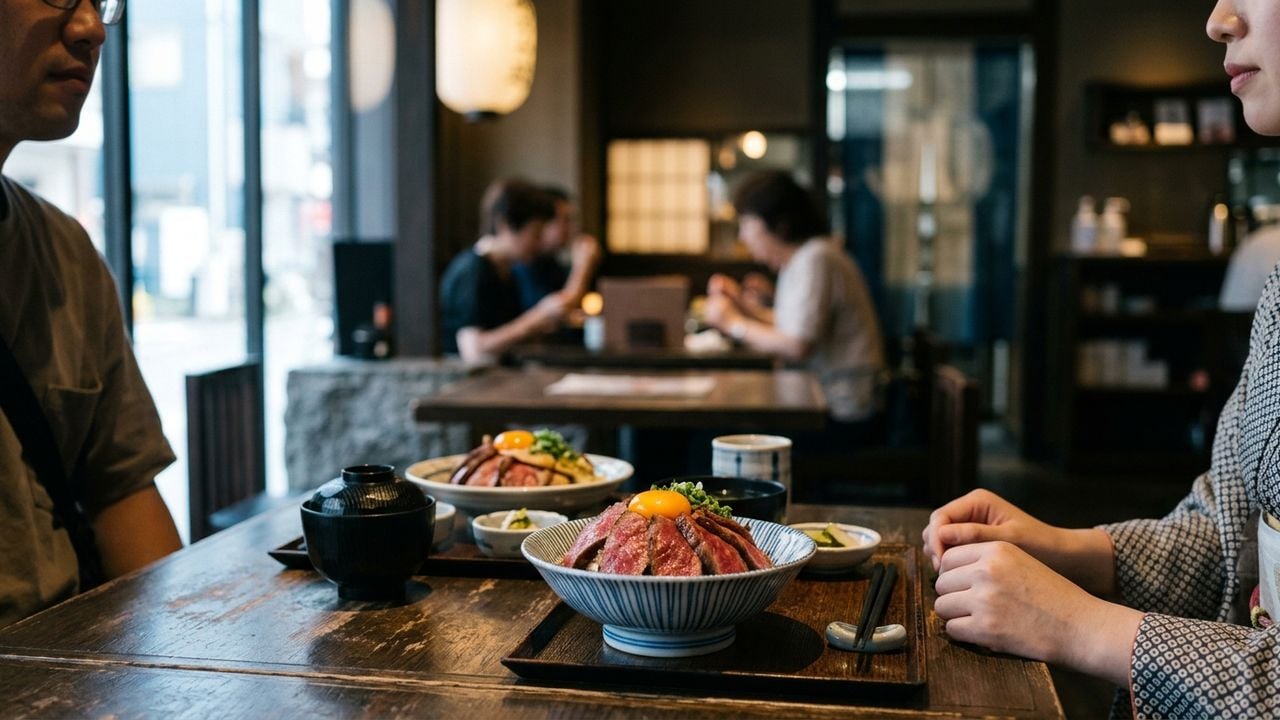
Also worth knowing for kimono visitors specifically: you are absolutely welcome to dine with us in kimono. The sofa-style table seating is particularly comfortable for kimono wearers — no bar stool balancing required. We have 18 seats total, including counter seats for solo visitors, tables for two, and a large sofa table that works well for groups or families.
"The lunch was the highlight of my Nagoya trip — I'm telling all my friends about it."
— Guest review
That kind of response genuinely means the most to us — not because of the praise itself, but because it captures what a morning in Osu can be when the pieces come together. The kimono, the temple, the back streets, and then a bowl of something you've never tasted before and can't find anywhere else in the world. That sequence of experiences is what Osu can offer a traveler who plans it thoughtfully.
A Practical Timeline for the Full Osu Kimono Morning
For those who find it easier to think in terms of time rather than maps, here's a rough framework that has worked well for guests who've shared their itineraries with us:
9:00–9:30 — Arrive at Osu Kannon Station or Yabacho. Pick up your kimono rental (several shops are located near Osu Kannon Temple) or arrive already dressed.
9:30–11:00 — Work through spots 1–5 at your own pace. The temple and arcade sections are best before crowds build.
11:00–11:30 — Walk toward Hisaya-odori Garden Flarie (spot 6) via the quieter back streets (spot 7). This naturally routes you toward Yabacho and Itadaki.
11:30 onward — Lunch at Itadaki. Last order is 30 minutes before the 15:00 closing, so you have plenty of time.
This structure works particularly well because it frontloads the busier, more energy-intensive temple areas and lets the second half of the morning slow down naturally. By the time you arrive for lunch, the morning feels complete rather than rushed.
If you'd like to explore how this kind of Osu route pairs with Nagoya's broader historic sights — Nagoya Castle, Atsuta Shrine, and beyond — our article on pairing historic Nagoya sightseeing with a rare wagyu lunch goes deeper on that combination.
A Note on the Restaurant Itself, for First-Time Visitors
I want to be straightforward about what Itadaki is and isn't, so you can decide whether it's the right fit for your day.
We are a specialty restaurant with one central dish: Rare Wagyu Gyudon — Japan's humble beef bowl, reimagined using ultra-rare Aichi Prefecture wagyu and a proprietary two-stage cooking technique that delivers a rare-style texture while fully meeting Japan's Ministry of Health, Labour and Welfare food safety standards. Every ingredient on the table — the rice, the egg, the miso soup, the pickles, the shiso leaves, the condiments — comes from Aichi Prefecture. This is a deliberate choice, not a marketing line. It's the foundation of what we do.
We don't offer a dinner service. We don't do takeout. We are lunch-only, open four days a week (Saturday, Sunday, Monday, Tuesday), with occasional additional closures. We have 18 seats. It is intentionally small, intentionally focused, and intentionally unhurried.
Our menu is available in English, Simplified Chinese, and Korean, with a step-by-step visual guide that walks you through how to enjoy the dish — so even if your Japanese is zero, you'll feel completely at ease. Staff warmly welcome international guests, and translation apps work perfectly well in the restaurant if you need them.
If you're exploring the Osu Shopping Street cosplay and subculture route as part of your day, Itadaki fits naturally as a lunch anchor on that itinerary as well — it's a neighborhood constant regardless of which version of Osu you're exploring.
Putting the Morning Together
What I keep coming back to, when I think about the guest who messaged me — the one who got lost and had to give up — is that the frustration wasn't about the food. She knew she wanted to come. The neighborhood just got in the way.
I hope this guide helps with that. Osu genuinely rewards visitors who approach it with a loose structure rather than no structure at all. The kimono photo spots listed above are all within a compact area. The walking route from spots 1 through 7 flows naturally toward Yabacho Station. And from Yabacho Exit 4, we're a 4-minute walk away — look for 「元祖レア牛丼 頂」 at street level, and take the stairs up.
For our complete menu, access details, and store information, visit our official page at https://itadaki8.com/english/
The morning in kimono, the back streets near Yabacho, the bowl of rare wagyu at the top of those stairs — it's a sequence that holds together better when the last piece is confirmed. Horai Wagyu sells out on most days, and walk-ins after 12:00 often miss it. Reserve now to make sure the lunch is waiting when you arrive.