Osu Shopping Street Cosplay Route: Ending With Itadaki's Best Lunch
 gotowp
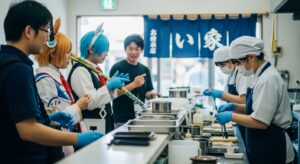
A couple of weeks ago, a visitor came in wearing the most elaborate fantasy armor costume I had ever seen up close. She had spent the morning walking Osu Shopping Street, stopping at every vintage shop and anime store along the way, and had timed her lunch break specifically around us. Before she sat down, she told me: "I've been planning this Japan trip for two years. I want every part of it to feel like a story."
That sentence stayed with me. Because that is exactly why Itadaki exists — not simply to serve lunch, but to give you something that becomes part of your story. And when your morning has already been filled with the color and energy of Osu's cosplay culture, the right ending to that morning matters.
This article focuses on one specific ingredient that makes that ending unforgettable: Horai Wagyu — one of Japan's rarest beef breeds, produced by just 3 farms in Aichi Prefecture, with only 300 heads raised each year across the entire country. It is the heart of our signature Rare Wagyu Gyudon, and it is the story you will carry home long after your cosplay photos have been shared.
Who This Is For
- ✅ Travelers walking Osu Shopping Street who want a lunch that matches the uniqueness of their day
- ✅ Wagyu enthusiasts who have already experienced Kobe or Matsusaka beef and are ready to discover what comes next
- ✅ First-time or repeat Japan visitors seeking a once-in-a-lifetime culinary moment — not just a good meal
- ✅ Anyone curious about what makes Horai Wagyu different from every other wagyu in Japan
- ✅ International visitors who have felt anxious about language barriers at local Japanese restaurants
What Makes Horai Wagyu So Rare — and Why That Matters on Your Plate
There are approximately 500,000 wagyu cattle raised in Japan at any given time. Horai Wagyu accounts for just 300 of them — produced across only 3 farms in the Okumikawa region of Aichi Prefecture. That number is not a marketing figure. It reflects a deliberate, almost austere approach to raising cattle that prioritizes depth of flavor over scale.
What sets Horai Wagyu apart from other wagyu is its feed. These cattle are raised on sake lees from Horaisen Sora — a premium sake brewed in the same mountainous Okumikawa region where the cattle are raised. The sake lees contribute to a flavor profile that is genuinely distinct: marbling that is present but not overwhelming, with a clean finish that carries both the richness of fat and the character of lean meat. It is a rare combination in Japanese wagyu, where heavy marbling often dominates everything else.
When I first sourced Horai Wagyu for Itadaki, I knew immediately that this was not just another premium ingredient. It was an ingredient with a complete story — the land, the sake brewery, the three farming families, the 300 heads. A story like that deserves to be served with the same care and intention. That is the foundation of every bowl we prepare.
You are planning a morning on Osu Shopping Street and want the lunch that follows to feel just as intentional — not an afterthought. Our monthly business calendar on Instagram shows exactly which days we are open, so you can build your cosplay route around a confirmed lunch slot. Takes under a minute to check.
The Two-Stage Technique: Safe, Rare, and Impossible to Replicate Elsewhere
One of the most common questions we receive from international visitors is whether our rare-style preparation is safe to eat. It is a completely fair question, and I want to answer it directly.
Our Rare Wagyu Gyudon is prepared using a proprietary two-stage cooking technique that heats the beef to over 70°C at the core — fully meeting Japan's Ministry of Health, Labour and Welfare food safety standards. The result is beef that delivers the silky, tender sensation associated with rare preparation, while being completely safe by Japan's strict regulatory standards. This technique was developed specifically for Itadaki and is not something you will find at any other gyudon restaurant.
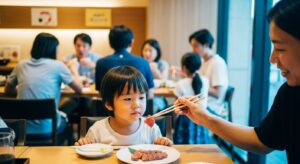
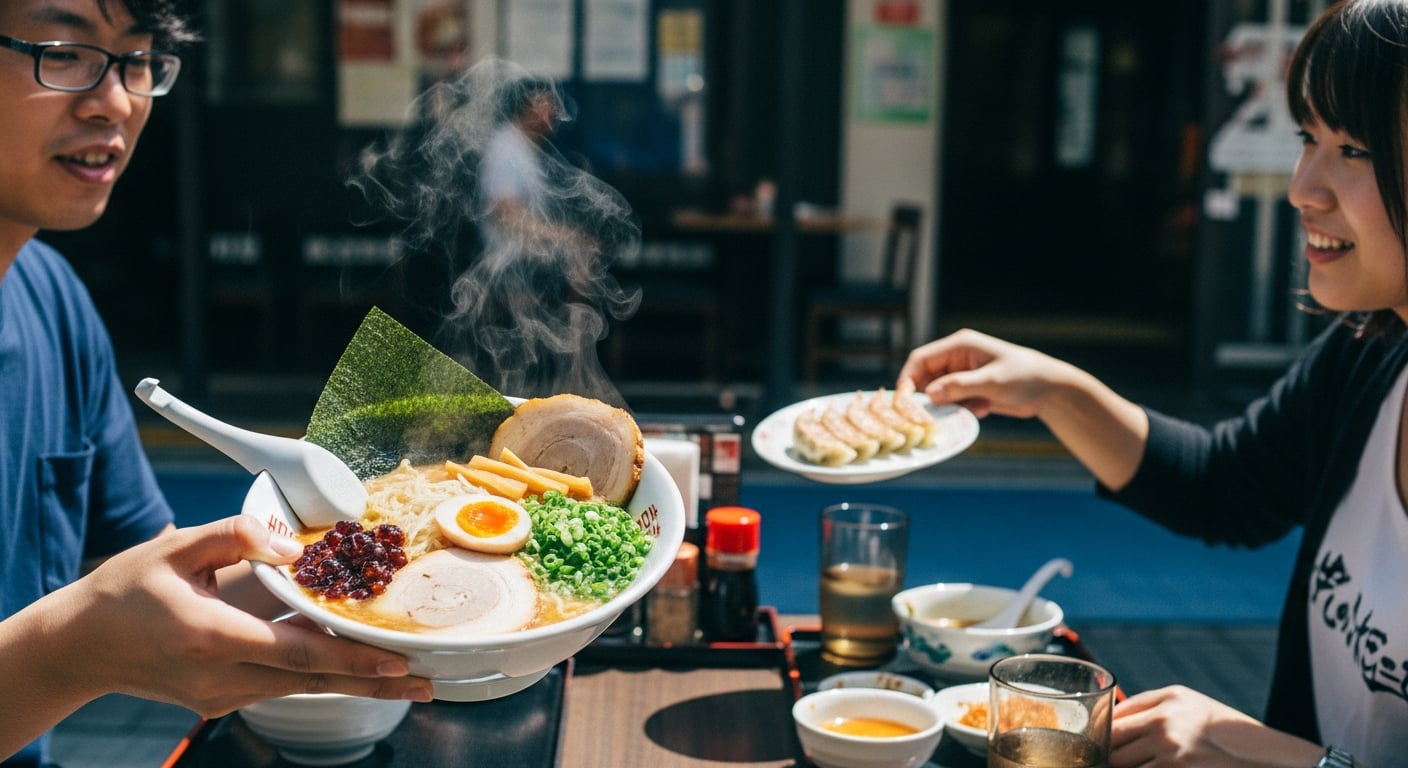
For visitors coming to us from Osu's cosplay street, the experience of sitting down and receiving a bowl with this kind of culinary precision behind it often comes as a genuine surprise. The dish does not announce itself loudly. It simply arrives — a ceramic bowl, a golden Nagoya Cochin egg yolk resting on pale pink Horai Wagyu, rice beneath, shiso leaves arranged to one side, a small cup of Hatcho miso soup beside it. Everything from Aichi. Everything intentional.
Our menu also provides a five-step visual guide in English, Chinese, and Korean that walks you through exactly how to enjoy the dish — how to separate the egg, when to add condiments, how to finish with wasabi. The guide removes any uncertainty about the experience, so you can focus on the story unfolding in front of you.
"The English menu with clear serving instructions made the experience stress-free."
— Guest review
✓ Key Takeaways
- Horai Wagyu is produced by only 3 farms in Japan — 300 heads annually — and is the centerpiece of Itadaki's Rare Wagyu Gyudon
- The two-stage cooking technique safely delivers a rare-style texture while fully meeting Japan's food safety standards
- A multilingual menu with a five-step visual guide ensures international visitors can enjoy the full experience without language barriers
Horai Wagyu is limited to 10 bowls per day, and guests arriving at peak lunch hours during a busy Osu weekend sometimes miss out. Securing your bowl in advance means the rarest part of the experience is already waiting for you when you arrive. Reserve via Tabelog Online — copy 鳳来牛希望 into the notes field to request Horai Wagyu.
From Osu's Cosplay Street to the Bowl: A Morning That Deserves This Lunch
If you have spent the morning walking Osu Shopping Street — stopping at vintage electronics shops, exploring anime stores, admiring cosplay outfits outside Osu Kannon Temple — you already understand what Osu is: a neighborhood that does one thing, completely. Every shop here has a specialty. Every person you meet has a reason for being there.
Itadaki is built on the same logic. We serve one dish. We source every ingredient from Aichi. We limit Horai Wagyu to 10 bowls per day because that is all we can prepare with the standards the ingredient deserves. The Osu district has been our home since we opened in April 2022, and the guests who find us — often mid-walk, sometimes after pausing at Osu Kannon Temple just a few minutes away — tend to be exactly the kind of travelers who appreciate that a specialty restaurant is not trying to be everything.
For those curious about how other visitors have woven Osu's cosplay scene into their day before arriving at Itadaki, the articles comparing Osu's cosplay dining culture with Akihabara's anime dining scene and five reasons Itadaki works as a cosplayer lunch stop in Osu offer good context. This article goes deeper into a single question: what is actually in the bowl, and why does it matter?
Every Ingredient Has a Name and a Place in Aichi
Part of what makes the experience at Itadaki feel different from a standard restaurant lunch is that every element on the table has a specific origin you can trace. This is not incidental — it is the core of what we do.
The rice is Aichi no Kaori, a brand rice grown in Aichi Prefecture, cooked in high-tech rice cookers that are recalibrated each year to match that season's grain quality. The miso soup is made with Hatcho miso and soybean miso from Okazaki City, two styles blended together, with Atsumi aosa seaweed and black nori from Mikawa Bay. The shiso leaves are the Aikei No.1 variety from Toyohashi. The egg is a Nagoya Cochin egg from Yamada Poultry Farm.
The pickled radish — Atsumi Ichō-zuke — comes from the Atsumi Peninsula, where a centuries-old tradition of ginkgo-leaf-shaped pickle cuts has been maintained by local producers. The pickled ginger on the table comes from Kimura Farm in Inazawa City. The dried whitebait sprinkled over your bowl is from Minamichita, along Aichi's southern coast.
This is not a list of exotic ingredients assembled for effect. It is a map of Aichi Prefecture, translated into a single bowl. When the visitor in her fantasy armor costume finished her meal that afternoon, she looked up and said, "I had no idea Aichi made all of this." That moment — that shift in perception — is exactly what we hope every guest carries home.
"I've had Kobe beef and Matsusaka beef, but Horai Wagyu at Itadaki was on another level."
— Guest review
Planning Your Visit: What to Know Before You Arrive
Itadaki is located on the 2nd floor at 4-1-20 Osu, Naka-ku, Nagoya — a 4-minute walk from Yabacho Station Exit 4 on the Meijo Subway Line. From Nagoya Station, the easiest route is the Higashiyama Line to Sakae, then transfer to the Meijo Line and alight at Yabacho — approximately 10 minutes total. Look for the Japanese sign reading 元祖レア牛丼 頂 at street level and take the stairs up to the second floor.
We are open Saturday, Sunday, Monday, and Tuesday from 11:00 to 15:00, and on public holidays from 09:00 to 15:00. Wednesday, Thursday, and Friday are non-operating days. Last order is 30 minutes before closing. Because our schedule includes occasional irregular closures, checking our monthly business calendar on Instagram before your visit is strongly recommended.
Horai Wagyu is strictly limited to 10 bowls per day. If you plan to order it, advance reservation via Tabelog Online is the most reliable way to secure your bowl. When reserving, please copy and paste 鳳来牛希望 into the notes field to request the Horai Wagyu option. For walk-in visitors, our Mikawa Beef Rare Gyudon is always available and prepared with the same two-stage cooking technique and Aichi-sourced ingredients.
If you are planning a broader day in Nagoya that includes history alongside Osu's cosplay culture, the step-by-step guide combining Nagoya Castle, Osu Kannon, and Itadaki into one day offers a practical itinerary worth bookmarking.
The meal you choose on a trip like this — one that only exists in one place, using ingredients that only come from one region — is not a meal you forget. It becomes the story you tell when someone asks what you ate in Japan. For our complete menu, access details, and store information, visit our official page at https://itadaki8.com/english/.
You have read what goes into every bowl — the 300-head-a-year Horai Wagyu, the sake lees feed, the Aichi ingredients mapped across a single dish. The next step is making sure that bowl is yours on the day you walk through Osu. Reservations via Tabelog are the only way to guarantee availability.