When You've Done the Golden Route, Discover Nagoya's Rare Wagyu
 gotowp
You've stood beneath the torii gates of Fushimi Inari. You've watched the deer wander through Nara Park. You've eaten ramen in Tokyo, sushi in Osaka, and matcha everything in Kyoto. And now — on your second or third trip to Japan — you find yourself asking a quietly exciting question: Where do I go that no one else has been yet?
That feeling isn't restlessness. It's the mark of a traveler who has graduated from the guidebook and started looking for Japan's real texture. And if that sounds like you, there's something waiting in Nagoya that most visitors — even many repeat visitors — never find.
Who This Is For
- ✅ Repeat visitors to Japan who've already done the Golden Route and want something genuinely new
- ✅ Wagyu enthusiasts who have tried Kobe and Matsusaka beef and want to discover what comes next
- ✅ Travelers passing through Nagoya en route to Shirakawa-go, Takayama, or Gifu
- ✅ Food lovers who value a story and a discovery over a Michelin listing
- ✅ Anyone who wants to come home with a meal worth talking about for years
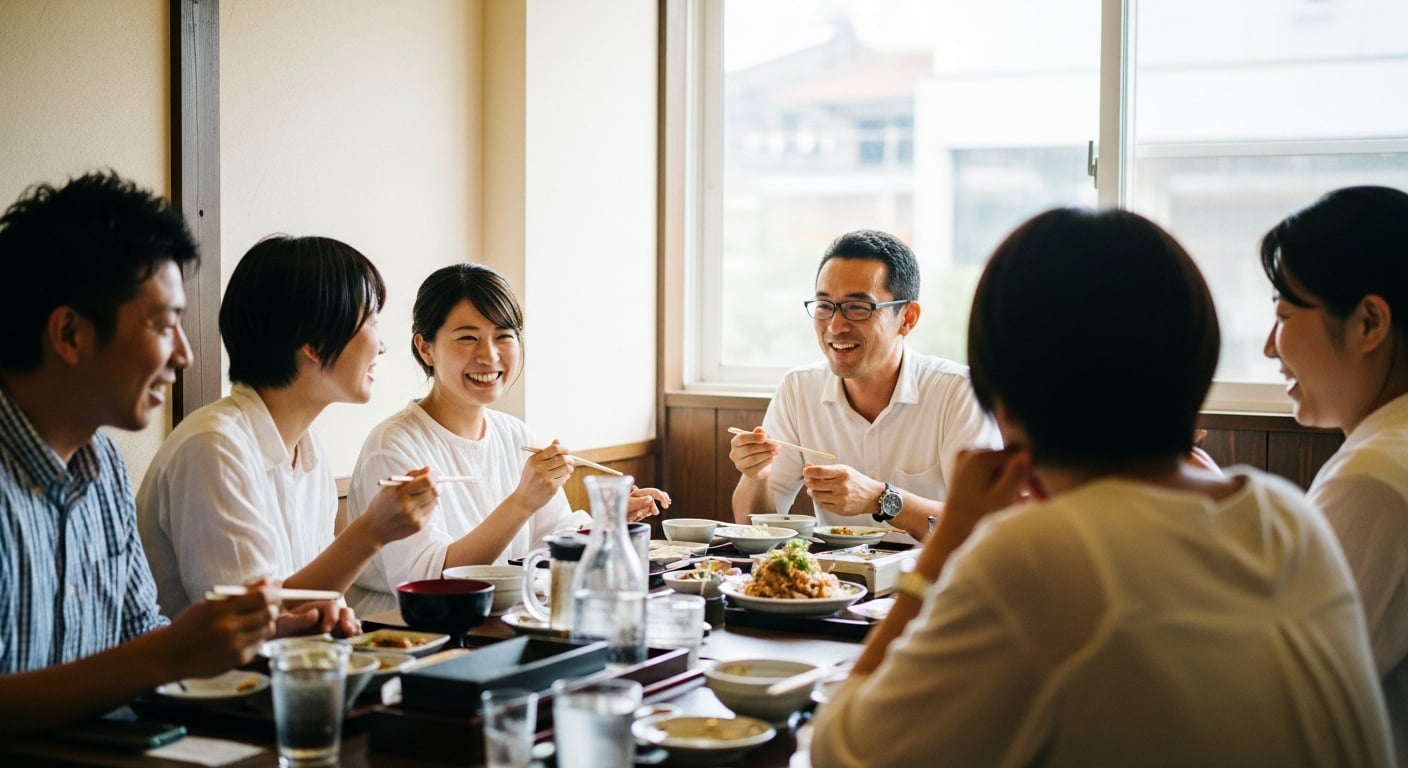
The City That Japan's Repeat Travelers Are Finally Stopping In
Nagoya has always been there, sitting between Tokyo and Kyoto on the Shinkansen line — the city millions of travelers pass through without stepping off the train. That used to feel like a missed opportunity. These days, it feels like a gift.
Because while the Golden Route has become increasingly familiar, Nagoya has quietly been doing what it has always done: building extraordinary things, sourcing exceptional ingredients, and feeding people who actually know what good food tastes like. Visitors from Hong Kong and Taiwan — among the most experienced Japan travelers in the world — have been making Nagoya a deliberate stop for years. They're not following a trend. They're following a feeling: that the most memorable meals in Japan are rarely the most famous ones.
Nagoya's Osu district captures this perfectly. Part traditional shopping street, part Buddhist temple neighbourhood, part anime and subculture hub — Osu has been a lively, slightly chaotic, deeply local destination for over 400 years. It doesn't appear prominently in most mainstream English guidebooks. That's precisely why it still feels like a discovery.
A Question That Became a Restaurant
I'm Masayuki Goto, and I opened Itadaki in Osu in April 2022 — but the idea had been forming much longer than that.
I'd been running MAX'S BAR since 2008, sourcing ingredients from small local farms across Aichi Prefecture. When the pandemic hit, I watched those farmers — people I'd built real relationships with over years — face a crisis. Premium local produce with nowhere to go. I felt I needed to do something that went beyond a single order.
Around the same time, I kept turning over a puzzling gap in Japanese cuisine. Katsudon has its refined versions. Oyakodon has premium interpretations. Kaisendon can be an extraordinary experience. But gyudon — Japan's beloved beef bowl — had never escaped its fast-food identity. Every version of it was built around speed and low cost. Nobody had ever asked: what if this was the finest bowl you'd ever eaten?
That question led me to Horai Wagyu.
300 Heads a Year — and a Beef You Won't Find Anywhere Else in Nagoya
Horai Wagyu is raised in Okumikawa, deep in the mountains of Aichi Prefecture, by just three farms. Across all of Japan's approximately 500,000 wagyu cattle, only 300 of them are Horai Wagyu. They're fed on sake lees from Horaisen Sora — one of Aichi's finest local breweries — which gives the beef a remarkably clean flavour: the rich, yielding quality of marbled wagyu, balanced with a lean finish that you don't expect.
Most people who visit Nagoya never hear this name. It doesn't appear on the wagyu lists that tourists study before their trip. It isn't promoted in the same way Kobe or Matsusaka beef are. It exists in small quantities, in one region, and it reaches our guests because I go directly to those farms and ask for it.
We limit Horai Wagyu to 10 bowls a day. Not as a marketing device — because that's genuinely all we can prepare with the care and precision the beef deserves.
And the preparation itself took years to develop.
The Technique Nobody Else Has
Rare wagyu is not something you can simply decide to serve. Japan's Ministry of Health, Labour and Welfare sets strict food safety standards for beef preparation, and they exist for good reason. The challenge I set for myself — and the challenge my team worked through over considerable time — was this: how do you deliver the silky, yielding texture of rare beef while fully meeting those standards?
The answer is what we call our two-stage cooking technique. It heats the beef to over 70°C at the core, satisfying Japan's food safety requirements completely, while preserving the rare mouthfeel that makes wagyu at this quality level genuinely extraordinary. I hold a Certified Food Sanitation Supervisor qualification, and every bowl prepared at Itadaki follows the precise process my team and I developed together.
Every other ingredient in the bowl — the rice, the sauce, the egg, the pickles, the shiso leaves — comes from Aichi Prefecture. The rice is Aichi no Kaori, grown here. The egg is from Nagoya Cochin hens at Yamada Poultry Farm. The miso soup is built on Hatcho miso from Okazaki. Even the white soy sauce base for our signature sauce comes from Hekinan City, just down the road.
This isn't a local sourcing policy. It's a philosophy. The bowl is, in every ingredient, the taste of this place.
✓ Key Takeaways
- Nagoya's Osu district is a lively, locally beloved neighbourhood that rarely appears in mainstream English travel guides — making it an ideal discovery for repeat Japan visitors
- Horai Wagyu is produced by only 3 farms in Japan with just 300 heads annually — a genuine scarcity, not a marketing claim
- Itadaki's proprietary two-stage cooking technique delivers a rare texture while fully meeting Japan's food safety standards
"The rare wagyu was unlike anything I've ever tasted — a life-changing culinary experience."
Guest review
Finding Us — and What to Do When You Arrive
Itadaki is on the 2nd floor of a building at 4-1-20 Osu, Naka-ku. Look for the sign reading 元祖レア牛丼 頂 (Ganso Rea Gyudon Itadaki) at street level and take the stairs up. We're a 4-minute walk from Yabacho Station Exit 4 on the Meijo Subway Line, and also within walking distance from Sakae, Kamimaezu, and Osu Kannon stations.
We're open for lunch only — 11:00 to 15:00, on Saturdays, Sundays, Mondays, and Tuesdays (and from 9:00 on public holidays). No dinner service. We keep things focused, and we like it that way.
If you want to experience Horai Wagyu specifically, I'd strongly recommend reserving in advance through Tabelog Online. When you book, paste the phrase 鳳来牛希望 into the notes field to request the Horai Wagyu bowl. The reservation interface is available in English. If you'd rather walk in, our Mikawa Beef Rare Gyudon is always available — prepared with the same technique, and equally worth your time.
Our menu is printed in English, Simplified Chinese, and Korean, and includes a five-step visual guide for how to enjoy the dish — how to separate the Nagoya Cochin egg, when to add the yolk, how to explore the condiments on the table. No Japanese required.
The Story You'll Carry Home
I travel when I can — exploring restaurants and food scenes abroad, understanding how different cultures shape what they eat. What I've learned is that the meals people remember aren't always the most expensive or the most famous. They're the ones with a story attached. The ones where you felt like you found something.
The name Itadaki comes from itadakimasu — the expression of gratitude Japanese people say before eating. It's a recognition that food is a gift: from the farmers who raised it, from the land that sustained them, from the craft that shaped it into something on your table. That feeling is what I wanted every guest to leave with.
If you've done the Golden Route and you're ready for the next layer of Japan — the one that doesn't appear in the standard itinerary — Osu is where I'd send you. And when you're here, we'll be upstairs, ready to serve you something you won't find anywhere else.
For our complete menu, access details, and store information, visit our official page at https://itadaki8.com/english/
When you're ready to make your reservation, we'd love to welcome you:
Reserve Your Rare Wagyu Experience
And since we operate on a limited schedule, you can always check the latest business calendar before you plan your visit:
Check Our Monthly Schedule on Instagram