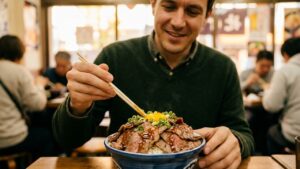
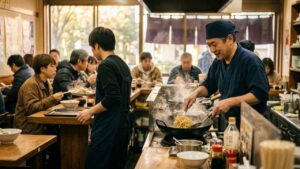
Between Matches at Paloma Mizuho Stadium: A Premium Nagoya Lunch Experience
 gotowp
Here's a number that surprises many visitors to Japan: over 70°C. That's the core temperature our wagyu reaches during preparation at Itadaki — the same threshold required by Japan's Ministry of Health, Labour and Welfare to certify beef as safely cooked. Yet guests consistently describe the texture as "rare." That apparent contradiction is exactly what this article is about.
September in Nagoya brings athletes, supporters, and sports enthusiasts together from across the world for events at Paloma Mizuho Stadium and venues around the city. Between matches, schedules open up for a few hours — not quite enough to travel far, but more than enough for a lunch that becomes the story you tell when you get home. For many of our visitors, that lunch is here at Itadaki.
But we've noticed something: a number of guests, especially those from North America, Europe, and Australia, arrive with a genuine question they're almost hesitant to ask out loud. "Is this actually safe?" It's a completely fair question. And we want to answer it honestly, in full, before you decide whether to visit.
Who This Is For
- ✅ Sports event visitors at Paloma Mizuho Stadium looking for a memorable lunch between matches
- ✅ Travelers who are curious about rare-style wagyu but have food safety concerns about undercooked beef
- ✅ First-time visitors to Nagoya who want to understand what makes Itadaki's preparation method different
- ✅ Guests planning a Nagoya stay before continuing to Shirakawa-go, Takayama, or Gifu the following day
- ✅ Anyone who has read about Horai Wagyu and wants to know if it lives up to the story
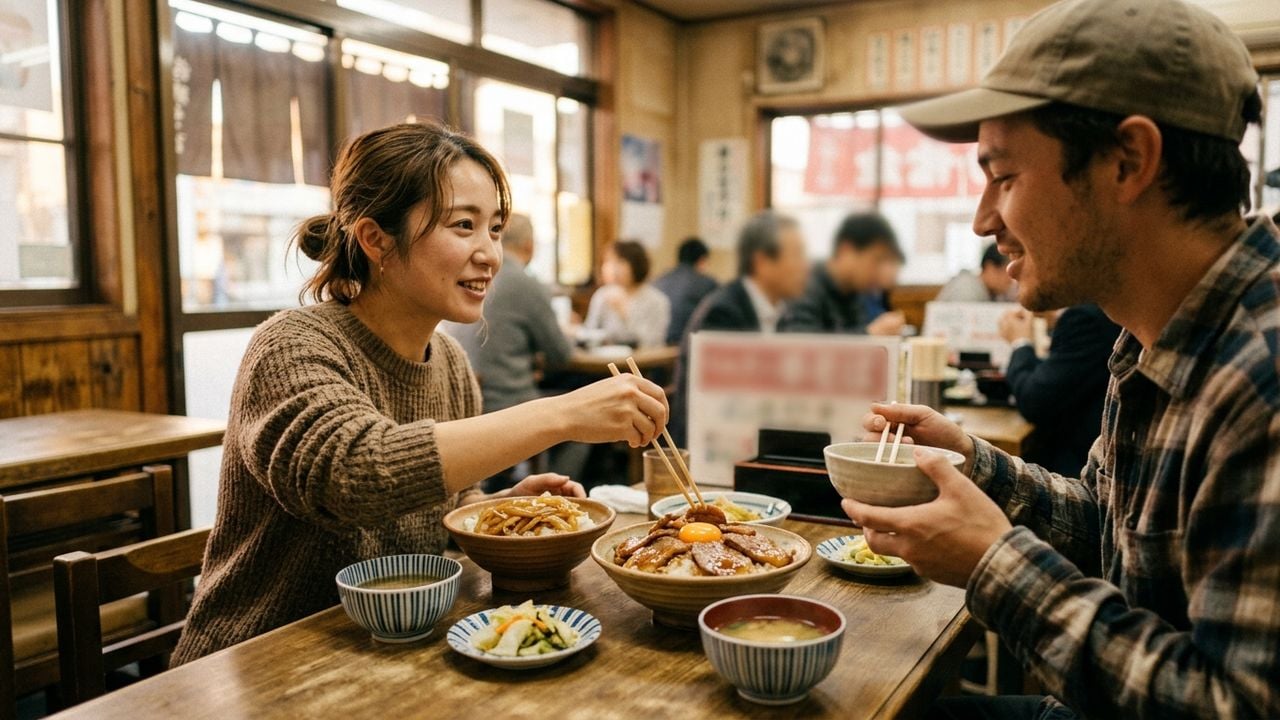
Why Western Travelers Pause — and Why That Pause Is Completely Understandable
In the United States, the UK, Australia, and much of Western Europe, public health guidance is clear: cook ground beef to 71°C (160°F) and whole cuts to at least 63°C (145°F). The reasoning is sound — E. coli, salmonella, and other bacterial risks are real, and food safety agencies are right to take them seriously.
So when a restaurant in Japan puts a bowl of wagyu in front of you and describes the beef as "rare-style," it's natural for that training to kick in. Some guests have told us they almost didn't come, or almost ordered something else, because the words "rare" and "safe" felt like they couldn't coexist.
We understand that instinct completely. And we think the most respectful thing we can do is explain, clearly and without oversimplifying, exactly how Itadaki's preparation works — and why Japan's regulatory framework handles this differently from what you may be used to.
The food safety question this article addresses is real — and the answer changes depending on the specific day we're open, since irregular closures do apply. Our monthly business calendar on Instagram is updated each month so you can confirm before making the trip from Paloma Mizuho Stadium. No account needed to view it.
The Two-Stage Cooking Technique: What Actually Happens in Our Kitchen
Itadaki was founded by Masayuki Goto, who holds certification as a Food Sanitation Supervisor under Japan's Ministry of Health, Labour and Welfare and operates under a licensed restaurant permit from the Aichi Prefecture Public Health Center. Food safety isn't a marketing point for us — it's a legal and professional obligation we take seriously every single day.
The rare-style texture in our wagyu gyudon is achieved through a proprietary two-stage cooking process developed specifically for Itadaki. Without going into the precise details of a method that took years to perfect, here is what matters for you as a guest:
- The beef is heated to over 70°C at the core — fully meeting Japan's strict Ministry of Health, Labour and Welfare food safety standards for beef preparation.
- The technique is designed to eliminate surface and internal bacterial risk while preserving the delicate, soft texture that makes the experience distinctive.
- Every bowl is prepared by trained kitchen staff following Goto's exact recipes and quality control procedures. There is no improvisation in the cooking process.
The result is a dish that feels — in every meaningful sensory way — like eating beautifully rare wagyu, while meeting the same safety standards that Japan's health authorities require of all licensed restaurants. This is not a workaround or a loophole. It is a genuine culinary and technical achievement, and it is why Itadaki has been featured on eight major Japanese TV programs, including NHK, as the originator of "Rare Wagyu Gyudon" as a culinary concept.
The Beef Itself: Why Source Quality Matters for Safety and Flavor
Food safety in meat preparation is not only about cooking temperature — it begins long before the beef reaches the kitchen. The quality and traceability of the source matters enormously.
At Itadaki, we use only two beef varieties, both from Aichi Prefecture farms we work with directly:
Horai Wagyu (limited to 10 bowls per day) is raised in Okumikawa, Aichi, by just three farms producing approximately 300 heads annually. The cattle are fed on sake lees from Horaisen Sora, a renowned local premium sake — a feeding method that influences both the beef's flavor profile and the careful, small-batch conditions under which the animals are raised. We source directly from these farms. There is no long supply chain obscuring the origin of what arrives in our kitchen.
Mikawa Beef comes from Aichi's Mikawa region, raised on okara feed with lactic acid bacteria gut management — a process designed to support the health of each animal from the inside out. We use the uchimomo (inner thigh) lean cut exclusively.
Knowing exactly where your beef comes from, how it was raised, and that it has been handled under rigorous quality control from farm to kitchen — that is a meaningful part of what "safe" actually means in practice.
✓ Key Takeaways
- Itadaki's proprietary two-stage cooking technique heats wagyu to over 70°C at the core, fully meeting Japan's Ministry of Health, Labour and Welfare food safety standards.
- The "rare" texture is a deliberate culinary achievement — not the result of undercooking. It is safe, certified, and prepared by trained staff following precise procedures every service.
- Horai Wagyu and Mikawa Beef are sourced directly from Aichi Prefecture farms under strict quality control — traceability is built into our supply chain, not an afterthought.
Horai Wagyu — only 300 heads raised annually across three farms — is limited to 10 bowls per day at Itadaki, and it does sell out during events and peak periods. If your match schedule puts you at Paloma Mizuho Stadium on a day we're open, reserving in advance via Tabelog is the only way to guarantee the bowl is waiting for you. The reservation process is in English and takes under two minutes.
What Guests Who Had the Same Concern Tell Us Afterward
The most honest evidence we can offer isn't a food safety certificate — it's what people say after they've eaten here. And some of the most meaningful feedback comes from guests who arrived with exactly the hesitation this article addresses.
"Perfect lunch during our Nagoya stay before our Shirakawa-go trip the following day."
— Guest visiting Nagoya as part of a Central Japan itinerary
What stands out about that comment isn't just the satisfaction — it's the context. A guest who trusted the experience enough to make it part of a carefully planned Japan trip, and who left Nagoya the following morning with that meal as a positive memory. That's the standard we hold ourselves to.
Other guests have told us:
"I've had Kobe beef and Matsusaka beef, but Horai Wagyu at Itadaki was on another level."
— Repeat Japan visitor, wagyu enthusiast
Guests who arrive knowing about Kobe beef and Matsusaka beef often leave talking about Horai Wagyu — a name most of them had never heard before walking through our door. Out of approximately 500,000 wagyu raised in Japan each year, only 300 are Horai Wagyu. That scarcity is real, not manufactured.
If you're visiting Nagoya for events at Paloma Mizuho Stadium, the lunch window between sessions is genuinely enough time for a full experience at Itadaki. We're a short distance from central Nagoya's sports venues, and our lunch-only service runs from 11:00 to 15:00, with last order 30 minutes before close. The experience — five deliberate steps from the first bite to the final touch of wasabi — takes around 45 to 60 minutes when you're not rushing, which is exactly how it should be enjoyed.
Practical Details for Your Visit
Itadaki is located in the Osu district of Nagoya, a 4-minute walk from Yabacho Station Exit 4 on the Meijo Subway Line. From Nagoya Station, the journey takes approximately 10 minutes by subway.
We are open Tuesday, Monday, Saturday, and Sunday from 11:00 to 15:00, with extended morning hours (from 09:00) on public holidays. Wednesday, Thursday, and Friday are our regular closed days. Please note that irregular closures do occasionally occur — our official Instagram publishes a monthly business calendar so you can confirm before traveling.
Horai Wagyu is limited to 10 bowls per day and does sell out during busy periods. If you've planned your visit around trying the Horai Wagyu specifically — which we think is worth doing — we recommend reserving in advance via Tabelog. Mikawa Beef is always available without a reservation, and it is a genuinely excellent dish in its own right.
Our menu is available in English, Simplified Chinese, and Korean, and includes a photographic five-step guide for enjoying the dish. You do not need Japanese to navigate the experience comfortably.
If you're considering combining your Nagoya visit with a day trip or overnight stay in Shirakawa-go or Takayama — as many of our guests do — you might find our piece on choosing between a Nagoya lunch and a Takayama lunch on the same itinerary useful for planning. And if you're attending multiple sporting events across different venues during your stay, our article on fitting a premium lunch between basketball matches at IG Arena covers the timing logistics in detail.
A Final Note on Trust
We opened Itadaki in April 2022 with a straightforward ambition: to create a dish that respects the farmers who produce Aichi's ingredients, respects Japan's food safety standards, and respects the intelligence of our guests enough to explain everything clearly. The name Itadaki comes from "itadakimasu" — the Japanese expression of gratitude spoken before a meal. That philosophy runs through everything we do, including how we answer questions like the one this article addresses.
If you're coming to Nagoya for Paloma Mizuho Stadium or any of the city's events this September, we'd be glad to be part of your day. Come with your questions — about the beef, the cooking method, the ingredients, anything — and we'll answer them honestly at the table.
For our complete menu, access details, and store information, visit our official page at https://itadaki8.com/english/.
You've read how the two-stage technique works, where the beef comes from, and what guests who had the same safety concern say afterward. The next step is straightforward: secure your spot before the 10 daily Horai Wagyu bowls are claimed by someone else visiting Nagoya this September. Tabelog reservations are available in English.