Otaku Pilgrimage Nagoya: Rare Wagyu Lunch in Cosplay Central Osu
 gotowp
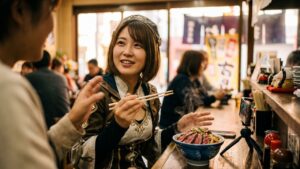
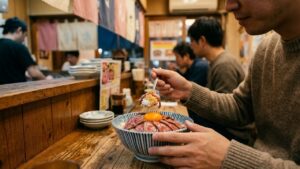
September in Nagoya carries a particular kind of energy. The summer heat begins to ease, the streets of Osu fill with color, and the city — always buzzing with life — feels especially alive this time of year. If you've timed your visit around the 2026 Asian Games, you're already ahead of most travelers. But here's what the guidebooks won't tell you: the real discovery waiting in Osu isn't on any official event map. It's a second-floor specialty restaurant where, most days, only 10 bowls of the rarest wagyu in Aichi Prefecture are ever served.
I'm Masayuki Goto, the founder of Itadaki. Today, I want to take you behind the bowl — into the ingredients themselves. Because if you're the kind of traveler who wants to understand why something tastes the way it does, this one's for you.
Who This Is For
- ✅ Repeat Japan visitors who've already done Tokyo and Kyoto, and are now hunting for discoveries that feel genuinely theirs
- ✅ Otaku travelers exploring Osu's cosplay and subculture scene who want a lunch that matches the depth of their trip
- ✅ Wagyu enthusiasts curious about Aichi's lesser-known beef beyond Kobe and Matsusaka
- ✅ Foodies who want to know exactly what's in their bowl — the farms, the regions, the reasoning
- ✅ Anyone who's asked themselves: "Where do Japanese food lovers actually eat in Nagoya?"
Why Osu? Why Here?
Osu is one of those neighborhoods that defies easy description. Walk through the covered shopping arcades and you'll pass a 400-year-old Buddhist temple, a maid café, a vintage electronics dealer, and a Taiwanese restaurant — sometimes within the same block. It's Nagoya's most layered district, and it's precisely the kind of place repeat visitors to Japan gravitate toward. Not because it's famous in the international press, but because it feels real.
When I opened Itadaki here in April 2022, I wasn't thinking about tourist foot traffic. I was thinking about ingredients. Specifically, I was thinking about the Aichi farmers I'd known through my bar — people raising extraordinary produce with almost no platform to share it with the world. The gyudon format gave me the structure. Osu gave me the community. And the ingredients? Those were already waiting.
If you're spending the day in Osu — whether you're here for cosplay, temple visits, or just wandering the arcade — the lunch you have here will be unlike anything else on your Japan itinerary. Not because I say so, but because of what actually goes into it.
You've seen where the ingredients come from — now the one practical question left is whether Itadaki will actually be open on the day you're planning to visit Osu. Our monthly business calendar covers exact open days, including any irregular closures during the Asian Games period. Takes thirty seconds to check.
The Beef: 300 Out of 500,000
Let's start with the number that matters most: 300. That's roughly how many Horai Wagyu cattle are raised annually across just three farms in Japan. In a country with approximately 500,000 wagyu cattle, Horai Wagyu represents a fraction of a fraction.
These cattle are raised in Okumikawa — the mountainous interior of Aichi Prefecture — and their diet includes sake lees from Horaisen Sora, a premium local sake with a reputation as refined as the beef it feeds. The result is wagyu with a character you don't often find: genuine marbling alongside a clean, lean-forward flavor. It doesn't overwhelm. It invites you to slow down and actually taste it.
I source Horai Wagyu directly from these farms. No intermediaries, no distribution markup. That directness is part of why I can offer it at all — and it's also why we limit it to 10 bowls per day. Freshness and rarity aren't marketing language here. They're the literal supply.
For guests who find the Horai Wagyu sold out on the day — it does happen during peak hours — we also serve Mikawa Beef, raised in Aichi's Mikawa region on okara feed with careful gut health management. It's a different expression of Aichi beef, leaner in cut (we use uchimomo only), and equally worth your attention.
The Cooking: Safe Rare, Not Raw
The most common question I get from international visitors is some version of: "Is this safe to eat?" It's a fair question, and I want to answer it directly.
The "rare" texture in our gyudon is achieved through a proprietary two-stage cooking technique developed specifically for Itadaki. The beef is heated to over 70°C at the core — fully meeting Japan's Ministry of Health, Labour and Welfare food safety standards — while the outer texture is managed to preserve that silky, just-cooked mouthfeel. I hold a Certified Food Sanitation Supervisor qualification, and our kitchen follows precise procedures on every single bowl.
This technique is genuinely difficult to replicate. It took time to develop, and it's part of what makes Itadaki the originator of this culinary concept — not just a restaurant that serves wagyu in a bowl.
Everything Else in the Bowl: Aichi, Start to Finish
The beef gets the headlines, but the supporting cast is what makes the bowl coherent. Here's what surrounds the wagyu, and where each element comes from:
- Rice: Aichi no Kaori, a premium brand rice grown in Aichi Prefecture. Cooked in high-tech rice cookers that we recalibrate annually to match each year's harvest quality. A small detail that matters more than most people expect.
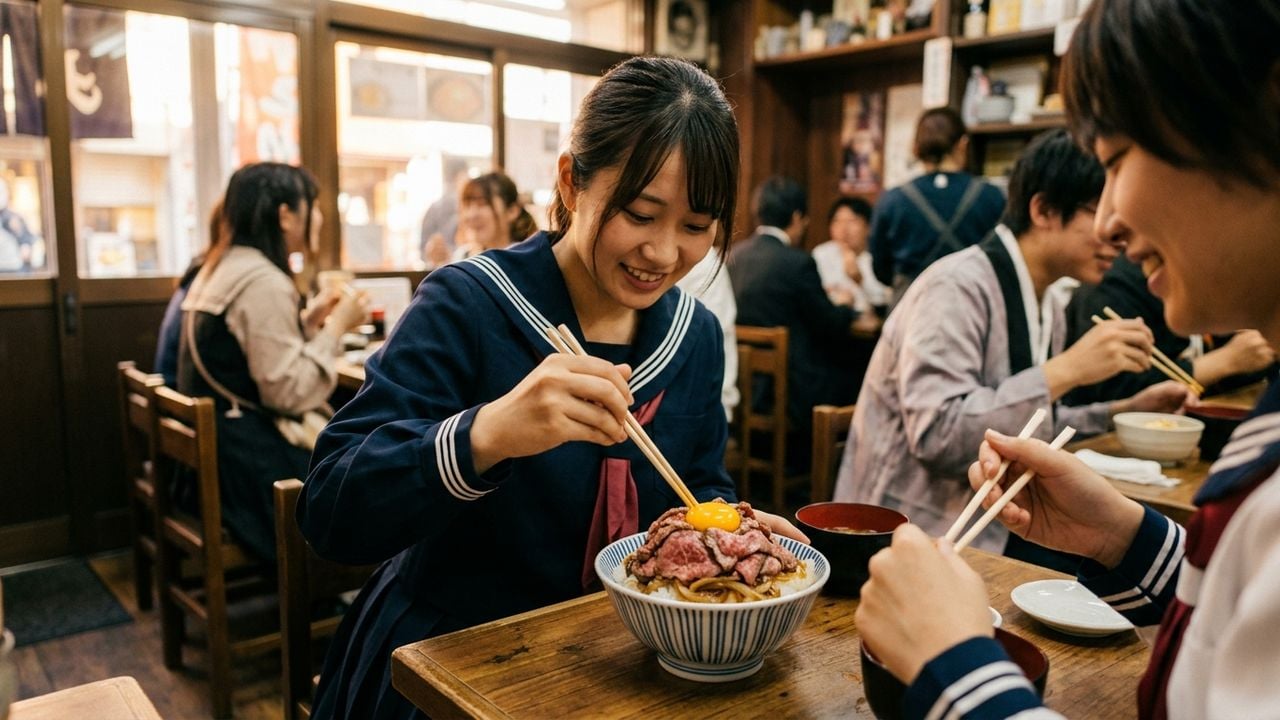
- Egg: Nagoya Cochin egg from Yamada Poultry Farm. The yolk goes on top of the beef; the white goes into the miso soup. This separation is step one of the five-step eating guide we give every guest.
- Magic Sauce: Built on a white soy sauce base from Hekinan City, blended with wine. Used both to briefly treat the beef and to simmer the onions — so the sauce threads through the entire bowl rather than sitting on top.
- Miso Soup: Hatcho miso and soybean miso from Okazaki City, with Atsumi aosa seaweed and black nori. Two types of miso, two types of seaweed — a depth of flavor in something most people treat as an afterthought.
- Pickles: Atsumi Ichō-zuke from the Atsumi Peninsula. A regional specialty that most visitors have never encountered, with a brightness that cuts cleanly through the richness of the wagyu.
- Shiso Leaves: Aikei No.1 variety from Toyohashi City. Fragrant, slightly herbal, and grown specifically for culinary use.
On the table, you'll also find complimentary condiments: pickled ginger from Kimura Farm in Inazawa City, chopped seaweed from Himakajima in Mikawa Bay, chirimen jako (dried whitebait) from Minamichita, our original 8-spice blend, and wasabi. Each one has a source. Each one has a reason for being there.
✓ Key Takeaways
- Horai Wagyu is limited to 10 bowls per day — reservation via Tabelog is recommended, especially during busy periods like the Asian Games.
- The two-stage cooking technique delivers a rare-style texture while meeting Japan's food safety standards completely.
- Every ingredient — rice, egg, sauce, pickles, shiso, miso — comes from a specific farm or producer in Aichi Prefecture.
Knowing that Horai Wagyu is limited to 10 bowls a day changes how you plan — especially if your Nagoya stop is sandwiched between a mountain trip and a game event. A Tabelog reservation locks in your bowl before you even board the train to Nagoya. No Japanese required to book online.
"Perfect lunch during our Nagoya stay before our Shirakawa-go trip the following day."
Guest review via Google
That review stays with me. Shirakawa-go is one of the most spectacular destinations in Central Japan, and yet this guest's memory of their Nagoya day — the day before — centered on a bowl of wagyu in Osu. That's the kind of meal I want to make. Not a side note. The story you tell first.
If you're combining Nagoya with mountain destinations, you might find this guide to rare wagyu between Shirakawa-go and Takayama journeys useful for planning your day.
The Osu Otaku Pilgrimage and Where Lunch Fits
Let's be honest about what makes an Osu day work. You're here for the energy — the cosplay street-snapping, the shrine visits, the arcade dives, the unexpected conversations with people dressed as characters you may or may not recognize. It's a full-day experience, and it asks something of you physically.
Lunch in this context isn't just fuel. It's a natural pause — a moment to sit on a proper sofa seat, take a breath, and eat something that rewards the slowdown. We have 18 seats total, including comfortable sofa-style seating that feels nothing like squeezing into a plastic chair at a fast-food counter. Counter seats for solo visitors, sofa tables for groups. Come in your cosplay, your kimono, your hiking gear from yesterday's mountain trail. We've seen it all, and every guest is equally welcome.
The five-step eating guide we provide in English walks you through exactly how to experience the bowl — from separating the egg to finishing with wasabi. It's designed so that even first-time visitors who've never encountered a dish like this can enjoy it with full confidence. Menus are also available in Simplified Chinese and Korean.
For a deeper look at how other subculture enthusiasts have experienced Itadaki during their Osu explorations, the story of a cosplayer's rare wagyu discovery in Osu is worth a read before your trip.
Finding Us — And Planning Ahead
Itadaki is on the second floor at 4-1-20 Osu, Naka-ku, Nagoya. A four-minute walk from Yabacho Station Exit 4 on the Meijo Subway Line. Also walkable from Sakae, Kamimaezu, and Osu Kannon stations. From Nagoya Station, the journey is roughly 10 minutes by subway.
We're open for lunch only — 11:00 to 15:00 on Saturdays, Sundays, Mondays, and Tuesdays. Public holidays: 9:00 to 15:00. Wednesday through Friday, we're closed. Last order is 30 minutes before closing, and irregular closures do happen. Our monthly business calendar is always posted on Instagram, so it's worth checking before you make the trip.
The Horai Wagyu — those 10 bowls — can sell out during peak hours. If you have a specific date in mind, especially during Asian Games season, a reservation via Tabelog is the most reliable way to secure your bowl.
For our complete menu, access details, and store information, visit our official page at https://itadaki8.com/english/
This is a neighborhood restaurant built on farm relationships, careful craft, and the belief that a gyudon can be as worth telling stories about as any kaiseki course or omakase counter. Come hungry. Come curious. Come ready to discover something that most visitors to Japan never find.
You came to Osu for a discovery worth talking about — not another meal that blurs into the itinerary. Horai Wagyu, 300 heads a year, 10 bowls a day: this is one of those lunches that becomes the story you tell first when you get home. Secure your seat now before the day fills up.