Is Raw Beef Really Safe to Eat in Japanese Restaurants?
 gotowp
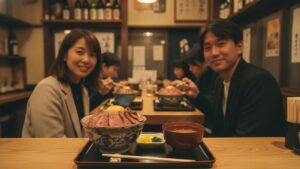
You're browsing a restaurant menu in Nagoya, and something catches your eye: a beef bowl described as "rare wagyu." Your first instinct might be a flicker of hesitation. Back home, ordering undercooked beef would raise red flags — your doctor, your food safety agency, maybe even your own common sense would say no. So is rare-style beef in Japan actually safe? And what exactly is happening in the kitchen before the bowl reaches your table?
The short answer: yes, when it's done right and by trained hands, rare-style wagyu prepared to Japanese food safety standards is safe to eat. But the longer answer — the one worth understanding before you sit down — is far more interesting.
Who This Is For
- ✅ Travelers from Western countries who are cautious about eating undercooked or rare-style beef
- ✅ Anyone who has seen "rare wagyu" on a Japanese menu and wondered what the safety standards actually are
- ✅ First-time visitors to Nagoya researching restaurants before their trip
- ✅ Wagyu enthusiasts who've tried Kobe or Matsusaka beef and are curious about lesser-known regional varieties
- ✅ Anyone who wants to understand the difference between "rare" as a marketing word and "rare" as a precise culinary technique
Why Does "Rare Beef" Sound Alarming to Western Visitors?
The concern is completely understandable, and it comes from a real place. In the United States, the United Kingdom, and across much of Europe, public health guidelines specifically warn against consuming undercooked ground beef due to the risk of E. coli O157:H7 and other pathogens. The FDA and USDA recommend cooking beef to an internal temperature of at least 63°C (145°F) for whole cuts — and higher for ground beef. Similar guidance exists in the UK and Australia.
These guidelines exist because the surface of beef can carry bacteria, and when beef is ground or improperly handled, those bacteria can migrate inward. The risk is real in contexts where cold chains, feed management, and slaughter hygiene are inconsistent.
But Japan's food culture and its food safety infrastructure are built on different foundations — particularly when it comes to beef preparation. Japan's Ministry of Health, Labour and Welfare has established specific legal standards for restaurants that serve beef in any rare-style form. These aren't suggestions. They are legally binding requirements, and restaurants that don't meet them cannot legally serve rare beef at all.
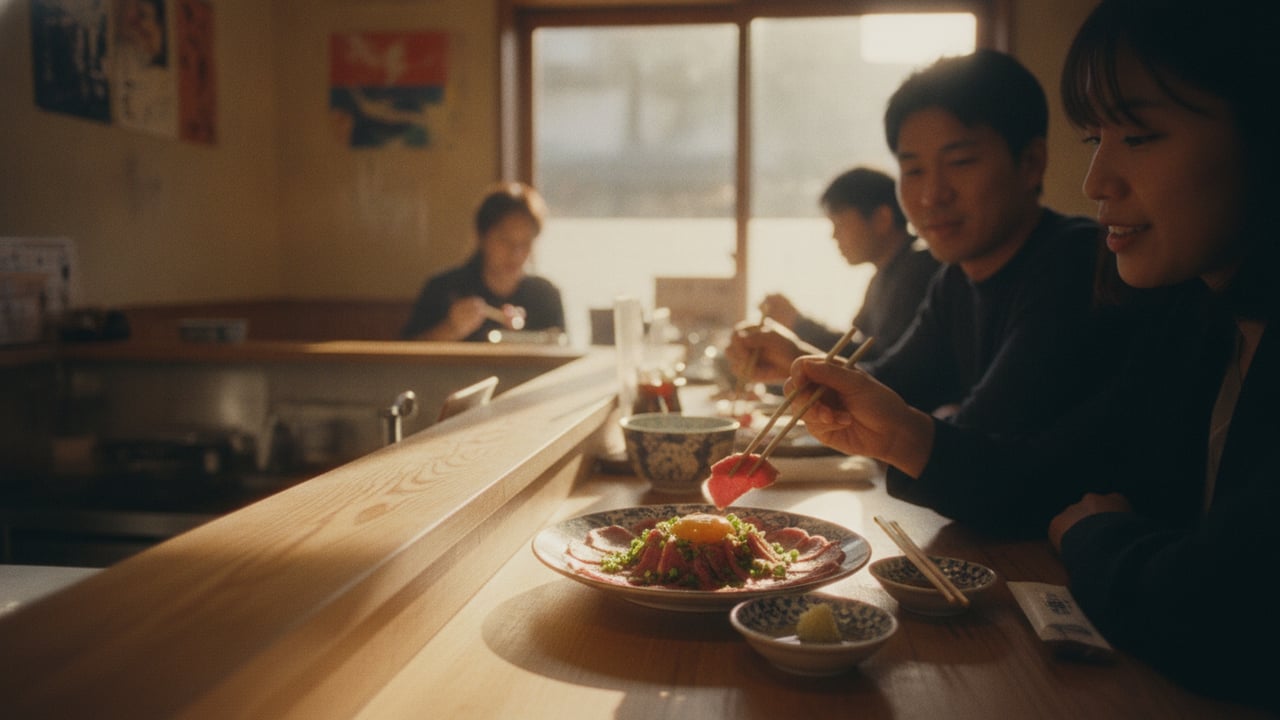
So when you see "rare wagyu" at a licensed restaurant in Japan, it doesn't mean the beef arrived raw and was placed on your bowl uncooked. It means the chef has used a certified technique to achieve a specific internal temperature while preserving a tender, silky texture. The word "rare" describes the result you experience — not the process that got you there.
You're still working through the safety question — and one more thing worth knowing is that Itadaki's business days follow a monthly calendar, not a fixed weekly schedule. The monthly business calendar is posted on the official Instagram, which is the most reliable place to confirm whether the restaurant is open on your travel dates. Takes less than a minute to check.
What Actually Happens in the Kitchen at Itadaki?
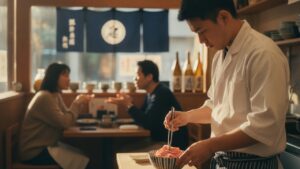
At Itadaki in Osu, Nagoya, the rare wagyu gyudon is prepared using what founder Masayuki Goto calls a two-stage cooking technique — a proprietary method developed specifically to meet Japan's Ministry of Health, Labour and Welfare standards while delivering the distinctive mouthfeel that makes the dish remarkable.
Here's what that means in practice: the beef is heated to over 70°C at the core. That's not surface browning. That's verified internal temperature — the same threshold that Japan's food safety regulations require for this category of preparation. The result is beef that looks and feels tender in the way a rare steak might, but has been cooked through in a way that eliminates the bacterial risks associated with genuinely undercooked beef.
Goto developed this technique over years of refinement, working as a Certified Food Sanitation Supervisor licensed by Japan's Ministry of Health, Labour and Welfare — a qualification that requires formal training in food hygiene, temperature control, and risk management. Itadaki also operates under a full Restaurant Operator License issued by the Aichi Prefecture Public Health Center.
This is not a restaurant guessing at safety. It's a restaurant that built its entire concept around the intersection of food safety and culinary innovation — and had to solve that puzzle before it could open its doors.
The beef itself also matters. Itadaki sources only from Aichi Prefecture farms: the ultra-rare Horai Wagyu from Okumikawa (just 300 heads raised annually across three farms) and Mikawa Beef from the Mikawa region. Both are raised under rigorous quality control by trusted local producers. When the ingredient chain is this short and this closely managed, the starting point for safety is already higher than with commodity beef sourced from multiple, less transparent origins.
If you'd like to go deeper on how Japan's standards compare to those in other countries, this breakdown of rare beef safety standards in Japan covers the regulatory framework in more detail.
✓ Key Takeaways
- Japan's Ministry of Health, Labour and Welfare sets legally binding internal temperature standards for rare-style beef preparation — restaurants that don't comply cannot legally serve it.
- Itadaki's two-stage cooking technique heats the beef to over 70°C at the core, fully meeting these standards while preserving the tender texture that defines the dish.
- All beef is sourced directly from closely managed Aichi Prefecture farms, adding another layer of traceability and quality control to the safety foundation.
Now that you know the two-stage cooking technique meets Japan's 70°C+ internal temperature standard, the next practical step is making sure the Horai Wagyu bowl is actually waiting for you when you arrive — it's limited to 10 bowls per day. Reserving your spot via Tabelog is the only way to guarantee availability, especially during peak autumn travel season. The reservation process is straightforward and takes just a few minutes.
How Is This Different from Eating Raw Meat?
This is the question that tends to linger, even after reading the reassurances above. And it deserves a precise answer.
"Raw meat" means uncooked meat — no heat applied, no pathogen reduction. Steak tartare, for example, is genuinely raw. In many countries, that's served legally in restaurants with appropriate disclosure, and the diner accepts the associated risk.
"Rare-style" beef, in Itadaki's context, means something entirely different. The beef has been cooked — the core temperature has been measured and confirmed — but the cooking technique preserves a texture that reads as tender and silky rather than firm and fibrous. It's closer to the experience of a perfectly cooked medium-rare steak (where the center is warm and pink) than to eating something genuinely uncooked.
The confusion arises because the word "rare" borrows from Western steak terminology, where it does imply a lower internal temperature. At Itadaki, the word describes the sensory outcome — a soft, almost melting texture — not the temperature at which the beef was cooked. That distinction is everything.
For anyone who wants a more detailed comparison between rare-style wagyu at Japanese specialty restaurants and conventional beef preparation, this piece on trusting rare-style beef at Japanese restaurants addresses the question from a practical diner's perspective.
"The staff were welcoming and made us feel at home even without perfect Japanese."
— A guest who visited Itadaki
That kind of welcome extends to answering safety questions, too. If you arrive at Itadaki with concerns you'd like addressed in person, the team is genuinely happy to walk you through the preparation. The printed English menu also explains the cooking method clearly, so you're never left guessing.
Should I Be More Cautious as a Specific Type of Traveler?
For most healthy adults, Itadaki's rare wagyu gyudon — prepared to Japanese food safety standards — presents no elevated risk compared to any other cooked beef dish. The internal temperature standard of 70°C+ is the benchmark that Japan's regulatory system has determined to be sufficient for safe consumption.
That said, there are specific groups for whom any medical or dietary question about food preparation deserves a more careful conversation with a healthcare provider:
- Pregnant travelers: Japanese food safety standards apply to the general population. If you have specific guidance from your obstetrician about beef preparation temperatures, that takes precedence over restaurant standards.
- Travelers with compromised immune systems: The same principle applies — personal medical advice should guide your decision, and Itadaki's kitchen team is happy to answer specific questions about preparation if you flag a concern at the time of your visit.
- Very young children: Parents can order at their discretion. The technique meets Japan's national food safety standards, but individual families know their children best.
For guests in any of these categories, Itadaki does not pressure anyone to order. The team's approach is straightforward: give you accurate information and let you decide. That honesty is part of the restaurant's DNA.
What Can I Expect When I Sit Down?
Beyond the safety question, it helps to know what the actual experience looks like — especially if rare wagyu gyudon is new to you.
The dish arrives as a bowl of premium Aichi-grown rice topped with carefully prepared wagyu, a Nagoya Cochin egg, shiso leaves, and Atsumi Ichō-zuke pickles. The English menu includes a five-step guide for experiencing the dish in the way Goto intended: starting with the wagyu in its purest form, then introducing the egg yolk, then layering in the tabletop condiments — pickled ginger, dried nori seaweed from Mikawa Bay, chirimen jako, and Itadaki's original eight-spice blend — and finishing with wasabi for a clean final note.
The Horai Wagyu version (Shinkoccho, ¥2,700 for 100g beef with 200g rice) is limited to 10 bowls per day. If you're planning your Nagoya itinerary around this dish, a reservation via Tabelog is the most reliable way to secure your bowl — especially during busy autumn travel periods like now.
Itadaki is located on the second floor at 4-1-20 Osu, Naka-ku — a four-minute walk from Yabacho Station Exit 4 on the Meijo Subway Line. The restaurant is open for lunch only (11:00–15:00) on Saturdays, Sundays, Mondays, and Tuesdays. Business hours on public holidays are 9:00–15:00. Because Itadaki follows a monthly calendar with occasional irregular closures, checking the official Instagram before your visit is the most reliable way to confirm the schedule for your travel dates.
For our complete menu, access details, and store information, visit our official page at https://itadaki8.com/english/
The safety question has a clear answer — and now the only thing standing between you and a bowl of Horai Wagyu is a reservation. With just 10 bowls available each day and no dinner service, securing your lunch slot in advance is the one step that turns a plan into a confirmed experience. Tabelog online reservations are open now.