10-Min Walk from The Royal Park Hotel Iconic Nagoya: Hidden Wagyu Gem
 gotowp
The short answer: yes, Horai Wagyu can — and does — sell out before you arrive. But with one simple step taken before you leave your hotel, you can walk into Itadaki knowing your bowl is already waiting for you.
If you're staying at The Royal Park Hotel Iconic Nagoya, you're sitting about 10 minutes from one of the most quietly extraordinary lunch destinations in central Japan — a specialty restaurant in the Osu district called Itadaki, which serves what is widely recognized as Japan's original Rare Wagyu Gyudon. The walk takes you through the edge of Osu Shopping Street, past Hisaya-odori Garden Flarie (just 3 minutes from Yabacho Station — the same station as Itadaki), and into a neighbourhood that mixes 400 years of merchant history with a very present-day energy.
But here's the thing most visitors don't know until it's too late: the Horai Wagyu version of this dish is capped at 10 bowls per day. Not 10 per seating. 10 total, across the entire lunch service. On a Saturday in September — when Nagoya is busy with events, sightseeing, and travellers in from Gifu and Shizuoka — those 10 bowls can disappear before noon.
Who This Is For
- ✅ Guests at The Royal Park Hotel Iconic Nagoya planning a lunch outing in Osu
- ✅ Travellers who want to try Horai Wagyu and cannot afford to arrive and find it sold out
- ✅ First-time users of Tabelog who want a step-by-step guide to reserving in English
- ✅ Visitors unsure whether to reserve in advance or just walk in
- ✅ Wagyu enthusiasts curious about what makes Horai Wagyu genuinely rare — not just by marketing
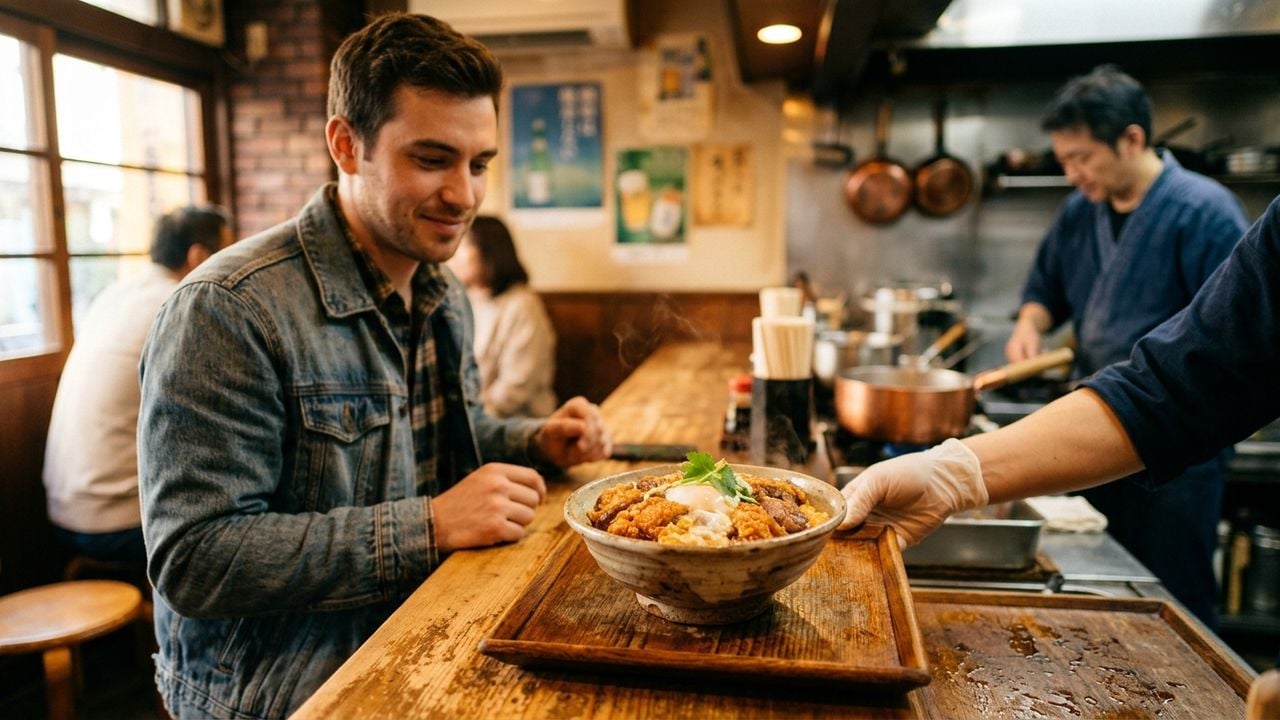
Why Horai Wagyu Sells Out — and Why That's Not Marketing
Let's start with the beef itself, because this is where the logic of the 10-bowl limit begins.
Horai Wagyu is a Japanese black wagyu raised in the Okumikawa region of Aichi Prefecture. Only 300 heads are raised each year, across just 3 farms in Japan. To put that in context: there are approximately 500,000 wagyu cattle in Japan at any given time. Horai Wagyu accounts for 300 of them. These cattle are fed on sake lees from "Horaisen Sora," a premium local sake — a feeding method that produces a flavour profile distinct from the heavy marbling of more commercially known wagyu brands.
Itadaki's founder, Masayuki Goto, sources directly from those farms. This is not a supply chain with flexibility built in. There is no backup warehouse. When the daily allocation arrives, it is exactly what it is — and when 10 bowls are served, that's the day's supply, finished.
This is why a guest who described the experience as "unlike anything I've ever tasted — a life-changing culinary experience" made a point of booking ahead. She had researched Horai Wagyu specifically, understood the 10-bowl daily cap, and reserved via Tabelog before her Nagoya trip began. She arrived at 11:05 on a Sunday, sat down without any wait, and the bowl was already confirmed for her table.
That's the scenario worth planning for.
You now know the 10-bowl cap is real — but Itadaki's operating days and any irregular closures are the next piece of the puzzle. The monthly schedule posted on Instagram shows exactly which days the restaurant is open, so you can match your Nagoya itinerary before committing to a plan. Takes less than a minute to check.
The Realistic Walk-In Situation — Especially from a Central Nagoya Hotel
Here's a case that plays out more often than visitors expect.
A traveller checks out of The Royal Park Hotel Iconic Nagoya on a Saturday morning, planning to spend the morning exploring Osu Kannon Temple and the shopping street before heading to the airport in the afternoon. Lunch at Itadaki is on the list — Horai Wagyu specifically. They arrive at 12:30, having spent longer than expected browsing vintage shops and photographing the temple.
At 12:30 on a Saturday, the Horai Wagyu is almost certainly gone.
This is the pattern. Not a failure of planning, just a mismatch between the traveller's natural rhythm and the reality of a 10-bowl hard cap. The walk from the hotel to Itadaki takes roughly 10 minutes. Yabacho Station (Exit 4, Meijo Subway Line) is the closest access point. But none of that matters if the arrival time falls in the middle of a busy lunch service without a reservation.
For guests staying at The Royal Park Hotel Iconic Nagoya and similar centrally located hotels, this walk-in risk is real. Other guests in the Osu area have faced the same situation and found a way through it — and the answer is consistent: reserve through Tabelog, and request Horai Wagyu explicitly in the notes field.
✓ Key Takeaways
- Horai Wagyu is limited to 10 bowls per day due to genuine supply constraints — 300 heads raised annually across 3 farms in Japan
- Walk-in guests arriving after the lunch rush begins (typically 12:00–12:30 on weekends) risk missing the Horai Wagyu entirely
- A Tabelog reservation with the right note in the comments field guarantees your bowl before you leave the hotel
You've read how walk-in guests arriving after 12:30 on weekends routinely miss the Horai Wagyu — and that the fix is a Tabelog reservation with 鳳来牛希望 in the notes field. That reservation page is where you lock in one of the 10 daily bowls before you leave your hotel. The process is available in English.
How to Reserve — Step by Step, in English
Tabelog is Japan's most widely used restaurant reservation platform. It's less familiar to international visitors than Google Maps or OpenTable, but the reservation process itself is available in English and takes under 5 minutes once you know what to do.
Here's the one step most foreign guests miss: requesting Horai Wagyu in the notes field. A standard reservation secures your table — but it does not automatically guarantee Horai Wagyu. You need to add a specific request.
Copy and paste this phrase into the notes field when completing your reservation:
鳳来牛希望
This means "Horai Wagyu, please" in Japanese. The restaurant staff will see this note and hold one of the 10 daily bowls for your table. You do not need to write anything else in Japanese — the rest of the reservation can be completed in English.
A few additional details worth noting before you book:
- Itadaki is open for lunch only (11:00–15:00), with last order at 14:30
- The restaurant operates on Saturday, Sunday, Monday, and Tuesday only (Wednesday through Friday are closed)
- On public holidays, doors open at 09:00 — earlier than the regular 11:00 start
- Irregular closures do happen — always check the monthly schedule on Instagram before your visit
- September 18, 2026 is a Friday — Itadaki is closed on Fridays. Plan your visit for the weekend or Monday/Tuesday instead
If you're arriving from The Royal Park Hotel Iconic Nagoya on a weekend morning and want to pair the meal with a walk through Osu, an 11:00 arrival is ideal. It maximises your chance of Horai Wagyu availability even without a reservation — though a reservation remains the safest route.
"The rare wagyu was unlike anything I've ever tasted — a life-changing culinary experience."
Guest review
If Horai Wagyu Is Already Gone — What Happens Next
Let's say you arrive without a reservation and the 10 bowls are sold out. This is worth addressing honestly, because it happens.
Itadaki's second signature dish — Mikawa Beef Rare Gyudon — is always available for walk-in guests, prepared using the exact same proprietary two-stage cooking technique. Mikawa Beef is raised in Aichi's Mikawa region on okara feed with lactic acid bacteria gut management. It is a genuinely distinct wagyu, not a consolation substitute, and it is the dish that many guests — including repeat visitors — specifically return for.
The Fumoto size (100g beef, 200g rice) starts at ¥1,800 and comes with the same Aichi Prefecture sourcing philosophy: Aichi no Kaori rice, Hatcho miso soup, Atsumi Ichō-zuke pickles, Toyohashi-grown shiso leaves, and a Nagoya Cochin egg. Every condiment on the table — the pickled ginger from Kimura Farm in Inazawa, the chopped seaweed from Mikawa Bay, the chirimen jako from Minamichita — is from Aichi.
For travellers who are combining Nagoya with a visit to Shirakawa-go, Takayama, or the Hida region, Itadaki makes a natural lunch stop before or after those trips. Guests heading to the Hida region have found Itadaki a rewarding addition to their Nagoya day — and the Mikawa Beef option means the experience is accessible regardless of walk-in timing.
Planning Your Osu Morning Around the Meal
For guests at The Royal Park Hotel Iconic Nagoya, the 10-minute walk to Itadaki pairs naturally with a broader Osu morning. Osu Kannon Temple is 5 minutes from the restaurant. Hisaya-odori Garden Flarie — a free-admission urban garden with themed sections including a European-style Harmony Garden and a Crystal Garden greenhouse — is 3 minutes from Yabacho Station.
A practical morning itinerary might look like this: arrive at Itadaki for the 11:00 opening (with a Tabelog reservation already confirmed), enjoy the full five-step Rare Wagyu Gyudon experience, then walk through the Osu shopping district toward Osu Kannon in the early afternoon. The sofa-style seating at Itadaki — 18 seats across counter spots and comfortable table configurations — is designed for a relaxed, unhurried lunch, not a quick turnover. There's no pressure to rush.
If you're travelling with family, the sofa table configurations work well for groups of 4–5. Past guests have brought young children and used the sofa seating for bottle feeding and settling infants. No dedicated kids menu is available, but the Fumoto size (smallest portion) is often suitable for children.
For context on how Itadaki fits into the broader Osu area dining landscape, this piece on discovering Nagoya's hidden wagyu scene covers the neighbourhood and the restaurant's place within it.
For our complete menu, access details, and store information, visit our official page at https://itadaki8.com/english/
The 10-bowl limit is not going to change — it's a direct reflection of how few Horai Wagyu cattle exist in Japan. If Itadaki is on your Nagoya itinerary, the reservation is the one step that guarantees the experience you came for. Place it now, add 鳳来牛希望 to the notes, and the bowl will be waiting when you walk in.