How to Reserve Horai Beef During Asian Games: Only 10 Bowls Daily
 gotowp
Here's a number that surprised even me when I first heard it: roughly 70% of international travelers to Japan say that language anxiety is the single biggest reason they end up eating at familiar chain restaurants instead of the local specialty spots they actually wanted to try. Seventy percent. That's not a small thing — that's most visitors choosing a safe, familiar experience over a once-in-a-lifetime one, simply because reading a Japanese menu felt too daunting.
I'm Masayuki Goto, the founder of Itadaki in Osu, Nagoya. I've been in this industry for 18 years, and I've traveled internationally enough to know exactly what that anxiety feels like. You're standing outside a restaurant that looks incredible. The smells coming from inside are extraordinary. But the handwritten sign is entirely in Japanese, and you have no idea how to begin. So you walk on.
I didn't want that to happen at Itadaki. Especially not during the Asian Games 2026 — when Nagoya is welcoming visitors from across Asia, and when our Horai Wagyu is limited to just 10 bowls per day. The last thing I want is for someone to miss that experience because they weren't sure they could navigate our menu.
So let me walk you through exactly what happens when you arrive — in plain English.
Who This Is For
- ✅ Visitors attending the Asian Games 2026 who want to try Horai Wagyu but are unsure about language barriers
- ✅ Travelers who have felt anxious about ordering at authentic Japanese restaurants without speaking Japanese
- ✅ Foodies researching how to secure one of the 10 daily Horai Wagyu bowls before they sell out
- ✅ Anyone wondering whether Itadaki's menu and staff are accessible to international guests
- ✅ Asian Games spectators planning their Nagoya food itinerary around the competition schedule
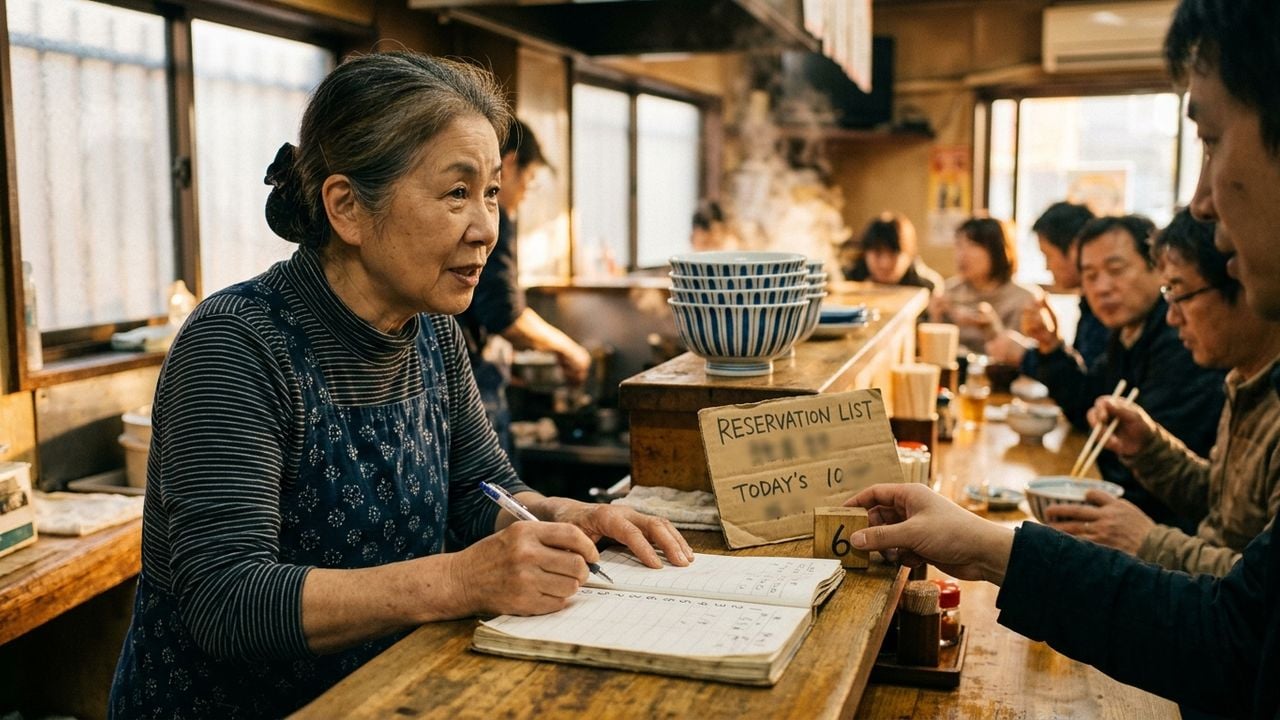
What I Noticed Traveling Abroad — And Why It Changed How I Built Itadaki
One of my great passions outside the restaurant is international travel. Not the tourist circuit kind — I mean the kind where you deliberately sit down in a local spot, point at something on the menu without fully knowing what it is, and trust that the experience will be worth it. I've done this in cities across Asia and beyond, discovering local flavors and understanding how different cultures shape what they eat and how they share it.
Every single time I felt genuinely welcomed — even without a shared language — I remembered it for years. And every time I walked away from a restaurant because I didn't feel confident enough to enter, I still think about what I missed.
That's what shaped how I designed Itadaki's approach to international guests. When we opened in April 2022, one of my non-negotiables was this: a visitor from Seoul, Hong Kong, or Sydney should be able to walk in, understand every dish, order confidently, and enjoy the full experience — without needing a single word of Japanese.
We built the entire guest-facing communication system around that idea.
You now know the menu is in English — but during the Asian Games period, Itadaki runs on a scheduled calendar and irregular closures do apply. Our monthly business schedule is published on Instagram before each month begins, so you can confirm your date before anything else. One quick check takes less than a minute.
The Multilingual Menu: What's Actually in It
Our printed menu is fully available in English, Simplified Chinese, and Korean. Not a partial translation — the complete menu, with every dish, every size, every option, and every price clearly listed in all three languages alongside Japanese.
Each dish entry includes a photo, the ingredients, and the price. You can point directly at what you want. There's no ambiguity, no guesswork, no need to mime anything to our staff (though we genuinely don't mind if you do).
But the part of our menu I'm most proud of is the "How to Enjoy Rare Gyudon" visual guide — a five-step illustrated walkthrough printed directly in the menu. It shows you:
- How to separate the raw Nagoya Cochin egg — the white goes into your miso soup, the yolk sits atop the beef
- How to taste the wagyu first in its purest form, appreciating the texture and flavor of the Horai beef before anything else
- How to mix the golden yolk into the beef for a richer, silkier bite
- How to add the complimentary condiments — pickled ginger, dried nori, chirimen jako, and our original 8-spice blend — to discover new dimensions of flavor
- How to finish with wasabi for a clean, refreshing final note
This matters because Rare Wagyu Gyudon isn't like other dishes. If you don't know the sequence, you might mix everything together immediately and miss the progression entirely. The guide exists so that your first encounter with this dish is the experience it's meant to be — not a guessing game.
One guest put it simply after their visit: "The English menu with clear serving instructions made the experience stress-free." That's exactly what we set out to achieve.
✓ Key Takeaways
- Itadaki's full menu is printed in English, Simplified Chinese, and Korean — including every dish, size, option, and price.
- A five-step visual guide in the menu shows you exactly how to enjoy the Rare Wagyu Gyudon — so the sequence unfolds as intended, even on your first visit.
- Translation apps work perfectly well in the restaurant if you want to ask something beyond the menu.
The five-step guide removes the guesswork from ordering — but with only 10 Horai Wagyu bowls available each day and the Asian Games drawing visitors to Osu, the dish sells out well before the last order at 14:30. Reserving your bowl in advance via Tabelog is the one step that guarantees your experience actually happens. The booking form is available in English.
How to Reserve One of the 10 Daily Horai Wagyu Bowls — Step by Step
The language question and the reservation question are closely linked during the Asian Games period. With competition schedules filling mornings and afternoons, visitors are working to fit lunch into narrow windows — and the last thing you want is to arrive at Itadaki and find that all 10 Horai Wagyu bowls are already gone.
Horai Wagyu is limited to 10 bowls every single day — produced by only 3 farms in all of Japan, with just 300 heads raised annually. That scarcity isn't a marketing device; it's simply what the supply allows. During peak periods like the Asian Games, those 10 bowls often sell out before noon.
Here's how to secure your bowl:
Step 1: Make your reservation via Tabelog Online.
Our reservation system is available in English through Tabelog. You can select your date, preferred time (we're open 11:00–15:00, last order at 14:30), and number of guests. No Japanese required to navigate the booking process.
Step 2: Check our business calendar before you book.
Itadaki operates on a scheduled calendar: we're open Saturdays, Sundays, Mondays, and Tuesdays, plus public holidays. During the Asian Games period in September and October 2026, irregular closures are possible. Our monthly schedule is published on our official Instagram — confirm your date there before reserving.
Step 3: Arrive with confidence — your menu is waiting.
When you arrive, our team will seat you and hand you the multilingual menu. If you have allergen concerns — soy, wheat, egg (removable), or sesame from the complimentary chirimen — the menu and our staff can help you navigate. Translation apps are also easy to use at the table.
Step 4: Order by pointing or showing your phone.
If there's ever a moment where you're unsure, pointing at the menu photo works perfectly. Our staff is used to welcoming international guests and has done so since day one.
"The English menu with clear serving instructions made the experience stress-free."
— A guest at Itadaki
A Personal Note on Why This Matters Right Now
During the Asian Games 2026, Nagoya is hosting athletes, families, and spectators from across Asia and beyond. Many of them will be exploring Osu — the district where we've been operating since 2022 — for the first time. Some will walk past Itadaki on their way to Osu Kannon Temple or through the shopping street, and wonder what the restaurant on the 2nd floor is about.
I want anyone who walks in to feel immediately at ease. That's why I'm a basketball fan who follows the Nagoya Diamond Dolphins — the team that plays at IG Arena, which is hosting basketball and judo at the Asian Games — and it's also why I care about how international guests experience Nagoya. Sports and food share something important: the best moments happen when you're fully present, not anxious about what comes next.
The multilingual menu, the five-step guide, the welcoming team — all of it is designed so that by the time your bowl arrives, the only thing left to do is eat, appreciate, and remember.
If you're mapping out your Nagoya itinerary around the Asian Games schedule, this Osu district food guide for Asian Games visitors covers the neighborhood in more detail — including what's within walking distance of Itadaki and how to build a natural route through the area.
And if you're weighing whether to visit at all, this piece on fitting Itadaki into an Asian Games week walks through the logistics of timing a visit around a packed events schedule.
The Short Version, If You Need It
Itadaki is fully accessible to international visitors. Our printed menu in English, Simplified Chinese, and Korean — paired with a step-by-step visual eating guide — means you can order, understand, and fully enjoy the experience without any Japanese. Our staff is welcoming to guests from around the world, and translation apps work without issue at the table.
The only thing that requires action on your part is the reservation. Horai Wagyu sells out. During the Asian Games, it will sell out faster than usual. Book via Tabelog before you arrive, confirm your date on our Instagram, and the rest takes care of itself.
For our complete menu, access details, and store information, visit our official page at https://itadaki8.com/english/
You've read about the multilingual menu, the five-step guide, and why the 10-bowl daily limit matters even more during Asian Games week. The only remaining question is whether your preferred date still has availability. Secure your reservation now via Tabelog — before the 10 bowls for your day are spoken for.