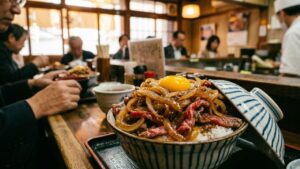
Guest at The Royal Park Hotel Iconic Nagoya? Try This Hidden Osu Gem
 gotowp
Here's a number that might surprise you: 29.7% of visitors from Hong Kong have been to Japan ten or more times. For Taiwan, that figure is 19.4%. These are not first-time tourists hunting for iconic landmarks — they are seasoned Japan travelers actively searching for the kind of discovery that no guidebook has gotten to yet. And if you're staying at The Royal Park Hotel Iconic Nagoya right now, you are already closer to one of those discoveries than you realize.
Who This Is For
- ✅ Guests at The Royal Park Hotel Iconic Nagoya looking for a genuine lunch discovery beyond hotel recommendations
- ✅ Repeat Japan visitors who have already done Tokyo, Kyoto, and Osaka — and want something locals actually talk about
- ✅ Wagyu enthusiasts curious about rare Aichi beef beyond the famous brands
- ✅ Anyone spending a half-day in Osu and wondering where to eat without ending up at a tourist trap
- ✅ Travelers who want a story worth telling when they get home
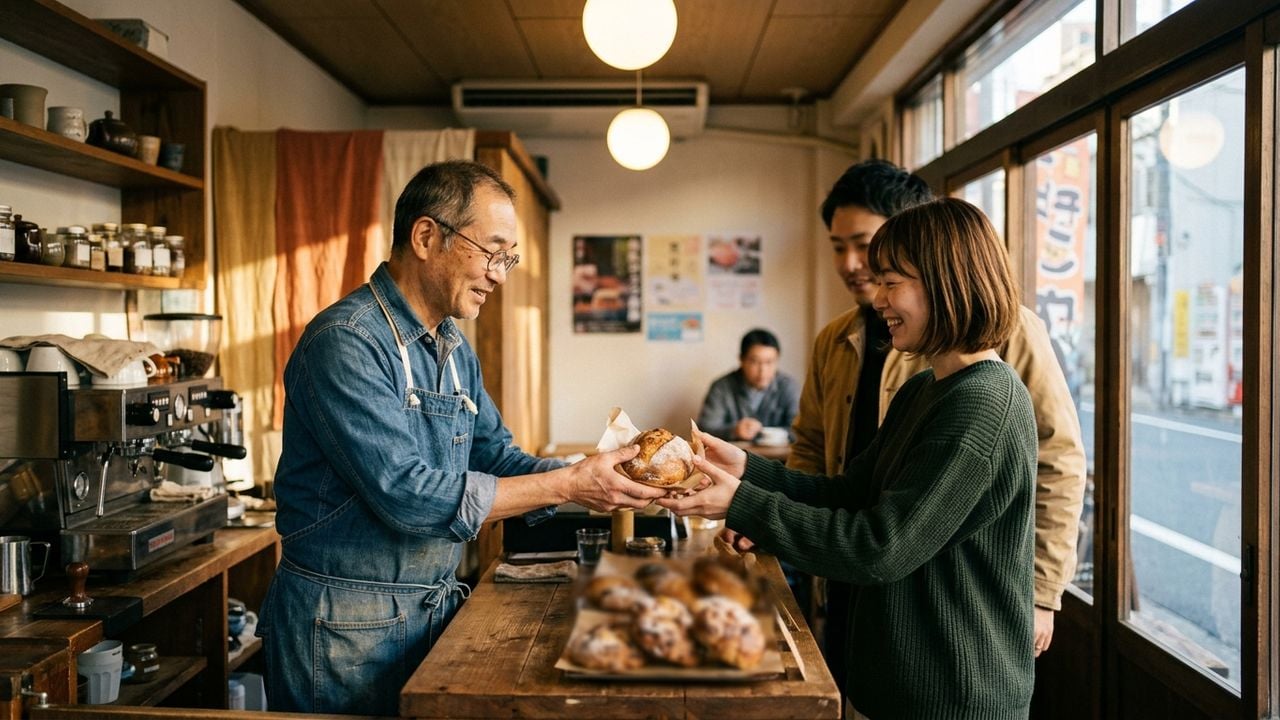
What Exactly Is a "Hidden Gem" in Nagoya — and Does Itadaki Qualify?
A hidden gem, in the truest sense, is a place that rewards the people who found it on their own — not because a major travel platform pushed it to the top of a list, but because they were curious enough to look a little deeper. Itadaki, a specialty restaurant tucked on the second floor of a building in the Osu district, fits that description precisely.
Opened in April 2022 by Masayuki Goto — a Nagoya restaurateur with 18 years in the industry — Itadaki serves what Goto invented: the Rare Wagyu Gyudon. Not a wagyu rice bowl in the loose sense of the phrase, but a completely original culinary concept that reimagines Japan's most humble comfort food as a precise, craft-driven experience. It has been featured on eight major Japanese television programs including NHK, and Goto holds direct sourcing partnerships with Horai Wagyu farms in Aichi Prefecture. Yet despite that recognition within Japan, Itadaki remains largely unknown to international visitors arriving with a standard English guidebook in hand. That gap is exactly what makes it worth seeking out.
One guest put it plainly after making the trip: "I traveled to Nagoya specifically to eat here — it was 100% worth it." That kind of intentionality — building a journey around a single lunch — is the mark of a discovery that genuinely delivers.
You now know Itadaki operates on only four days a week and limits Horai Wagyu to ten bowls daily — which means the gap between "I want to go" and "they're sold out or closed" is narrower than it looks. The monthly business calendar, including any irregular closures during your stay dates, is posted directly on Instagram. A thirty-second check before you plan your day is all it takes.
How Far Is Itadaki from The Royal Park Hotel Iconic Nagoya?
The Royal Park Hotel Iconic Nagoya sits near Hisaya-odori, Nagoya's elegant central boulevard. From there, reaching Itadaki is straightforward. Take the Meijo Subway Line from a nearby station and get off at Yabacho Station — Exit 4 brings you to Itadaki's building in about four minutes on foot. The total journey from the hotel to your seat is comfortably under fifteen minutes.
What makes this particularly convenient is that Yabacho Station is also the closest station to Hisaya-odori Garden Flarie — a free-admission urban garden just three minutes from the station that many guests visit on the same outing. The two make a natural pairing: a quiet morning stroll through the garden's six themed spaces, then lunch at Itadaki before heading back to the hotel or continuing deeper into Osu.
Itadaki is open for lunch only (11:00–15:00) on Saturdays, Sundays, Mondays, and Tuesdays, with an earlier opening at 9:00 on public holidays. There is no dinner service. Since September 18, 2026 falls on a Friday — a non-business day — if you're reading this on arrival day, plan your visit for the weekend. Last order is 30 minutes before closing, and irregular closures do occasionally apply, so checking the monthly schedule on Instagram before you go is a good habit.
What Makes the Osu District Worth the Detour from Your Hotel?
Osu is one of those Nagoya neighborhoods that locals feel quietly proud of — and quietly protective of. It has over 400 years of history as a merchant district, anchored by Osu Kannon Temple, one of Central Japan's most important Buddhist sites. But walk ten minutes in any direction from the temple and you'll pass vintage clothing shops, anime retailers, maid cafés, Taiwanese noodle counters, and hardware stores that have been in the same family for generations — all coexisting without apparent contradiction.
It's the kind of place that rarely appears on page one of an English travel search, which is precisely why Japan's most seasoned repeat visitors gravitate toward it. There's no single "must-do" that everyone does. Instead, you build your own version of the neighborhood. Itadaki fits into that logic perfectly: a specialty restaurant doing one thing, doing it exceptionally well, and not advertising itself to the kind of crowds that would dilute what makes it special. If you'd like more context on navigating Osu as a destination in its own right, this guide to discovering Nagoya's best-kept wagyu secret goes deeper into what makes the district worth a dedicated half-day.
✓ Key Takeaways
- Itadaki is a 10–15 minute journey from The Royal Park Hotel Iconic Nagoya via the Meijo Subway Line — practical for a lunch visit during your stay.
- The Osu district rewards travelers who look beyond the standard English guidebook — Itadaki sits within that discovery-worthy neighborhood.
- Itadaki operates lunch-only, four days a week; planning ahead (including a quick Instagram check) prevents a wasted trip.
You're planning a lunch around a ten-bowl daily limit — which means timing is the one variable you actually control. Securing your Horai Wagyu bowl in advance through Tabelog takes the uncertainty out of the visit entirely, so your focus on the day can be the meal itself rather than whether it's still available. The reservation is made online, no Japanese language required.
What Is the Rare Wagyu Gyudon, and Why Does It Matter to a Serious Food Traveler?
Goto's original question, when he was developing the concept during the early pandemic years, was a simple one: why does every major Japanese rice bowl — katsudon, oyakodon, kaisendon — have a premium interpretation, while gyudon has always been understood as chain-restaurant fast food? The answer, he decided, was that no one had bothered to try yet. Itadaki is the result of that question.
The dish centers on Horai Wagyu — a Japanese black wagyu raised in Okumikawa, Aichi Prefecture, fed on sake lees from Horaisen Sora, a locally celebrated premium sake. Only three farms in Japan produce it, with approximately 300 heads raised annually across all three. To put that in perspective: there are roughly 500,000 wagyu cattle in Japan at any given time. Horai Wagyu accounts for a fraction of a fraction of that total. Itadaki limits the Horai Wagyu gyudon to ten bowls per day.
The preparation is equally considered. Goto developed a proprietary two-stage cooking technique that heats the beef to above 70°C at the core — fully meeting Japan's Ministry of Health, Labour and Welfare food safety standards — while preserving the silky, yielding texture that the word "rare" implies. It's a technical achievement that took deliberate development, and it's the reason guests who have already eaten Kobe beef, Matsusaka beef, and Omi beef describe the experience here as something different rather than simply more of the same.
Every ingredient on the bowl — the rice, the sauce, the egg, the pickles, the miso soup — comes from Aichi Prefecture. The white soy sauce base for the signature magic sauce is from Hekinan City. The egg is a Nagoya Cochin from Yamada Poultry Farm. The pickled radish is the traditional Atsumi Ichō-zuke from the Atsumi Peninsula. This is not a sourcing story bolted onto a menu for marketing purposes; it's the foundation the entire restaurant was built on, growing directly out of Goto's relationships with Aichi farmers who struggled during the pandemic years.
"I've had Kobe beef and Matsusaka beef, but Horai Wagyu at Itadaki was on another level."
Guest review
Do I Need a Reservation, and How Do I Secure One?
Walk-ins are welcome at Itadaki, but for the Horai Wagyu option specifically, a reservation through Tabelog Online is strongly recommended. With only ten bowls available each day and a lunch-only service window, the Horai Wagyu can sell out during peak hours — particularly on weekends and public holidays when foot traffic through Osu is higher. If you are staying at The Royal Park Hotel Iconic Nagoya over a weekend, the practical advice is to reserve before you arrive rather than hoping for availability on the day.
The Mikawa Beef Rare Wagyu Gyudon is always available without reservation, starting from ¥1,800 for the standard size. It uses a lean uchimomo cut from Aichi's Mikawa region and is prepared using the same two-stage technique. For guests who discover Itadaki after arriving in Nagoya and can't secure a Tabelog reservation in time, the Mikawa Beef bowl is a genuine experience in its own right — not a consolation option.
Menus are available in English, Simplified Chinese, and Korean. A photographic five-step guide explains how the dish is meant to be enjoyed — separating the Nagoya Cochin egg, tasting the wagyu first on its own, then layering condiments in stages. For international guests, this removes any uncertainty about the experience and lets you focus on the meal itself. If you're traveling through the broader Nagoya area and want to understand how Itadaki fits into a larger regional food itinerary, this guide for Hida region travelers stopping in Nagoya offers useful context on planning your visit around a Shirakawa-go or Takayama day trip.
Is Itadaki the Kind of Place That Actually Delivers on the Promise of a Hidden Gem?
The honest answer: it depends on what you're looking for. If you want a discovery that comes with a story — about a specific wagyu breed, about a founder who built a restaurant concept from a pandemic-era question, about an Aichi Prefecture ingredient supply chain that most visitors to Japan never hear about — then yes, Itadaki delivers on that promise with precision.
The restaurant has 18 seats across a mix of counter seating and sofa-style table seating. There are no private rooms. It is a small, focused space that does one thing exceptionally well, and the atmosphere reflects that. Solo diners are comfortable at the counter. Families have used the sofa tables, including guests who have brought infants. The seating configuration makes it approachable for a range of visit types, which matters when you're working around a travel schedule from The Royal Park Hotel Iconic Nagoya.
What Itadaki is not: a place that tries to be everything. There is no dinner service, no delivery, no à la carte course menu. The beverage list is short and built entirely around Aichi specialties — Kinshachi Beer, Chita Highball, Nagoya Cider. The focus is singular, and that singularity is the point. For an area as layered as Osu, where the range of options is genuinely overwhelming, a restaurant that has made every decision deliberately is its own form of relief.
For complete menu details, access information, and the full story behind Itadaki's sourcing philosophy, visit the official English page at itadaki8.com/english/.
One guest made the trip to Nagoya specifically for this bowl and called it 100% worth it. You're already in the city, staying a short subway ride away. The Horai Wagyu is limited to ten bowls a day and the lunch window closes at 15:00 — locking in your spot now is the one step that turns this from a plan into a certainty.