Nagoya Sightseeing Meets Local Cuisine: Osu District Food Tour During Asian Games
 gotowp
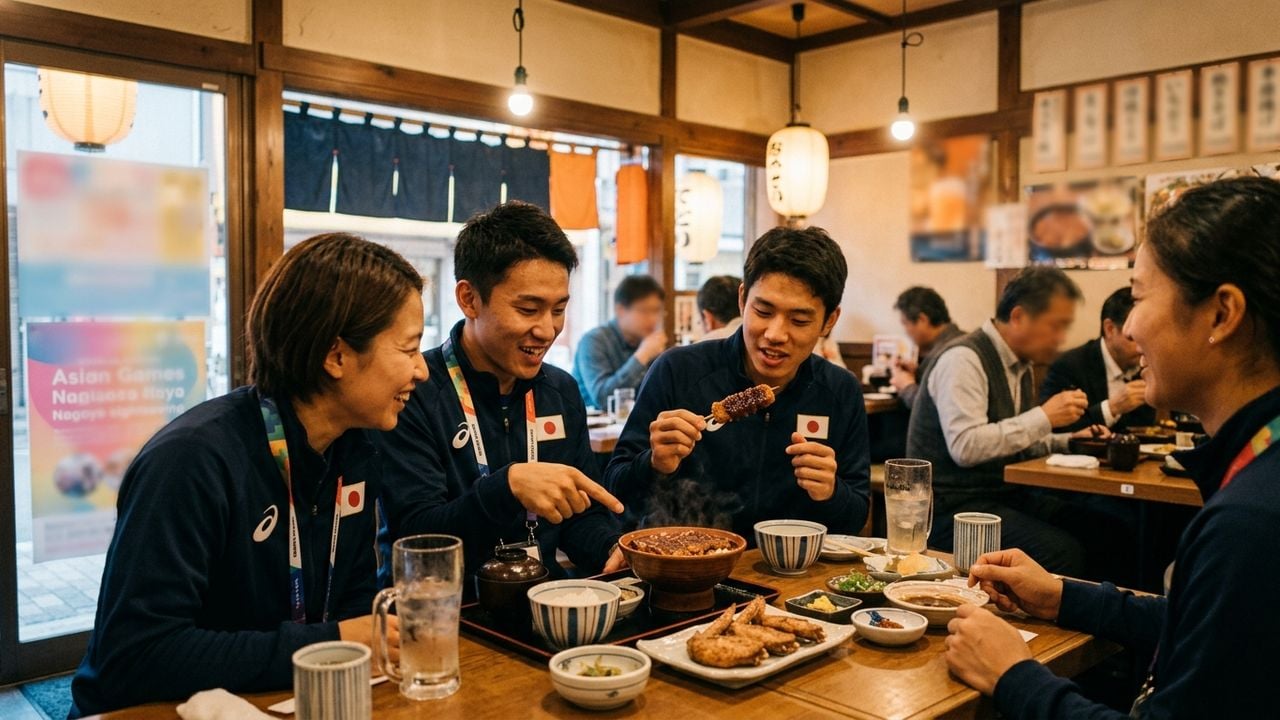
A group of visitors stopped by Itadaki last week — they had been wandering Osu Shopping Street after a morning at the Asian Games venues, and one of them pulled out their phone and showed me a screenshot of our restaurant on Google Maps. "We almost didn't come," one of them admitted. "We weren't sure if the rare beef thing was actually safe to eat." That moment stuck with me. It's a question we hear more often than almost any other, and it deserves a real answer — not a vague reassurance, but the actual facts behind how the dish is made and why it's safe.
So if you're in Nagoya for the Asian Games this September, planning an Osu food tour, and you've seen our name come up on a map or a travel thread — this article is for you. I want to answer the questions that are genuinely holding people back from walking through our door.
Who This Is For
- ✅ Travelers in Nagoya during Asian Games 2026 who want to make the most of sightseeing in the Osu district
- ✅ Visitors curious about rare wagyu but unsure whether it's safe to eat
- ✅ Anyone who has seen Itadaki on Google Maps and wants honest, practical information before visiting
- ✅ Foodies looking for a lunch experience in Osu that goes beyond the usual tourist trail
- ✅ First-time visitors to Nagoya who want to understand what makes the local food scene worth exploring
Is Rare Wagyu Actually Safe to Eat?
This is the question I want to answer first — directly, and without hedging.
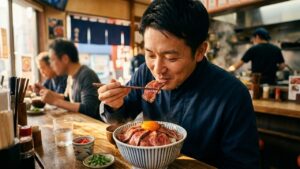
At Itadaki, the answer is yes. Our signature rare wagyu gyudon is prepared using a proprietary two-stage cooking technique that heats the beef to over 70°C at the core. That threshold fully satisfies Japan's food safety standards as set by the Ministry of Health, Labour and Welfare — the same government body that regulates food preparation across all licensed restaurants in Japan.
I hold a Certified Food Sanitation Supervisor qualification, and Itadaki operates under a restaurant license issued by the Aichi Prefecture Public Health Center. The two-stage technique was developed specifically to deliver the sensory experience of rare-textured beef — that soft, yielding quality that makes wagyu so distinctive — while ensuring the kind of thorough heat penetration that eliminates the bacterial risks associated with undercooked beef.
I understand why Western visitors are cautious. Public health guidance in the United States and many European countries advises against consuming beef that hasn't been cooked to a safe internal temperature, and for good reason — that guidance exists in a context where beef preparation standards vary widely. Japan operates differently. The rare wagyu preparation at Itadaki isn't "raw beef" in the way that phrase registers for most Western travelers. It's a precisely controlled cooking method with documented food safety compliance built in from the start.
The beef itself also matters here. We source exclusively from Aichi Prefecture — Horai Wagyu from Okumikawa and Mikawa Beef from the Mikawa region — both raised under rigorous quality control by farms we work with directly. The integrity of the ingredient before it reaches the kitchen is part of the safety equation, not just what happens during cooking.
You now know the food safety answer — but whether Itadaki is actually open on the day you're visiting Osu during Asian Games week is a separate question. Our schedule changes monthly, and irregular closures do happen. Our official Instagram publishes the monthly business calendar so you can confirm before you plan your route.
What Exactly Is "Rare Wagyu Gyudon" — and Why Doesn't It Exist Anywhere Else?
Itadaki invented this category. When I launched the restaurant in Osu in April 2022, there was no such thing as a rare wagyu gyudon specialty restaurant. Katsudon, oyakodon, kaisendon — all of Japan's beloved donburi traditions had premium high-end versions. Gyudon alone remained purely the territory of fast-food chains. I wanted to ask: what would happen if you applied the same reverence for ingredients and technique to the humble beef bowl?
The result is a dish where everything on the tray — the beef, the rice, the egg, the miso soup, the pickles, the garnishes — comes from Aichi Prefecture. The rice is "Aichi no Kaori," a premium Aichi-grown variety. The miso soup uses Hatcho miso from Okazaki. The pickled radish is Atsumi Ichō-zuke from the Atsumi Peninsula. The egg is a Nagoya Cochin egg from Yamada Poultry Farm. Even the sauce — what we call our "magic sauce" — is built on a white soy sauce base from Hekinan City, blended with wine.
The Horai Wagyu that goes into our signature bowl is produced by just three farms in Japan, with only 300 heads raised annually. These cattle are fed on sake lees from Horaisen Sora, a premium local sake from Okumikawa. Out of approximately 500,000 wagyu raised in Japan every year, Horai Wagyu represents a tiny fraction — and we limit our service to 10 bowls of it per day.
We've been featured on eight major Japanese TV programs, including NHK, for this reason: the dish didn't exist before Itadaki, and it can't be replicated by anyone without the direct farm relationships, the sourcing network, and the proprietary cooking method we've built over years.
✓ Key Takeaways
- Itadaki's rare wagyu is cooked to over 70°C at the core using a two-stage technique — fully meeting Japan's Ministry of Health, Labour and Welfare food safety standards.
- Horai Wagyu is one of Japan's rarest beef varieties: only 300 heads produced annually across 3 farms, limited to 10 bowls per day at Itadaki.
- Every ingredient on the tray is sourced from Aichi Prefecture — this is a genuine farm-to-bowl experience, not a marketing phrase.
The Horai Wagyu bowl is limited to 10 servings a day — and Asian Games week is one of the busiest periods we see all year. Knowing the food safety facts and the access route is one thing; arriving to find the Horai allocation already gone is another. A Tabelog reservation takes only a few minutes and locks in your bowl before you leave your hotel.
How Do I Fit Itadaki Into an Osu District Food Tour During Asian Games Week?
Osu is genuinely one of the most interesting neighborhoods in Central Japan for food, and it's especially lively during major events like the Asian Games. The shopping street alone has over 1,200 shops, and the area around Osu Kannon Temple draws a constant mix of locals, cosplay enthusiasts, history lovers, and international visitors. If you're coming to Nagoya for the Games and want to build a half-day around this neighborhood, here's how it tends to work well.
We open at 11:00 on Saturdays, Sundays, Mondays, and Tuesdays (and at 09:00 on public holidays). Last order is 30 minutes before our 15:00 close. A lunch visit fits naturally into a morning that starts with Osu Kannon Temple or a stroll through Hisaya-odori Garden Flarie — a free-admission urban garden just three minutes from Yabacho Station that's featured in major English travel guides and makes for a calm start before the energy of the shopping street. For a deeper look at how to pair Osu sightseeing with a wagyu lunch, this guide to Osu Kannon and local wagyu covers the neighborhood route in more detail.
For access: we're a four-minute walk from Yabacho Station Exit 4 on the Meijo Subway Line. From Nagoya Station, that's roughly ten minutes total — Higashiyama Line to Sakae, transfer to the Meijo Line, one stop to Yabacho. No complicated navigation, no long transfer times.
One practical note: if you want the Horai Wagyu bowl specifically, we strongly recommend reserving in advance through Tabelog. Ten bowls go quickly on busy days, and during Asian Games week the area sees significantly more foot traffic than usual. Here's a closer look at what lunch near Yabacho Station looks like during Asian Games if you want to plan your timing.
"I discovered Itadaki through Google Maps and it became the best meal of our Japan trip."
— A visitor who found us during their Nagoya stay
What Should I Know Before I Arrive — English Menu, Payment, Solo Dining?
A few practical questions come up constantly, so I want to address them directly.
English menu: Yes. We have printed menus in English, Simplified Chinese, and Korean. There's also a photographic five-step guide that walks you through how to eat the dish — separating the egg white into the miso soup, placing the yolk on the beef, tasting the wagyu on its own first before mixing, then layering in condiments, and finishing with wasabi. It's a deliberate sequence that changes how the dish unfolds on the palate, and guests consistently tell us it made the experience significantly more enjoyable.
Payment: We accept credit cards, Apple Pay, and Google Pay. You don't need cash.
Solo dining: Five of our eighteen seats are counter seats, and we see solo diners regularly — business travelers, people who've come to Nagoya specifically for a particular experience, visitors doing a food tour alone. It's a genuinely comfortable environment for solo visits.
Reservations vs. walk-in: Walk-ins are welcome, but for the Horai Wagyu bowl, reservation through Tabelog is the only way to secure your seat. Mikawa Beef gyudon is always available, so walk-in guests who miss the Horai allocation still have a full experience ahead of them. Our business calendar — including any irregular closures — is published monthly on our official Instagram, which is worth checking before you travel.
Families and groups: We have sofa-style table seating that works well for families, including guests who've brought infants. Our full capacity is eighteen seats, and full restaurant buyout is available for groups — reach out via Instagram DM if you're coordinating something for a group during Asian Games week.
For the complete picture — full menu with pricing, access map, and all practical details — visit our official page at https://itadaki8.com/english/. If you're also weighing whether to eat at event venues or head into the city center for lunch, this comparison of venue dining versus Osu during Asian Games might help you decide.
One More Thing Worth Saying
The restaurant is named Itadaki — from "itadakimasu," the expression of gratitude Japanese people speak before a meal. It's not a casual choice of name. Every element of what we serve traces back to a specific farm, a specific place in Aichi, a specific relationship we've built over years. The Horai Wagyu comes from people who raise 300 cattle a year and put genuine care into every stage of that process. The egg comes from Yamada Poultry Farm. The pickles are made from radishes grown on the Atsumi Peninsula.
When someone tells me they found us on Google Maps and that lunch became the best meal of their Japan trip, I'm not surprised — but I'm always grateful. That's exactly the experience we set out to create. A bowl of food with a story worth telling, prepared by people who take the story seriously.
You've read through the food safety detail, understood what makes this dish unlike anything else in Nagoya, and figured out how to fit it into your Asian Games itinerary. The one step left is securing your seat — especially if Horai Wagyu is on your list. Ten bowls a day sell out, and walk-in availability during event week is never guaranteed.