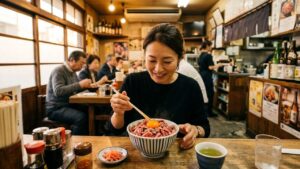
Asian Games Athletes' Guide: Authentic Japanese Wagyu Beef in Central Nagoya
 gotowp
You've just finished a morning session at one of the Asian Games venues, your schedule has a rare two-hour window, and someone on your team mentions a bowl of wagyu beef that's been featured on Japanese national television. It sounds extraordinary — but a quiet worry creeps in: Will I actually be able to figure out what to order? What if I can't read the menu? What if I say something wrong and the whole thing turns awkward?
That hesitation is something we hear about all the time from international visitors. And it's exactly why, when we built Itadaki from the ground up in Osu, Nagoya, we made multilingual accessibility a core part of what we do — not an afterthought.
This article is a practical guide specifically for athletes, coaches, support staff, and families visiting Nagoya for the 2026 Asian Games and Asian Para Games — people with limited time, unfamiliar with Japanese dining customs, and looking for a meal that genuinely reflects where they are. We'll walk you through precisely what to expect when you walk through our door, from the moment you pick up the menu to the final spoonful.
Who This Is For
- ✅ Athletes and support staff at the 2026 Asian Games looking for a meaningful lunch near central Nagoya venues
- ✅ International visitors anxious about ordering at a Japanese specialty restaurant without speaking Japanese
- ✅ Wagyu enthusiasts who have tried Kobe or Matsusaka beef and want to discover what Aichi Prefecture produces
- ✅ Travelers who want to understand exactly what they're eating — every ingredient, every step of the dish
- ✅ Anyone who has ever chosen a chain restaurant abroad just to avoid the uncertainty of a language barrier
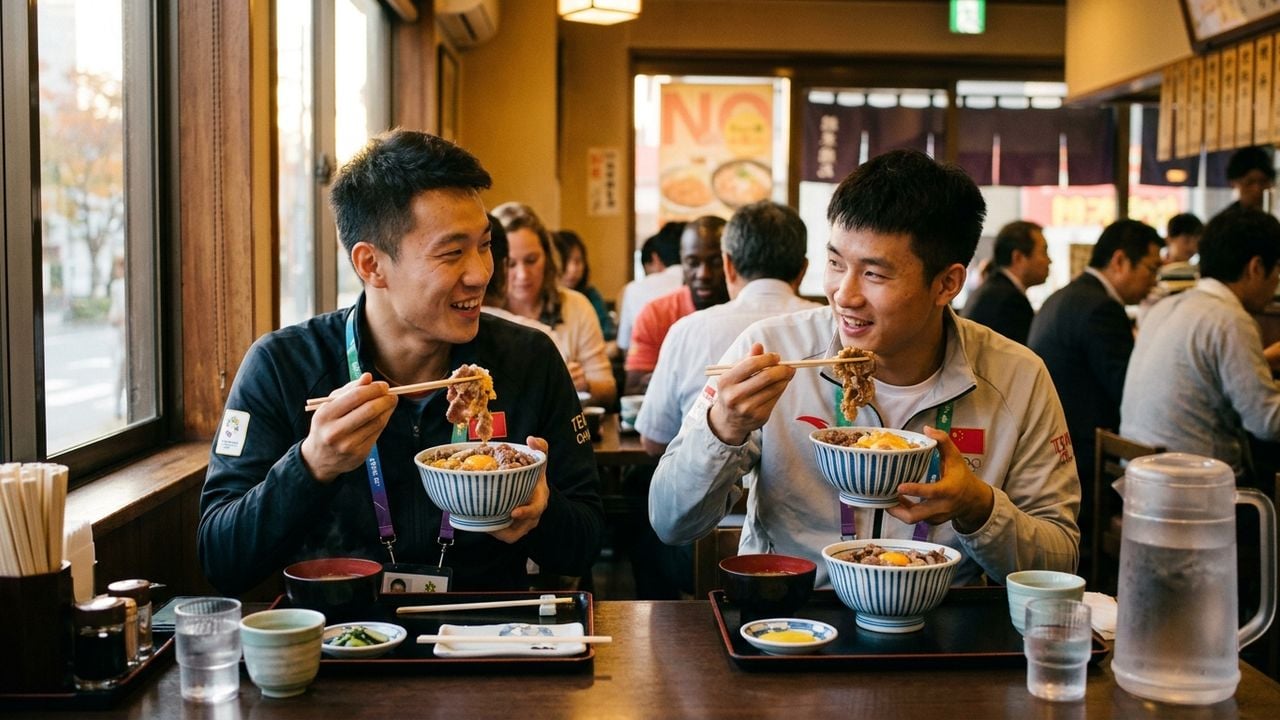
The Anxiety Is Real — And You're Not Alone
Japan has some of the most extraordinary food in the world. It also has menus written entirely in Japanese kanji, dishes that look different from anything you've seen before, and cultural rituals around eating that nobody explained to you before you arrived. For many international visitors, that combination quietly pushes them toward the familiar — an international hotel restaurant, a global chain — and away from the places that locals actually cherish.
At a specialty restaurant like Itadaki, the concern is doubled. Not only is the menu in Japanese, but the dish itself — a rare-style wagyu gyudon — is genuinely unlike anything most visitors have encountered. What does "rare" mean in this context? Is it safe? How do you eat it? What's that egg doing there?
These are fair questions, and they deserve clear, honest answers. That's precisely what our printed multilingual menu is designed to provide.
The monthly schedule is what most international visitors miss when planning around Asian Games event days — and a closed door on a tight itinerary is a real problem. Our Instagram account is where we publish the confirmed business calendar each month, so you can check open days before locking in your plans. No account required to view the schedule.
What You'll Actually Find When You Sit Down
The moment you're seated at Itadaki — whether at one of our comfortable sofa tables or at the counter — a staff member will bring you a fully printed menu available in English, Simplified Chinese, and Korean. This isn't a rough translation or a phone screen someone will hold up for you. It's a carefully prepared document with photographs of every dish, prices listed clearly in yen, and ingredient explanations written in plain, readable English.
The menu tells you exactly what's in each bowl: which region the beef comes from, what cut is used, how it's cooked, and what accompanies it. If you have questions about specific allergens — soy, wheat, egg, sesame — the information is there for you to read at your own pace.
For athletes managing their nutrition closely: the standard Mikawa Beef gyudon (Fumoto, 100g beef / 200g rice) and the Horai Wagyu gyudon (Shinkoccho, 100g beef / 200g rice) are both à la carte. You can adjust rice quantity, add or remove the Nagoya Cochin egg, or swap to our barley rice option from Toyohashi. The menu lists every option with its price and a clear description — no guessing required.
If you want to use a translation app on your phone, our open table layout makes that completely comfortable. There's no pressure, no rushing.
The Five-Step Guide: How to Eat a Rare Wagyu Gyudon
This is the part that surprises most international visitors most — not just that a guide exists, but how genuinely useful it is.
Inside the multilingual menu, there is a visual, step-by-step section titled "How to Enjoy Rare Gyudon." It walks you through the experience in five deliberate stages:
- Separate the egg: Pour the egg white gently into your miso soup, and place the golden yolk directly on top of the wagyu.
- Taste the wagyu first: Before mixing anything, take one piece of beef on its own. This is where you'll understand what Horai Wagyu actually tastes like — the texture our two-stage cooking technique creates, the way the marbling settles on the tongue.
- Mix in the yolk: Break the yolk and combine it with the beef. The richness shifts the flavor entirely.
- Explore the condiments: Your table will have complimentary pickled ginger from Inazawa City, dried nori seaweed from Mikawa Bay, chirimen jako (dried whitebait from Minamichita), and our original 8-spice blend. Each changes the bowl in a different direction. Try them one by one.
- Finish with wasabi: A small amount on the final bites brings the whole experience to a clean, refreshing close.
This sequence transforms what might look like a simple rice bowl into something much more layered — and the guide means you'll experience it as it was designed to be experienced, without needing to ask a single question in Japanese.
✓ Key Takeaways
- Itadaki's fully printed multilingual menu (English / Simplified Chinese / Korean) removes the language barrier before you even need to speak.
- The 5-step visual guide in the menu shows you exactly how to eat the dish — no Japanese required, no guessing involved.
- Every allergen, ingredient, and option is explained in clear English so you can make informed choices at your own pace.
You now know exactly what the multilingual menu covers and how the five-step guide works — the only remaining question is whether Horai Wagyu will still be available when you arrive. With only 10 bowls prepared each day, securing one in advance is the difference between experiencing it and missing it entirely. Tabelog Online reservation takes a few minutes and confirms your bowl before you leave the venue.
The Ingredients Behind the Bowl — Why Aichi Matters to Athletes
For competitors paying close attention to what they put into their bodies, knowing the source of every ingredient matters. At Itadaki, every single item on the menu comes from Aichi Prefecture — not a marketing claim, but a sourcing commitment that founder Masayuki Goto built into the restaurant's DNA from day one.
The beef itself comes in two forms. Mikawa Beef — available daily — is a lean uchimomo cut from cattle raised in Aichi's Mikawa region on okara feed with lactic acid bacteria gut management. Clean, flavorful, consistent. The Horai Wagyu — limited to 10 bowls per day — is one of Japan's rarest wagyu breeds, produced by only three farms in Okumikawa with just 300 heads raised annually. These cattle are fed on the lees of Horaisen Sora, a premium local sake, which contributes to the beef's distinctive balance of marbling and lean flavor.
The rice is Aichi no Kaori, an Aichi-grown variety cooked in high-tech rice cookers that our team calibrates each year to match that season's harvest. The miso soup uses Hatcho miso from Okazaki City — one of Japan's most storied miso traditions. The egg is a Nagoya Cochin egg from Yamada Poultry Farm, a heritage breed that produces a deeply golden, rich yolk.
None of this requires you to speak Japanese to appreciate. But understanding it — because our menu explains it in your language — changes how the bowl tastes. You're not just eating beef on rice. You're eating the agricultural identity of a region.
For international visitors who want deeper context on what makes Aichi's wagyu distinct from Japan's more famous brands, our Asian Games Nagoya 2026 food guide to local Aichi beef you can only try here goes into further detail on why Horai Wagyu sits in a category of its own.
"The lunch was the highlight of my Nagoya trip — I'm telling all my friends about it."
— Guest review via Google Maps
That kind of response doesn't come from the food alone. It comes from an experience that felt welcoming, legible, and genuinely worth the detour — even for someone who didn't speak a word of Japanese when they walked in.
Getting Here During Asian Games Week
Itadaki is located on the 2nd floor at 4-1-20 Osu, Naka-ku, Nagoya — a 4-minute walk from Yabacho Station Exit 4 on the Meijo Subway Line. From Nagoya Station, the journey takes approximately 10 minutes by subway (Higashiyama Line to Sakae, transfer to Meijo Line, one stop to Yabacho).
We are open for lunch only: 11:00–15:00 on Saturdays, Sundays, Mondays, and Tuesdays. On public holidays, we open from 9:00. Last order is 30 minutes before closing. Please note that September 17, 2026 falls on a Thursday, which is one of our regular closure days — if you're planning around Asian Games events, we recommend checking our monthly schedule and arriving on one of our open days.
We are a fully non-smoking restaurant with 18 seats including sofa tables and counter seating. The counter works particularly well for solo diners or pairs who want to eat efficiently during a busy competition schedule. Larger groups of up to 18 can arrange a full restaurant buyout — please contact us via Instagram DM in advance to discuss availability.
If you're planning around multiple venues or combining your visit with Osu Kannon Temple or the Hisaya-odori Garden Flarie (a free-admission urban garden just 3 minutes from Yabacho Station), you'll find our guide to the best lunch spot near Yabacho Station during Asian Games useful for timing your visit.
For those arriving from further afield — including venues outside central Nagoya — the full guide to eating near Aichi-Nagoya 2026 Asian Games venues covers transportation options and timing from multiple access points across the city.
A Note on Reservations and Availability
Walk-ins are welcome at Itadaki. However, if your schedule during Asian Games week is tight — or if you specifically want the Horai Wagyu bowl, which is limited to 10 portions per day — we strongly recommend making a reservation in advance via Tabelog Online. During peak event periods, those 10 bowls can sell out well before closing time.
Our business calendar varies month to month. The most reliable way to confirm we're open on the specific day you plan to visit is to check our official Instagram account, where we publish the monthly schedule.
Whether you're an athlete looking for a meaningful meal between sessions, a family member exploring Osu while your competitor prepares for their event, or a coach who simply wants one lunch in Nagoya that will stay with you long after the closing ceremony — we've made sure the only thing you need to bring is an appetite. The language part, we've already handled.
For our complete menu, access details, and store information, visit our official page at https://itadaki8.com/english/
The menu is in English, the five-step guide is waiting at your table, and the Horai Wagyu is sourced from three farms producing just 300 heads a year — the only variable left is whether you've secured your seat. Make your reservation through Tabelog Online now, and the rest takes care of itself.