If You Support Para Games in Nagoya, Choose Osu for Real Food
 gotowp
You're in Nagoya for the 2026 Asian Para Games — cheering on athletes, soaking up the energy, navigating a city you may be visiting for the very first time. Between events, there's that familiar question: Where should we actually eat? Not just something quick. Something you'll remember. Something you'll want to photograph, post, and tell people about long after the games are over.
That's the question I think about a lot. I'm Masayuki Goto, founder of Itadaki — the restaurant in Osu, Nagoya that created what we call the Original Rare Wagyu Gyudon. Before I opened this place in 2022, I spent years running MAX'S BAR, traveling whenever I could, and eating my way through cities I'd never visited before. I know the feeling of landing somewhere unfamiliar and wanting to find something genuinely worth the trip.
If you're here for the Para Games — whether you're a spectator, a support crew member, or a family traveling with an athlete — this article is for you. Not a generic list of restaurants, but a real conversation about why Osu is the right neighborhood to choose, and what kind of experience makes a story worth telling.
Who This Is For
- ✅ Para Games spectators and supporters looking for a lunch that goes beyond the venue's food stalls
- ✅ Travelers who want a Japan dining story that stands out — not just another sushi post
- ✅ Visitors to Osu who want to combine sightseeing, food, and genuinely shareable content in one afternoon
- ✅ Groups and families who want a relaxed, welcoming atmosphere without needing to speak Japanese
- ✅ Anyone who wants their Nagoya experience to be worth telling about for years
Why Osu Belongs in Your Para Games Itinerary
The Para Games venues are spread across Aichi Prefecture, and many visitors will find themselves with pockets of free time between competitions — an afternoon here, a morning there. Osu is one of the most accessible and rewarding ways to spend that time.
It's a neighborhood with genuine character. Over 400 years of history packed into a shopping street with 1,200 shops. Osu Kannon Temple at one end, cosplay cafés and vintage electronics shops around the corner. It's the kind of place where you look up and realize you've been walking for two hours without noticing.
From Yabacho Station (Meijo Subway Line, Exit 4), Itadaki is a four-minute walk. The same station puts you near Hisaya-odori Garden Flarie, a free-admission urban garden that's become one of Nagoya's most photographed spots — beautifully maintained, regularly featured in major English travel guides, and just three minutes on foot from the station. It's the kind of low-effort, high-reward stop that makes Osu easy to spend a full afternoon in.
For visitors curious about how Osu compares to Sakae for accessible dining options during the Para Games, Osu offers a distinct combination: more intimate in scale, rich in independent restaurants, and built for the kind of slow exploration that produces real memories.
You're planning an Osu lunch during the Para Games, but you're not sure if Itadaki will actually be open on the day you're free. Our schedule shifts month to month, and during major event periods we sometimes adjust our calendar. Our monthly schedule is posted on Instagram so you can confirm before you commit to the plan.
The Dish Behind the Story — and Why It Travels Well on Instagram
Here's something I believe strongly: a photograph is only as interesting as the story that comes with it. Plenty of wagyu looks beautiful on a plate. But when someone asks your followers, "What is that?" — that's when the story matters.
At Itadaki, the story writes itself. Horai Wagyu is produced by just three farms in Aichi Prefecture, with only 300 heads raised annually. Out of approximately 500,000 wagyu cattle in Japan, these 300 are fed on sake lees from Horaisen Sora — a renowned local premium sake brewed in Okumikawa. That feeding method creates a beef with an unusual combination: light marbling alongside a clean, lean finish. It's not just rare in name. It's rare because the numbers are genuinely that small.
We serve it using our proprietary two-stage cooking technique — a method I developed specifically to deliver a rare-style texture while fully meeting Japan's Ministry of Health, Labour and Welfare food safety standards. The beef reaches over 70°C at the core. It's safe. It just doesn't taste like it's been cooked through, and that contrast is the whole point.
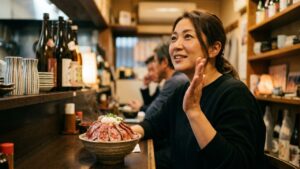
The bowl arrives with a Nagoya Cochin egg sitting on top, vibrant shiso leaves from Toyohashi, traditional Atsumi Ichō-zuke pickles, and rice grown right here in Aichi. Every element has an address. Every ingredient has a farmer behind it. That's not a marketing line — it's genuinely how we source, because when I started Itadaki during the pandemic, I was watching those same farmers struggle with unsold harvests. Sourcing directly wasn't just an idea. It was a commitment.
The Horai Wagyu Gyudon is limited to 10 bowls per day, so if that's what you're coming for, I'd recommend booking through Tabelog in advance rather than arriving and hoping.
✓ Key Takeaways
- Osu is four minutes from Yabacho Station — easy to reach during free time between Para Games events, and rich with things to see and photograph before or after lunch.
- The story behind Horai Wagyu (300 heads annually, sake lees feeding, Aichi-only sourcing) gives your food content a narrative that goes far beyond the photo itself.
The Horai Wagyu bowl — the one limited to 10 per day — is the dish behind the story you'd actually want to share. Walking in and finding it sold out is the one outcome worth avoiding. Reserving through Tabelog takes a few minutes and secures your bowl before you leave your hotel.
What Happens When You Actually Sit Down
I travel a lot. Whenever I'm abroad, one of the first things I feel in a new restaurant is whether the staff genuinely want you there — or whether they're just tolerating a foreign face at the door. That feeling stays with me, and it's shaped how we run Itadaki from the very beginning.
We have printed menus in English, Simplified Chinese, and Korean. We also include a photographic five-step guide that walks you through exactly how to enjoy the dish — when to separate the egg, how to use the condiments, when to reach for the wasabi at the end. You don't need to speak any Japanese to feel completely at ease here.
One of our guests described it in a way that I still think about:
"The staff were welcoming and made us feel at home even without perfect Japanese."
That's exactly what I want every visitor to feel. Especially visitors who've traveled a long way — whether for the Para Games, for wagyu, or simply because Nagoya was the next stop on the map.
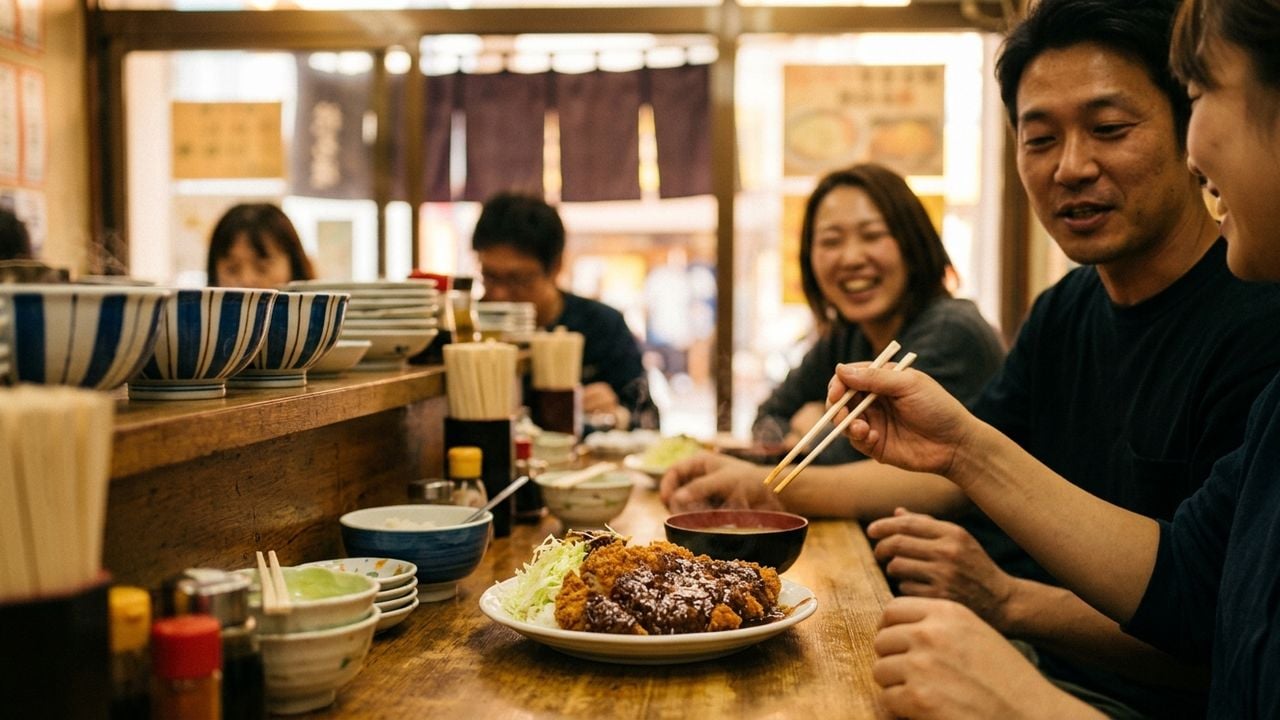
The restaurant has 18 seats, all with sofa-style seating. Five counter seats are perfect for solo visitors or pairs. The larger sofa tables work well for groups and families. It's a small space, which means the experience feels personal — not rushed, not transactional. We're open for lunch only (11:00–15:00, with last order 30 minutes before close), which keeps things focused and unhurried.
For those traveling with family members or support staff who are interested in the Para Games context, other Para Games families have found Osu to be a natural choice for their Nagoya dining — partly because of accessibility within the neighborhood, and partly because of what the area offers before and after the meal.
On Cheering for Athletes and Choosing Where You Eat
I watch a lot of sport. Basketball in particular — I've followed the Nagoya Diamond Dolphins for years, and when IG Arena (Aichi International Arena) opened in July 2025 with Kengo Kuma's design, it felt like Nagoya had finally gotten the stage it deserved. The arena is now a confirmed venue for basketball and judo at the 2026 Asian Games, and I have no doubt it will host Para Games events with the same energy.
Being in a stadium supporting athletes from across Asia — that's a specific kind of feeling. There's a generosity in it, a widening of perspective. And I think the best meals during a trip like this come from places that match that feeling. Not tourist-facing. Not curated for convenience. Real food, made with care, from a kitchen that has a specific point of view.
Everything at Itadaki comes from Aichi Prefecture. The beef, the rice, the sauce, the eggs, the pickles, the seaweed — every single ingredient has a local source. That's not just a philosophy. It's a constraint I imposed on myself because I believe Aichi's food culture deserves to be experienced as a whole, not cherry-picked. When you sit down here, you're tasting a region, not just a dish.
For visitors exploring why Osu has become a destination in its own right for international travelers attending 2026 events, this piece on discovering Osu as a food destination for Asian Games supporters covers some of the broader neighborhood context worth reading before your visit.
Planning Your Osu Lunch During the Para Games
A few practical things worth knowing before you come:
Itadaki is open Tuesday, Saturday, Sunday, and Monday — and on public holidays from 9:00 to 15:00. We're closed Wednesday through Friday. Because our schedule can shift, I'd recommend checking our monthly calendar on Instagram before planning your visit, especially during a major event period like the Para Games when foot traffic in Nagoya will be higher than usual.
The Horai Wagyu option (limited to 10 bowls daily) can sell out during peak hours. If that's part of what you want to experience, a reservation through Tabelog is the safest approach. We also offer Mikawa Beef Rare Wagyu Gyudon, which is always available — a different wagyu from the same Aichi sourcing philosophy, starting from ¥1,800.
Payment is accepted by credit card, and we're located on the 2nd floor at 4-1-20 Osu, Naka-ku — accessible by staircase. Staff will assist with strollers when possible, though we can't guarantee assistance depending on how busy we are at the moment.
Average spend is around ¥3,000 per person, ordering à la carte. No set menus — you choose what you want, at your own pace.
For our complete menu, access details, and store information, visit our official page at https://itadaki8.com/english/
You've found the dish, the neighborhood, and the story. The one thing left is making sure your bowl is waiting when you arrive — especially with only 10 Horai Wagyu bowls available each day during what will be one of Nagoya's busiest seasons. Locking in your reservation now means you arrive knowing exactly what's ahead.