When Cheering for Para Athletes, Discover Aichi's Rare Wagyu
 gotowp
You've just spent the morning in the stands, watching para athletes push the absolute limits of human possibility. The atmosphere was electric. The effort on display was humbling. And now, somewhere between the venue and your next destination, you're standing in Nagoya wondering: where do I find a lunch that actually matches the scale of this moment?
That question has a very specific answer in September 2026 — and it's a ten-minute subway ride from the heart of the city.
Who This Is For
- ✅ Visitors attending the Aichi Nagoya 2026 Asian Para Games looking for a meaningful lunch experience beyond stadium food
- ✅ Travelers who want at least one meal on this Japan trip that becomes a story worth telling — not just a dish worth photographing
- ✅ Wagyu enthusiasts who have tried Kobe or Matsusaka beef and are ready to discover what Aichi has been quietly hiding
- ✅ Anyone who wants to understand Nagoya's food culture at its most honest, local, and rare
- ✅ Solo visitors, families, and small groups who want a relaxed, welcoming lunch spot that genuinely supports international guests
Why This September in Nagoya Calls for Something Extraordinary
The Aichi Nagoya 2026 Asian Para Games bring together athletes, families, supporters, and curious visitors from across Asia and beyond. Nagoya — a city that already carries the legacy of Japan's three greatest warlords — is now writing a new chapter in its history. You are here for something significant. And a trip this meaningful deserves a lunch to match.
Here's the thing about memorable meals: the price is rarely what makes them unforgettable. It's the story. It's the singularity. It's the feeling that what you just ate exists only here, prepared only this way, from ingredients grown by only a handful of farms in the entire country. That is the foundation Masayuki Goto built Itadaki on when he opened in Osu, Nagoya in April 2022 — and it's exactly why visitors keep saying they traveled specifically for this bowl.
If you're curious about how Itadaki fits into Nagoya's broader landscape of rare culinary discoveries, this piece on what to explore in Osu during the Aichi Nagoya 2026 events gives helpful context on the neighborhood itself.
You're mapping out your Para Games days and trying to figure out which lunch slots line up with open days at Itadaki. The monthly business calendar — including any irregular closures during the September event period — is updated on our official Instagram, so you can plan your visit around confirmed open days. Takes thirty seconds to check.
The Ranking: 5 Reasons This Lunch Becomes a Once-in-a-Lifetime Experience
Rather than simply describing the dish, I want to break down — in order of impact — exactly why guests consistently describe Itadaki's Rare Wagyu Gyudon as the highlight of their Japan trip. Consider this a ranked guide for discerning visitors who want to understand why before they commit to a reservation.
#1 — The Ingredient Itself Is Irreplaceable
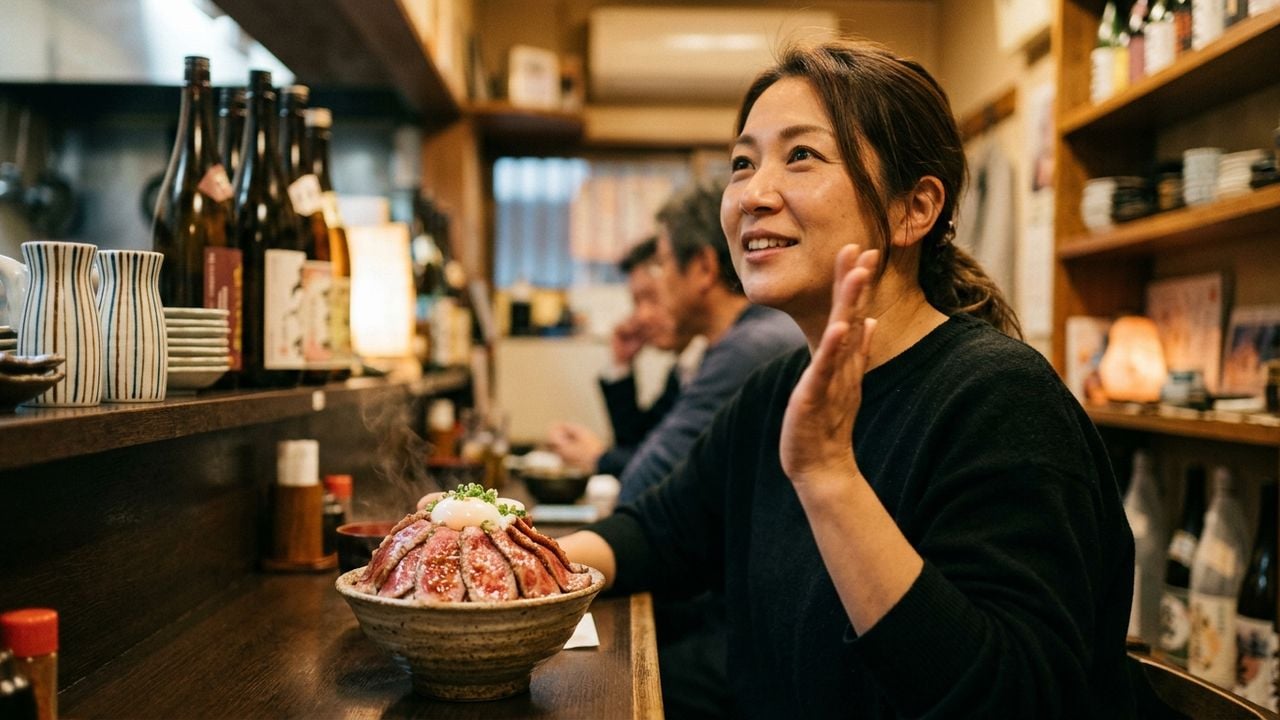
Out of approximately 500,000 wagyu raised across Japan each year, only 300 carry the name Horai Wagyu. Produced by just three farms in Okumikawa, deep in Aichi's mountain interior, these cattle are raised on a diet that includes the lees of Horaisen Sora — a premium local sake. The result is a marbling profile unlike anything you'll find on a standard wagyu menu: lean and refined, with a depth of flavor that surprises even guests who've eaten extensively in Japan. Itadaki is one of the very few restaurants in Nagoya with a direct-supply partnership with those farms. Ten bowls a day. When they're gone, they're gone.
#2 — The Cooking Technique Is Genuinely Patented Knowledge
The words "rare wagyu" can make first-time visitors nervous — and understandably so. Goto developed a proprietary two-stage cooking technique that brings the beef to over 70°C at its core, fully meeting Japan's Ministry of Health, Labour and Welfare food safety standards, while preserving the silky, melting texture that defines the rare experience. No other gyudon restaurant in Japan does this. It represents years of testing, refinement, and Goto's 18 years of food industry expertise distilled into a single signature method.
#3 — Every Single Ingredient Tells an Aichi Story
The rice is Aichi no Kaori, grown in Aichi. The egg is from Nagoya Cochin hens at Yamada Poultry Farm. The miso soup is built on Hatcho miso from Okazaki. The pickles are traditional Atsumi Ichō-zuke from the Atsumi Peninsula. The shiso leaves are Aikei No.1 variety from Toyohashi. The white soy sauce that forms the base of Goto's "magic sauce" is from Hekinan City. Not a single ingredient crosses a prefectural border. For a visitor who wants to taste where they actually are, this is as honest as food gets.
#4 — The Five-Step Experience Transforms Eating Into a Ritual
The bowl arrives with a printed guide — available in English — walking you through five deliberate stages. Separate the Nagoya Cochin egg yolk and white. Taste the wagyu first in its purest form. Add the yolk. Explore the complimentary condiments: pickled ginger, dried seaweed from Mikawa Bay, chirimen jako, Itadaki's original 8-spice blend. Finish with wasabi. Each step reveals a new dimension of the same bowl. Guests who follow the guide often describe reaching the final step and immediately wishing they could start over. That structured progression is what separates this from simply "eating a beef bowl."
#5 — The Origin Story Is Worth Carrying Home
Goto conceived Itadaki during the COVID-19 pandemic, when small Aichi farms — including the producers he'd been sourcing from for years — struggled with unsold harvests. His response wasn't charity. It was architecture: design a restaurant concept built entirely around those farms, create a dish that had never existed before, and build a business that would support those producers long-term. The name "Itadaki" comes from "itadakimasu" — the Japanese expression of gratitude before meals. Every bowl is a small act of that gratitude, made edible.
✓ Key Takeaways
- Horai Wagyu is one of Japan's rarest beef brands — 300 heads per year, from 3 farms in Aichi — and Itadaki is among the only Nagoya restaurants with direct access to it
- The proprietary two-stage cooking technique delivers a rare texture while fully meeting Japan's official food safety standards
- Every ingredient on the table — from rice to egg to pickles to the sauce — comes from Aichi Prefecture, making the experience a genuine portrait of the region
Horai Wagyu is limited to 10 bowls a day, and the Osu area sees noticeably more visitors during major Nagoya events — which means walk-in availability for that specific bowl is genuinely uncertain. Reserving in advance via Tabelog locks in your bowl before you make the trip across the city. The process is straightforward and takes just a few minutes.
"The rare wagyu was unlike anything I've ever tasted — a life-changing culinary experience."
— A guest at Itadaki
For those who've already explored what sets Horai Wagyu apart from Japan's more famous wagyu brands, this deeper look at Aichi's ultra-rare Horai Wagyu and how it compares to Kobe beef is worth reading before you book.
Practical Details for Para Games Visitors
Itadaki is open for lunch only — 11:00 to 15:00 on Saturdays, Sundays, Mondays, and Tuesdays. On public holidays, service begins at 9:00. Last order is 30 minutes before closing. Wednesday through Friday, the restaurant is closed. During the Para Games period, business days follow the regular schedule — please check the monthly calendar on Itadaki's official Instagram to confirm open days before you plan your visit.
The restaurant is on the 2nd floor at 4-1-20 Osu, Naka-ku — a four-minute walk from Yabacho Station Exit 4 on the Meijo Subway Line, and also within comfortable walking distance from Sakae, Kamimaezu, and Osu Kannon stations. From Nagoya Station, the total journey is roughly ten minutes by subway.
Menus are printed in English, Simplified Chinese, and Korean, and the five-step eating guide is available in English. Staff are welcoming to international guests regardless of Japanese ability — that part has always been by design. The 18-seat dining room features sofa-style table seating throughout, making it easy for families and small groups to settle in comfortably. There are also five counter seats, ideal for solo visitors who want a front-row experience.
Because Horai Wagyu is strictly limited to 10 bowls per day and the Para Games season brings higher foot traffic to the Osu area, a reservation via Tabelog is strongly recommended. If the Horai Wagyu sells out before you arrive, Mikawa Beef — another Aichi-raised wagyu prepared with the same rare-style technique — is available without limitation, starting from ¥1,800 for the Fumoto size.
And for families who came to Nagoya to cheer someone dear — there's a lovely companion piece worth reading: how one family discovered Itadaki during the Para Games and made it the centerpiece of their Nagoya itinerary.
A Lunch That Matches the Scale of the Day
Athletes at the Para Games are here to do something that most people never attempt: push past what seems possible, in front of the world, on purpose. That spirit of deliberate, unrepeatable effort — of doing something that can only happen once, in this moment, in this place — is exactly what Goto was reaching for when he created Itadaki.
A once-in-a-lifetime Japan trip deserves at least one meal that earns that description honestly. Not because of the price, not because of the brand name on the menu, but because the ingredient is real, the technique is original, the story is true, and the bowl you're holding exists in exactly ten copies today — and none tomorrow.
For our complete menu, access details, and store information, visit our official page at https://itadaki8.com/english/
You've read what makes this bowl unrepeatable — the 300-head-per-year wagyu, the technique no other gyudon restaurant offers, the Aichi story in every ingredient. The next step is simply securing your seat before the 10 daily Horai Wagyu bowls are claimed. Reserve your spot now via Tabelog — because this is one lunch that shouldn't be left to chance.