How I Made Time for Itadaki During Asian Games Nagoya Week
 gotowp
Here's a number that surprised me when I first looked it up: roughly 70% of food safety concerns cited by Western travelers in Japan relate not to seafood or fermented ingredients — but to beef. Specifically, the idea of eating beef that isn't cooked all the way through. And during Asian Games Nagoya week, when schedules are packed and every meal decision feels higher-stakes than usual, that hesitation can quietly talk you out of experiences you'd otherwise love.
I want to be honest about something: when a guest first tells me they're nervous about our rare-style wagyu, I don't dismiss it. I was trained to think about food safety first — as a Certified Food Sanitation Supervisor, it's not a background detail for me, it's the foundation of everything we do at Itadaki. So let me take you behind the kitchen door and show you exactly what "rare wagyu" actually means here, and how I carved out time for this experience during one of Nagoya's busiest weeks of the year.
Who This Is For
- ✅ Visitors attending the Asian Games Nagoya who are curious about Itadaki but uncertain about the rare-style preparation
- ✅ Travelers from Western countries who've heard warnings about undercooked beef and want clear, honest answers
- ✅ Foodies with a packed event schedule looking for a lunch that's worth the detour — without the risk of a bad afternoon
- ✅ Anyone who's had Kobe or Matsusaka beef and wants to understand what makes Horai Wagyu different
- ✅ Guests planning a solo or small-group lunch between matches or ceremonies during Asian Games week
The Concern No One Talks About Out Loud
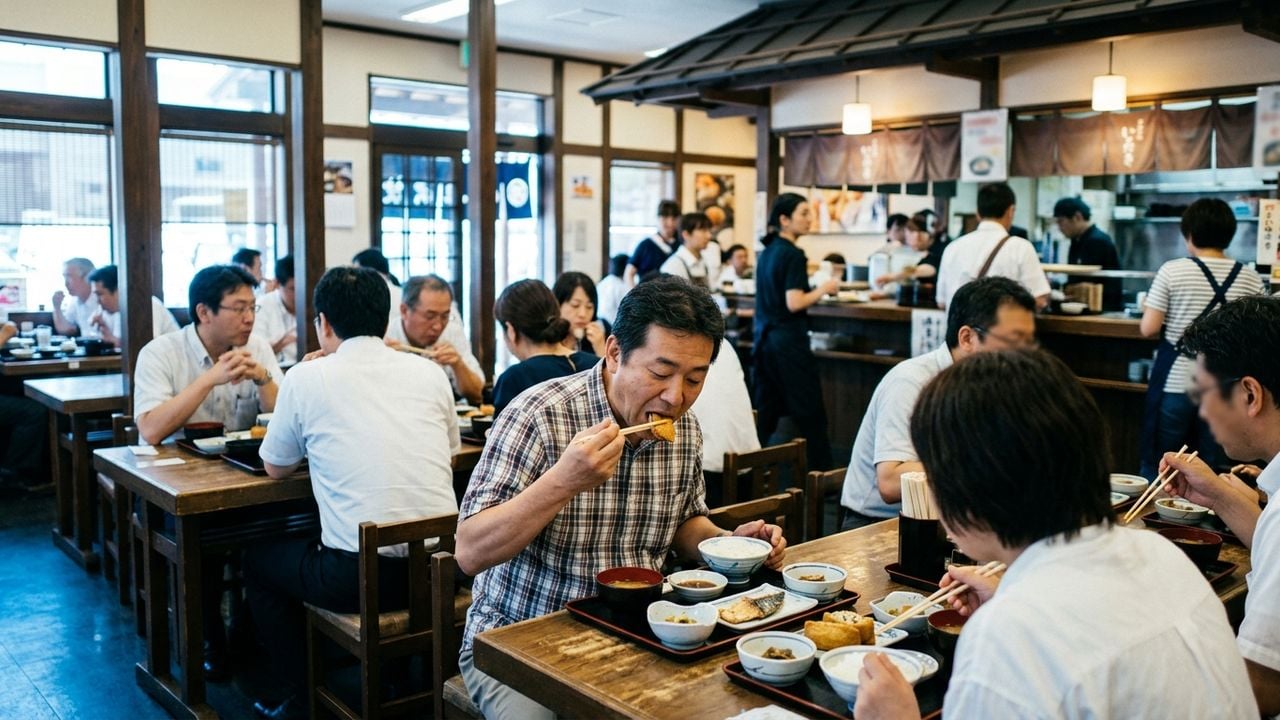
During Asian Games Nagoya week, I've noticed something: many guests arrive already knowing about Itadaki. They found us on Google Maps, saw us mentioned in a travel thread, or noticed our Tabelog listing. But a surprising number of them hesitated for days before making a reservation — not because of the price, not because of the location, but because of three words: rare-style wagyu.
That hesitation is completely understandable. In the United States, the UK, and much of Europe, public health guidelines explicitly warn against consuming undercooked beef. E. coli O157:H7 and other bacterial risks are real concerns, and they've shaped decades of food culture. A traveler who grew up in that environment — and who is about to have a physically demanding day of watching competition events — has every reason to think carefully before ordering something described as "rare."
What those travelers don't yet know is that the word "rare" at Itadaki means something technically very different from what they're imagining.
If the food safety question is still turning over in your mind, you're not alone — it's the one thing most guests don't ask out loud but wish they'd known before arriving. Our monthly business calendar on Instagram also shows exact open days during Games week, so you can plan around your event schedule without guessing. A quick follow takes 10 seconds.
Check Itadaki's open days during Asian Games week on Instagram
What's Actually Happening in Our Kitchen
I developed Itadaki's two-stage cooking technique specifically to solve this problem — not to work around food safety standards, but to meet them completely while still delivering the texture and experience that makes rare wagyu extraordinary.
Here's what the technique does: every piece of beef we serve is heated to above 70°C at its core. That's not an approximation or a target range — it's a hard threshold that fully satisfies Japan's Ministry of Health, Labour and Welfare food safety standards for beef preparation. The "rare" mouthfeel guests experience is the result of precise temperature control across two stages of cooking, not undercooking. The exterior and the core are both treated, in sequence, using equipment calibrated specifically for this process.
This is why the technique took time to develop and refine. Anyone can undercook beef. Getting the texture of rare wagyu — that silky, almost melting resistance — while hitting 70°C internally requires understanding how heat moves through high-marbled Japanese black wagyu at a cellular level. It's why no other gyudon restaurant in Japan offers this, and why I hold this method as Itadaki's core intellectual property.
The beef itself also matters. Horai Wagyu — produced by only three farms in Aichi Prefecture, with just 300 heads raised annually — and Mikawa Beef are both sourced directly from farms I work with personally, under rigorous quality controls. The supply chain is short and transparent. That's not a marketing phrase; it's a practical food safety advantage.
The Five Steps That Change Everything
Food safety is why guests can trust the dish. But understanding how to eat it is what transforms it from a meal into a memory.
Every bowl at Itadaki comes with a printed guide — available in English, Simplified Chinese, and Korean — that walks you through five deliberate steps. The guide exists because the dish is designed to evolve as you eat it, not to be consumed all at once.
It starts with the Nagoya Cochin egg: separate the white into the miso soup, and rest the golden yolk on top of the wagyu. Then eat the beef in its purest form first, before anything else touches it. Then blend the yolk in for richness. Then layer in the complimentary condiments — pickled ginger, dried nori from Mikawa Bay, chirimen jako, Itadaki's original 8-spice blend — one by one, to discover how each changes the flavor. Finally, finish with a touch of wasabi.
One guest put it better than I could:
"The five-step eating guide made the dish even more enjoyable and memorable."
— A guest at Itadaki
That's what the guide is designed to do. Not to complicate the experience, but to slow it down — to make sure every element of what's in front of you actually registers, rather than disappearing in two minutes between match schedules.
✓ Key Takeaways
- Itadaki's two-stage cooking technique heats beef to above 70°C at the core — fully meeting Japan's Ministry of Health, Labour and Welfare food safety standards. "Rare" describes the texture achieved through precise temperature control, not undercooked meat.
- Horai Wagyu and Mikawa Beef are sourced directly from Aichi Prefecture farms under rigorous quality controls, keeping the supply chain short and transparent.
- The five-step eating guide, available in English, is not a gimmick — it's the structure that turns a 15-minute lunch into something you'll still be describing two weeks later.
You now know that the "rare" in our rare wagyu is a precisely engineered texture, not a shortcut — and that Horai Wagyu is limited to 10 bowls a day. During Asian Games Nagoya week, those bowls move faster than usual. Tabelog reservations take about two minutes and guarantee your bowl is waiting when you arrive between sessions.
How I Actually Fit This Into Asian Games Week
The logistics question is real. Asian Games Nagoya week fills schedules fast — morning sessions, transit, afternoon events, dinner with travel companions. Where does a 45-minute lunch fit?
Itadaki is a four-minute walk from Yabacho Station Exit 4 on the Meijo Subway Line. The Meijo Line runs a loop through central Nagoya, connecting directly to Nagoya Station and Sakae. From most event venues in the city, you're looking at under 20 minutes door to door. We're open 11:00–15:00 on Mondays and Tuesdays (and weekends and public holidays), with last order 30 minutes before closing.
The practical rhythm that works: arrive at 11:00 or 11:30, before the midday crowd builds. Reserve in advance via Tabelog — especially for Horai Wagyu, which is limited to 10 bowls per day and does sell out during peak periods. Take 40 minutes for the full five-step experience. Walk out into Osu district, which is one of Nagoya's most photogenic neighborhoods, before heading back to the venue.
If you're thinking through the broader puzzle of where to eat around event schedules, this guide on planning your Nagoya lunch during Asian Games 2026 goes deeper into the logistics. And if you're weighing options between eating near the venue versus coming into the city center, this piece on venue lunch versus city center dining during the Games lays out the trade-offs clearly.
One Thing I Ask Guests to Know Before They Arrive
Transparency matters to me more than managing perceptions. So here's what I want you to know before you make a reservation.
If you have severe beef allergies, or if you are traveling with young children and have questions about the appropriate portion for them, please flag this when you reserve. Our kitchen is small, and while we take every precaution, cross-contamination cannot be fully guaranteed. The smallest size — Fumoto (Mikawa Beef, 100g beef, ¥1,800) — is often suitable for children whose parents choose to order at their own discretion.
For Muslim travelers: our beef is not Halal-certified, and I want to be direct about that rather than leave it ambiguous.
And for guests with mobility considerations — Itadaki is on the second floor, accessible by staircase. I know this matters for some Asian Para Games visitors and spectators, and I'd rather you know before making the trip. There's a dedicated article on accessibility at Itadaki for Para Games visitors that covers this in full detail.
None of these limitations change what we are. They're just the honest picture of a small, craft-focused restaurant in Osu that takes its responsibility to every guest seriously.
Why This Week, in Particular, Feels Right for This Experience
Asian Games Nagoya week is a rare convergence — people from across Asia and beyond, gathered in a city that most of them are visiting for the first time. Nagoya carries a food culture that doesn't always get the attention it deserves internationally. Hatcho miso, Nagoya Cochin, Aichi's white soy sauce, the wagyu raised in Okumikawa's mountain valleys — these ingredients have their own depth and story, and almost none of it has crossed over into the global wagyu conversation yet.
The name Itadaki comes from itadakimasu — the expression Japanese speakers say before every meal, a word that carries gratitude for the farmers, the land, and everyone whose hands touched the food. It felt like the right name for a restaurant built on direct relationships with Aichi's producers. And during a week when Nagoya is hosting the world, that philosophy of gratitude and craft feels more relevant than ever.
You don't need to have heard of Horai Wagyu before you walk in. Most guests haven't. But out of the 500,000 wagyu cattle raised in Japan each year, only 300 are Horai — fed on sake lees from Horaisen Sora, a premium local sake, by three farms in Okumikawa. The bowl in front of you carries that specificity. That's not something you encounter by accident on a busy event week. It's something worth making time for.
For our complete menu, access details, and store information, visit our official page at itadaki8.com/english/.
Asian Games week in Nagoya won't come around again. You've read through the food science, the five-step guide, and the logistics — the only thing left is securing your spot before the 10 daily Horai Wagyu bowls are gone. Reserve directly through Tabelog to confirm your time.