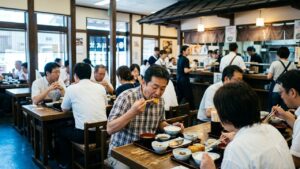
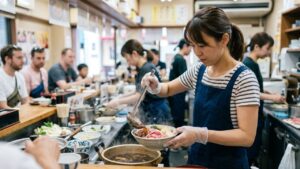
Behind the Scenes: How Itadaki Prepares for Asian Games 2026
 gotowp
You've spent weeks planning your Asian Games 2026 itinerary — matches, transport, hotels — and somewhere between all of that, you've started wondering: Can I actually walk into a local Nagoya restaurant and order without any Japanese? It's a question I hear more and more as September approaches, and honestly, it's a fair one. Chain restaurants are predictable. Local specialty shops are a leap of faith.
I'm Masayuki Goto, founder of Itadaki — The Original Rare Wagyu Gyudon — here in Osu, Nagoya. I opened this place in 2022 because I believe Aichi's ingredients deserve to be experienced by the world, not just by locals who already know where to look. And with the Asian Games coming to our city, that belief has never felt more relevant. So let me pull back the curtain and show you exactly how we've been getting ready.
Who This Is For
- ✅ Asian Games 2026 spectators and visitors who want to eat somewhere genuinely local — not a hotel buffet
- ✅ Travelers anxious about ordering at Japanese restaurants without speaking Japanese
- ✅ Wagyu enthusiasts curious whether Nagoya has something worth seeking out beyond Kobe and Matsusaka
- ✅ Anyone who wants to understand how Itadaki actually supports international guests, step by step
- ✅ Visitors wondering whether the Horai Wagyu will still be available if they arrive later in the day
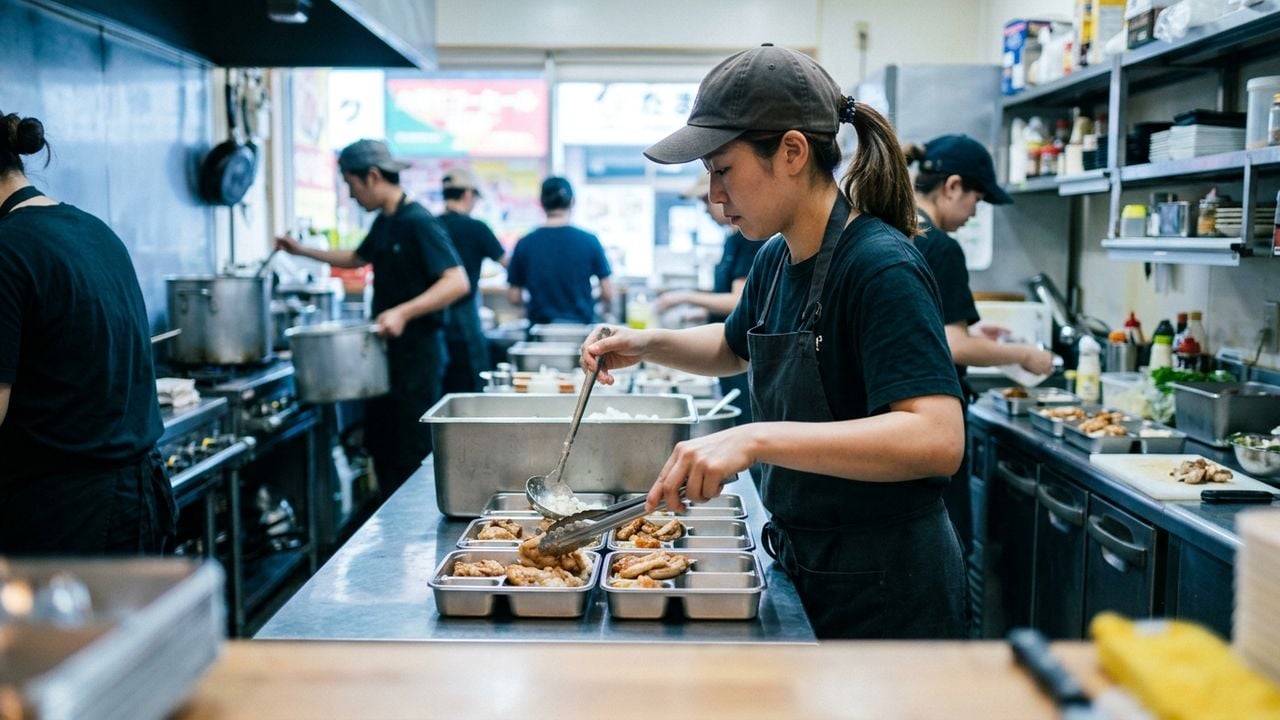
The Fear I Keep Hearing — and Why It Makes Complete Sense
Every time I travel abroad — and exploring unfamiliar food scenes is something I genuinely love — I feel a version of this myself. You stand outside a restaurant, squinting at a sign you can't read, and you make a calculation: Is the experience worth the uncertainty? For too many visitors, the answer is "no," and they end up at the nearest international chain.
That quiet act of self-editing — choosing the safe option over the local one — is something I've always wanted to solve at Itadaki. It's not just about losing a guest. It's about a visitor leaving Nagoya without tasting what this city actually has to offer. During Asian Games week, when thousands of people from across Asia and beyond are moving through this city for the first time, that gap feels even more urgent to close.
The specific anxiety I hear most often goes something like this: "I don't know how to order it. I don't know what the dish even is. What if I do it wrong?" Rare gyudon is not a dish most international visitors have encountered before. It's not sushi, it's not ramen — both of which most travelers now feel comfortable navigating. A rare-style wagyu beef bowl, with a raw Nagoya Cochin egg, served in five deliberate steps? That takes a little explanation. And if the menu doesn't explain it in your language, the dish can feel more intimidating than exciting.
You're planning around Asian Games events and wondering whether the Horai Wagyu will still be available when you arrive — and whether the schedule even lines up with your match days. Our monthly business calendar on Instagram shows the exact open days for August and September so you can plan before you commit. Takes less than a minute to check.
What We Actually Put on the Table — Our Multilingual Menu in Detail
When I was designing Itadaki's systems, I made a decision that I don't think gets enough attention from other restaurants: the menu is not an afterthought. For international guests, the menu is the first conversation you have with them.
Itadaki's printed menu is available in English, Simplified Chinese, and Korean. Every dish has a photo, a clear price, and a description of the ingredients. You don't need to guess what "Shinkoccho" means or wonder whether the egg is included. Everything is laid out.
The section I'm most proud of is what we call the "How to Enjoy Rare Gyudon" guide — a five-step visual walkthrough printed directly on the menu. Here's what it covers:
- Separate the raw Nagoya Cochin egg — the white goes into the miso soup, the yolk rests on top of the beef.
- Taste the wagyu first, on its own. The rare texture and the depth of Horai Wagyu's flavor are worth experiencing without distraction.
- Break the yolk into the beef and mix for a richer, silkier combination.
- Explore the complimentary condiments on the table — pickled ginger from Inazawa, dried seaweed from Mikawa Bay, chirimen jako, and our original 8-spice blend — and layer them in however you like.
- Finish with a touch of wasabi for a clean, refreshing final note.
That five-step structure does something important: it turns a potentially bewildering experience into something that feels guided and intentional. Guests aren't left wondering if they're "doing it right." They're on a journey, and the map is in their hands.
For guests with specific concerns about allergens — soy, wheat, egg — the menu also flags the key ingredients clearly. If you need to omit the Nagoya Cochin egg (possible for a small adjustment), or if sesame is a concern, you'll find the relevant information before you order, not after.
✓ Key Takeaways
- Language anxiety at local Nagoya restaurants is real and understandable — but at Itadaki, the multilingual menu resolves most of it before you even speak to staff.
- The five-step visual guide means you'll know exactly how to enjoy the dish, even if this is your first time eating rare-style wagyu.
You now know the five-step guide is in your hands the moment you sit down — but the Horai Wagyu is limited to 10 bowls a day, and Asian Games week will be busier than a typical September in Nagoya. Reserving in advance via Tabelog locks in your bowl before the lunch service begins. The reservation form is in Japanese, but selecting a date and time requires no Japanese reading ability.
What Happens When You Walk In — The Human Side of Our Welcome
Menus cover a lot, but they don't cover everything. What I've always believed is that genuine warmth communicates across language barriers in a way that no printed guide fully can.
One guest put it in a way that stuck with me:
"The staff were welcoming and made us feel at home even without perfect Japanese."
Guest review
That's what I aim for. Not flawless English. Not a scripted welcome. Just the kind of genuine attentiveness that tells a visitor: you belong here, and we're glad you found us.
In practice, this means a few things. Staff are trained to walk guests through the menu visually — pointing to sections, confirming choices with a nod or a simple gesture — so that even if words fail, the interaction doesn't. Translation apps work perfectly well at Itadaki, and you're welcome to use one. We'd rather you ask the question than leave uncertain.
For Asian Games visitors specifically, I want to be honest about one thing: we are a small restaurant — 18 seats, lunch service only, open Saturday through Tuesday and on public holidays from 09:00 to 15:00. We're not a large venue with a dedicated concierge. What we have is a tight-knit team that has been welcoming international guests since 2022, and that experience shows. If you've read about how Itadaki welcomes international business guests, you'll recognize that the same attentiveness applies to every visitor, whatever the occasion.
Goto's Favorite Local Spots — A Personal Detour for Asian Games Week
This is where I get to indulge my other obsession: recommending the Nagoya I actually love, not just the Nagoya in the travel guides.
If you have time between events during Asian Games week, I'd push you toward two places that most visitors never find on their own.
The first is IG Arena (Aichi International Arena) — which, full disclosure, is where basketball and judo will be held during the Games. Designed by Kengo Kuma and opened in July 2025, it's genuinely one of the most beautiful arenas I've seen anywhere. As someone who loves basketball and watches the Nagoya Diamond Dolphins whenever I can, walking into that building still gives me a small thrill. If you're attending events there, arrive early and take in the architecture.
The second is Shikemichi (四間道), a preserved Edo-period merchant district near Nagoya Station. Three-hundred-year-old warehouses, cobblestone streets, rooftop shrines called "Yanegami-sama" that you won't find anywhere else in Japan — and tucked inside those restored buildings, some of the quietest, most atmospheric cafés in the city. It's the kind of place you stumble on and immediately feel like you've discovered a secret. It's a complete contrast to the energy of Osu, and worth an hour of anyone's afternoon.
Both are within easy reach of central Nagoya. Both are worth the detour. And after either, the walk or subway ride to Itadaki for lunch is straightforward — we're a four-minute walk from Yabacho Station Exit 4 on the Meijo Subway Line, and well within reach of wherever the Games take you in the city.
One Practical Note Before You Come: The Horai Wagyu Situation
Everything from Aichi — that's our commitment. And one of those Aichi ingredients, Horai Wagyu from Okumikawa, is strictly limited to 10 bowls per day. Only 300 heads of Horai Wagyu are raised annually across just 3 farms in Japan, fed on Horaisen Sora sake lees, and we receive a carefully controlled allocation. There is no way to simply order more.
During Asian Games week, when Nagoya will be busier than it has been in years, those 10 bowls will go quickly. If Horai Wagyu is the reason you're making the trip — and for some guests, it genuinely is — a reservation via Tabelog is the honest advice I can give you. Walk-ins are always welcome, but availability for Horai Wagyu cannot be guaranteed later in the lunch service.
For planning purposes: if you're mapping out the week, you might find our complete guide to Nagoya lunch during Asian Games 2026 useful for thinking through timing and logistics. And if you've ever wondered how guests with packed event schedules actually fit Itadaki into their day, here's a behind-the-scenes look at how that works in practice.
The name Itadaki comes from "itadakimasu" — the Japanese expression of gratitude before a meal. It's a reminder that food is a gift from farmers, land, and craft. Whatever language you speak, that idea translates perfectly. We'll see you in September.
For our complete menu, access details, and store information, visit our official page at https://itadaki8.com/english/
The multilingual menu, the five-step guide, the welcoming staff — everything described here is ready for you. The one thing we can't hold without a reservation is your Horai Wagyu bowl. Secure it now through Tabelog so the language question is the last thing on your mind when you arrive.