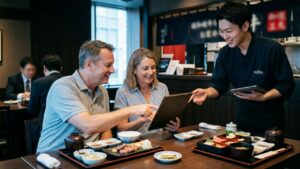
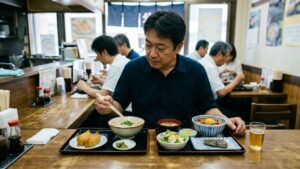
10 Things Business Travelers Say About Nagoya's Best Lunch
 gotowp
Late August in Nagoya means one thing above almost anything else: heat. The kind of heat that rises off the pavement around Sakae and Osu and makes you grateful for air conditioning and a cold Kinshachi beer. Business travelers passing through for MICE events, factory tours, or conference sessions at Nagoya Congress Center know this feeling well — and so do I.
I'm Masayuki Goto, founder of Itadaki in Osu. Before I ran a restaurant, I spent years running MAX'S BAR and traveling — eating my way through cities I'd never visited, asking questions about where local producers got their ingredients, and quietly building a map of the kind of meals that stick with you long after you've landed back home. That habit of observation never left me. And one thing I've noticed — both from conversations with guests at Itadaki and from my own time on the road — is that business travelers in Nagoya approach lunch very differently than tourists do.
Tourists have a list. Business travelers have a gap — usually 60 to 90 minutes between a morning meeting and an afternoon session — and they want to fill it with something that feels like a reward, not a transaction. What they say afterward about that lunch is what I find genuinely interesting. So here are 10 things I hear most often from business travelers who've made Nagoya their lunch destination.
Who This Is For
- ✅ Business travelers visiting Nagoya for conferences, MICE events, or Toyota-related industry visits
- ✅ Professionals who want a lunch experience worth photographing and talking about — not just fueling up
- ✅ Visitors staying in Nagoya who want to discover something genuinely different from well-known wagyu brands
- ✅ Travelers whose Japan trip content needs to stand out from the usual Tokyo sushi or Osaka street food posts
- ✅ Solo diners who value a relaxed, unhurried lunch environment with clear English support
1–3: The Meal Itself
1. "I expected something forgettable. It wasn't."
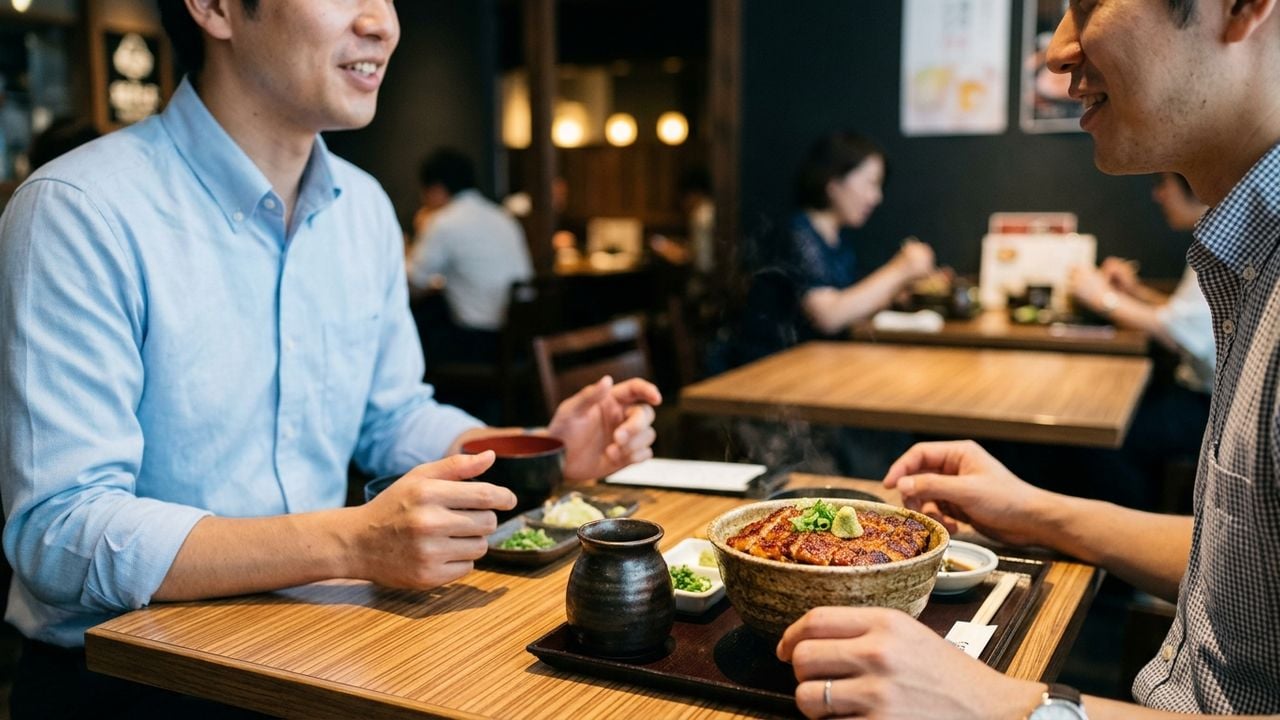
This comes up again and again. Business travelers arrive with low expectations for lunch — they're in Nagoya for work, not a culinary expedition. Then something unexpected happens at the table. At Itadaki, that moment usually arrives with the bowl itself: marbled wagyu arranged over steamed Aichi-grown rice, a raw Nagoya Cochin egg yolk resting on top, the colors vivid and deliberately composed.
2. "The presentation made me stop and take a photo before I even touched it."
This is the visual impact that turns a lunch into content. Our two-stage cooking technique achieves a rare-style texture that is genuinely unusual — soft, silky, nothing like a conventional beef bowl — and the plating reflects that care. Guests who came in expecting to eat quickly find themselves lingering with their phone out instead.
3. "I had no idea Nagoya had wagyu this rare."
Most business travelers who know Japanese wagyu know Kobe and Matsusaka. Few have heard of Horai Wagyu. Only 300 heads are raised annually across just 3 farms in Aichi — fed on sake lees from Horaisen Sora, a premium local brewery. That number puts it in a different category entirely: out of roughly 500,000 wagyu cattle in Japan, only 300 are Horai. When I explain this at the table, the reaction is almost always the same: genuine surprise, then genuine curiosity.
Horai Wagyu is limited to 10 bowls a day — and business lunches have a habit of being planned the morning of. Our monthly business calendar tells you exactly which days we're open before you block out that lunch slot. Takes ten seconds to check on Instagram.
4–6: The Story They Take Home
4. "The lunch was the highlight of my Nagoya trip — I'm telling all my friends about it."
"The lunch was the highlight of my Nagoya trip — I'm telling all my friends about it."
Guest review, Itadaki
This kind of feedback reflects something I think about a lot as someone who travels for food myself. A meal that becomes the headline of your trip isn't about price or prestige — it's about the story it gives you. When your followers or colleagues ask "What did you eat in Nagoya?", a bowl with a 300-head-a-year wagyu story behind it is infinitely more interesting to talk about than a standard set lunch near the station.
5. "I posted it on Instagram and my followers kept asking what it was."
The concept of "Rare Wagyu Gyudon" is new enough that most people — even well-traveled food enthusiasts — haven't seen it before. When the question "What is that?" appears in your comments, you have a ready answer: a gyudon reimagined from the ground up, made with beef so scarce it's limited to 10 bowls a day, prepared using a proprietary technique that delivers a rare texture while meeting Japan's full food safety standards. That's a caption that writes itself.
6. "It made me feel like I'd discovered something that wasn't on any map."
Osu isn't Shibuya. It isn't the Shinkansen corridor between Tokyo and Osaka. Business travelers who venture four minutes from Yabacho Station and find Itadaki on the second floor of a quiet building in this historic shopping district often describe that discovery feeling — the sense that they found something real. That feeling is exactly what I wanted when I opened here in 2022. If you're curious how solo business travelers in Nagoya typically plan a lunch like this, that context might help you figure out timing and logistics.
✓ Key Takeaways
- The visual presentation of the dish — rare-style wagyu, egg yolk, ceramic bowl — is consistently what prompts business travelers to stop and photograph before eating.
- The story behind Horai Wagyu (300 heads/year, fed on Horaisen Sora sake lees) is what transforms the photo into shareable content with a narrative.
- Itadaki's location in Osu — four minutes from Yabacho Station — gives it the feel of a discovery, not a tourist stop.
You now know why 300-heads-a-year wagyu becomes a story worth telling — but knowing it sells out daily means the gap between reading and eating can close faster than expected. Securing a seat through Tabelog takes the guesswork out of whether a bowl will be waiting when you arrive.
7–9: What Makes It Work for a Business Schedule
7. "The English menu made everything effortless."
Itadaki offers printed menus in English, Simplified Chinese, and Korean, along with a photographic five-step guide to enjoying the dish. For a solo business traveler with no Japanese language skills and 70 minutes to spare, removing the guesswork entirely changes the experience. You can focus on the food and the moment instead of trying to decode a laminated card.
8. "I was in and out in under an hour, but it didn't feel rushed."
This is something I deliberately designed into the format. The gyudon — served with miso soup, pickles, shiso leaves, and complimentary tabletop condiments — is a complete meal in itself. The five-step eating guide gives structure to the experience without making it feel choreographed. Business travelers who need to be back at a conference by 1:30pm consistently tell me they had plenty of time, and still felt like they'd done something meaningful with their lunch hour. For a deeper look at why Itadaki works particularly well as a business lunch in Nagoya, that piece covers the full picture.
9. "The counter seats were perfect for solo dining."
Five counter seats face the kitchen. No awkward table for one in the corner, no sense of occupying space meant for a group. Business travelers who eat alone — which is a large portion of our weekday visitors — often mention how comfortable the seating configuration made them feel. The sofa-style table seats are equally relaxed for those who want more room to spread out with a laptop bag.
10: The One That Stays With You
10. "I came for a quick lunch and left thinking about coming back."
This is the one that means the most to me. Itadaki exists because I wanted to build something that would make people think differently about Aichi's ingredients — about what a gyudon could be when you treated every element with the same care you'd give a course meal. Every ingredient on the table comes from Aichi Prefecture: the rice, the miso, the pickles, the shiso, the egg. Even the complimentary condiments — pickled ginger from Inazawa, dried seaweed from Mikawa Bay, chirimen jako from Minamichita — have a provenance worth noting.
When a business traveler leaves with that feeling — of wanting to return, of something not quite finished — I know the meal did what I hoped it would. It wasn't just fuel. It was a story. And in today's travel culture, the story is what you take with you long after the bowl is empty.
If you're in Nagoya on business and have a lunch window to fill, Itadaki is open Tuesday, Monday, Saturday, and Sunday from 11:00 to 15:00, and from 09:00 on public holidays. We're four minutes on foot from Yabacho Station Exit 4 (Meijo Subway Line), and about ten minutes from Nagoya Station by subway. Horai Wagyu is limited to 10 bowls per day, so if your schedule allows, a reservation through Tabelog is worth doing in advance. Our monthly business calendar is updated on Instagram, so it's worth a quick check before your visit.
For our complete menu, access details, and store information, visit our official page at https://itadaki8.com/english/
The 10-bowl daily limit on Horai Wagyu is real, and business schedules don't always leave room for a second visit. If this lunch is going to become the story you tell your colleagues and followers, the next step is locking in a seat before the bowls run out.