Quick Lunch vs Full Experience Near Toyota Museum Nagoya
 gotowp
A guest left me a message last month that stayed with me for days. She had just finished a tour of the Toyota Commemorative Museum of Industry and Technology and was trying to decide between grabbing something fast near the museum or making the short subway journey across the city for a proper sit-down lunch. She wrote: "I only had 90 minutes. Was it worth moving?"
It's a question I hear more often than you'd think — not just from first-time visitors, but increasingly from repeat travelers who already know Nagoya's bigger attractions and are now looking for something the guidebooks haven't caught up with yet. And honestly, there's no single right answer. It depends entirely on what kind of traveler you are.
So let me lay it out honestly, the way I'd explain it to a friend planning their afternoon.
Who This Is For
- ✅ Repeat Japan visitors who want a discovery story to bring home — not just another meal
- ✅ Travelers near Toyota Museum with 60–90+ minutes to spare for lunch
- ✅ Anyone tired of popular guidebook spots and looking for where locals genuinely eat in Nagoya
- ✅ Foodies curious about Nagoya's specialty ingredients beyond the well-known Nagoya-meshi standards
- ✅ Solo travelers, couples, or small groups open to a short subway ride for something truly memorable
The Case for Eating Right Near Toyota Museum
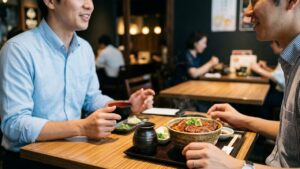
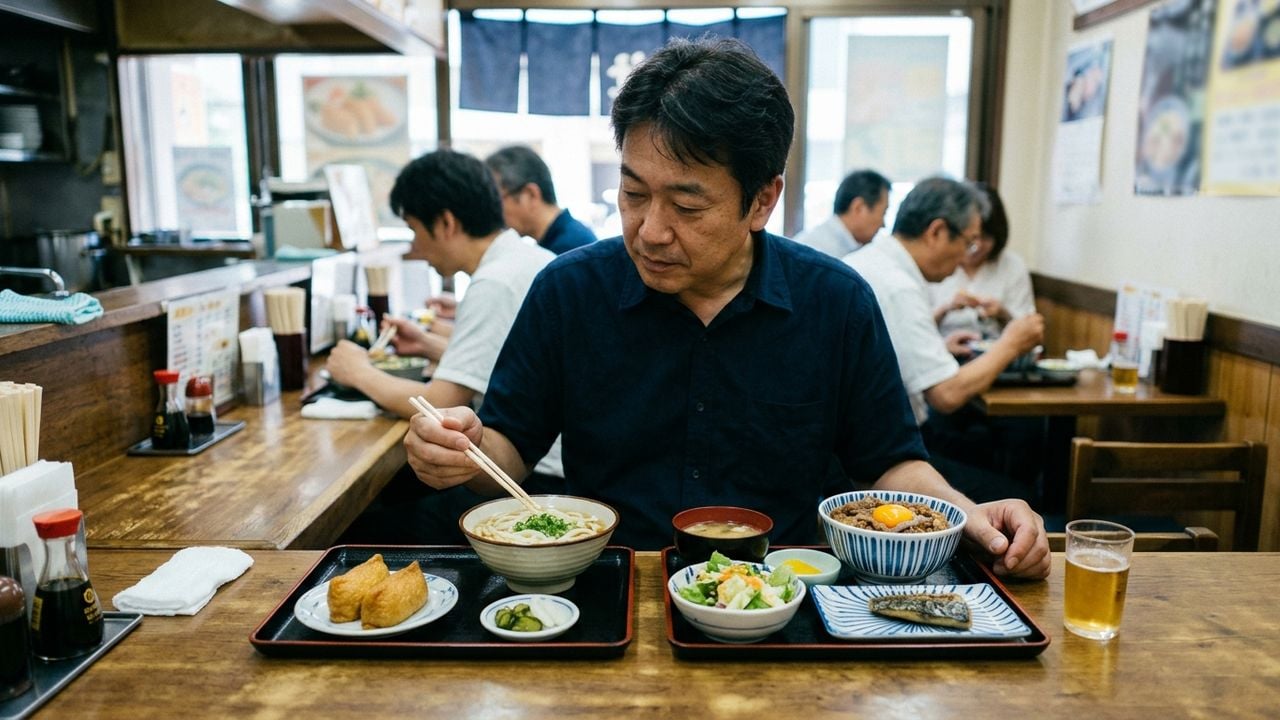
Let's be fair: the area around the Toyota Commemorative Museum of Industry and Technology in Noritake isn't a culinary desert. There are café-style spots and chain restaurants within a short walk, and if your schedule is genuinely tight — if you have a bullet train to catch or an afternoon factory tour already booked — eating nearby makes practical sense.
A quick lunch near the museum works well when:
- You have under 60 minutes between activities
- You're traveling with young children who need to eat on their schedule
- You're prioritizing the museum experience over the meal
- You'd prefer to rest rather than navigate public transit mid-trip
There's nothing wrong with this choice. Efficiency has its place in travel. But — and this is the key distinction — a convenient lunch near Toyota Museum will rarely become the story you tell when you get home. It fills a gap. It doesn't create a memory.
For a deeper look at what a post-museum lunch in Nagoya can look like, we've written about that experience separately. Here, I want to focus on a different question: what does it feel like when you choose not to take the easy option?
You're weighing whether a 20-minute subway ride is worth it — and the answer depends on what day Itadaki is actually open. Our monthly schedule changes, and irregular closures do happen. Our Instagram posts the confirmed business calendar each month, so you can plan around it before committing to the trip.
What Happens When You Move — The Osu Discovery
From the Toyota Museum area, Osu is about 20–25 minutes by subway — a manageable distance if you've left enough breathing room in your afternoon. And what you find when you arrive is difficult to describe through a guidebook entry, because Osu doesn't really translate into bullet points.
It's one of Nagoya's oldest commercial districts — over 400 years of history layered under a streetscape that somehow also contains anime shops, maid cafés, Taiwanese noodle stalls, and one of Central Japan's most important Buddhist temples, Osu Kannon. It's the kind of neighborhood that Japanese food enthusiasts seek out quietly, without announcing it, because half the appeal is that it doesn't feel like a tourist destination even when it clearly is one.
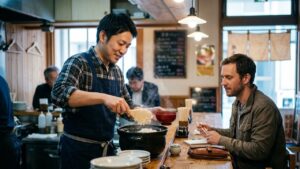
This is where Itadaki sits: on the second floor of a building on Osu's main street, serving lunch on four days a week, running out of its rarest ingredient by mid-morning on busy days. It's not hidden in the dramatic sense. But it is the kind of place that rewards the traveler who asks, "What else is here that I haven't been told about?"
Itadaki is a specialty restaurant with a single focus: Rare Wagyu Gyudon — a culinary concept that founder Masayuki Goto created from scratch when he opened here in April 2022. Japan has premium versions of katsudon, oyakodon, kaisendon. Before Itadaki, nobody had done it with gyudon. Goto asked why not, and then built an answer.
"The staff were welcoming and made us feel at home even without perfect Japanese."
— Guest review
That line matters more than it might seem. For travelers who hesitate about venturing into specialty restaurants where English isn't guaranteed, Itadaki offers printed menus in English, Simplified Chinese, and Korean, along with a photographic five-step guide to enjoying the dish. You don't need to speak Japanese to have a full experience here.
✓ Key Takeaways
- Eating near Toyota Museum is practical but rarely creates a memorable story — the choice depends entirely on how much time and curiosity you have.
- Osu district, about 20–25 minutes by subway, is a genuine local neighborhood with a 400-year history that most English guidebooks barely mention.
- Itadaki offers English menus and multilingual support, making it accessible even for visitors who don't speak Japanese.
The Horai Wagyu bowl — limited to 10 per day — is the one guests describe as the turning point of their Nagoya afternoon. If that's the bowl you want at the end of your Toyota Museum visit, showing up without a reservation is a real risk, especially on weekends. Tabelog reservations take only a few minutes and lock in your seat and your bowl.
The Honest Comparison: Time, Effort, and Return
Here's how I'd frame the decision for different traveler types:
If you have 60 minutes or less: Stay near the museum. Don't rush a meal that deserves time.
If you have 75–90 minutes: It's tight, but possible. Yabacho Station (the nearest stop to Itadaki, Meijo Subway Line, Exit 4) is a 4-minute walk from the restaurant. Factor your transit time carefully, and consider making a reservation via Tabelog in advance — particularly if you want to try our Horai Wagyu bowls, which are limited to 10 per day and can sell out before noon on weekends.
If you have 2 hours or more: Go to Osu. Without question. Walk through Osu Shopping Street after lunch, visit Osu Kannon Temple, and stop at Hisaya-odori Garden Flarie (just a 3-minute walk from Yabacho Station) — a free-admission garden that's been quietly featured in major English travel guides. You'll leave with a very different afternoon than the one most Toyota Museum visitors have.
The Rare Wagyu Gyudon experience at Itadaki is built around two types of wagyu, both sourced exclusively from Aichi Prefecture. The Mikawa Beef bowl (from ¥1,800) is available every service day without reservation. The Horai Wagyu bowl — produced by only 3 farms in Japan, with just 300 heads raised annually — is the one that stops people mid-bite and makes them reach for their phones to tell someone. That bowl starts at ¥2,700 for the standard Shinkoccho size, and it's the one worth planning your afternoon around.
For guests already exploring what Nagoya has to offer beyond its famous landmarks, you might also find this comparison useful: how a Nagoya lunch compares to a Takayama lunch when you're deciding how to spend a limited day in Central Japan.
Why Repeat Japan Visitors Keep Choosing This Route
Here's something Goto noticed early on: a significant share of Itadaki's guests are not first-time Japan visitors. They've done Kyoto. They've had Kobe beef. They've walked Nishiki Market and bought the same matcha Kit-Kats at Kyoto Station. Now they're back, and they're looking for the story that belongs only to them.
Nagoya tends to appear late in that progression — not because it lacks depth, but because it doesn't market itself aggressively to international travelers. That restraint, ironically, is exactly what makes it valuable to the traveler who's grown tired of places that do.
Data from Japan tourism research supports this pattern: visitors from Hong Kong (29.7% of whom have been to Japan 10 or more times) and Taiwan (19.4%) are increasingly choosing destinations off the Golden Route on repeat visits — and Aichi Prefecture is one of the regions benefiting from that shift. They're not looking for the most famous thing. They're looking for the thing they'll actually remember.
Itadaki's menu tells a story most travelers have genuinely never heard: Horai Wagyu fed on sake lees from Horaisen Sora, a premium local sake from Okumikawa. Nagoya Cochin eggs from Yamada Poultry Farm. White soy sauce from Hekinan City as the base of a signature "magic sauce" used to both dip the beef and simmer the onions. Atsumi Ichō-zuke pickles from the Atsumi Peninsula. Every element on the table is from Aichi, and every element has a farm attached to it.
That's not a marketing narrative. It's the actual sourcing structure that Goto built when he opened the restaurant during the pandemic, specifically to support Aichi's small-scale producers who had lost their restaurant clients during lockdowns. The food tells that story honestly, without needing to oversell it.
If you're a business traveler weighing how to use a lunch window near Nagoya's industrial sites, this guide to fitting a wagyu lunch into a tight business trip schedule addresses the logistics more specifically.
Making the Choice — and Making It Count
There's no verdict here that applies to everyone. Some days you need fuel, not a narrative. But if you're reading this far, you probably already know which kind of afternoon you want.
The travelers who leave Itadaki with the strongest memories are rarely the ones who stumbled in. They're the ones who made a small, deliberate choice — to move a little further, to give an afternoon 30 extra minutes, to follow a recommendation that wasn't in their first search result. And they end up with a bowl of rare wagyu from one of Japan's most limited-production farms, in a neighborhood that still feels like it belongs to Nagoya rather than to international tourism.
That's the full experience, as opposed to the quick one. Whether it's worth it is something only you can decide — but the return tends to be disproportionate to the effort.
Itadaki is open for lunch on Saturdays, Sundays, Mondays, and Tuesdays (11:00–15:00), with last orders at 14:30. On public holidays, we open at 9:00. Irregular closures do occur — our monthly business calendar is posted on Instagram. Horai Wagyu bowls are limited to 10 per day; reservations via Tabelog are strongly recommended if you want to guarantee your bowl.
For our complete menu, access details, and store information, visit our official page at https://itadaki8.com/english/
You've read the comparison — now the only question is whether your schedule allows the full version of this afternoon. If it does, a Tabelog reservation holds your Horai Wagyu bowl and your seat, so the only thing left to do is show up and eat. Reservations are free and take about two minutes to complete.