Step-by-Step Guide: Adding Nagoya to Your Tokyo-Kyoto-Osaka Trip
 gotowp
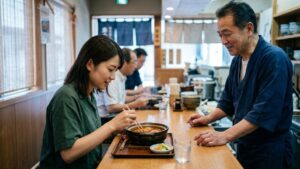
A couple of weeks ago, I received a message from a guest who had just returned home to Australia. She wrote that she'd found Itadaki through Google Maps while killing time at her Nagoya hotel the morning before her train to Kyoto. She hadn't planned it. She hadn't read about us anywhere. And yet, she ended the message with this:
"I discovered Itadaki through Google Maps and it became the best meal of our Japan trip."
I read that and sat quietly for a moment. Because I know exactly what she means — and I also know how close she came to missing it entirely.
Most travelers on the Tokyo-Kyoto-Osaka route pass through Nagoya Station at full speed. They're mid-itinerary, focused on the next destination. Nagoya is a transfer, not a stop. And that's the thing I want to change — not by overselling the city, but by helping you plan it properly, one step at a time, so that what could have been a blur becomes a memory you carry home.
This guide is specifically for travelers who are already thinking about adding Nagoya to their itinerary and want a concrete, low-stress way to do it. Not a general "why Nagoya" pitch — but a real sequence of steps you can follow.
Who This Is For
- ✅ Travelers already planning a Tokyo-Kyoto-Osaka trip who want to add one more meaningful stop
- ✅ Wagyu enthusiasts who feel that "just eating good beef" is no longer enough and want a culinary experience with a real story behind it
- ✅ Repeat Japan visitors who have already done the Golden Route and want to go deeper this time
- ✅ Foodies who are building an itinerary around once-in-a-lifetime meals, not just sightseeing
- ✅ Anyone who's ever wondered what they might be missing by not stopping in Nagoya
Step 1 — Decide Where Nagoya Fits in Your Route
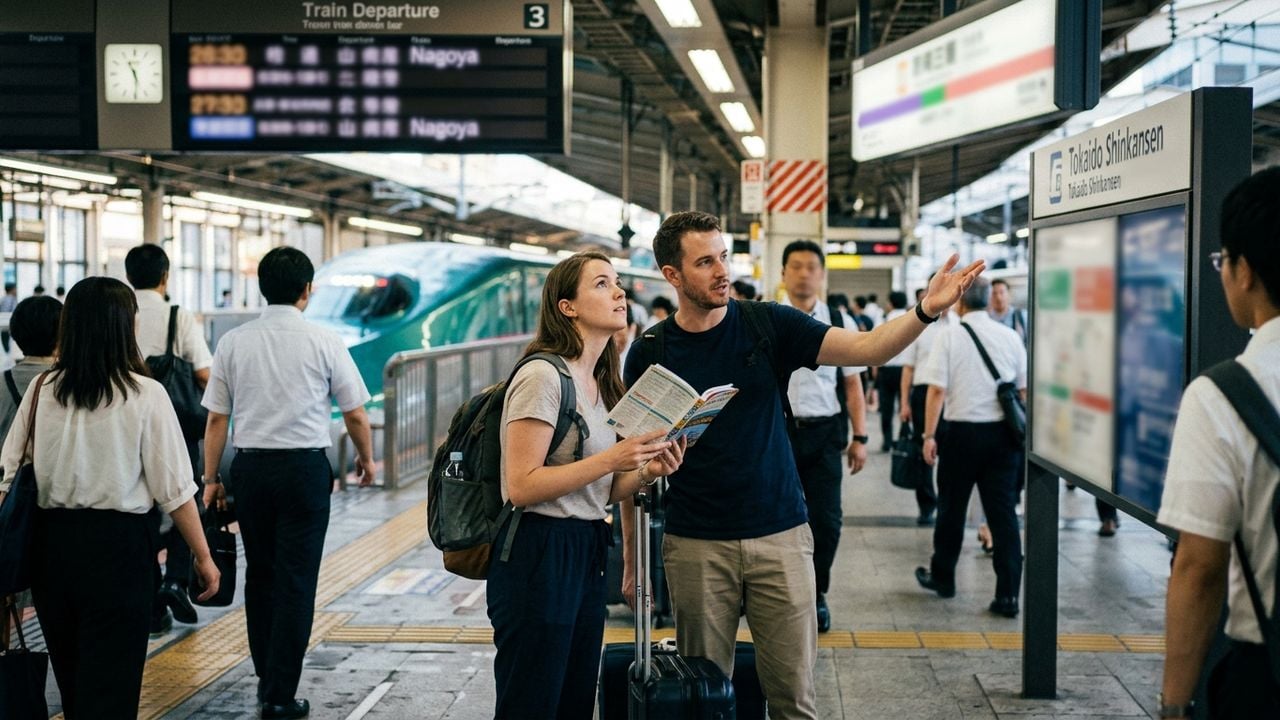
The Tokaido Shinkansen runs Tokyo → Nagoya → Kyoto → Osaka in sequence. That means adding Nagoya doesn't require backtracking — it just requires stopping where you were already going to pass through.
The most natural insertion points are:
- Day 2 or 3 of your trip — stop in Nagoya on your way from Tokyo to Kyoto. Arrive in the late morning, have lunch, spend the afternoon, then catch a late-afternoon shinkansen to Kyoto.
- As a day trip from Kyoto or Osaka — Nagoya is only 35 minutes from Kyoto by Nozomi. You can leave after breakfast and be back in time for dinner.
- Your final full day before flying out from Chubu Centrair International Airport — Nagoya is the most convenient base if your international flight departs from Chubu.
For most travelers, the simplest version is this: give Nagoya one full lunch stop. Not a full day, not an overnight — just a deliberate, planned lunch. That's enough to have an experience that reshapes the entire trip in memory.
If you want to explore further — Nagoya Castle, Atsuta Shrine, or the historic Osu district — building in a one-night stay opens up considerably more. But the meal comes first. Plan that, and the rest arranges itself around it. If you're curious about how other travelers have approached this, Is Nagoya Worth Adding to Your Golden Route Itinerary? covers the broader case well.
You're planning a Nagoya stop, but Itadaki is only open four days a week — and the monthly schedule can shift. Our Instagram shows the exact days we're open each month, updated before the month begins. A quick check before you finalize your train bookings takes less than a minute.
Step 2 — Choose a Meal That Does the Work a Once-in-a-Lifetime Experience Needs to Do
Here's something I've thought about a lot over the past four years of running Itadaki: the meals that stay with people are never just about the food. They're about the story the food carries.
You can eat excellent wagyu in Tokyo. You can find beautifully plated kaiseki in Kyoto. What you cannot do anywhere else in the world — literally anywhere — is eat a Rare Wagyu Gyudon made with Horai Wagyu. Because that dish was invented here, in this small second-floor restaurant in Osu, Nagoya, in April 2022. And the beef itself comes from a group of farms so small that only 300 heads are raised each year across all of Japan. To put that in context: there are roughly 500,000 wagyu cattle in Japan. Horai Wagyu represents 300 of them.
That's not a marketing number. It's simply the reality of what these farms produce. Horai Wagyu is raised in Okumikawa — deep in the Aichi mountains — and fed on the lees of Horaisen Sora, a premium local sake. The result is a beef with a flavor profile that's unlike any other wagyu I've encountered in 18 years of working with food: light marbling with lean meat character, a combination that's genuinely rare even within Japan's wagyu landscape.
The concept I built Itadaki around — the Rare Wagyu Gyudon — reimagines Japan's humblest comfort food using this beef, a proprietary two-stage cooking technique that brings the core temperature above 70°C while preserving a rare-style texture, and ingredients sourced entirely from Aichi Prefecture. Every component tells you something about this region: the rice, the egg, the miso, the pickles, the shiso leaves. All of it, Aichi.
When a guest describes that meal as the best of their Japan trip, I believe them. Not because the dish is expensive. Because it's impossible to have anywhere else.
✓ Key Takeaways
- Nagoya fits naturally into the Tokyo-Kyoto-Osaka Shinkansen route — no backtracking needed. A single lunch stop is enough to make the stop meaningful.
- Once-in-a-lifetime culinary experiences are defined by uniqueness and story, not price. The rarer the concept and the harder to replicate, the more it endures in memory.
- Horai Wagyu — 300 heads per year, fed on sake lees, raised in Aichi — is the kind of ingredient that gives a meal its story. And you can only eat it here.
You now know that Horai Wagyu is capped at 10 bowls per day and that walk-in availability on weekends is genuinely uncertain. Reserving your bowl through Tabelog is the one step that closes the gap between "I'm planning to go" and "I'm going." The reservation system works in English.
Step 3 — Understand How Itadaki Works Before You Arrive
A few practical things I always want first-time guests to know, because surprises in either direction can affect the experience.
Our hours and days: Itadaki is open Saturday, Sunday, Monday, and Tuesday — lunch only, 11:00 to 15:00 (last order 14:30). On public holidays, we open at 09:00. We are closed Wednesday, Thursday, and Friday. Please check our monthly schedule on Instagram before you finalize your plans, as irregular closures do occur.
Horai Wagyu is limited to 10 bowls per day: This isn't a promotional tactic. It's the genuine supply constraint of working with a beef this rare. During peak hours — especially on weekends — those 10 bowls go quickly. If Horai Wagyu is the reason you're coming, I strongly recommend making a reservation through Tabelog in advance rather than walking in and hoping.
Getting here: Itadaki is on the 2nd floor at 4-1-20 Osu, Naka-ku, Nagoya — a 4-minute walk from Yabacho Station Exit 4 on the Meijo Subway Line. From Nagoya Station, take the Higashiyama Line to Sakae, transfer to the Meijo Line, and get off at Yabacho. Total journey time is around 10 minutes.
Language: Our menu is available in English, Simplified Chinese, and Korean. We also provide a photographic five-step guide for enjoying the dish, which multiple guests have told us made the experience feel genuinely guided rather than confusing.
Is the rare preparation safe? This is the question I get most often, and it's the right question to ask. Our two-stage cooking technique brings the beef to over 70°C at the core — fully meeting Japan's Ministry of Health, Labour and Welfare standards. The "rare" in Rare Wagyu Gyudon refers to the mouthfeel, not an undercooked preparation. That's the technical achievement we've spent years developing, and it's been recognized by Japan's food safety authorities as well as eight major Japanese television programs, including NHK.
For a broader sense of what makes Nagoya's food culture distinctive from other Japanese cities — context that makes the Itadaki experience richer to understand — What Makes Nagoya Food Different From Osaka and Kyoto? offers a useful frame.
Step 4 — Build the Rest of Your Nagoya Morning Around the Meal
If you're arriving for a lunch stop, here's a sequence that works well and that many of our guests have used naturally:
09:30 — Arrive at Yabacho or Osu Kannon Station. Walk through Osu Kannon Temple before the day crowds arrive. The temple grounds are calm and atmospheric at this hour, and the surrounding shopping street begins waking up around 10:00.
10:00–10:50 — Explore Osu Shopping Street at your own pace. The district blends traditional crafts, vintage clothing, anime shops, and local snack vendors in a way that genuinely can't be scripted. If you're visiting during the World Cosplay Summit period — typically in late summer — the streets around this time are particularly alive with costumes and international energy.
11:00 — Arrive at Itadaki when we open. Early arrival is particularly wise if you're hoping for the Horai Wagyu. Even with a reservation, arriving at opening means you experience the dish at its freshest.
After lunch — Hisaya-odori Garden Flarie is a 3-minute walk from Yabacho Station (the same station as Itadaki) and is free to enter. It's a beautifully designed urban garden with themed zones — European, Asian, and a crystal greenhouse — that makes for an unhurried, photogenic walk before catching your shinkansen onward.
The entire morning, from temple to shopping street to lunch to garden, fits comfortably within four to five hours. You can be on a train to Kyoto by early afternoon without feeling rushed.
"The lunch was the highlight of my Nagoya trip — I'm telling all my friends about it."
Step 5 — Lock It In Before You Land in Japan
This is the step most people skip, and it's the one that matters most.
Itadaki accepts reservations through Tabelog, Japan's leading restaurant reservation platform. You don't need to read Japanese — the reservation flow works in English, and you'll receive confirmation by email. Making a reservation before your trip means you're not relying on walk-in availability, and it guarantees that when you arrive in Nagoya mid-itinerary with your bags and your energy and your appetite, there's a seat waiting for you — and quite possibly a bowl of Horai Wagyu.
For travelers who have spent time researching the case for adding Nagoya to a Japan trip beyond the obvious stops, the reservation is simply the step that converts the research into reality.
I started Itadaki because I believed Aichi's ingredients deserved to be known — not just by people who happen to live here, but by anyone willing to take the time to find them. That Australian guest who found us on Google Maps while waiting for her train? She almost didn't stop. I'm glad she did. I hope you will too.
For our complete menu, access details, and store information, visit our official page at https://itadaki8.com/english/
You've built the route, understood the hours, and know what makes this meal worth planning around — 300 heads a year, a culinary concept invented at this one restaurant, and a bowl that guests keep calling the highlight of their Japan trip. The only step left is securing your seat before those 10 Horai Wagyu bowls are claimed.