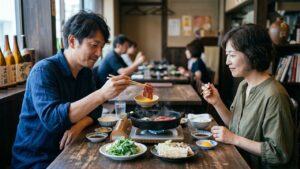
The Complete Guide to Nagoya Lunch for Second-Time Japan Visitors
 gotowp
A guest who visited us last month told me something that stuck with me. She had been to Japan three times before — Tokyo, Kyoto, Osaka, the classic route — and this trip, she had decided Nagoya was her main destination. She'd researched Osu thoroughly, saved our location on Google Maps, and still walked past our building twice before finding us. "The sign is in Japanese, the entrance is on the second floor, and the street was so busy I almost gave up," she laughed, once she was safely seated and her bowl had arrived.
She's far from the only one. Osu is one of Nagoya's most vibrant neighborhoods — a maze of covered shopping arcades, temple gates, subculture shops, and street food stalls that has been growing for over 400 years. For a second-time Japan visitor who already knows how to read a subway map and use IC cards, Osu is genuinely exciting. But "knowing how to travel in Japan" and "finding a second-floor restaurant in a specific side street" are two very different skills.
This guide is written for visitors who are already comfortable in Japan and ready to go deeper — including the exact steps to reach us without any second-guessing.
Who This Is For
- ✅ Second-time (or more) Japan visitors ready to explore Nagoya beyond the standard tourist trail
- ✅ Travelers who've done Tokyo, Kyoto, and Osaka and are now hungry for authentic local discoveries
- ✅ Anyone who's ever gotten lost in Osu and wants a clear, step-by-step approach to finding Itadaki
- ✅ Wagyu enthusiasts curious about Aichi's regional beef beyond well-known brands
- ✅ Visitors planning a Nagoya lunch stop before or after a day trip to Shirakawa-go, Takayama, or the Gifu region
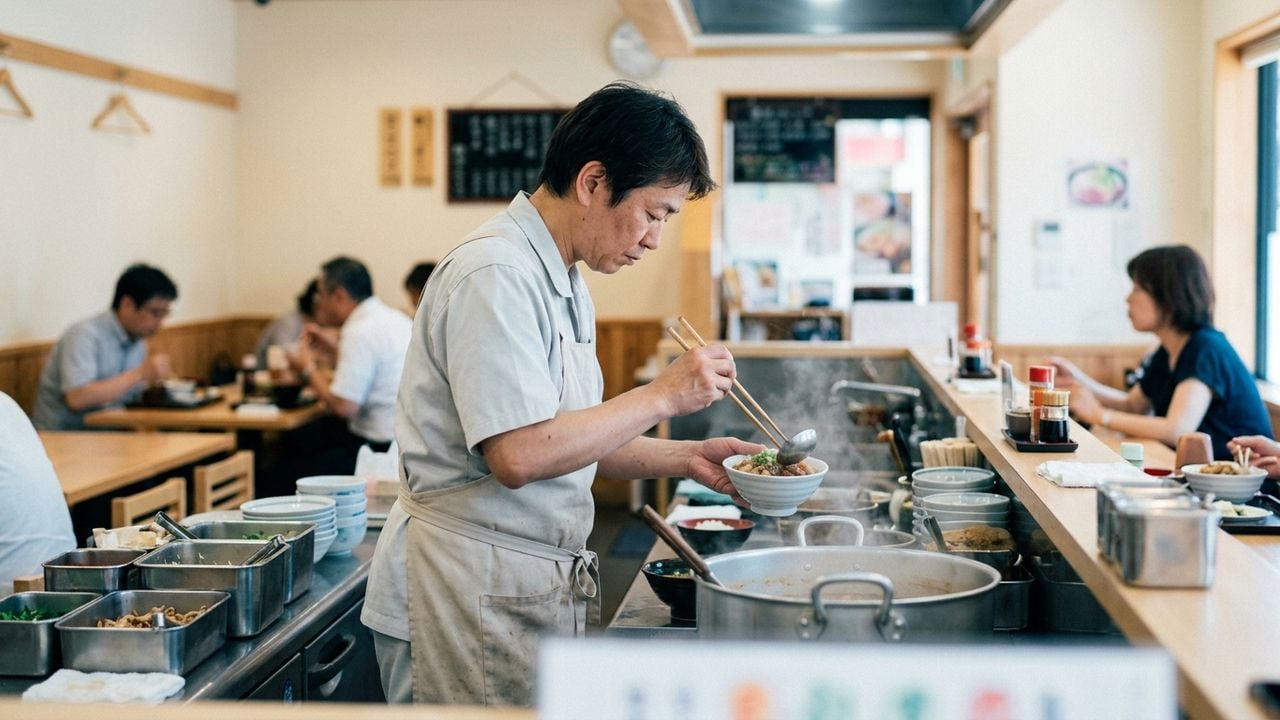
Why Osu Rewards the Returning Traveler
First-time visitors to Japan tend to experience Nagoya as a transit point — a place you pass through on the Shinkansen between Tokyo and Kyoto. But those who return know better. Nagoya is where some of Japan's most distinctive food culture lives quietly, without the crowds or the price tags of the major tourist cities.
Osu, in particular, has a character unlike any other district in Japan. It's neither the polished elegance of Kyoto's Gion nor the sensory overload of Tokyo's Shibuya. Osu is layered: centuries-old Buddhist temples standing beside cosplay cafés, traditional craft shops next to imported vintage electronics, Taiwanese noodle spots around the corner from a wagyu specialty restaurant. It takes a second (or third) visit to Japan to fully appreciate what that layering means — and to slow down enough to find the places that aren't in the English guidebooks yet.
That's where Itadaki sits. We're not on the main shopping arcade. We're not visible from the street. We're on the second floor of a building in the Osu district, and we serve Rare Wagyu Gyudon — a culinary concept that didn't exist before we opened in April 2022. Founder Masayuki Goto spent 18 years in the hospitality industry before asking a question that seemed almost too simple: why has every classic Japanese donburi — katsudon, oyakodon, kaisendon — developed a premium high-end version, except gyudon? His answer became Itadaki.
You now know the subway route and the building sign to look for — but Itadaki's hours follow a monthly schedule that can include irregular closures. Before you lock in your Nagoya lunch plan, our Instagram carries the up-to-date monthly business calendar so you can confirm we're open on your specific day. Takes about 30 seconds to check.
The Exact Route: From Nagoya Station to Itadaki
Let me walk you through this step by step, because this is genuinely the most common point of confusion for our guests.
From Nagoya Station:
Take the Higashiyama Subway Line (the blue line) from Nagoya Station toward Fujigaoka. Ride two stops to Sakae Station. At Sakae, transfer to the Meijo Subway Line (the purple line) and ride one stop to Yabacho Station. The whole journey takes approximately 10 minutes and costs a few hundred yen on your IC card. Get off at Yabacho and use Exit 4.
From Exit 4, Itadaki is a 4-minute walk. Head south along the main road and turn into the Osu shopping area. If you're walking from your hotel in Sakae or Fushimi, Yabacho is also within comfortable walking distance — roughly 10 to 15 minutes on foot through one of Nagoya's most pleasant city-center streets.
Other nearby stations: Itadaki is also reachable on foot from Kamimaezu Station (Meijo/Tsurumai Lines), Osu Kannon Station (Tsurumai Line), and Sakae Station — all within 10 to 15 minutes walking. If you're arriving from the direction of Osu Kannon Temple, we're a natural lunch stop after a morning of temple-visiting and shopping.
Finding the building: Once you're in the Osu area, look for the sign at street level that reads 「元祖レア牛丼 頂」 (pronounced Ganso Rea Gyudon Itadaki). The entrance is at ground level, and our restaurant is on the second floor — take the stairs up. If you walk past an entrance without seeing this sign, backtrack; Google Maps can sometimes point slightly off in this area due to the density of the shopping streets.
A direct Google Maps link is available on our official page at itadaki8.com/english/ — opening it before you leave your hotel is the single most reliable preparation you can make.
Parking: There's no dedicated parking at Itadaki, but multiple coin parking lots are available within a 1 to 3-minute walk in the surrounding Osu area. That said, public transportation is genuinely the easiest option — Nagoya's subway system is clean, punctual, and simple to navigate with an IC card.
✓ Key Takeaways
- From Nagoya Station, take the Higashiyama Line to Sakae, transfer to the Meijo Line, and exit at Yabacho Station Exit 4 — about 10 minutes total.
- Look for the Japanese sign 「元祖レア牛丼 頂」 at street level. The restaurant is on the 2nd floor — take the stairs.
- Google Maps can be imprecise in Osu; use the direct link on our English page and save it to your phone before you leave your hotel.
Knowing the route is one thing — arriving to find the 10 daily bowls of Horai Wagyu already gone is another. If Horai Wagyu is the reason you're making the trip, a Tabelog reservation with the note 鳳来牛希望 locks in your bowl before you even step on the subway. The reservation process is available in English.
Planning Your Visit: What Second-Time Visitors Should Know
If you've visited Japan before, you already know that the best experiences reward a little planning. Here's what's worth knowing before you arrive at Itadaki.
We're open for lunch only. Our hours are 11:00–15:00 on Saturdays, Sundays, Mondays, and Tuesdays, and 09:00–15:00 on public holidays. We're closed on Wednesdays, Thursdays, and Fridays. Last order is 30 minutes before closing. Our monthly business calendar is posted on our official Instagram — worth checking if you're planning around a specific date. August in Nagoya is lively, with the tail end of summer events, and we do see busy lunchtimes during weekends and public holidays.
About Horai Wagyu: Our signature offering — the Rare Wagyu Gyudon featuring Horai Wagyu — is strictly limited to 10 bowls per day. Horai Wagyu is produced by only 3 farms in Japan, with just 300 heads raised annually using a unique feeding method incorporating sake lees from Horaisen Sora, a renowned local premium sake. If experiencing this particular beef is a priority for your visit, advance reservation via Tabelog Online is strongly recommended. When booking, please copy and paste the following into the notes field: 鳳来牛希望 — this tells us you'd like Horai Wagyu reserved for you. Reservations can be made in English on the Tabelog website.
If you're walking in without a reservation, arriving right at 11:00 opening gives you the best chance of securing Horai Wagyu. Our Mikawa Beef Rare Gyudon is always available for walk-in guests and is prepared with the same proprietary two-stage cooking technique — an equally considered experience from a different Aichi-region wagyu.
For those who want deeper context on the wagyu itself, our complete guide to Rare Wagyu Gyudon for beef connoisseurs explains the sourcing, the cooking technique, and the tasting journey in full detail.
The Experience Itself: What to Expect When You Sit Down
One of the things I'm most proud of at Itadaki is that no one has to figure out the dish alone. We serve guests from around the world, and we've put real thought into making the experience accessible without making it feel instructional.
Our menu is printed in English, Simplified Chinese, and Korean, with clear photos and ingredient explanations. Alongside the menu, every table receives a five-step visual guide — "How to Enjoy Rare Gyudon" — that walks you through the dish: from separating the Nagoya Cochin egg (white into the miso soup, yolk atop the beef) to appreciating the wagyu's texture before mixing, to layering in condiments like the Itadaki original 8-spice blend, pickled ginger from Inazawa, and dried seaweed from Mikawa Bay. The fifth step brings everything together with wasabi for a clean finish.
"The five-step eating guide made the dish even more enjoyable and memorable."
Guest review
That guide matters. Rare Wagyu Gyudon isn't a dish you rush through — it's designed to evolve across five stages, each revealing a different dimension of the beef and the accompanying Aichi ingredients. When guests follow the steps, they often tell us they didn't expect a beef bowl to have that kind of depth. That's exactly what Masayuki Goto set out to create.
We have 18 seats in total: five counter seats that work well for solo visitors and couples, and sofa-style table seating that's comfortable for groups and families. All table seats feature sofa seating — relaxed and unhurried, which suits a proper lunch.
Making the Most of Your Time in Osu
If you're building a half-day around your Itadaki visit, Osu rewards exploration before or after your meal. Osu Kannon Temple is a five-minute walk — one of Central Japan's most important Buddhist sites, and a genuinely atmospheric place to begin a morning in the district. The main Osu Shopping Street runs nearby, with over 1,200 shops ranging from antique Buddhist goods to vintage electronics to independent fashion.
Three minutes from Yabacho Station (the same station you'll arrive at) is Hisaya-odori Garden Flarie — a free-admission urban garden with six themed sections including a European-style Harmony Garden and a Crystal Garden greenhouse. It's featured in major English travel guides and makes for a pleasant walk either before or after lunch, particularly on a summer morning before the midday heat sets in.
If Itadaki is part of a broader Nagoya itinerary — perhaps before or after a day trip to Shirakawa-go or Takayama — the complete guide to Nagoya Station area lunch for Hida travelers covers how to integrate an Osu lunch stop into a journey toward Gifu Prefecture, including timing and transit logistics.
And if your Nagoya visit is centered around one of the city's historical sites — Nagoya Castle, Atsuta Shrine, or a walk through the Sengoku-era landmarks — the complete guide to Samurai Nagoya with an Itadaki lunch stop maps out a full day combining both.
A Note on Arriving Ready
The guest who walked past our building twice — she ended up having what she called the best lunch of her Japan trip. She messaged us on Instagram afterward to ask about the Horai Wagyu reservation process for her next visit, which she's already planning.
What made the difference wasn't anything complicated. It was knowing where to exit the subway, having the building sign saved as a photo on her phone, and understanding that we're on the second floor. Three small pieces of preparation, and a bowl of wagyu gyudon became a story she'll be telling for years.
We built Itadaki to be a place where every guest feels genuinely welcomed — regardless of whether they speak Japanese, regardless of whether they've eaten wagyu before, regardless of whether they found us easily or took a couple of extra turns getting here. The name "Itadaki" comes from "itadakimasu" — the Japanese expression of gratitude spoken before a meal. It's a reminder that eating is a gift: from the farmers who raise the beef, from the land of Aichi Prefecture, and from every person in the kitchen who turns those ingredients into something worth traveling for.
For our complete menu, access details, and store information, visit our official page at itadaki8.com/english/.
You've got the route, the entrance details, and a clear picture of what to expect when you sit down. The one thing left is securing your seat — especially if Horai Wagyu is on your list, with only 10 bowls available each day. Reserve now through Tabelog to make this lunch the one you planned for.