How Nagoya Specialty Differs From Kyoto Traditional Cuisine
 gotowp
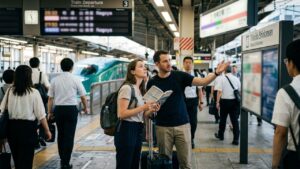
You've done Kyoto. You've photographed kaiseki courses presented like lacquer paintings, sipped matcha in centuries-old machiya townhouses, and posted temple-garden photos that your followers loved. Now you're planning a Japan trip that goes further — and you're wondering: can Nagoya actually compete with Kyoto when it comes to food experiences worth sharing?
Or maybe the question feels more personal. You've seen the same Kyoto food content hundreds of times on Instagram. Yudofu. Obanzai. Tofu in eleven variations. Beautiful, yes — but you want something your followers haven't seen yet. Something that makes them stop scrolling and ask, "Wait — where is that?"
That feeling is exactly where this comparison starts.
Who This Is For
- ✅ Repeat Japan visitors who have already experienced Kyoto's traditional cuisine and want something genuinely new
- ✅ Travelers building a Japan itinerary around content that stands out — not just another beautiful temple lunch
- ✅ Foodies who care as much about the story behind a dish as the dish itself
- ✅ Visitors passing through Nagoya on their way to Shirakawa-go, Takayama, or the Golden Route
- ✅ Anyone trying to decide whether Nagoya food deserves a dedicated stop — or just a quick transfer
Kyoto's Cuisine: Beautiful, Refined, and Deeply Familiar
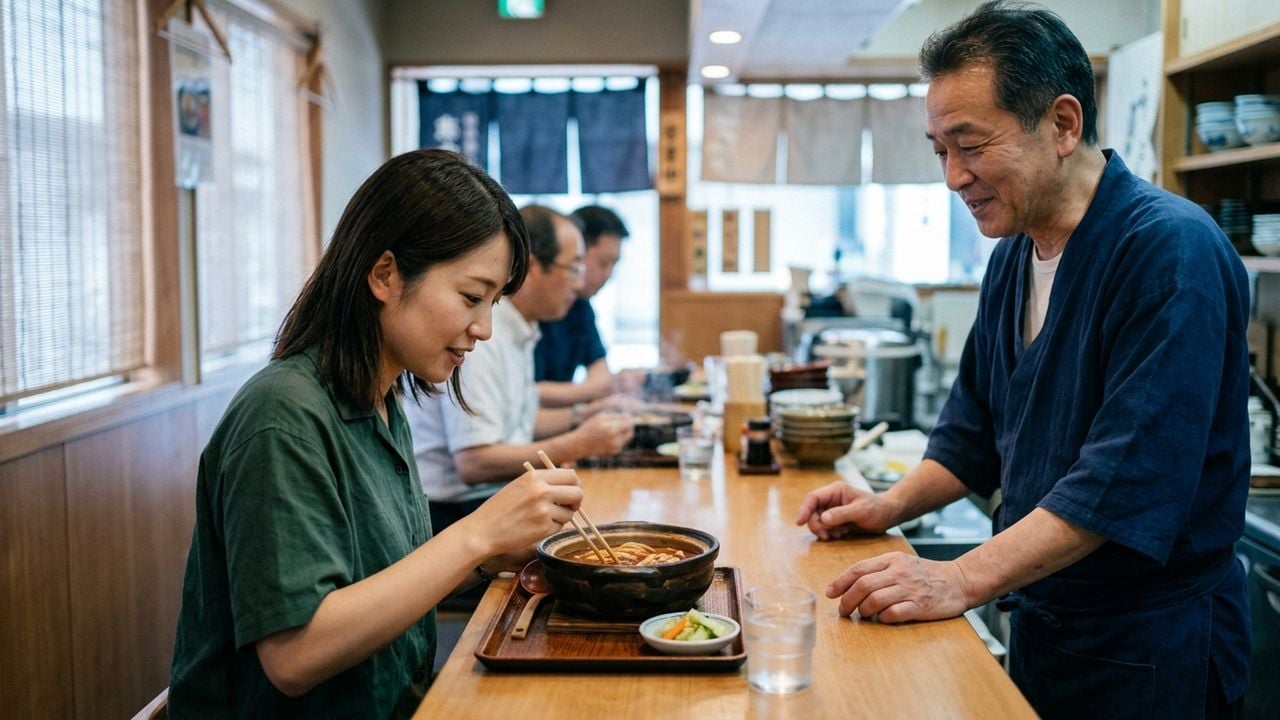
There is no question that Kyoto's culinary tradition is one of the great achievements of Japanese food culture. Kaiseki — the multi-course ceremonial cuisine developed for tea ceremony culture — is precise, restrained, and visually extraordinary. Kyo-ryori (Kyoto-style cooking) built its identity around subtlety: dashi-forward broths, seasonal vegetables from Kyoto's surrounding farmlands (collectively called Kyo yasai), and an aesthetic philosophy of "nothing extra, nothing missing."
For first-time visitors, Kyoto food is revelatory. For second or third-time visitors, it starts to feel like territory they already know well. Tofu kaiseki at a machiya restaurant near Gion. Yatsuhashi from a famous confectionery near Kinkakuji. Obanzai at a long-established izakaya in Nishiki Market. All of it is genuinely good — but the content looks like content you've already posted.
Kyoto's food culture is centered on continuity: honoring what has been passed down across generations without disruption. That is its strength. It is also why, for experienced Japan travelers, the visual language of Kyoto dining starts to feel predictable.
You're weighing whether Nagoya food can actually give you content your followers haven't already seen from Kyoto — and that answer depends entirely on knowing which days Itadaki is open before you plan your itinerary. Our monthly business calendar, including any irregular closures, is posted on Instagram so you can plan around it before you book anything else. No login required to view the schedule.
Nagoya's Culinary Identity: Invention, Not Preservation
Nagoya's food culture was built on a different principle entirely. Where Kyoto refined and preserved, Nagoya invented.
Miso katsu — deep-fried pork cutlet dressed in rich Hatcho miso sauce from Okazaki City — is not a variation on something older. It is an original Nagoya creation. Hitsumabushi (grilled eel over rice, eaten three ways in sequence) follows a similar logic: a dish with its own protocol, its own ritual, its own story. Even Nagoya-style morning coffee culture — where a full breakfast arrives automatically with your coffee order — reflects a city that doesn't inherit conventions from elsewhere. It makes its own.
This spirit of invention is still alive in Nagoya today. And it's producing experiences that Kyoto, for all its beauty, simply cannot offer.
The most striking recent example? A small restaurant in Osu called Itadaki, which opened in April 2022 and introduced a culinary concept that had never existed before: the Rare Wagyu Gyudon.
Founder Masayuki Goto had been watching small Aichi Prefecture farms struggle during the pandemic — premium producers of local wagyu, heritage eggs, and specialty rice who suddenly had nowhere to sell their products. He'd spent nearly two decades running MAX'S BAR and understood the economics of hospitality in a crisis. So he asked a question that now seems obvious in hindsight: Why does every category of Japanese bowl cuisine have a premium high-end version — except gyudon? Katsudon, oyakodon, kaisendon — all elevated. The humble beef bowl, somehow, had never been touched.
That question became Itadaki. The name itself comes from itadakimasu — the expression of gratitude spoken before every meal in Japan, a quiet acknowledgment that what you're about to eat was once alive, cared for, and brought to your table by someone's hands.
✓ Key Takeaways
- Kyoto cuisine is defined by continuity and refinement — extraordinary for first-time visitors, but familiar territory for repeat Japan travelers.
- Nagoya's food culture has always been invention-led, producing original dishes with their own rituals and stories.
- The most shareable food experiences combine visual impact with a narrative your followers genuinely haven't heard before.
Horai Wagyu is limited to 10 bowls per day — and once that's gone, it's gone until the next business day. If the story behind those 300-heads-a-year cattle is the one you want to bring home from Nagoya, securing your bowl in advance is the only way to guarantee it. Tabelog online reservation takes a few minutes and confirms your spot before you arrive.
The Comparison That Actually Matters for Your Travel Content
Here's where the two cities diverge most clearly — not in quality, but in originality of story.
When you photograph a kaiseki course in Kyoto, you are adding one more beautiful image to a genre that millions of travelers have already documented. Your photo might be stunning. The food certainly will be. But your followers have a reasonable chance of having seen something similar before — and more importantly, they can imagine what it tasted like without your explanation.
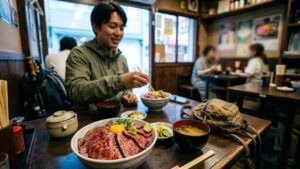
When you photograph a bowl of Rare Wagyu Gyudon at Itadaki, you are showing something your followers almost certainly cannot place. The marbled Horai Wagyu arranged over rice, the golden Nagoya Cochin egg yolk resting on top, the traditional ceramic bowl, the row of condiments lined up beside it — the image raises an immediate question: What is that?
And that question is exactly where your story begins.
Horai Wagyu is produced by just three farms in Aichi Prefecture, with only 300 heads raised each year — out of approximately 500,000 wagyu cattle across Japan. These cattle are raised in the Okumikawa region and fed on sake lees from Horaisen Sora, one of Aichi's most respected local breweries. The result is a beef with a flavor profile that doesn't match anything your followers have tasted: not the famously intense fat of Kobe, not the deeply savory richness of Matsusaka, but something lighter, cleaner, and more nuanced — with both elegant marbling and genuine lean meat flavor in the same bite.
Itadaki serves it using a proprietary two-stage cooking technique that heats the beef to over 70°C at the core — fully meeting Japan's Ministry of Health, Labour and Welfare food safety standards — while preserving a rare-style texture that feels unlike anything a conventional beef bowl delivers. Every ingredient in the bowl comes from Aichi Prefecture: the rice, the miso, the egg, the pickles, the shiso leaves, the sauce base. It's a complete portrait of one prefecture's ingredients in a single ceramic bowl.
For travelers who have had Kobe beef and Matsusaka beef, this is not repetition. It's discovery.
"The staff were welcoming and made us feel at home even without perfect Japanese."
— Guest review, Itadaki
That warmth matters more than it might seem. One of the quiet anxieties international visitors carry into any unfamiliar restaurant — especially one serving something as new as a Rare Wagyu Gyudon — is whether they'll feel lost without Japanese language skills. At Itadaki, the menu is available in English, Simplified Chinese, and Korean, and the experience comes with a printed five-step guide that walks you through how to eat the dish in sequence: separating the egg, tasting the wagyu first on its own, layering the yolk, adding condiments, finishing with wasabi. The ritual of eating is part of the story you'll have to tell.
If you're building a Nagoya itinerary and weighing where to spend your food budget, the question isn't really "Kyoto vs. Nagoya." It's more specific: if you've already experienced Kyoto's culinary tradition, Nagoya offers something that doesn't compete with it — it extends your Japan food story into territory that's genuinely uncharted.
You can read more about how Nagoya's food culture diverges from other Japanese cities in this piece on what makes Nagoya food different from Osaka and Kyoto, which goes deeper into the regional contrasts that shape each city's character.
Practical Comparison: What to Expect From Each Experience
For travelers still deciding how to allocate time and meals across their itinerary, here's a direct comparison of what each city's dining culture typically delivers:
Kyoto kaiseki or kyo-ryori:
— Multi-course format, often requiring advance reservation weeks or months ahead
— Higher price point (¥10,000–¥30,000+ per person for kaiseki)
— Strong visual tradition, seasonal emphasis, quiet atmosphere
— Ideal for a first Japan trip or a special-occasion splurge
— Followers will recognize the genre immediately
Itadaki Rare Wagyu Gyudon (Nagoya, Osu district):
— Single-dish lunch format, à la carte, no courses required
— From ¥1,800 (Mikawa Beef) to ¥2,700 for the signature Horai Wagyu Shinkoccho
— Visually striking and Instagram-worthy in an entirely unfamiliar way
— Reservation recommended via Tabelog (Horai Wagyu is limited to 10 bowls per day)
— Followers will ask questions — and you'll have answers ready
The two experiences are not in conflict. Many of our guests have done both on the same Japan trip. But if you're a repeat visitor who has already logged your Kyoto meals, Nagoya's Osu district offers a completely different register — and Itadaki sits right in the middle of it, four minutes' walk from Yabacho Station on the Meijo Subway Line.
If you're planning to combine Nagoya with Shirakawa-go or Takayama, Itadaki is also a natural lunch stop before or after those day trips — as many guests have found it to be a fitting first or last meal in the city. We've written more about that in our piece on whether Itadaki works as a lunch stop before Shirakawa-go from Nagoya.
And if you're mapping out a broader Golden Route extension to include Nagoya, this step-by-step guide to adding Nagoya to a Tokyo-Kyoto-Osaka trip covers the logistics in detail.
Which Experience Is Right for You?
If this is your first time in Japan, Kyoto's culinary tradition deserves your full attention. The kaiseki experience — the pacing, the seasonal ingredients, the almost meditative quiet of a traditional dining room — is something every food lover should encounter at least once.
But if you've been to Japan before, if your followers already know your Kyoto content, and if what you want most is a story that genuinely surprises people — Nagoya is the answer. Not because it's competing with Kyoto, but because it's doing something Kyoto never set out to do: inventing a new genre of Japanese cuisine and inviting you to be among the first to tell the world about it.
Horai Wagyu. Only 300 heads a year. Only a handful of bowls served each day. A culinary concept that didn't exist before 2022. That's not a restaurant recommendation. That's a travel story.
For our complete menu, access details, and store information, visit our official page at https://itadaki8.com/english/
You've read the comparison — the difference between food content your followers recognize instantly and food content that makes them stop and ask questions. The Horai Wagyu bowl at Itadaki is that second thing, and it's available only at lunch, only on scheduled business days, and only in quantities of 10 per day. The next step is straightforward: reserve your seat now so the story is waiting for you when you arrive in Nagoya.