Behind the Scenes: How Itadaki Welcomes International Business Guests
 gotowp
Nagoya is quietly becoming one of Japan's most important business destinations. With Toyota's global headquarters drawing technical teams from Europe, North America, and Southeast Asia, and an expanding MICE calendar that fills the city's hotels throughout the year, more international business travelers are spending meaningful time here — not just a layover night, but two or three days with genuine space to explore.
And yet, for many of those visitors, the same question surfaces when lunchtime arrives: "Can I actually walk into a local Japanese restaurant without speaking any Japanese?" It's a fair concern. Menus in Japanese only, staff who may not be comfortable in English, dishes that require explanation to be enjoyed properly — these aren't imaginary hurdles. For a business traveler with a tight afternoon schedule and no room for a stressful experience, the default choice is often a hotel restaurant or a familiar international chain.
At Itadaki in Osu, Nagoya, we hear this question often. And we've worked hard to make sure the answer is always: Yes — you can walk in, feel at ease, and have a lunch you'll genuinely remember.
Who This Is For
- ✅ International business travelers visiting Nagoya for meetings, factory tours, or MICE events who want an authentic local lunch experience
- ✅ Foreign visitors who feel anxious about dining at Japanese specialty restaurants due to language barriers
- ✅ Wagyu enthusiasts curious about Horai Wagyu but unsure how to order or eat rare-style gyudon properly
- ✅ Anyone who has previously defaulted to hotel restaurants or chain restaurants to avoid communication difficulties
- ✅ First-time visitors to Nagoya looking for a genuinely welcoming, stress-free dining experience with no Japanese required
The Concern We Hear Most Often
When international guests reach out to us ahead of their visit — through Google Maps, through our Instagram, or simply by walking up to the door — the most common hesitation isn't about the food itself. It's about the experience around the food.
"Will I be able to understand the menu?" "How do I eat this?" "What if I have questions about ingredients?"
These are completely understandable worries. A rare wagyu gyudon is not sushi or ramen — it comes with a specific way of being enjoyed, a raw-style egg that plays a deliberate role, condiments meant to be added in a particular sequence, and a cooking technique that's unlike anything most visitors have encountered before. Walking into that experience without any guidance would leave most guests confused, regardless of how adventurous they are as travelers.
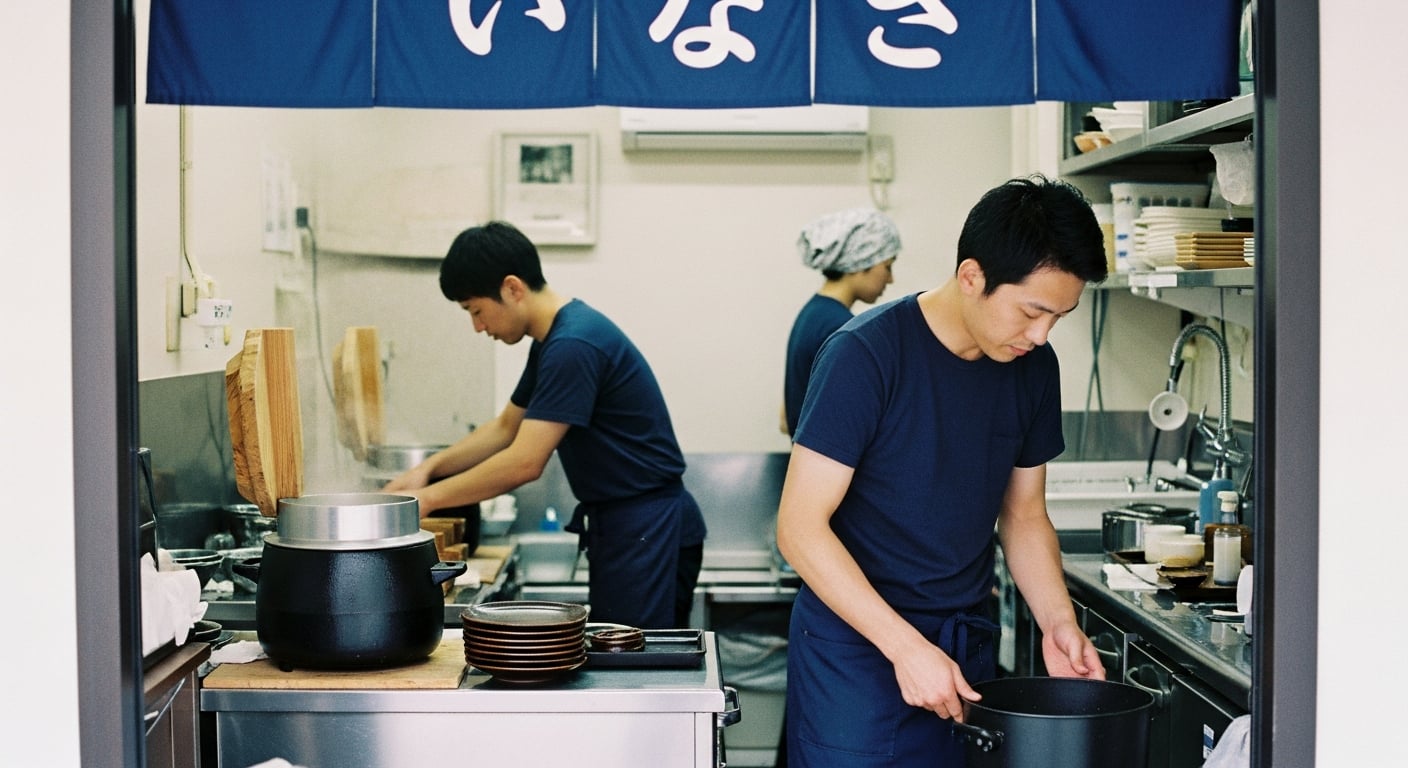
This is exactly why founder Masayuki Goto built the multilingual support into Itadaki from day one — not as an afterthought, but as a core part of the concept. If the restaurant is going to invite guests from around the world into a genuinely new culinary experience, those guests deserve to understand and enjoy every step of it.
A Menu Designed for International Guests
Itadaki's printed menu is available in three languages: English, Simplified Chinese, and Korean. Every dish is accompanied by a clear photo, a price (tax included), and a description of the key ingredients. There are no hidden surprises, no ambiguous phrasing, and no dishes listed only in kanji.
But the element that business travelers in particular seem to appreciate most is the five-step visual guide included in the menu: "How to Enjoy Rare Gyudon." It walks through exactly what to do — from separating the Nagoya Cochin egg (white into the miso soup, yolk atop the beef), to experiencing the wagyu in its purest form first, to mixing the yolk through for a richer bite, to adding condiments like pickled ginger, dried nori, and Itadaki's original 8-spice blend, and finally finishing with a touch of wasabi. Step by step, with photos.
The feedback we receive about this guide is consistent. One guest summed it up simply:
"The five-step eating guide made the dish even more enjoyable and memorable."
— Guest review
For a business traveler who may have thirty minutes for lunch and no patience for uncertainty, this kind of clarity is genuinely valuable. You sit down, read the guide, and you already know exactly what you're doing before the bowl arrives.
What Happens at the Table
Beyond the menu itself, the experience at Itadaki is designed to be welcoming without being performative about it. The restaurant's 18 seats — including five counter seats ideal for solo diners and several comfortable sofa tables — create an atmosphere that's relaxed and unhurried. There's no pressure to order quickly or vacate for the next table.
Staff members are used to welcoming international guests and are comfortable with guests using translation apps at the table. If you have a question about allergens — soy in the soy sauce, wheat in the sauce base, or whether the egg can be removed — pointing and showing on your phone works perfectly well. The menu also covers the key allergen information in English, so most questions are answered before they're even asked.
For guests with a specific dietary need, it's worth noting in advance: Itadaki is a wagyu specialty restaurant, and full vegetarian or vegan options are not available. Halal certification is also not held. Being clear about this upfront is part of how we respect our guests' time and planning.
✓ Key Takeaways
- Itadaki's menu is fully printed in English, Simplified Chinese, and Korean — with photos, prices, and allergen notes — so ordering requires no Japanese at all.
- The five-step "How to Enjoy Rare Gyudon" visual guide removes all uncertainty about how to eat the dish, making the experience genuinely enjoyable from the first bite.
- Staff are welcoming to international guests, and translation apps work comfortably at the table for any additional questions.
The Horai Wagyu Question — and What Guests Actually Find
Many international business travelers who visit Itadaki arrive having already explored Japan's most famous wagyu brands through corporate dinners or previous trips. Kobe beef, Matsusaka beef — these names are well known internationally, and guests who have tasted them often arrive at Itadaki with a quietly calibrated set of expectations.
What they encounter with Horai Wagyu tends to recalibrate those expectations entirely.
"I've had Kobe beef and Matsusaka beef, but Horai Wagyu at Itadaki was on another level."
— Guest review
Horai Wagyu is produced by only three farms in Aichi Prefecture, with just 300 heads raised annually across all of Japan. The cattle are fed on sake lees from Horaisen Sora, a premium local sake, which contributes to a flavor profile that's distinctly its own — neither the heavy marbling of Kobe nor the pronounced richness of Matsusaka, but something quieter and more precise. Combined with Itadaki's proprietary two-stage cooking technique — which heats the beef to over 70°C at the core, fully meeting Japan's Ministry of Health, Labour and Welfare food safety standards — the result is a rare-style texture that is both safe and unlike anything most guests have tasted before.
Because Horai Wagyu is limited to just 10 bowls per day, we strongly recommend reserving in advance via Tabelog Online. If you'd like to ensure the Horai Wagyu is waiting for you, copy and paste this phrase into the notes field when reserving: 鳳来牛希望 (this tells us you'd like to request Horai Wagyu). Reservations can be made in English on the Tabelog website. If you're arriving without a reservation, our Mikawa Beef Rare Gyudon is always available — equally crafted, same technique, and a genuinely impressive dish in its own right.
Getting Here on a Business Schedule
Itadaki is a 4-minute walk from Yabacho Station Exit 4 on the Meijo Subway Line. From Nagoya Station, the journey takes approximately 10 minutes: take the Higashiyama Line to Sakae, transfer to the Meijo Line, and get off at Yabacho. The restaurant is on the 2nd floor — look for the sign reading 元祖レア牛丼 頂 at street level and take the stairs up.
Itadaki is open for lunch only: Monday, Tuesday, Saturday, and Sunday from 11:00 to 15:00, and public holidays from 09:00 to 15:00. Last order is 30 minutes before closing. For business travelers working from a hotel in Nagoya's city center, this is a genuinely easy lunch stop — close, direct, and well-timed for an afternoon meeting or factory visit in the Aichi area.
Business schedules shift, and before visiting it's always worth checking our monthly calendar for any irregular closures. Our Instagram is updated regularly with the latest schedule.
A Lunch That Represents Nagoya Honestly
There's something I find genuinely satisfying about the moment a business traveler — someone who has eaten well in many cities, who knows the difference between good beef and exceptional beef — sits down at Itadaki for the first time and realizes this is something they haven't encountered before. Not because we've manufactured a story around it, but because Horai Wagyu is genuinely rare, the cooking technique is genuinely unique, and every ingredient on the bowl is genuinely from Aichi Prefecture.
That's what we want every international guest to experience: not a performance of Japanese hospitality, but the real thing — a bowl of food with a story worth carrying home, served in a space where you'll always be able to understand what you're eating and why it matters.
If you're planning a visit, we'd love to have a bowl ready for you. For our complete menu, access details, and store information, visit our official page at https://itadaki8.com/english/
To secure your Horai Wagyu — or simply to choose your preferred time — you're warmly welcome to reserve ahead: Reserve Your Rare Wagyu Experience
And for the most up-to-date business calendar before you finalize your plans: Check Our Monthly Schedule on Instagram