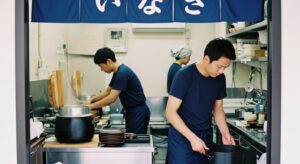
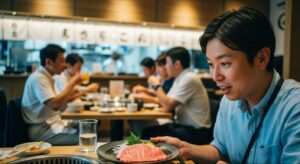
Inside Look: A Day at Itadaki Through the Eyes of a Business Diner
 gotowp
You've wrapped up a morning of meetings near Nagoya Station. Your colleagues head back to the hotel. You, on the other hand, have exactly 90 minutes to yourself — and you'd like to spend it on something worth remembering.
You open Google Maps, type "wagyu Nagoya lunch," and a place called Itadaki comes up. The photos stop you mid-scroll. Beautifully marbled beef, a golden egg yolk, a ceramic bowl. It looks extraordinary. But then you notice the word: rare.
And the familiar hesitation kicks in.
Is it actually safe? Back home, undercooked beef is something you're told to avoid. What if I feel unwell before my afternoon flight? Is this one of those "only in Japan" things that sounds exciting but turns out to be risky?
These are honest, reasonable questions — and they deserve honest, specific answers. This article is written for exactly that moment of hesitation. Here's what a solo business lunch at Itadaki actually looks like, from the food safety facts to the final bite.
Who This Is For
- ✅ Business travelers in Nagoya with limited time who want a memorable, quality lunch — not just a sandwich
- ✅ Visitors who are curious about rare wagyu but have genuine concerns about food safety
- ✅ Solo diners wondering whether Itadaki is comfortable for one person dining alone
- ✅ Anyone who has Googled "is rare beef safe in Japan" and wants a clear, factual answer
- ✅ Repeat Japan visitors ready to move beyond familiar wagyu brands and discover something genuinely rare
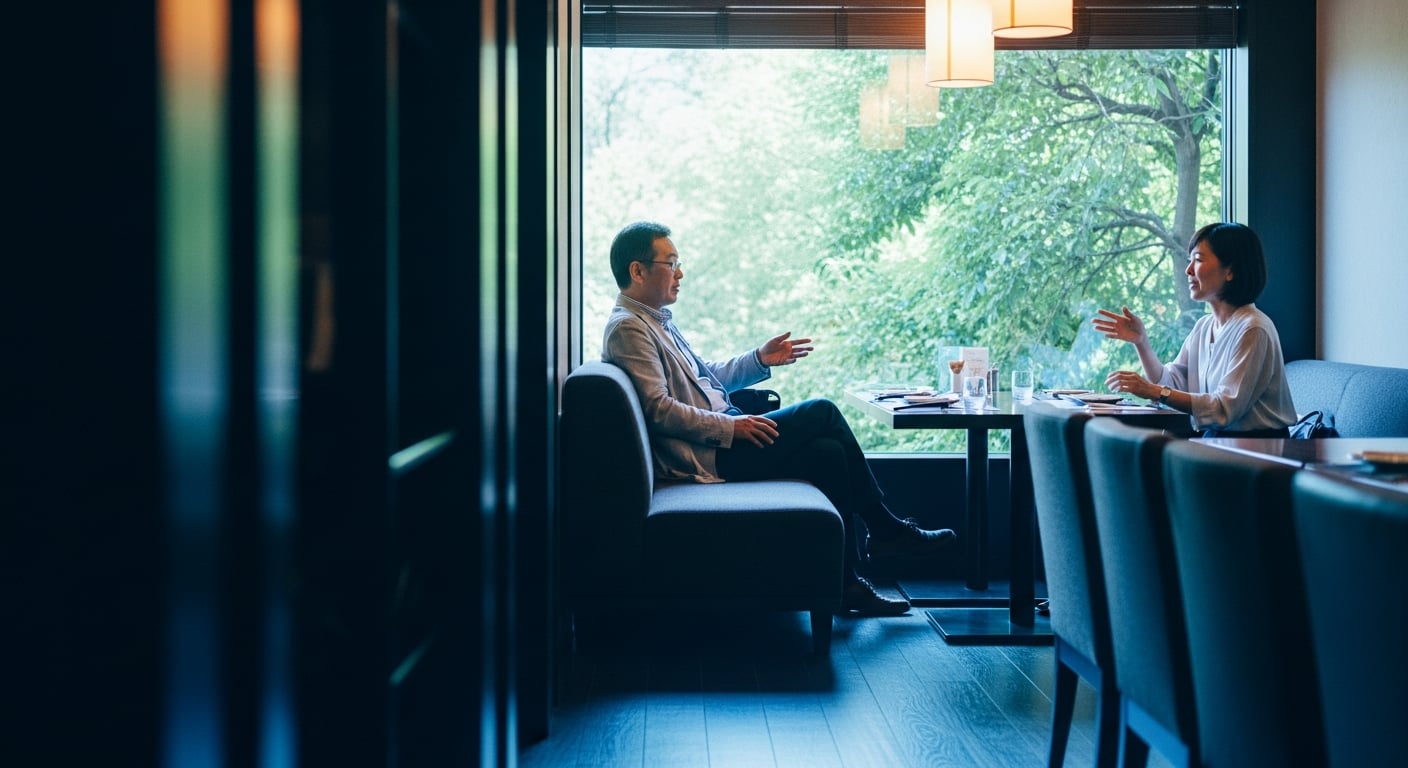
The Question Everyone Has: Is Rare Wagyu Actually Safe to Eat?
Let's address this directly, because it's the question that holds a lot of people back — and it deserves more than a reassuring wave of the hand.
In the United States, the UK, and much of Western Europe, food safety guidelines generally advise cooking beef to an internal temperature of at least 71°C (160°F) to eliminate harmful bacteria such as E. coli and salmonella. This is sound, well-established guidance. So when a menu says "rare wagyu," it's completely natural to pause.
What makes Itadaki different is not cultural bravado — it's engineering.
Founder Masayuki Goto, a Certified Food Sanitation Supervisor licensed by Japan's Ministry of Health, Labour and Welfare, spent years developing a proprietary two-stage cooking technique specifically to solve this problem. The process heats the beef to over 70°C at the core — fully meeting Japan's strict national food safety standards — while preserving the silky, tender mouthfeel that makes the experience unique. It's not served raw. It's not served medium-rare in the Western sense. It is precisely, technically cooked to a point that satisfies both regulatory standards and the sensory quality that makes the dish worth traveling for.
This technique is difficult to replicate and represents genuine culinary innovation. Goto didn't compromise on safety to achieve a dramatic menu concept — he built the safety into the concept from the ground up.
Only two beef sources are used: Horai Wagyu and Mikawa Beef, both raised in Aichi Prefecture under rigorous quality control by trusted local farms with whom Itadaki maintains direct sourcing partnerships. The supply chain is short, transparent, and carefully managed.
What Arriving at Itadaki as a Solo Diner Actually Feels Like
Itadaki is located on the 2nd floor of a building at 4-1-20 Osu, Naka-ku — a four-minute walk from Yabacho Station Exit 4 on the Meijo Subway Line. From Nagoya Station, it's roughly 10 minutes by subway: Higashiyama Line to Sakae, then transfer to the Meijo Line to Yabacho. Straightforward, even for first-time visitors.
Look for the signage that reads「元祖レア牛丼 頂」(Ganso Rea Gyudon Itadaki) at street level, and take the stairs up.
The restaurant seats 18 in total, with five counter seats specifically designed for solo diners. The seating is sofa-style throughout — the kind of seat where you settle in rather than perch awkwardly. For a business traveler eating alone between meetings, this matters. There's no sense of being squeezed into a corner or rushed through your meal.
The printed menu is fully available in English, with photos, prices, and ingredient explanations clearly laid out. No language barrier. No pointing at kanji and hoping for the best. If you want to ask something, the staff are welcoming — and a translation app works perfectly well in this environment.
Opening hours are 11:00–15:00, with last order at 14:30. Itadaki operates on Saturdays, Sundays, Mondays, and Tuesdays only — no dinner service. For business travelers whose schedules shift by the day, it's worth checking the monthly business calendar on Instagram before you go.
The Dish Itself: What the Five-Step Experience Looks Like
The bowl arrives in a traditional Japanese ceramic vessel. The arrangement is deliberate: carefully layered Horai Wagyu over rice, topped with a raw Nagoya Cochin egg, shiso leaves, and pickled radish. Alongside it: complimentary condiments including pickled ginger, dried nori seaweed, chirimen jako (dried whitebait from Minamichita), and Itadaki's original 8-spice blend.
The English menu includes a five-step visual guide titled "How to Enjoy Rare Gyudon" — breaking down each stage of the experience clearly. Step one: separate the egg, with the white going into your miso soup and the yolk placed directly on the beef. Step two: taste the wagyu in its pure form first, appreciating the texture and flavor that the two-stage technique creates. Step three: mix the yolk through for a richer, silkier bite. Steps four and five: layer in condiments, then finish with wasabi for a clean, refreshing close.
It sounds almost ceremonial — and in a sense, it is. The name "Itadaki" comes from "itadakimasu," the Japanese expression of gratitude spoken before eating. That spirit is embedded in the structure of the meal itself.
The Horai Wagyu at the center of all this is genuinely rare: produced by only three farms in Japan, with just 300 heads raised annually — fed on sake lees from Horaisen Sora, a renowned Aichi brewery. Out of approximately 500,000 wagyu produced across Japan each year, these are 300. The flavor reflects that specificity: a balance of light marbling and lean beef character that is unlike the heavily marbled wagyu styles more commonly associated with famous brands.
"Instagram-worthy presentation and unforgettable taste. My followers keep asking about it."
— Guest review
For a solo lunch between meetings, this is not a difficult thing to imagine. The bowl is striking. The story is real. And yes — if you photograph it, people will ask.
✓ Key Takeaways
- Itadaki's rare wagyu is cooked to over 70°C at the core using a proprietary two-stage technique — fully meeting Japan's national food safety standards. "Rare" describes the texture and eating experience, not undercooked beef.
- Solo dining is thoughtfully accommodated: five counter seats, sofa-style comfort, English menu with a step-by-step guide, and welcoming staff who don't require you to speak Japanese.
- Horai Wagyu is limited to 10 bowls per day. For business travelers with fixed schedules, a reservation via Tabelog Online is the safest approach — note「鳳来牛希望」in the comments field to request Horai Wagyu specifically.
The One Practical Detail That Changes Everything: Reserving Horai Wagyu
Horai Wagyu is limited to 10 bowls per day. That is not a marketing figure — it reflects the actual supply of an ingredient produced in quantities too small for most restaurants to even consider featuring.
For a business traveler who has one specific lunch window and no margin for a detour, this detail matters. The recommended approach is to book in advance via Tabelog Online. Reservations can be made in English on the Tabelog website. When completing your booking, copy and paste the following phrase into the notes field:
鳳来牛希望
This tells the kitchen that you are requesting the Horai Wagyu bowl. Simple, and it removes all uncertainty from your lunch plan.
If you're walking in without a reservation, arriving right at 11:00 when the doors open gives you the best chance. And if Horai Wagyu has sold out, Mikawa Beef Rare Gyudon — the second signature offering, prepared with the same two-stage technique — is always available. It starts from ¥1,800 for the standard size (Fumoto: 100g beef, 200g rice) and represents the same commitment to Aichi ingredients and food safety standards.
Average spending per visit runs around ¥3,000, which for the quality and uniqueness of the experience is a figure that rarely comes up in complaints.
"I traveled to Nagoya specifically to eat here — it was 100% worth it."
— Guest review
Why This Lunch Stays With You After the Meetings Are Done
There's a particular kind of lunch that business travelers remember — not because it was the fanciest room or the longest menu, but because it was completely specific. A dish that exists only here, made from ingredients grown only in this region, prepared using a technique developed by one person who spent years figuring out how to do something no one had done before.
Masayuki Goto founded Itadaki in April 2022, after 18 years in the hospitality industry, with a question that turned out to have a genuinely interesting answer: why had no one ever created a premium version of gyudon — Japan's humble beef bowl — when every other donburi style had its fine dining equivalent? The answer became a restaurant, a culinary concept, and a sourcing philosophy built entirely around Aichi Prefecture's agricultural identity.
Itadaki has since been featured on eight major Japanese television programs, including NHK, as the originator of the Rare Wagyu Gyudon category. That recognition is meaningful — but it doesn't change what the lunch feels like from a counter seat on a Tuesday afternoon. Quiet. Deliberate. Worth the detour.
For complete menu details, access information, and everything else you need to plan your visit, head to our official page: https://itadaki8.com/english/
When your schedule opens up and you're ready to secure your bowl — particularly if Horai Wagyu is on your list — a reservation takes only a few minutes:
Reserve Your Rare Wagyu Experience
And if you'd like to check our current operating schedule before you plan your day:
Check Our Monthly Schedule on Instagram
The counter seat will be ready. The rest is up to you.