Asian Games 2026: Global Foodies Discover Nagoya's Rare Wagyu Beef
 gotowp
You're scrolling through Google Maps somewhere in Nagoya, maybe between stadium events or after a morning at Osu Kannon Temple, when a listing stops you cold: Rare Wagyu Gyudon. The photos are striking — thinly sliced beef, a golden egg yolk, a bowl of rice that somehow looks both humble and extraordinary. Then you read the description more carefully. Rare-style. And that familiar hesitation kicks in.
Is this actually safe to eat? Back home, health authorities in the US, UK, Australia, and much of Europe actively advise against consuming undercooked beef. E. coli. Salmonella. You've heard the warnings. And yet here you are, staring at what might be the most interesting-looking lunch of your entire Japan trip — during one of the biggest sporting events Central Japan has ever hosted.
That exact moment — the curiosity-meets-caution freeze — is something we hear about regularly here at Itadaki. And it's exactly what this article is for.
Who This Is For
- ✅ Travelers visiting Nagoya for the 2026 Asian Games who want to explore local food but aren't sure about rare-style beef preparations
- ✅ Visitors from Western countries who have concerns about food safety when eating rare or near-raw beef
- ✅ Wagyu enthusiasts curious about Horai Wagyu but hesitant to take the plunge without understanding the cooking method
- ✅ Anyone who discovered Itadaki through Google Maps or a travel guide and wants to know what to expect before making a reservation
- ✅ First-time visitors to Japan exploring authentic culinary experiences beyond the familiar
The Moment of Discovery — And the Question That Follows
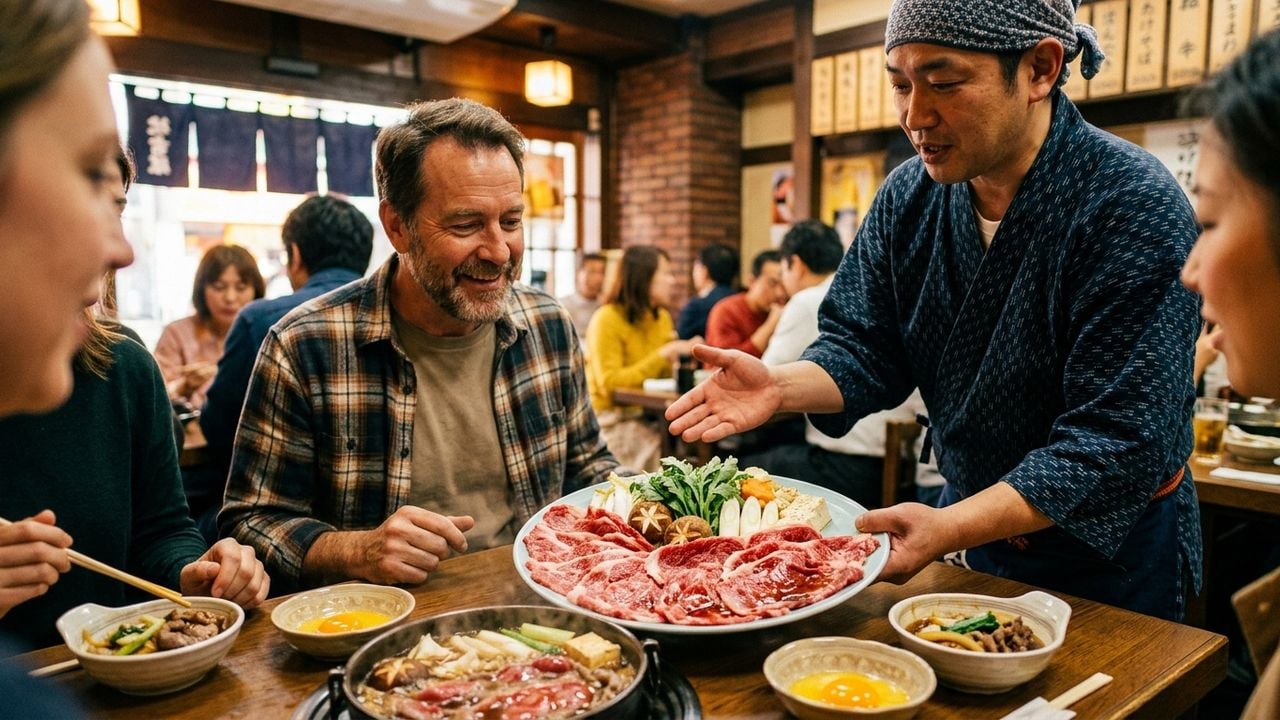
During the Asian Games 2026, Nagoya has welcomed an extraordinary wave of food-curious visitors from across Asia, the Middle East, Europe, and the Americas. Many of them have already sampled Kobe beef, tried Matsusaka shabu-shabu, and worked their way through the usual highlights of Japanese cuisine. Nagoya itself has been a revelation — Miso Katsu, Hitsumabushi, Tebasaki — but every so often, a guest stumbles onto something they weren't expecting at all.
That's how it tends to happen at Itadaki. Not through a concierge recommendation or a food magazine spread, but through the simple act of wandering and searching. One guest recently captured it perfectly:
"I discovered Itadaki through Google Maps and it became the best meal of our Japan trip."
— Guest visiting Nagoya during their Japan trip
That spontaneous discovery is meaningful to us. But we also know that for many international visitors — particularly those from Western food cultures — the phrase "rare wagyu" on the menu isn't an instant yes. It's a pause. A search. A conversation with a travel companion. Is this actually safe?
Let's answer that directly.
The food safety question is real, and one article can't capture every detail about how our schedule and availability work during the Asian Games period. Our monthly business calendar — including irregular closure dates and peak-season updates — is posted regularly on Instagram. Takes about 30 seconds to check before you plan your lunch.
Why Western Travelers Hesitate — And Why Japan Is Different
The concern is completely understandable, and we don't dismiss it. In the United States and across much of Europe, food safety guidelines from organizations like the USDA and the UK Food Standards Agency specifically warn against eating undercooked ground or whole-muscle beef without proper internal temperature control. The risks — E. coli O157:H7, Salmonella, and other pathogens — are real and well-documented in those food systems.
Japan operates under a different framework, with the Ministry of Health, Labour and Welfare setting its own rigorous standards for beef preparation. But more importantly, what Itadaki serves is not simply "rare" beef in the Western sense of the word. What looks rare on the plate is the result of something far more deliberate.
Our founder Masayuki Goto — a Certified Food Sanitation Supervisor and Licensed Restaurant Operator under the Aichi Prefecture Public Health Center — developed a proprietary two-stage cooking technique specifically to solve this challenge. The beef is heated to over 70°C at the core during preparation, fully meeting Japan's Ministry of Health, Labour and Welfare food safety requirements. What you experience on the plate — that soft, almost silken texture that feels rare — is not undercooked beef. It is the result of a precise, temperature-controlled process that achieves a rare sensation while ensuring complete food safety.
This technique is Itadaki's intellectual property. It took time, testing, and Goto's 18 years of food industry experience to develop it correctly. No other gyudon restaurant in Japan offers this same preparation.
✓ Key Takeaways
- Itadaki's rare-style wagyu is cooked to over 70°C at the core — meeting Japan's strictest food safety standards, despite its rare appearance and texture
- The two-stage cooking technique is proprietary to Itadaki and was developed under the direct supervision of a Certified Food Sanitation Supervisor
- Only premium Aichi Prefecture beef — Horai Wagyu and Mikawa Beef — is used, both sourced from farms under rigorous quality control
Now that you understand exactly how the two-stage cooking technique works and why the food safety concern doesn't apply here the way it would back home, the next practical step is securing a bowl before the daily limit runs out. Horai Wagyu is capped at 10 bowls per day, and the Asian Games lunch rush is real. Reservation is handled entirely through Tabelog — no account required beyond a basic registration.
What Happens at the Table — A Realistic Picture
Understanding the cooking method is one thing. Understanding what it actually means when the bowl arrives in front of you is another. Here's what a typical experience looks like for a first-time visitor navigating this with some initial hesitation.
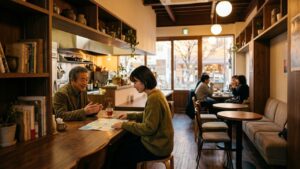
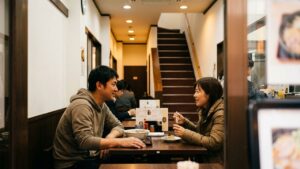
A couple visiting Nagoya for the Asian Games, staying near Sakae, had debated whether to try Itadaki after seeing it on Google Maps the previous evening. The food safety question had come up in their conversation. They decided to make a reservation via Tabelog and showed up at the Osu location — a four-minute walk from Yabacho Station — on a Saturday lunch.
The English-language menu on the table explained the two-stage cooking method clearly. The five-step eating guide, printed in English alongside photographs, walked them through the experience: separating the Nagoya Cochin egg so the yolk sits on the beef, tasting the wagyu first on its own before adding condiments, exploring the pickled ginger, chirimen jako, and the original 8-spice blend in sequence. By step two, the hesitation had dissolved entirely. By step four, they were asking the staff about the farms.
That scenario — initial caution giving way to genuine delight — plays out at our counter seats and sofa tables regularly. The printed guide and English menu aren't afterthoughts. They were designed specifically so that international guests could engage with the dish on their own terms, without needing to ask a dozen questions just to feel comfortable eating.
The beef itself — whether Horai Wagyu (limited to 10 bowls per day) or Mikawa Beef — comes from farms that Goto sources directly. Horai Wagyu is produced by just three farms in Japan, with only 300 heads raised annually. The cattle are fed on sake lees from Horaisen Sora, a renowned local premium sake — a feeding method that shapes the beef's distinctive flavor profile. This level of traceability is part of what makes the food safety story coherent from farm to bowl.
What "Safe Rare" Actually Tastes Like
We could spend more time on the technical explanation, but the more honest thing to say is this: the proof is in the eating.
The texture of Itadaki's rare-style wagyu is unlike anything most international guests have encountered in a beef bowl context. It doesn't have the chewiness of a well-done cut, nor the raw resistance of a steak tartare. It sits in its own category — yielding, almost buttery, with the marbling of Horai Wagyu's black cattle genetics expressed in a way that a higher-heat preparation would simply destroy. The magic sauce, built on white soy sauce from Hekinan City and blended with wine, complements rather than competes with the beef's natural flavor.
Visitors who have tried Kobe beef, Matsusaka beef, and Omi beef sometimes tell us that Horai Wagyu surprised them most — not because of aggressive richness, but because of its balance. The lean uchimomo cut of Mikawa Beef, available every day without the 10-bowl limit, offers a different entry point: cleaner, lighter, and a genuine discovery in its own right.
If you're visiting Nagoya during the Asian Games and looking for a lunch that tells you something true about this city and this prefecture, the story of the rare wagyu beef bowl that every Asian Games visitor should try begins with exactly this question — and the answer is already on the table.
Practical Notes Before You Go
A few things worth knowing so your visit goes smoothly:
Getting there: Itadaki is located on the 2nd floor at 4-1-20 Osu, Naka-ku, Nagoya — a four-minute walk from Yabacho Station Exit 4 on the Meijo Subway Line. From Nagoya Station, the total journey is roughly 10 minutes via the Higashiyama Line to Sakae, transferring to the Meijo Line.
Hours and availability: We're open for lunch only (11:00–15:00) on Saturdays, Sundays, Mondays, and Tuesdays. On public holidays, we open at 9:00. Wednesday through Friday we are closed. Horai Wagyu is limited to 10 bowls daily and can sell out during peak hours — reserving your Horai Wagyu bowl in advance is strongly recommended during the Asian Games period. Irregular closures may apply; the monthly business calendar is posted on our official Instagram.
Language support: Menus are available in English, Simplified Chinese, and Korean. The five-step eating guide is printed in English with photographs. Staff will do their best to assist in English.
Payment: Credit cards, Apple Pay, and Google Pay are accepted.
For our complete menu, access details, and store information, visit our official page at https://itadaki8.com/english/
The Question Is Worth Asking
Food safety concerns aren't a sign of timidity — they're a sign of being thoughtful about what you eat. We respect that, and we've built Itadaki's entire preparation method around answering that concern with something more than reassurance: a certified, tested, documented technique that delivers both safety and an extraordinary sensory experience.
The Asian Games has brought thousands of visitors to Nagoya who are curious, adventurous, and genuinely interested in discovering what this city tastes like beyond the usual landmarks. Itadaki exists for exactly that kind of discovery. The bowl is waiting. The story behind it is worth knowing. And the answer to your safety question — the real, detailed, honest one — is 70°C at the core, every single time.
You came here with a specific question — is rare wagyu actually safe to eat — and now you have a specific answer: 70°C at the core, certified preparation, and a technique built from 18 years of food industry experience. The only thing left is to sit down at the table. Secure your spot before the 10 daily Horai Wagyu bowls are gone.