Aichi-Nagoya 2026 Asian Games: The Rare Wagyu Beef Bowl Every Visitor Should Try
 gotowp
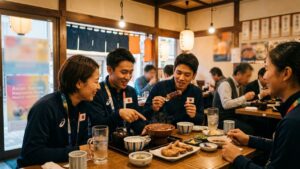
The 2026 Asian Games have officially arrived in Aichi-Nagoya, and the city is alive in a way that feels genuinely electric right now — packed stands, athletes from across the continent, and visitors discovering a side of Japan that most people miss entirely. If you're here for the Games, you already know that Nagoya is more than a stopover. What you might not know yet is that it's also home to a culinary experience that, once you've had it, you'll never stop talking about.
A once-in-a-lifetime meal isn't defined by a price tag. It's defined by a story that belongs to you — and one that can't be replicated anywhere else in the world. During your time in Nagoya, there is one bowl that fits that description perfectly.
Who This Is For
- ✅ Visitors attending the 2026 Aichi-Nagoya Asian Games who want their food memories to match the scale of the event
- ✅ Wagyu enthusiasts who have already tried Kobe or Matsusaka beef and want to discover what comes next
- ✅ Travelers looking for an authentic Nagoya experience that goes beyond sightseeing
- ✅ Anyone planning a lunch stop in the Osu or Sakae area during the Games
- ✅ First-time and repeat Japan visitors who want at least one meal worth telling stories about
What makes a meal truly once-in-a-lifetime during a Japan trip?
The answer isn't about finding the most expensive restaurant or chasing a Michelin star. It's about sitting down in front of something that was invented in this city, using ingredients that exist in quantities so small they could disappear entirely within a single lunch rush — and knowing that no other trip, to any other city, could have given you this.
That's the philosophy behind Itadaki, a specialty restaurant in Osu, Nagoya that opened in April 2022. Founder Masayuki Goto — who has spent 18 years in the food and hospitality industry — asked a simple but radical question during the pandemic: why does Japan have premium versions of katsudon, oyakodon, and kaisendon, but no premium gyudon? The beef bowl had been left behind, claimed entirely by fast food chains. Goto decided to change that.
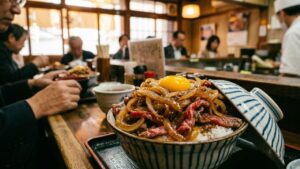
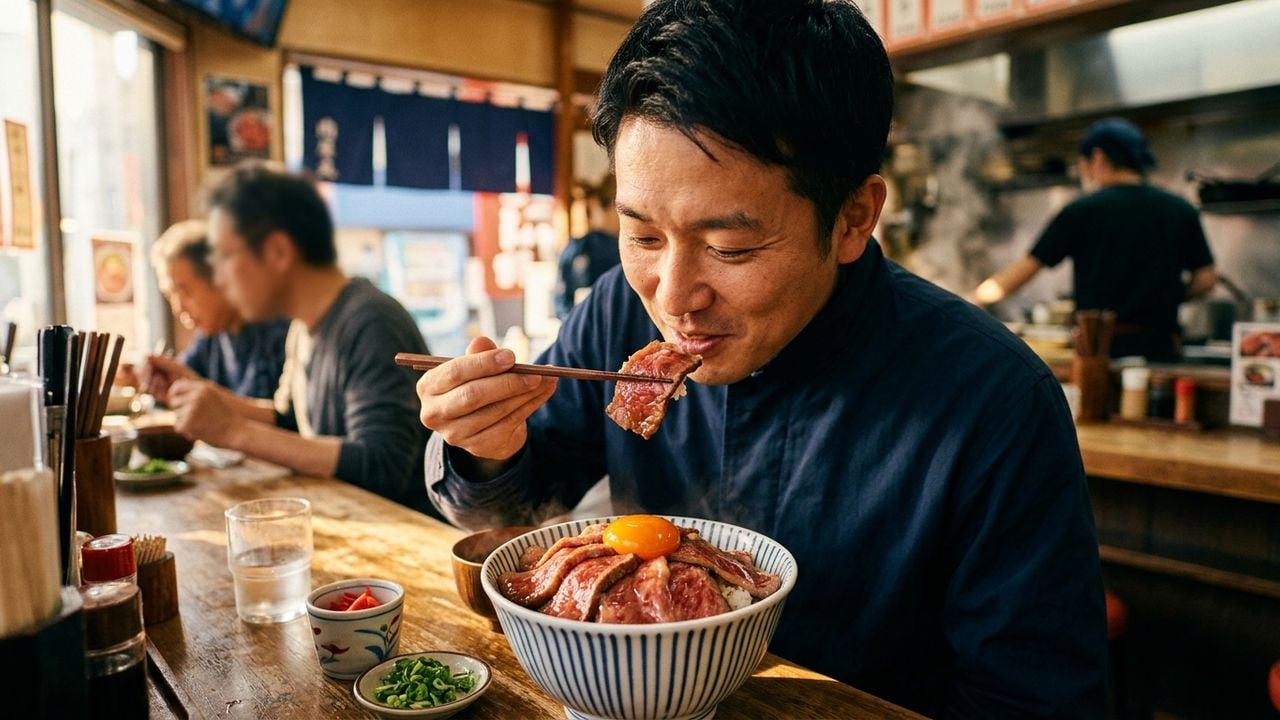
What emerged was the world's first "Rare Wagyu Gyudon" — a concept invented at Itadaki and nowhere else. The dish has since been featured on 8 major Japanese TV programs, including NHK, and recognized as a genuinely new culinary category. But the television attention isn't what makes it memorable. The Horai Wagyu is.
You now know that the Horai Wagyu Gyudon is limited to 10 bowls a day — and that Itadaki is closed Wednesday through Friday, with hours that shift on public holidays during the Asian Games period. The monthly business calendar is published on our official Instagram, where you can confirm exact open days before you plan your route. No account needed to view it.
What is Horai Wagyu, and why is it so rare?
Of the approximately 500,000 wagyu cattle raised in Japan each year, only 300 are Horai Wagyu — produced by just 3 farms in the Okumikawa region of Aichi Prefecture. These cattle are fed on sake lees from Horaisen Sora, a premium local sake, which gives the beef a flavor profile unlike anything you'll find under a more familiar brand name.
Guests who have tried both describe it better than we ever could:
"I've had Kobe beef and Matsusaka beef, but Horai Wagyu at Itadaki was on another level."
— Guest testimonial
That kind of comparison means something. Kobe and Matsusaka are among the most celebrated wagyu brands in the world. For Horai Wagyu to stand apart from them isn't a marketing line — it's the honest reaction of someone who came in with high expectations and left genuinely surprised.
Itadaki is one of the very few restaurants in Nagoya with a direct-supply partnership with these farms. The Horai Wagyu Gyudon (called Shinkoccho in the standard size) is limited to 10 bowls per day — not as a gimmick, but because that's how much arrives fresh each morning.
Is the "rare-style" preparation actually safe to eat?
This is the most common question we hear, and it deserves a straight answer. The short answer is: yes, fully.
Goto developed a proprietary two-stage cooking technique that heats the beef to over 70°C at the core — the threshold required by Japan's Ministry of Health, Labour and Welfare food safety standards. The result preserves what guests describe as a "rare" mouthfeel, but the process is certified safe and is carried out precisely by a trained team following Goto's exact recipe every service.
Goto himself holds a Certified Food Sanitation Supervisor qualification, and the restaurant operates under a Licensed Restaurant Operator permit from the Aichi Prefecture Public Health Center. The technique is Itadaki's intellectual property — developed specifically to make this experience possible without compromise on safety.
So the "rare" in Rare Wagyu Gyudon refers to both the texture and the scarcity. Both are real.
✓ Key Takeaways
- Horai Wagyu is produced in quantities of just 300 heads per year across 3 farms — Itadaki sources it directly and limits availability to 10 bowls per day
- The "rare-style" texture is achieved through a proprietary two-stage cooking method that fully meets Japanese food safety standards
- Itadaki invented the Rare Wagyu Gyudon concept — it exists nowhere else in the world
With 10 Horai Wagyu bowls per day and a stadium full of fellow visitors in town for the Asian Games, the window to secure one is genuinely narrow. Tabelog reservations let you lock in your bowl before you board the subway to Yabacho — so the story you want to tell starts with a confirmed seat, not a sold-out sign.
What does the full experience actually look like at the table?
Every element on the tray is from Aichi Prefecture — not as a regional marketing exercise, but because Goto built the restaurant on a genuine commitment to the farmers around him who struggled during the pandemic. The rice is Aichi no Kaori, grown locally. The miso soup uses Hatcho miso from Okazaki. The pickles are Atsumi Ichō-zuke from the Atsumi Peninsula. The egg — which arrives raw and golden on top of the beef — is a Nagoya Cochin egg from Yamada Poultry Farm.
The dish is served with a five-step guide printed in English, which walks you through the intended eating sequence: separating the egg white into the miso soup, placing the yolk on the beef, eating the wagyu first in its purest form, then gradually mixing condiments — pickled ginger, dried seaweed from Mikawa Bay, chirimen jako, and Itadaki's original 8-spice blend — until you finish with a touch of wasabi. Each step genuinely changes the flavor. The guide isn't decoration; it's part of how the dish works.
Complimentary condiments sit on every table, all sourced from Aichi. English menus are available as printed materials. Staff are accustomed to welcoming international guests and communicate warmly regardless of language.
If you'd like to explore Osu before or after your meal, the area is well worth the extra time. Osu Kannon Temple is a short walk from Itadaki, and the Osu Shopping Street — with over 1,200 shops and more than 400 years of history — is the kind of place that rewards slow walking. Hisaya-odori Garden Flarie, a free-admission urban garden featured in major English travel guides, is just a 3-minute walk from Yabacho Station.
How do I get there, and do I need a reservation?
Itadaki is located on the 2nd floor at 4-1-20 Osu, Naka-ku, Nagoya — a 4-minute walk from Yabacho Station Exit 4 on the Meijo Subway Line. From Nagoya Station, the journey takes approximately 10 minutes by subway (Higashiyama Line to Sakae, then transfer to the Meijo Line toward Yabacho).
During the Asian Games period, Nagoya's transit is busier than usual, but the subway system remains reliable and Yabacho is a straightforward stop. The restaurant seats 18 guests across counter seats and sofa-style table seats — comfortable for solo diners, couples, and small groups.
Opening hours during the Games: Tuesday, Saturday, and Sunday from 11:00 to 15:00 (last order at 14:30), and on public holidays from 09:00 to 15:00. Wednesday, Thursday, and Friday are closed. Itadaki operates lunch service only — there is no dinner service.
For the Horai Wagyu Gyudon specifically, a reservation via Tabelog is strongly recommended. With only 10 bowls available each day, they can sell out during peak lunch hours. The Mikawa Beef Rare Wagyu Gyudon — starting from ¥1,800 for the Fumoto size — is always available and equally crafted with the same care and sourcing philosophy, making it a genuine option if Horai Wagyu is fully reserved.
Business schedules can vary, so before you visit, it's worth confirming the monthly calendar. If you're planning your Games itinerary now, this guide to dining near the Asian Games venues covers the logistics in more detail and may help you fit Itadaki into your schedule naturally.
"The lunch was the highlight of my Nagoya trip — I'm telling all my friends about it."
— Guest testimonial
The Asian Games will end. The flights home will come. But a meal with a story this specific — 300 heads of wagyu a year, a cooking method invented in this restaurant, every ingredient traced to the farms of Aichi — that stays with you in a way that a stadium full of fireworks simply doesn't.
For our complete menu, access details, and store information, visit our official page at https://itadaki8.com/english/
The Games are here, the city is full, and the 10 daily bowls of Horai Wagyu won't wait. If this is the meal you want as the centerpiece of your Nagoya days, the next step is a Tabelog reservation — it takes a few minutes and gives you the certainty that your seat and your bowl will be there when you arrive.