8-Min Walk from Nagoya Sakae Washington Plaza: Asian Games Visitors' Hidden Spot
 gotowp
You've just checked into Nagoya Sakae Washington Plaza, dropped your bags, and opened Instagram. Your followers are already waiting for something memorable — not another shot of a convenience store onigiri, not a bowl of ramen that looks identical to the one you posted in Tokyo. You want that photo. The one where someone comments, "Wait, what is that?" and you actually have an answer worth typing out.
That's exactly the moment Masayuki Goto, founder of Itadaki, had in mind when he created this place. And it's only an 8-minute walk from your hotel.
Who This Is For
- ✅ Asian Games 2026 visitors staying in Sakae who want a lunch story that goes beyond the stadium
- ✅ Travelers who've already posted "Kobe beef" or "Matsusaka wagyu" and want something genuinely new to share
- ✅ Anyone who believes a great travel photo needs a great story behind it, not just good lighting
- ✅ Guests exploring the Osu and Sakae districts looking for a visually striking, Instagram-worthy lunch experience
- ✅ First-time visitors to Nagoya who want to discover what makes this city distinct from Tokyo or Osaka
Why Goto Built a Restaurant That Tells a Story Before You Even Take a Bite
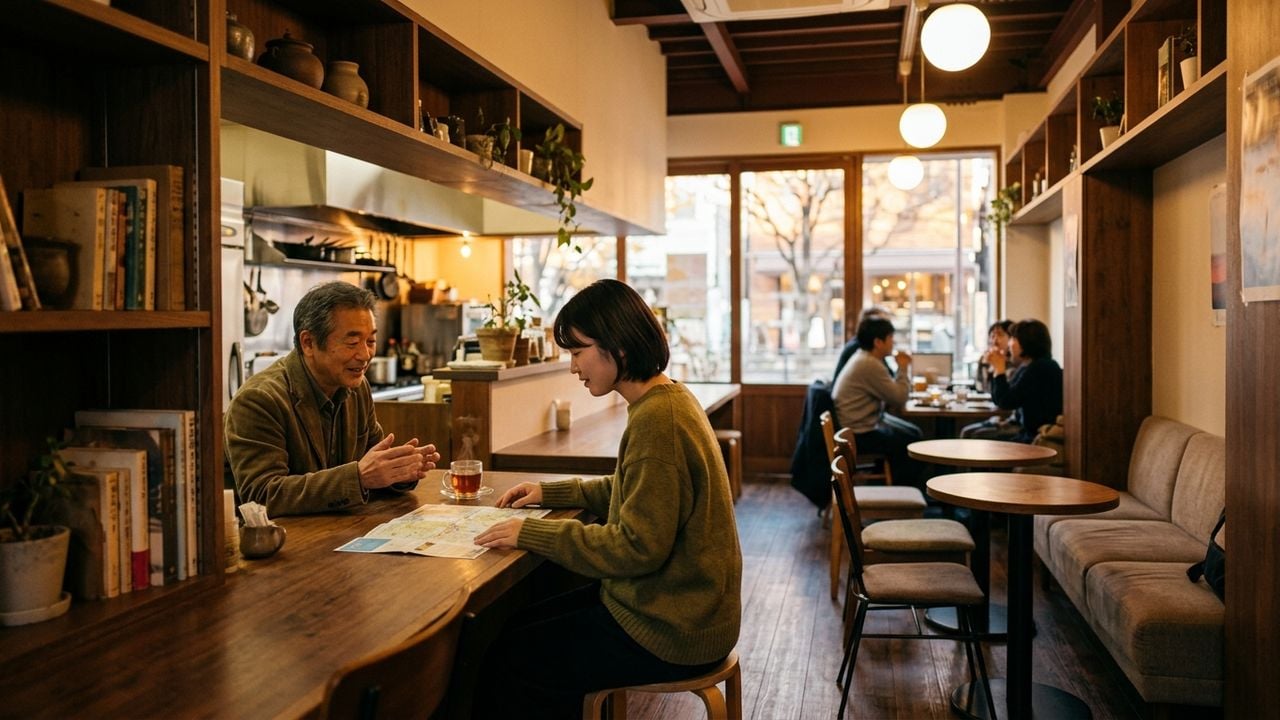
Goto has been in the food and beverage world for 18 years, and he's the kind of person who travels specifically to eat — not just to fill his stomach, but to understand how a culture expresses itself through flavor. When he's not at Itadaki, you'll find him at a basketball game at the newly opened IG Arena, or wandering the preserved Edo-period lanes of Shikemichi, noting how the best experiences are never just visual — they always come wrapped in a story.
That philosophy is what gave birth to Itadaki in April 2022. During the pandemic, small Aichi Prefecture farms that Goto had sourced from for years were struggling with unsold harvests. He watched wagyu producers, rice growers, and artisan condiment makers face a crisis that had nothing to do with the quality of what they raised or grew. He felt he had to do something.
The question he asked himself was deceptively simple: Katsudon has a premium version. Oyakodon has a premium version. Kaisendon has a premium version. Why has no one ever made a truly premium gyudon? Everyone thought of gyudon as chain-restaurant fast food. Goto decided to change that entirely — by sourcing every single ingredient from Aichi Prefecture and developing a proprietary two-stage cooking technique that delivers a rare-style wagyu experience while fully meeting Japan's food safety standards.
The restaurant's name comes from itadakimasu — the Japanese expression of gratitude spoken before a meal. It's not a marketing tagline. It's the operating philosophy: that food is a gift from farmers, land, and craft, and deserves to be treated that way at every step.
You're 8 minutes from Itadaki, but the Horai Wagyu is capped at 10 bowls a day — and during Asian Games season, those bowls go fast. The monthly business calendar tells you exactly which days are open and when to time your visit. Goto posts it on Instagram before each month begins.
The Dish That Makes Your Followers Stop Scrolling
Here's the thing about a dish that's genuinely Instagram-worthy: the image alone isn't enough to make it memorable. What stops people mid-scroll is when they see something and immediately wonder, What is that? — and then, crucially, when the answer turns out to be a story they want to retell.
Itadaki's signature bowl arrives arranged in a traditional Japanese ceramic vessel: thinly sliced wagyu resting over premium Aichi-grown rice, a golden Nagoya Cochin egg yolk placed on top, shiso leaves and pickled radish fanned alongside. The visual is striking on its own. But the story behind it is what separates this photo from every other "wagyu lunch in Japan" post your followers have seen.
The beef is Horai Wagyu — a Japanese black wagyu produced in the Okumikawa region of Aichi Prefecture, raised by only 3 farms in Japan, with just 300 heads produced annually. Out of roughly 500,000 wagyu cattle in Japan, 300 are Horai Wagyu. These cattle are fed on sake lees from Horaisen Sora, one of Aichi's most celebrated local breweries, which contributes to a flavor profile that's distinctly lighter and more nuanced than the heavily marbled wagyu most international visitors associate with Japan's premium beef scene.
And Itadaki limits the Horai Wagyu bowls to just 10 per day.
When your followers ask "What is that?" — you'll have an answer that takes a full paragraph to tell. That's the difference between a photo and a travel story.
✓ Key Takeaways
- Itadaki is an 8-minute walk from Nagoya Sakae Washington Plaza, making it an ideal lunch stop during Asian Games 2026 sightseeing in the Sakae-Osu corridor
- The Horai Wagyu gyudon — limited to 10 bowls daily — offers a visually striking, story-rich experience that stands apart from familiar wagyu brands like Kobe and Matsusaka
- Every ingredient, from the rice to the egg to the condiments, is sourced exclusively from Aichi Prefecture, creating a cohesive "taste of Nagoya" narrative worth sharing
The five-step eating ritual is something you experience in the moment — but the Horai Wagyu that makes it worth photographing is limited to 10 bowls per day, and walk-ins during peak Asian Games weekends rarely find one available. A Tabelog reservation locks in the bowl before you arrive.
The Five-Step Guide That Turns a Meal Into a Memory
One of the things Goto is most deliberate about is that enjoying this dish isn't passive. He designed a five-step eating guide specifically so that guests experience the wagyu in layers — each step revealing something new about the same bowl.
You start by separating the raw Nagoya Cochin egg: the white goes into your miso soup, the golden yolk rests on top of the beef. Then you taste the wagyu in its purest form first, without mixing anything — just the rare-style texture and the clean, delicate flavor of Horai Wagyu. Next, you fold the yolk into the beef for a silkier, richer bite. Then the tabletop condiments come in: pickled ginger from Inazawa City's Kimura Farm, chopped seaweed from Mikawa Bay, tiny dried whitebait from Minamichita, and Itadaki's original 8-spice blend. The final step is a touch of wasabi for a clean, refreshing finish.
It sounds like a lot for a beef bowl. But that's the point — this isn't a beef bowl in the conventional sense. It's a structured culinary journey presented in a humble format.
"The five-step eating guide made the dish even more enjoyable and memorable."
— Guest review
Each of those five steps is also a moment worth photographing. The yolk before it breaks. The wagyu before you stir anything. The condiment spread laid out beside the bowl. You don't need to plan your shots — the experience unfolds naturally as a sequence of images that tell a complete story.
For visitors during the Asian Games season, when Nagoya's Sakae and Osu districts are buzzing with international energy, this rare wagyu lunch spot just minutes from Yabacho Station has become a particularly meaningful stop — a moment of quiet craft amid the excitement of the games.
Getting Here from Nagoya Sakae Washington Plaza
The walk from Nagoya Sakae Washington Plaza to Itadaki takes about 8 minutes on foot, passing through the Sakae district and into the northern edge of the Osu area. Alternatively, you can take the Meijo Subway Line one stop from Sakae Station to Yabacho Station — Itadaki is a 4-minute walk from Yabacho Station Exit 4.
The restaurant is located on the 2nd floor at 4-1-20 Osu, Naka-ku, Nagoya. Look for the staircase — there's no elevator, so please keep that in mind if you're traveling with a stroller. Staff may assist with carrying when available, though this cannot be guaranteed depending on conditions at the time.
Itadaki is open for lunch only: 11:00–15:00 on Saturdays, Sundays, Mondays, and Tuesdays (last order 30 minutes before closing). On public holidays, including those that fall during the Asian Games period, the restaurant opens at 9:00. Wednesday, Thursday, and Friday are closed. Irregular closures may apply — Goto updates the monthly business calendar on Itadaki's official Instagram, so it's worth checking before you make the trip.
English menus are available, along with printed menus in Simplified Chinese and Korean. The five-step eating guide is also printed in multiple languages, so the experience is fully accessible whether or not you speak Japanese.
If you're planning to try the Horai Wagyu — and you should, if it's available — a reservation via Tabelog is strongly recommended. With only 10 bowls per day, they do sell out during peak lunch hours, especially on weekends and public holidays during the Asian Games season. The Mikawa Beef gyudon is always available as an excellent alternative, starting from ¥1,800.
If you're exploring more of what the Osu and Sakae area has to offer, this guide to the Osu district food and sightseeing scene during Asian Games 2026 is a good companion read — it covers the neighborhood context beyond just the meal itself.
A Story Worth Telling When You Get Home
There's a specific kind of travel experience that stays with you — not just in your camera roll, but in the stories you find yourself telling months later. "We found this tiny place in Nagoya, only 8 minutes from our hotel. They make a beef bowl using wagyu that only 3 farms in all of Japan produce. Just 300 cattle a year. They limit it to 10 bowls a day. And there's this five-step way of eating it..."
That's the story Goto designed into every bowl. Not through marketing, but through the craft itself — the ingredient choices, the cooking technique, the structured eating ritual, the all-Aichi sourcing philosophy. It's a meal that gives you something to say, not just something to photograph.
For Asian Games visitors staying in Sakae, Itadaki offers exactly what the best travel experiences do: a window into a place that most visitors never find, and a story that makes your Japan trip genuinely yours.
For our complete menu, access details, and store information, visit our official page at https://itadaki8.com/english/
You've read about the 300-head wagyu, the five-step guide, and the all-Aichi story behind the bowl — the next step is making sure that bowl is waiting for you when you arrive. Tabelog reservations are the only way to guarantee a Horai Wagyu gyudon before the 10 daily bowls sell out.