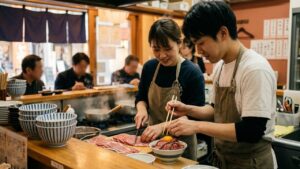
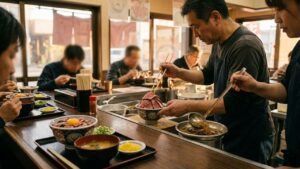
10 Reasons Itadaki Deserves Your Nagoya Lunch Reservation
 gotowp
A few weeks ago, a guest who'd just finished lunch stopped at the counter before leaving and said something that stayed with me: "I've been to Japan six times. This is the first time I've found somewhere that felt like I wasn't supposed to find it."
She'd discovered us through Google Maps while wandering near Osu Kannon Temple. No guidebook. No influencer recommendation. Just curiosity and a few minutes of scrolling — and suddenly she was sitting in front of a bowl of rare wagyu she'd never heard of, made with ingredients she hadn't known existed.
That moment is exactly what Itadaki was built for. Not for visitors on their first Japan trip following a printed list of famous names. For the ones who've already done that — and are now asking, "Where do people here actually eat?"
If that question sounds familiar, this article is for you.
Who This Is For
- ✅ Repeat visitors to Japan who've already covered Tokyo, Kyoto, and Osaka, and want something genuinely off the beaten path in Nagoya
- ✅ Food-focused travelers who value a dish's story and craft over brand recognition or star ratings
- ✅ Visitors staying in Nagoya as part of a broader itinerary (Shirakawa-go, Takayama, Gifu) looking for a standout lunch that matches the depth of their trip
- ✅ Anyone staying in Osu or Sakae who wants to understand what the neighborhood is actually about, beyond the shopping street
- ✅ Travelers who've had Kobe beef or Matsusaka beef and are wondering what else Japanese wagyu has to offer
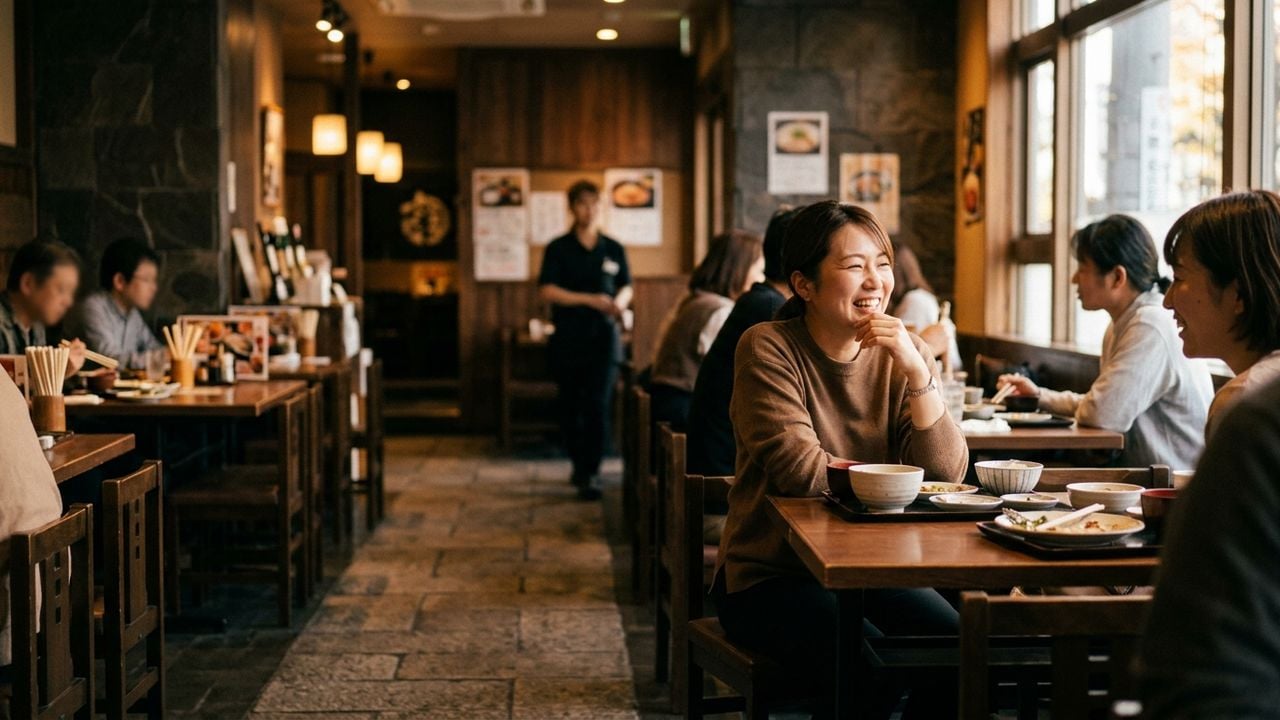
Before Itadaki: The Familiar Pattern Most Visitors Know
Here's a scene that plays out for a lot of repeat visitors to Japan. You've done the famous things. You've eaten at the famous places. Wagyu? You've had it — the beautifully marbled steak at the restaurant in Kyoto, or the yakiniku in Shinjuku. You know it's good. But somewhere around your third or fourth trip, the famous spots start to feel like a checklist, not a discovery.
Nagoya often gets skipped entirely in those early trips. It's between Tokyo and Kyoto on the Shinkansen, and most first-timers treat it as a transit stop rather than a destination. The result is that Nagoya's food culture — one of the most distinctive in Japan — remains genuinely unfamiliar to a huge number of international travelers, even those who've visited Japan many times.
That gap is where Itadaki exists.
You've read about the Horai Wagyu limit of 10 bowls a day — and the fact that Itadaki operates only four days a week. Knowing the monthly schedule before you build your Nagoya itinerary is the step most visitors miss. The official Instagram publishes the business calendar each month so you can plan around it. No account required to view it.
After Itadaki: What Changes When You Find the Right Place
When guests sit down at Itadaki for the first time, the shift is usually visible within the first few minutes. The menu arrives — printed in English, with a clear five-step guide explaining exactly how to eat the dish, in what order, and why each step matters. One guest put it simply:
"The English menu with clear serving instructions made the experience stress-free."
Guest review
That stress-free quality matters more than it sounds. When you're navigating a foreign city, a foreign language, and a dish you've genuinely never encountered before, the last thing you want is to feel like you're doing it wrong. At Itadaki, the experience is designed so that every visitor — regardless of their Japanese ability — can engage with it fully, at their own pace.
And then the bowl arrives.
What you're looking at is a Rare Wagyu Gyudon made with Horai Wagyu — a wagyu breed raised in Okumikawa, deep in Aichi Prefecture, by just three farms producing around 300 heads per year. In a country where wagyu cattle number in the hundreds of thousands, those numbers are extraordinary. The cattle are fed on sake lees from Horaisen Sora, a respected regional sake, which contributes to a flavor profile that's distinctly its own — leaner than the heavily marbled wagyu most visitors have tried, with a clean depth that doesn't fade after the first bite.
This is the dish that Masayuki Goto, Itadaki's founder, spent the COVID-19 pandemic years developing. When bars were restricted and the small Aichi farmers he sourced from were struggling with unsold harvests, Goto didn't step back — he built forward. He chose the gyudon as his format because it was humble, it was efficient, and it had never been done at this level. Every other major Japanese donburi style — katsudon, oyakodon, kaisendon — had a premium version. Gyudon didn't. Goto asked why, and then answered his own question by opening Itadaki in Osu in April 2022.
10 Reasons This Specific Place Earns Your Reservation
There are plenty of restaurants in Nagoya worth visiting. Here's what makes Itadaki different in ways that matter specifically to the kind of traveler this article is written for.
1. No one else is doing this. Itadaki invented the Rare Wagyu Gyudon as a culinary category. It has been recognized as the originator by eight major Japanese TV programs, including NHK. This isn't a variation on something you've already had.
2. The wagyu itself is genuinely rare. 300 heads per year across three farms. Those aren't marketing numbers — they're the actual production reality of Horai Wagyu, and they shape why the dish is limited to just 10 bowls per day.
3. The rarity is earned through craft, not scarcity theater. Goto's proprietary two-stage cooking technique heats the beef to over 70°C at the core — fully meeting Japan's food safety standards — while preserving the tender, rare-style texture that makes the dish what it is. This took years to develop and isn't replicable elsewhere.
4. Everything on the table comes from Aichi. The rice (Aichi no Kaori), the egg (Nagoya Cochin from Yamada Poultry Farm), the miso soup (Hatcho miso from Okazaki), the pickles (Atsumi Ichō-zuke from Atsumi Peninsula), the shiso leaves (Toyohashi-grown Aikei No.1), the complimentary condiments — every element on the table traces back to a specific farm, region, or producer in Aichi Prefecture. This is a full portrait of a place, not just a meal.
5. The neighborhood itself is part of the discovery. Itadaki is located in Osu — a district that mixes 400 years of merchant history with anime shops, cosplay culture, and one of Central Japan's most important Buddhist temples. It's exactly the kind of place that repeat Japan visitors tend to love precisely because mainstream English guidebooks haven't caught up with it yet.
6. The five-step eating guide turns the meal into an experience. The dish is designed to be eaten in a specific sequence — starting with the wagyu in its purest form, then adding the Nagoya Cochin egg yolk, then the condiments, then finishing with wasabi. Each step genuinely changes the flavor. The printed guide makes that journey accessible to any guest.
7. The restaurant is small, intentionally. 18 seats. No dinner service. Lunch only, four days a week (Saturday, Sunday, Monday, and Tuesday). This isn't a compromise — it's the model Goto designed to keep quality at the center of every bowl.
8. Sofa seating makes it comfortable for groups and families. Most of the tables feature sofa-style seating, which is unusually relaxed for a specialty lunch restaurant. It works just as well for a solo traveler at the counter as for a group of five sharing a side dish of stuffed green peppers alongside their gyudon.
9. The story you'll tell afterward is genuinely yours. The guests who come back — and some travel specifically to Nagoya to return — often say the same thing: that discovering Itadaki felt personal. Not found on a billboard or in a hotel lobby pamphlet. Found through searching, wandering, or a recommendation from someone who'd been there themselves. That feeling doesn't come from the famous spots.
10. The visit connects directly to why you travel. Goto named the restaurant "Itadaki" — from "itadakimasu," the expression of gratitude spoken before every meal in Japan. The philosophy behind the name is that food is a gift: from the farmers who raised the cattle, from the land that produced the rice, from the craftspeople who developed the sauce. A lunch here is an encounter with that idea in its most tangible form.
✓ Key Takeaways
- Itadaki is the originator of Rare Wagyu Gyudon — a culinary concept built entirely on Aichi Prefecture ingredients, including Horai Wagyu limited to just 300 heads produced annually across three farms.
- The experience is designed to be fully accessible to international visitors: English menus, a printed five-step guide, and welcoming service regardless of language ability.
- With only 10 bowls of Horai Wagyu available per day, and lunch service running only four days a week, reserving your spot in advance is the difference between getting the bowl and missing it.
The 10-bowl daily limit for Horai Wagyu is real — not a marketing line. If your Nagoya day is already taking shape around Osu, Shirakawa-go, or a castle visit, securing your seat now means one less variable to worry about on the day. Tabelog reservation takes a few minutes and confirms your spot directly.
Practical Details Worth Knowing Before You Go
Itadaki is a four-minute walk from Yabacho Station Exit 4 on the Meijo Subway Line, and also within walking distance of Sakae, Kamimaezu, and Osu Kannon stations. From Nagoya Station, the total journey is around 10 minutes by subway.
Lunch service runs from 11:00 to 15:00 (last order at 14:30) on Saturday, Sunday, Monday, and Tuesday. On public holidays, the restaurant opens earlier, at 9:00. Wednesday, Thursday, and Friday are non-operating days. There is no dinner service.
Because Horai Wagyu is limited to 10 bowls per day, it can sell out during peak hours. Reservation via Tabelog is the most reliable way to secure your bowl — particularly if you're planning your visit around another activity in the Osu area or a day trip to Shirakawa-go or Takayama the following morning. If you're also planning a lunch stop during your castle touring around Aichi, you might find this guide on what to eat when you explore Aichi's castles useful for building your itinerary.
The monthly business calendar — including any irregular closures — is published on Itadaki's official Instagram, so it's worth checking before finalizing your plans. For the complete menu, access details, and everything else you need to plan your visit, the full information is at Itadaki's official English page at itadaki8.com/english/.
The Kind of Lunch You'll Still Be Talking About
Repeat visitors to Japan often describe a turning point — the trip where the experience shifted from "seeing famous things" to "understanding something real." For a growing number of those travelers, that shift happens in Nagoya, in a neighborhood their first-trip selves skipped entirely, over a bowl that didn't exist a decade ago.
Itadaki isn't the restaurant for every visitor. It's the restaurant for the ones who are ready for it — who want to sit down, follow a five-step guide in English, taste a wagyu they genuinely didn't know existed, and leave with a story that belongs only to them.
That's the lunch worth reserving.
You've just read 10 reasons this specific bowl is worth the detour — but the bowl itself is limited to 10 a day, and the restaurant is open only four days a week. The gap between reading about it and actually tasting it closes with one step. Reserve your seat on Tabelog before the day fills.