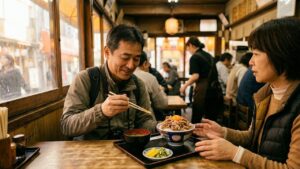
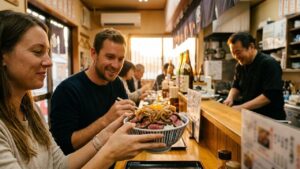
Behind the Scenes: How Itadaki Serves Castle Town Visitors
 gotowp
You've just spent the morning walking the stone paths of Nagoya Castle, imagining the footsteps of Oda Nobunaga and Tokugawa Ieyasu. Or maybe you took the early train out to Inuyama, stood at the edge of Japan's oldest original castle keep, and came back to the city with your camera full and your stomach completely empty. Either way, you're facing a familiar traveler's dilemma: it's lunchtime in Nagoya, you want something genuinely memorable — not just filling — and you have no idea where to begin.
You've already had sushi. You've tried ramen. You've had wagyu somewhere along the Golden Route and it was good, but somehow it felt like ticking a box. What you're quietly hoping for — though you might not have said it out loud — is a meal that feels like a discovery. Something with a story. Something you couldn't have planned before arriving in Japan.
That's the situation a lot of castle town visitors find themselves in when they walk into Itadaki.
Who This Is For
- ✅ Travelers who spent the morning at Nagoya Castle, Inuyama Castle, or Atsuta Shrine and want a lunch worth remembering
- ✅ Wagyu enthusiasts who have tried Kobe or Matsusaka beef and are ready to discover what else Japan is hiding
- ✅ Repeat visitors to Japan looking for something genuinely off the usual tourist circuit
- ✅ Anyone who wants their Japan trip to include at least one meal that becomes a story to tell back home
- ✅ Travelers curious about ultra-rare Aichi wagyu and what makes it different from any beef they've had before
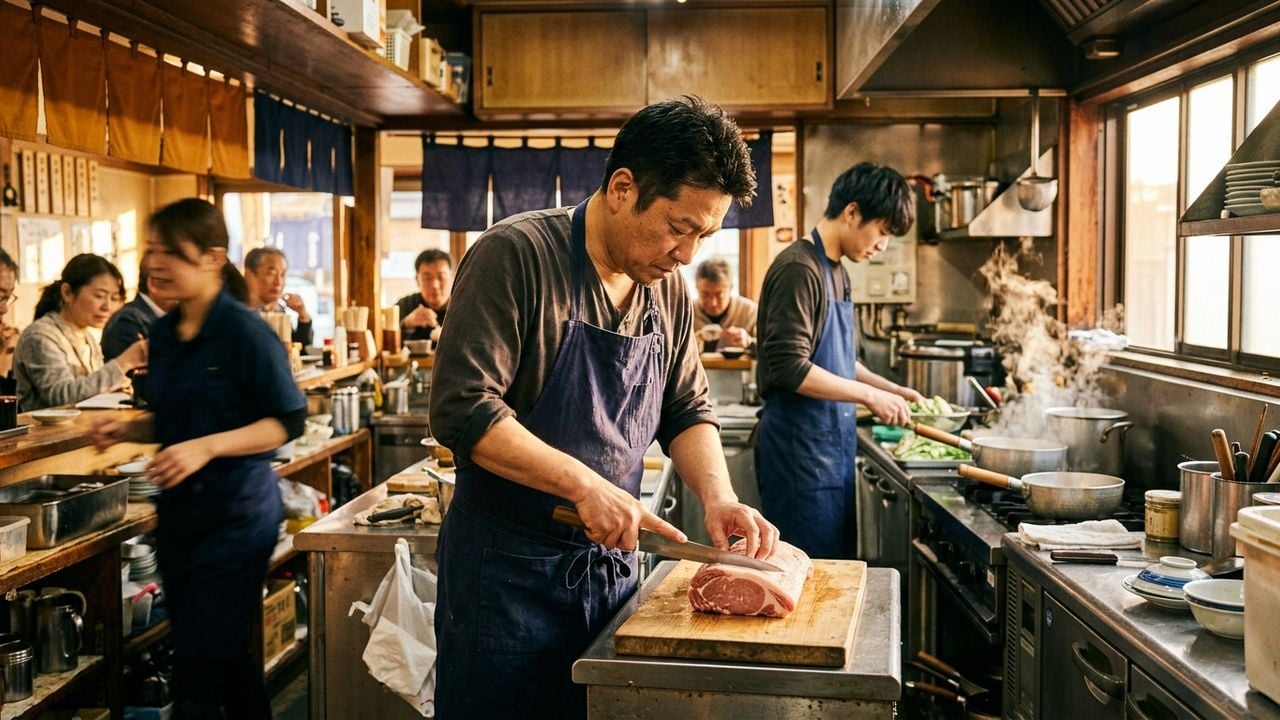
The Castle Trail That Ends at the Table
Nagoya is extraordinary for history lovers. The city is the birthplace of all three of Japan's great unifiers — Oda Nobunaga, Toyotomi Hideyoshi, and Tokugawa Ieyasu — and the surrounding region is layered with centuries of samurai culture. Visitors who follow that thread often find themselves moving between Nagoya Castle, Atsuta Shrine, and day trips out to Inuyama, sometimes all within a single itinerary.
What's less documented in most travel guides is what to do at lunch. Nagoya has a rich food culture — miso katsu, hitsumabushi, tebasaki — but for a traveler who has already researched those dishes and wants something they won't find anywhere else, the options feel suddenly thin.
This is where a particular kind of Nagoya visitor tends to find Itadaki: not through a tourism board recommendation, but through a Google Maps search, a post in a travel forum, or a tip from someone who visited Nagoya last year and said, "You have to go, but make sure you reserve in advance."
Itadaki is a four-minute walk from Yabacho Station (Meijo Subway Line Exit 4) — the same line that connects directly to Nagoya Castle's nearest station. After a morning in the castle grounds, you're already on the right line. From Inuyama, Meitetsu connects back into central Nagoya in under an hour, making a lunch stop in Osu an easy addition before heading to your next destination. If you're curious how visitors from Inuyama have woven this into a single day, How I Combined Inuyama Castle and Itadaki in One Day walks through exactly that kind of itinerary.
You're planning a castle-and-lunch day in Nagoya, but Itadaki is only open on scheduled business days — and the monthly calendar shifts. Our Instagram is where we post the confirmed schedule each month, so you can check before you finalize your itinerary. Takes thirty seconds to pull up.
A Dish That Was Invented Here — and Only Exists Here
Masayuki Goto, who founded Itadaki in April 2022, asked a question that sounds simple but had never been answered before: why does every classic Japanese rice bowl have a high-end version — except gyudon?
Katsudon has its premium variations. Kaisendon has omakase. But gyudon — Japan's beloved beef bowl — had always been the domain of fast-food chains. Nobody had reimagined it as a fine dining experience using rare wagyu and a signature rare-style preparation.
Goto changed that. Working directly with farms in Aichi Prefecture and developing a proprietary two-stage cooking technique — one that heats the beef to over 70°C at the core to fully meet Japan's Ministry of Health, Labour and Welfare food safety standards, while preserving a distinctly tender, rare-style texture — he created something that had no precedent in Japanese cuisine. NHK and seven other major Japanese television networks have since recognized Itadaki as the originator of the "Rare Wagyu Gyudon" culinary concept.
The beef at the heart of this dish is Horai Wagyu: a Japanese black wagyu raised in the Okumikawa mountains of Aichi, fed on sake lees from Horaisen Sora — a premium local sake — by just three farms in all of Japan. Only 300 heads are produced annually. Out of approximately 500,000 wagyu raised across Japan each year, that's a rarity that isn't manufactured for marketing purposes. It's simply the reality of how this beef is raised.
Itadaki is one of the very few restaurants in Nagoya with a direct sourcing partnership with those farms. And because demand consistently exceeds supply, Horai Wagyu is limited to 10 bowls per day — which is why reservation via Tabelog is genuinely recommended, not just suggested as a formality.
For visitors interested in the deeper connection between Aichi's samurai heritage and its wagyu culture, The Warlord Heritage of Aichi Wagyu Culture offers a fascinating lens on how this region's history shaped its approach to cattle farming.
✓ Key Takeaways
- Itadaki is four minutes from Yabacho Station (Meijo Line) — a natural lunch stop after Nagoya Castle or the return from Inuyama
- The "Rare Wagyu Gyudon" concept was invented at Itadaki, using a proprietary two-stage cooking technique that is safe and fully meets Japanese food safety standards
- Horai Wagyu — the signature ingredient — is produced by only 3 farms in Japan, with just 300 heads annually; limited to 10 bowls per day
Horai Wagyu is limited to 10 bowls per day, and castle town mornings tend to run long — meaning lunch arrives at peak hours. Reserving your bowl in advance via Tabelog means you arrive knowing your seat and your bowl are waiting. Reservation is available online in a few steps.
What the Experience Actually Looks Like
One guest, reflecting on their visit, put it plainly:
"The English menu with clear serving instructions made the experience stress-free."
That detail matters more than it might seem. When you're sitting in a small restaurant in Osu, jet-lagged from a morning of sightseeing, the last thing you want is to spend five minutes wondering whether you're supposed to mix everything together immediately or eat things in a specific order. Itadaki provides a printed five-step guide in English — and in Simplified Chinese and Korean — that walks you through each stage of the dish.
The experience unfolds deliberately. You begin by separating the raw Nagoya Cochin egg: the white goes into the miso soup, the golden yolk is placed atop the beef. You taste the wagyu first in its purest form, letting the rare-style texture and the flavor profile of Horai Wagyu speak without interference. Then you incorporate the yolk, which transforms the mouthfeel entirely. Gradually, you add from the complimentary condiments arranged on the table — pickled ginger from Inazawa, chopped seaweed from Mikawa Bay's Himakajima island, chirimen jako from Minamichita, Itadaki's original 8-spice blend — each addition changing the dish in a small but distinct way. A final note of wasabi closes the bowl.
Every element on the table comes from Aichi Prefecture. The rice is "Aichi no Kaori," a premium Aichi-grown variety. The miso soup uses Hatcho miso from Okazaki — the same city that produced one of Japan's most celebrated warlords. The pickles are traditional Atsumi Ichō-zuke from the Atsumi Peninsula. It's a complete expression of the prefecture's food culture in a single bowl.
The restaurant seats 18 guests across counter seats and sofa-style tables — a setting that's comfortable for solo travelers who've spent the morning walking castle grounds alone, and equally suited to small groups who want to sit and talk through the experience without feeling rushed. Itadaki serves lunch only (11:00–15:00, with last order at 14:30 on regular business days), which fits naturally into a castle-and-lunch itinerary without the pressure of an evening reservation.
Why This Particular Meal Becomes the Story
After more than eighteen years working with Aichi's food producers — first through MAX'S BAR, then through Itadaki — Goto has a clear view of what makes a meal memorable beyond the moment you finish eating. It's the story you carry home.
When you sit down to a bowl of Horai Wagyu Rare Gyudon, you're not just eating good beef. You're eating something produced by a handful of farmers in a mountain valley in Okumikawa, fed on the lees of a sake that's been brewed in the same region for generations, prepared using a technique that Goto and his team developed over years of testing, in a restaurant that opened in the middle of a pandemic because Goto wanted to find a way to keep those farmers in business.
That's the kind of story that doesn't require embellishment. It's true, it's specific, and it's tied to a place — Aichi — that most international travelers have never thought of as a food destination. Until they come here.
Visitors who want to understand more about how Itadaki prepares to welcome guests from all over the world — including those with dietary questions, accessibility needs, or language concerns — can read more at Behind the Scenes: Preparing Itadaki for Diverse Guests.
September in Nagoya carries a particular energy this year. The 2026 Asian Games are underway, and the city is hosting visitors from across the continent alongside its regular stream of castle enthusiasts and history travelers. The Osu district — where Itadaki is located — is as lively as it ever gets. If your itinerary has brought you here for the Games, for the castles, or simply because Nagoya finally made it onto your Japan map, lunch in Osu is a natural anchor for the day.
For full menu details, access information, and practical planning notes, visit our official page at https://itadaki8.com/english/.
You've read what goes into this bowl — the Okumikawa farms, the sake-lees feeding, the two-stage technique, the five steps of eating. The only thing left is to actually sit down to it. Secure your Horai Wagyu bowl now before the 10-bowl daily limit fills for the day you're visiting.