Why Historic Tour Fans Now Choose Itadaki as Their Nagoya Lunch
 gotowp
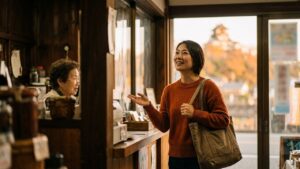
A guest stopped by Itadaki a few weeks ago — a solo traveler who had just spent the morning at Nagoya Castle, then walked through the Shikemichi district to soak in the Edo-period warehouses and the rooftop shrines you only find in this corner of Japan. By the time she sat down at the counter, she wasn't just hungry. She was glowing with that particular energy that comes from a morning of genuine discovery.
"I want this trip to feel different from my last Japan visit," she said. "I want stories worth sharing — not just 'here's a castle' photos."
That conversation stayed with me, because it captured something I hear again and again from our guests — especially the ones who've already done the Golden Route and are now seeking something deeper. They're not just looking for a good meal or a good photo. They want the whole day to feel like a story worth telling.
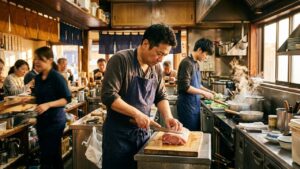
I'm Masayuki Goto, founder of Itadaki. I've been part of Nagoya's food and nightlife scene for nearly 18 years, and long before I opened this restaurant, I spent years exploring this city on foot — finding the places that don't make the front page of every travel blog but genuinely deserve to. Today, I want to walk you through the historic tour route that I personally love, and explain why I think lunch matters just as much as the temples and castles themselves.
Who This Is For
- ✅ Travelers who want their Japan trip to stand out — not just on Instagram, but in the stories they tell for years
- ✅ History enthusiasts visiting Nagoya Castle, Atsuta Shrine, or Aichi's samurai heritage sites who want a lunch that matches the depth of their itinerary
- ✅ Repeat Japan visitors already familiar with Tokyo and Kyoto, now exploring Nagoya for hidden authentic experiences
- ✅ Anyone who's been searching for a Nagoya food experience with a genuine backstory — not just a great plate, but a narrative worth sharing
The Historic Spots I Keep Recommending to Guests
Nagoya is, at its core, a city built on the stories of three warlords — Oda Nobunaga, Toyotomi Hideyoshi, and Tokugawa Ieyasu — all born within what is now Aichi Prefecture. For anyone drawn to samurai history and Sengoku-period Japan, this city is quietly one of the country's richest destinations. Yet it remains dramatically undervisited compared to Kyoto or Nara, which means the sites feel genuinely atmospheric rather than overwhelmed by crowds.
Nagoya Castle is the obvious centerpiece, and rightly so — the reconstructed Honmaru Palace interiors are meticulously detailed and deeply informative. But my personal recommendation to guests who ask is to build a morning around two places that most itineraries skip.
The first is Shikemichi (四間道) — a preserved Edo-period merchant district tucked near Nagoya Station that feels like it exists in a different century. Three-hundred-year-old kura (storehouses) line cobblestone streets, and the "Yanegami-sama" rooftop shrines — small guardian shrines built directly onto the rooftops of old merchant homes — exist nowhere else in Japan quite like this. Hidden cafés and small restaurants occupy restored traditional buildings throughout the district. I've walked through Shikemichi dozens of times, and it still has the power to stop me mid-step. This is the kind of place your followers will ask about.
The second is Atsuta Shrine, one of Japan's most important Shinto sites and home to one of the three Imperial Treasures. The forested grounds are serene in a way that feels genuinely removed from modern Nagoya, even though the city is all around you. For travelers with any interest in Japanese cultural history, an hour here is irreplaceable.
Both of these places carry something the Instagram-famous spots often don't: a story that gets more interesting the more you know about it. That's the kind of experience worth building a day around.
You're building a Nagoya day with real narrative depth — historic sites, preserved streets, and a lunch that closes the loop. But Itadaki is open only four days a week, with public holiday hours that shift from the regular schedule, and irregular closures do apply. The monthly business calendar on our official Instagram is the only place where confirmed open days are posted in real time. It takes 30 seconds to check before you finalize your itinerary.
Why Lunch Is the Third Act of a Good Historic Tour
Here's something I've noticed over years of watching guests come through our door: the ones who've had the most memorable Nagoya days aren't necessarily the ones who visited the most sites. They're the ones whose day had a coherent narrative — where each part of the day fed into the next.
A castle in the morning. A preserved merchant street mid-morning. And then — what? Most travelers default to convenience here, grabbing whatever is nearest. But the lunch you choose on a day like this is actually where the story gets its final, shareable chapter.
This is exactly the gap that Itadaki was built to fill.
When I conceived this restaurant in 2022, the question I kept asking was: why does every other traditional Japanese dish — katsudon, oyakodon, kaisendon — have a premium, story-rich version, while gyudon was still considered fast food? The beef bowl deserved better. More than that, the farmers of Aichi Prefecture — who were struggling during the pandemic with unsold harvests of extraordinary ingredients — deserved a restaurant that would tell their story properly.
So I built Itadaki around a single commitment: every ingredient sourced from Aichi Prefecture, prepared with a technique that we developed ourselves, and presented in a way that gives guests something genuinely worth talking about. The name itself comes from "itadakimasu" — the Japanese expression of gratitude spoken before every meal — because that philosophy of respect for ingredients and the people who grow them is woven into everything we do here.
✓ Key Takeaways
- Nagoya's historic circuit — Shikemichi, Nagoya Castle, Atsuta Shrine — offers a depth of samurai and Edo-period culture that few other cities can match at this level of intimacy
- The most memorable Japan trip days have a coherent narrative from morning through lunch — and the lunch you choose matters as much as the sites you visit
- Itadaki was built specifically to give Aichi's extraordinary local ingredients the platform they deserve — and to give guests a story worth sharing long after they leave
You've just read that the Horai Wagyu — 300 heads annually, fed on Horaisen Sora sake lees — is limited to 10 bowls each day and does sell out during peak hours. That's the one detail that can change your whole day if you arrive and find it gone. A Tabelog reservation holds your bowl before you even step onto the Meijo Line.
The Dish That Becomes Part of the Story
Let me describe what arrives at the table, because I think you'll understand immediately why guests react the way they do.
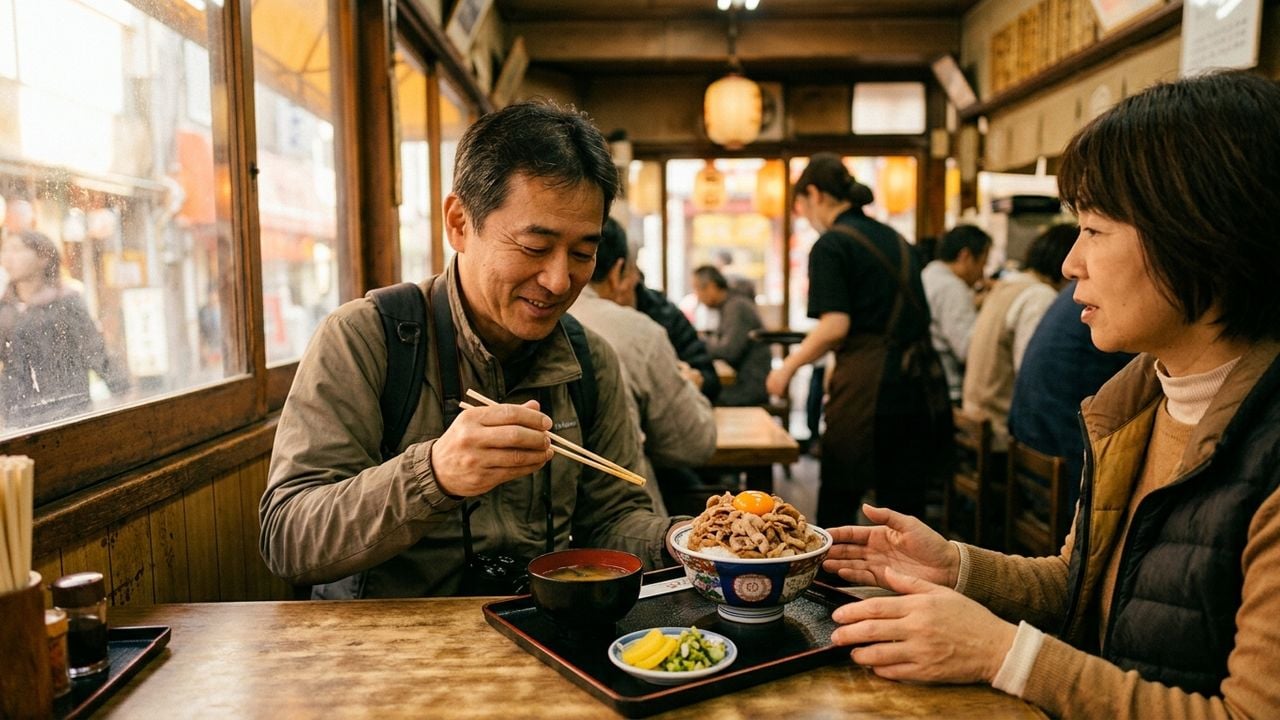
The bowl holds thinly sliced wagyu, arranged over a mound of Aichi no Kaori rice — an Aichi-grown premium variety cooked in high-tech rice cookers we calibrate annually to match that year's harvest. A Nagoya Cochin egg sits whole in the center. The Horai Wagyu itself — produced by only three farms in Aichi Prefecture, with just 300 heads raised annually — has a marbling profile unlike anything most visitors have encountered, because the cattle are fed on sake lees from Horaisen Sora, a renowned local premium sake brewed in Okumikawa.
The texture is what our guests describe first. It reads as rare — genuinely, unmistakably rare — yet our proprietary two-stage cooking method heats the beef to over 70°C at the core, fully meeting Japan's Ministry of Health, Labour and Welfare food safety standards. We call it our signature rare preparation, and it took real development work to get right. No other gyudon restaurant offers this technique.
The five-step eating guide on the table walks you through separating the egg white into the miso soup and placing the golden yolk over the beef, then tasting the wagyu in its purest form before gradually adding the complimentary condiments — pickled ginger from Inazawa, chopped nori from Mikawa Bay, chirimen jako from Minamichita, and our original 8-spice blend. Each step shifts the flavor profile. By the time you reach the wasabi finish, you've taken a genuine journey through Aichi's ingredients.
This is the kind of dish where the story and the taste are inseparable. And when your followers ask "What is that?" — you'll have an answer that takes longer than a caption.
"The lunch was the highlight of my Nagoya trip — I'm telling all my friends about it."
— Guest review
That's not a reaction to a good meal. That's a reaction to a day that came together perfectly — and to a dish that gave the whole journey a final chapter worth remembering.
If you're planning a historic day around Aichi's castle towns and samurai sites, you might also find this useful: pairing Aichi's historic castle towns with the right Nagoya lunch is something we've thought about carefully, and the guide there offers a broader view of how to build these days.
Practical Notes for Your Historic Tour Day
Itadaki is located on the 2nd floor at 4-1-20 Osu, Naka-ku — a 4-minute walk from Yabacho Station Exit 4 on the Meijo Subway Line, and also within easy walking distance from Sakae Station and Osu Kannon Station. From Nagoya Castle, a subway ride via the Meijo Line connects you directly to Yabacho in around 10 minutes.
We serve lunch only, from 11:00 to 15:00 on Saturdays, Sundays, Mondays, and Tuesdays (last order 30 minutes before closing). On public holidays, we open from 09:00. This article publishes in September 2026, which is prime season for the Asian Games in Nagoya — so if your historic tour day falls during that period, expect the Osu district to be particularly lively.
One practical note: our Horai Wagyu Gyudon is strictly limited to 10 bowls each day, and it does sell out during peak hours. If you have your heart set on the Horai Wagyu experience, a reservation via Tabelog is strongly recommended. The Mikawa Beef Rare Wagyu Gyudon is available without this limitation and shares the same commitment to Aichi sourcing and our signature rare preparation technique.
Our menu is available in English, Simplified Chinese, and Korean, and the five-step eating guide is fully illustrated — so the experience is genuinely accessible even without Japanese. Solo diners are warmly welcome at our counter seats; groups of up to five fit comfortably at our sofa table.
For anyone building a day around Osu district, Hisaya-odori Garden Flarie is a 3-minute walk from Yabacho Station — a free-admission garden with six themed spaces including a European-style Harmony Garden and a Crystal Greenhouse. It's a genuinely beautiful spot, often featured in English travel guides, and pairs naturally with a post-lunch stroll before or after visiting Osu Kannon Temple.
One more note from personal experience: if you're drawn to the kind of quiet, story-rich corners of Nagoya that most visitors walk past, Shikemichi is worth an early morning visit before the day gets busy. And if you're a basketball fan visiting for the Asian Games — or just curious about where I spend my off days — IG Arena (Aichi International Arena), designed by Kengo Kuma and opened in July 2025, is genuinely worth seeing. But that's a separate story.
The Day That Becomes the Story You Keep Telling
I've traveled enough to know that the meals we remember from our trips aren't always the most elaborate ones. They're the ones that felt right for the day — where the place, the ingredient, and the moment aligned into something you couldn't have planned perfectly but somehow did.
A morning of samurai history, Edo-period streets, and ancient shrine forests. Then a seat at Itadaki, a bowl of Horai Wagyu Rare Gyudon, and a five-step journey through the flavors of Aichi. By the time you lift your chopsticks for the last bite, you'll already know this is the story you'll be telling.
That, for me, is what "itadakimasu" really means — gratitude for everything that came together to make this moment possible.
For our complete menu, access details, and store information, visit our official page at https://itadaki8.com/english/
Your historic tour day in Nagoya has its morning and its streets — now give it the lunch that becomes the part you actually tell people about. Horai Wagyu is 300 out of 500,000 wagyu in Japan, strictly limited to 10 bowls a day, and September 2026 is peak season in Osu. Secure your seat now so the story ends the way you planned it.