Traveler Story: An Inuyama Day Trip That Ended With Rare Wagyu
 gotowp
Early September in Nagoya carries a particular energy. The intense heat of summer is beginning to soften — just barely — and the days feel long enough to fit in something truly worthwhile. For many visitors, that means catching the train out to Inuyama for the day: the castle, the river, the old town streets that somehow still feel like a different era. It's the kind of trip that leaves you quiet on the ride back, turning things over in your mind.
But what happens after Inuyama? Where does a day like that deserve to end?
That's a question I've heard from guests more times than I can count. And more often than not, the answer — once they've found us — involves a bowl of rare wagyu and a feeling they didn't expect.
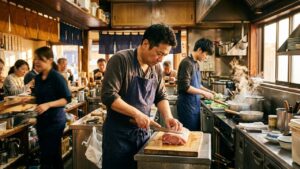
My name is Masayuki Goto. I'm the founder of Itadaki, tucked into the second floor of a building in Osu, Nagoya. We've been doing one thing since April 2022: the original Rare Wagyu Gyudon. And I want to talk honestly about the question that almost stops some visitors from ever walking through the door.
Who This Is For
- ✅ Visitors who have heard about our rare wagyu but are genuinely unsure whether it's safe to eat
- ✅ Travelers planning an Inuyama day trip and looking for a lunch destination worthy of the occasion
- ✅ Anyone who has tried Kobe or Matsusaka beef and is curious what Aichi's wagyu has to offer
- ✅ Guests who want to understand exactly what "rare-style" means before they order
- ✅ Solo diners or couples looking for a relaxed, story-driven lunch in central Nagoya
The Question I Hear Most Often
"Is it actually safe?"
I understand why people ask. In many Western countries, health authorities recommend cooking beef thoroughly — and for good reason, given the risks of E. coli and other bacterial concerns associated with undercooked meat. When someone reads "rare wagyu gyudon" on a menu, the instinct is caution. That's not ignorance; it's reasonable.
So let me answer it directly, the same way I would if you were sitting across from me at the counter.
The beef at Itadaki is not raw. It is not served in a way that cuts corners on safety. Every bowl is prepared using a proprietary two-stage cooking technique that I developed with my team before we ever opened — a method that heats the beef to over 70°C at its core. That temperature fully meets Japan's Ministry of Health, Labour and Welfare food safety standards for beef preparation. The sensation of eating rare beef is there. The risk is not.
Japan has some of the strictest food safety regulations in the world, and as a Certified Food Sanitation Supervisor with a Licensed Restaurant Operator certification from the Aichi Prefecture Public Health Center, I don't take that lightly. Getting the technique right took time. It had to be right before I could open. That's the foundation everything else is built on.
The safety question is answered — but knowing <em>when</em> Horai Wagyu is actually available on your specific travel day is the next piece of the puzzle. Our monthly schedule, including irregular closures, is updated regularly on Instagram so you can plan around your Inuyama trip without guesswork. Takes a few seconds to check before you book anything.
Why Inuyama Travelers Find Their Way to Us
Inuyama is about 30 minutes north of Nagoya by train. The castle — Japan's oldest surviving original castle — sits on a bluff over the Kiso River, and the preserved merchant town below it has a calm that's hard to find in central Nagoya. Guests who spend a morning there often arrive back at Yabacho Station with that particular appetite that comes from a good walk and a lot of fresh air.
Itadaki is a four-minute walk from Yabacho Station Exit 4. The timing fits naturally. And Osu itself — with its layered mix of old temple culture and modern Nagoya life — makes the transition from a historic day trip feel seamless rather than abrupt.
One guest, after their Inuyama visit, told us something I still think about: "The rare wagyu was unlike anything I've ever tasted — a life-changing culinary experience." That's the kind of remark that stays with you. Not because it flatters us — because it tells you something genuine happened. A shift in what they thought was possible from a bowl of rice and beef.
If you're curious how a day of samurai history can flow into a rare wagyu lunch in Osu, this piece on combining Nagoya's samurai heritage with a rare wagyu lunch goes deeper into that particular itinerary.
✓ Key Takeaways
- Itadaki's rare wagyu is cooked to over 70°C at the core — fully meeting Japanese food safety standards while delivering a rare-style texture.
- The two-stage technique is proprietary and took considerable development time before the restaurant opened in 2022.
- Inuyama day-trippers returning to Nagoya find Itadaki a natural, rewarding way to close the day — four minutes from Yabacho Station.
You now know that "rare-style" at Itadaki means 70°C at the core and full compliance with Japanese food safety standards — not a shortcut, but a technique years in the making. The next step is making sure one of those 10 daily Horai Wagyu bowls is waiting for you when you walk in from Yabacho Station. Reservation is through Tabelog and takes just a few minutes.
What's Actually in the Bowl — and Where It Comes From
When I started planning Itadaki during the pandemic, I made a decision that shaped everything: every ingredient would come from Aichi Prefecture. No exceptions.
This wasn't branding. It came from watching small local farms — people I'd sourced from for years through MAX'S BAR — struggle with unsold harvests when restaurants closed. I wanted to build something that would support them directly and consistently, not just once.
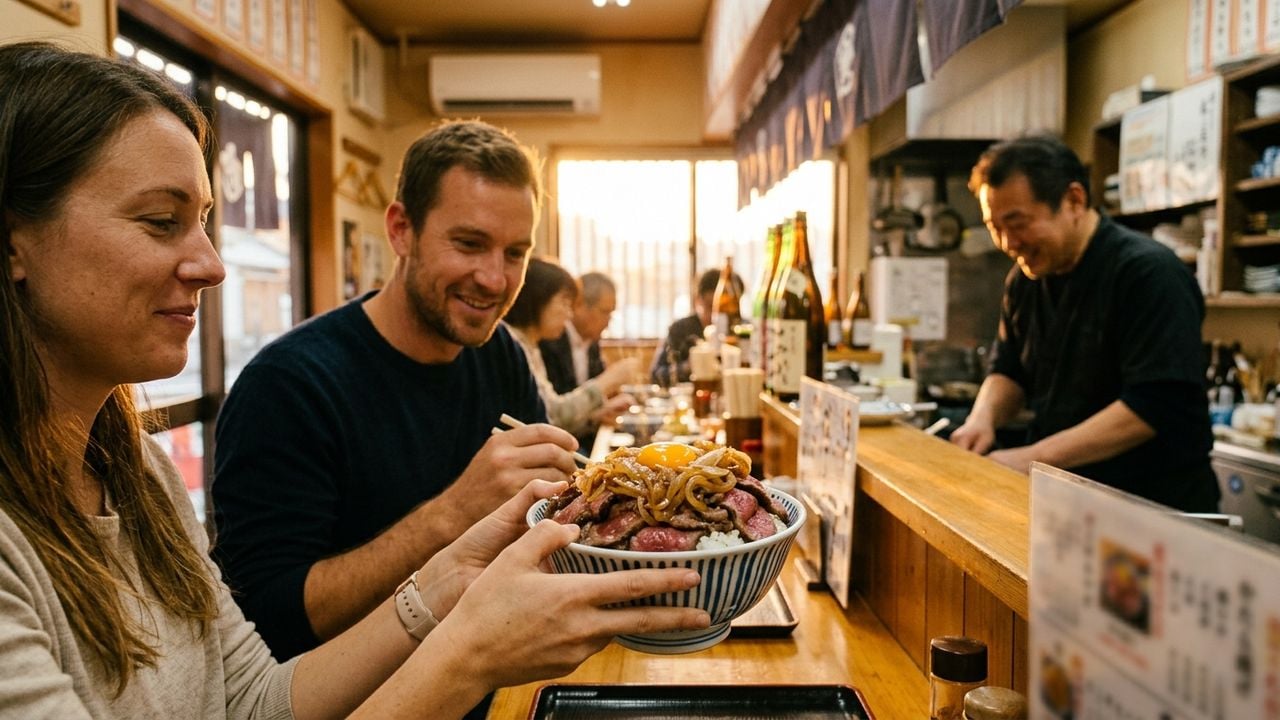
The beef we're best known for is Horai Wagyu — Japanese black wagyu raised in the Okumikawa region of Aichi. Only three farms in Japan produce it. Roughly 300 heads are raised annually. For context: there are approximately 500,000 wagyu in Japan. Horai Wagyu represents a small fraction of that — and it's fed on sake lees from Horaisen Sora, a renowned local premium sake, which gives the beef a flavor profile unlike anything in the standard wagyu lineup. We limit it to 10 bowls per day.
Alongside the beef: rice grown in Aichi, miso from Okazaki's centuries-old traditions, pickled radish from the Atsumi Peninsula, shiso leaves from Toyohashi, and a Nagoya Cochin egg from Yamada Poultry Farm. The egg arrives raw, and part of the experience is separating it yourself — white into the miso soup, golden yolk placed directly over the beef. The five-step eating guide printed on our menu walks you through it without any guesswork.
For guests who've already explored the wagyu world — Kobe, Matsusaka, Omi — Horai Wagyu tends to surprise. It has a character that doesn't rely on heavy marbling alone. This piece written from a wagyu enthusiast's perspective captures that discovery well.
"The rare wagyu was unlike anything I've ever tasted — a life-changing culinary experience."
A guest, after their first visit to Itadaki
Practical Things Worth Knowing Before You Visit
We're open for lunch only — 11:00 to 15:00 — on Saturdays, Sundays, Mondays, and Tuesdays. On public holidays, we open at 9:00. We're closed Wednesday through Friday. Last order is 30 minutes before closing.
Because Horai Wagyu is limited to 10 bowls daily, it can sell out during peak hours. Reservation via Tabelog is the most reliable way to secure it. Our monthly business calendar — including any irregular closures — is posted on our official Instagram.
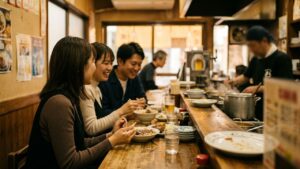
The restaurant is on the second floor, accessed by staircase. We have 18 seats total: five counter seats (comfortable for solo diners), and a mix of sofa tables for pairs, small groups, and families. The sofa seating in particular makes longer, more relaxed lunches easy — no rush, no hard chairs.
Printed menus are available in English, Simplified Chinese, and Korean. You don't need Japanese to order or to understand what you're eating.
For our complete menu, access details, and store information, visit our official page at https://itadaki8.com/english/.
Why the Story Matters as Much as the Taste
I've been in the food and beverage industry for 18 years. I founded MAX'S BAR in 2008. When I started Itadaki, I wasn't trying to make another wagyu restaurant. I was trying to answer a question that genuinely puzzled me: why did every classic Japanese bowl dish — katsudon, oyakodon, kaisendon — have a premium version, while gyudon was still exclusively associated with fast food chains? Nobody had tried to elevate it. So I did.
The name "Itadaki" comes from itadakimasu — the expression of gratitude spoken before every meal in Japan. It reflects what I believe food should be: a gift from the farmers who raised it, the land that produced it, and the people who prepared it. Worth slowing down for.
An Inuyama day trip has that same quality. You slow down. You look at something old and well-made and feel the weight of the craft behind it. Coming back to Nagoya and sitting down with a bowl that was built with the same kind of care — it completes something.
That, I think, is why guests remember it the way they do.
Inuyama deserves a proper ending — and a bowl built on 300-head-a-year wagyu, a proprietary cooking technique, and every ingredient sourced from Aichi Prefecture is exactly that. Horai Wagyu sells out during peak hours, and September lunch slots fill quickly. Securing your seat now means arriving already knowing the story behind what you're about to eat.