5 Things to Know About Accessible Dining During Nagoya Para Games
 gotowp
September in Nagoya has a particular energy to it. The summer heat is just beginning to soften, the city is buzzing with international visitors, and this year — with the Asian Para Games 2026 bringing athletes, families, and spectators from across the globe — that energy is something entirely different. If you're navigating Nagoya with mobility considerations, or you're traveling with someone who is, the question of "where can we actually eat comfortably?" can quietly overshadow everything else on your itinerary.
I want to talk about that honestly. Not just access ramps and door widths — though those matter — but the full picture of what it feels like to walk into a restaurant as a visitor with different needs, and walk out having had one of the most memorable meals of your trip.
At Itadaki, we've welcomed guests in wheelchairs, guests traveling with strollers, solo diners, and families with young children. Here are five things worth knowing before you plan your Para Games lunch stop in Nagoya.
Who This Is For
- ✅ Para Games spectators or support staff looking for a meaningful lunch near central Nagoya
- ✅ Travelers with mobility considerations who want honest, practical access information before arriving
- ✅ Visitors who have heard about rare wagyu but aren't sure if the food safety concerns are real
- ✅ Anyone traveling with family members who need extra space, time, or comfort while dining
- ✅ International visitors who want a genuine Nagoya culinary experience — not just a convenient one
1. The "Before" Moment: What Accessible Dining Anxiety Actually Looks Like
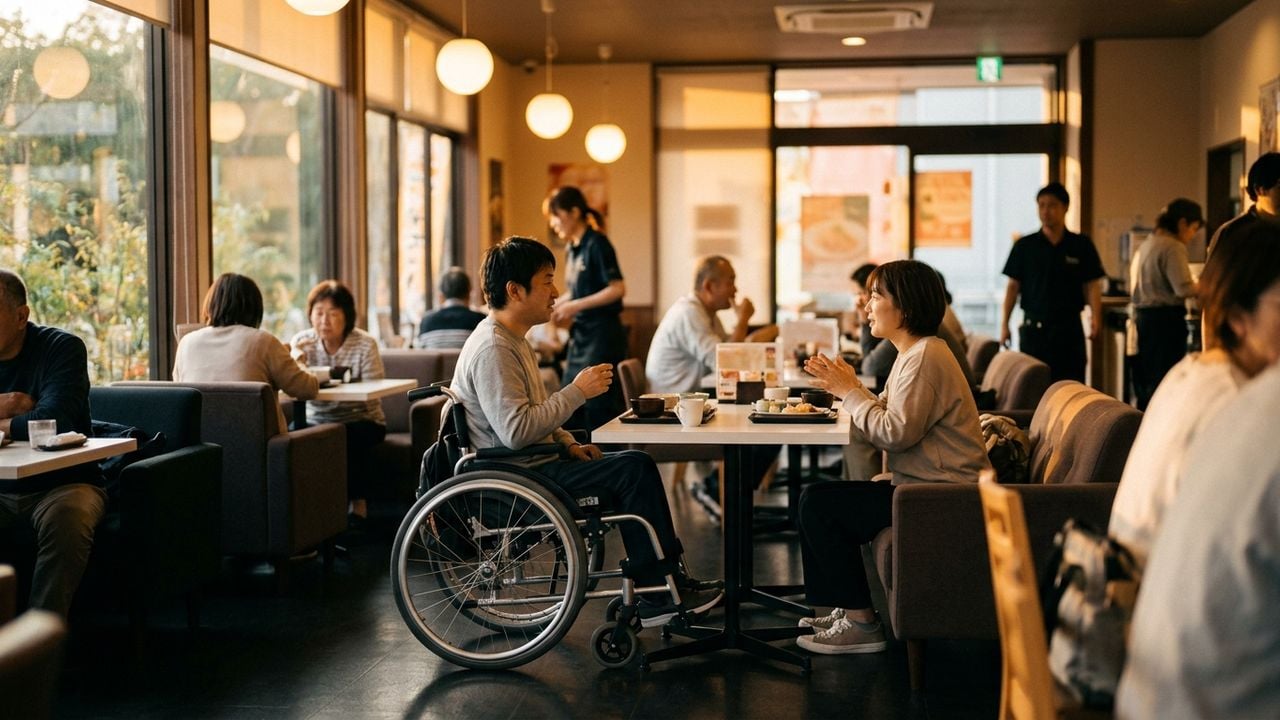
Here's a scene that plays out more often than restaurants like to admit. A visitor — perhaps a Para Games spectator, perhaps someone traveling with a family member who uses a wheelchair — stands outside a restaurant they genuinely want to try. They peer through the window. There's a step at the entrance. Or they can't quite tell if the tables have enough clearance. So they move on, settling for somewhere easier, somewhere less interesting.
The anxiety isn't irrational. It comes from experience — from the times you've committed to a restaurant only to find the accessible toilet is up a flight of stairs, or the aisle between tables is just slightly too narrow. It's exhausting to do that scouting work while you're also trying to enjoy a trip.
We want to give you the honest picture upfront, so you can decide with full information rather than uncertainty.
You're now carrying two open questions at once: whether the physical access works for your situation, and whether the rare wagyu is genuinely safe. Our monthly business calendar on Instagram also shows exactly which days we're open during Para Games week — so you can confirm the date before committing to anything. It takes about 30 seconds to check.
2. What Itadaki's Physical Access Actually Looks Like
Itadaki is located on the second floor of a building in Osu, Naka-ku — and that means a staircase is required to reach us. There is no elevator. This is something we say clearly, because the last thing we want is for anyone to arrive and face an unexpected barrier.
If you use a manual wheelchair and have companions who can assist, some guests have managed the staircase with help from our staff — though we can never guarantee staff availability for this at any given moment, and we would not want you to plan your visit around an assumption. If stairs are a firm limitation, please reach out via Instagram DM before your visit so we can talk through your situation honestly.
Inside the restaurant, however, the picture changes considerably. All of our table seating features generous sofa-style cushioned seats — not the hard stools or fixed chairs that make long lunches uncomfortable. Our sofa table for five, our tables for four, and our two-person tables all offer enough space for a relaxed, unhurried meal. Guests traveling with infants have used the sofa seating for bottle feeding and rest. The space is small — 18 seats in total — which means it's never a loud, overwhelming environment.
The closest subway exit is Yabacho Station Exit 4 on the Meijo Line, a four-minute walk away. The route from the station is flat and manageable. Coin parking is available within a one-to-three minute walk for those arriving by car.
3. The Food Safety Question That Stops Many Visitors in Their Tracks
This one deserves its own section, because it's the concern we hear most often — and it's completely understandable.
When visitors from Western countries see the words "rare wagyu," something reasonable happens: a mental flag goes up. In the US, UK, Australia, and much of Europe, public health guidance is clear about the risks of undercooked beef — E. coli, salmonella, and other bacterial concerns are taken seriously, and "rare beef" often means risk. That's not a cultural misunderstanding. It's a reasonable baseline for someone who grew up in a food safety environment that treats rare beef with caution.
So here is the actual answer, not just reassurance.
Itadaki's rare wagyu is prepared using a proprietary two-stage cooking technique developed specifically to resolve this tension. The beef is heated to over 70°C at the core — a temperature that fully meets the food safety standards set by Japan's Ministry of Health, Labour and Welfare. This isn't a workaround or a grey area. It's a technique that Masayuki Goto, our founder, developed deliberately, with food safety as the non-negotiable foundation.
Goto holds a Certified Food Sanitation Supervisor qualification from Japan's Ministry of Health, Labour and Welfare, and Itadaki operates under a Licensed Restaurant Operator certification from the Aichi Prefecture Public Health Center. The rare texture you experience is real — it's not imitation, it's not a visual trick — but it is achieved safely. Every bowl prepared at Itadaki follows these precise standards.
The beef itself comes only from Aichi Prefecture farms — Horai Wagyu from Okumikawa and Mikawa Beef from the Mikawa region — both raised under rigorous quality control by trusted local producers. We source directly. We know exactly where each piece of beef comes from.
✓ Key Takeaways
- Itadaki is on the second floor via staircase — guests with strict mobility limitations should contact us via Instagram before visiting
- Inside, sofa-style seating and a calm, small-space atmosphere make the dining experience genuinely comfortable
- The "rare" texture in our wagyu is achieved through a two-stage cooking technique that heats beef to over 70°C at the core — fully meeting Japan's Ministry of Health, Labour and Welfare standards
The two-stage cooking technique answers the food safety question — but there's still the 10-bowl-per-day limit on Horai Wagyu to think about, especially during a high-traffic week like Para Games. Securing your bowl in advance through Tabelog means you arrive knowing exactly what's waiting for you. Reservation is handled entirely online, no Japanese required.
4. The "After" — What Guests Say When the Hesitation Was Worth It
I'll let a guest say this one.
"The lunch was the highlight of my Nagoya trip — I'm telling all my friends about it."
A visitor to Itadaki during their Nagoya stay
That kind of response doesn't come from someone who ate something that was merely fine. It comes from someone who arrived with a question — is this safe, is this real, is this worth it — and left with an answer they didn't expect. The five-step eating guide that comes with every bowl (separate the egg yolk, taste the beef first in its purest form, mix, add condiments, finish with wasabi) turns what could be a confusing unfamiliar dish into something you understand and enjoy on your own terms.
The Horai Wagyu — produced by only three farms in Japan, with just 300 heads raised annually — carries a story that stays with you. These cattle are fed on the sake lees of Horaisen Sora, a premium local sake from Okumikawa. That's not a marketing line. It's a farming practice, and it's why the beef tastes the way it does: a distinctive combination of light marbling and lean flavor that makes it genuinely different from other wagyu you may have tried.
For Para Games visitors and their companions, the experience of sitting in a calm, welcoming space — away from the logistics and crowds of event venues — and having a lunch that was clearly made with care, using ingredients from a specific place, by people who can explain exactly what you're eating in English, makes a real difference. It's the kind of meal you remember when everything else has blurred together.
If you're curious about how other international visitors have approached dining in Osu during major Nagoya events, this guide on what Asian Games spectators should know about Osu dining covers the neighborhood context well.
5. Practical Notes for Para Games Visitors Planning Their Nagoya Lunch
A few honest, specific details to help you plan:
Hours: Itadaki is open Tuesday during Para Games week (11:00–15:00, last order 14:30). We open only on scheduled business days — Saturday, Sunday, Monday, and Tuesday — so always check our monthly calendar on Instagram before your visit, as irregular closures can apply.
Horai Wagyu availability: The Horai Wagyu (Shinkoccho and larger sizes) is strictly limited to 10 bowls per day. During peak periods — and Para Games week will be a peak period — these sell out. Reservation via Tabelog is strongly recommended if Horai Wagyu is your goal. Mikawa Beef is always available without the same scarcity.
English support: Our menu is available in English, Simplified Chinese, and Korean. The five-step eating guide is photographic, so it works regardless of language. Staff will do their best to communicate clearly with international guests.
Payment: Credit cards and major digital payment methods including Apple Pay and Google Pay are accepted.
Group visits: If you're traveling with a larger group — a family, an athlete's support team, event participants — full restaurant buyout is available for up to 18 people. Please inquire via Instagram DM well in advance.
For a broader look at dining considerations during Aichi Para Games 2026, including timing and neighborhood planning, that companion article covers the wider context.
A Closing Thought
The name Itadaki comes from "itadakimasu" — the Japanese expression spoken before a meal, a moment of gratitude for the food, the farmers, and the craft behind it. That philosophy shapes how we think about every guest who walks through our door, including guests who needed to do a little more planning before they could get here.
If you came to Nagoya for the Para Games and you're looking for one lunch that tells you something true about this city — its ingredients, its craft, its hospitality — we'd be glad to be part of your trip.
For our complete menu, access details, and store information, visit our official page at https://itadaki8.com/english/
You've read through the access details, the food safety explanation, and what guests say after they've made the decision to come. The remaining step is simply claiming your seat — particularly if Horai Wagyu is on your mind, since those 10 bowls go quickly during event weeks. Reserve directly through Tabelog to lock in your lunch.