7 Ways Itadaki Welcomes Guests With Diverse Needs
 gotowp
A few weeks ago, a guest sent us a message through Instagram before their visit. It read something like this: "I'm really excited to try your restaurant, but I'm a little nervous — I don't speak any Japanese. Will I be able to order? Will I understand what I'm eating?"
That message stayed with me. Because I know this feeling is shared by so many travelers — not just in Nagoya, but all across Japan. You find a place that looks extraordinary. You want to go. And then doubt creeps in: What if I can't communicate? What if I order the wrong thing? What if something goes wrong?
At Itadaki, we've thought carefully about every one of those moments. And over the years since we opened in April 2022, welcoming guests from around the world has become one of the things I'm most proud of. So today, I want to walk you through exactly how we make that experience as smooth and memorable as possible — for guests with all kinds of needs.
Who This Is For
- ✅ International travelers visiting Nagoya who are worried about ordering at a Japanese restaurant without speaking Japanese
- ✅ Guests with dietary considerations (allergies, egg preferences, etc.) who want to know what to expect
- ✅ Families with young children wondering whether Itadaki is suitable for them
- ✅ Solo travelers or business visitors looking for a comfortable, stress-free lunch experience
- ✅ Anyone who has ever walked past a restaurant they wanted to try — and kept walking because the menu was only in Japanese
1. A Fully Multilingual Menu You Can Actually Use
This is the foundation of everything. Our printed menu is available in English, Simplified Chinese, and Korean — complete with clear photos, prices, and ingredient explanations for every dish. You don't need to guess. You don't need to translate anything on your phone.
When you sit down, you'll receive the menu in your preferred language. Each dish is described clearly, including what cut of beef is used, where the ingredients come from (spoiler: everything is from Aichi Prefecture), and how each item is prepared. There's no ambiguity about what's raw, what's cooked, or what comes included.
This might sound like a small thing. But for a traveler who's been navigating Japan for days — sometimes stumbling through menus full of kanji — having a menu that just works in your language is genuinely relieving.
You now know that the menu and eating guide are both available in English — but the one thing that changes week to week is our opening schedule. Our monthly business calendar, including any irregular closures, is posted on Instagram before each month begins. A quick check before your trip takes less than a minute.
2. The 5-Step Visual Guide to Eating Rare Gyudon
The Rare Wagyu Gyudon is unlike anything most guests have eaten before. It's not just a bowl of beef over rice — it's an experience that unfolds in stages. And because it involves a raw Nagoya Cochin egg, rare-style wagyu, and several complimentary condiments at the table, we wanted to make sure every guest could enjoy it exactly the way it was meant to be enjoyed.
So we created a five-step visual guide titled "How to Enjoy Rare Gyudon," included right in the multilingual menu. Here's what it covers:
- Separate the Nagoya Cochin egg — the white goes into the miso soup, the yolk rests on top of the beef
- Taste the wagyu first, on its own, to experience its natural flavor and rare texture
- Mix the golden yolk into the beef for a richer, silkier bite
- Experiment with the table condiments — pickled ginger, dried nori, chirimen jako, and our original 8-spice blend — to discover new dimensions of flavor
- Finish with a touch of wasabi for a clean, refreshing final note
Every step is illustrated clearly. Guests who follow the guide consistently tell us it transformed a dish they might have felt confused by into one of the most memorable meals of their Japan trip.
✓ Key Takeaways
- Itadaki's menu is fully printed in English, Simplified Chinese, and Korean — with photos, prices, and ingredient details included
- A five-step visual eating guide is built into the multilingual menu, so guests always know exactly how to enjoy the dish
- Both tools are designed to make the experience genuinely stress-free, not just theoretically accessible
You've just seen that Horai Wagyu is limited to 10 bowls a day — and that it does sell out, especially on weekends and public holidays. The multilingual menu and five-step guide will be waiting for you at the table, but only if you secure your seat first. Reserving via Tabelog is free and takes just a few minutes.
3. A Team That Welcomes You — Language or No Language
One of the most meaningful pieces of feedback we've received came from a guest who wrote:
"The staff were welcoming and made us feel at home even without perfect Japanese."
That's the hospitality standard we aim for every single day. Our team may not all speak fluent English, but warmth doesn't require a shared language. We're comfortable with guests using translation apps at the table, and we're trained to communicate clearly through the multilingual menu, pointing, and patient interaction.
For guests with specific questions about ingredients or allergens, we encourage you to note these at the time of your Tabelog reservation. That way, we can prepare in advance and ensure your visit goes smoothly from the moment you walk through the door.
4. Allergen Information, Laid Out Clearly
Food allergies are one of the most stressful aspects of dining abroad, especially when the menu isn't in your language. At Itadaki, we address this directly in our multilingual menu.
Here's a summary of the key allergen information for our gyudon:
- Soy: Present in our soy sauce, miso paste, and Atsumi Ichō-zuke pickles
- Wheat: Present in the soy sauce used in our magic sauce
- Egg: The Nagoya Cochin egg is included with all gyudon — but it can be removed at a ¥150 reduction if needed
- Sesame: Found in the complimentary chirimen (dried whitebait) topping on the table — guests with sesame allergies should simply skip this topping. Our original 8-spice blend does not contain sesame.
One important note for Muslim travelers: Itadaki does not hold Halal certification, and our beef is not Halal-certified. We want to be transparent about this so you can plan accordingly. If you'd like guidance on Halal-friendly options in the Nagoya area, we've put together a guide to Muslim-friendly dining near Itadaki that may be helpful.
5. Comfortable Seating for Every Kind of Guest
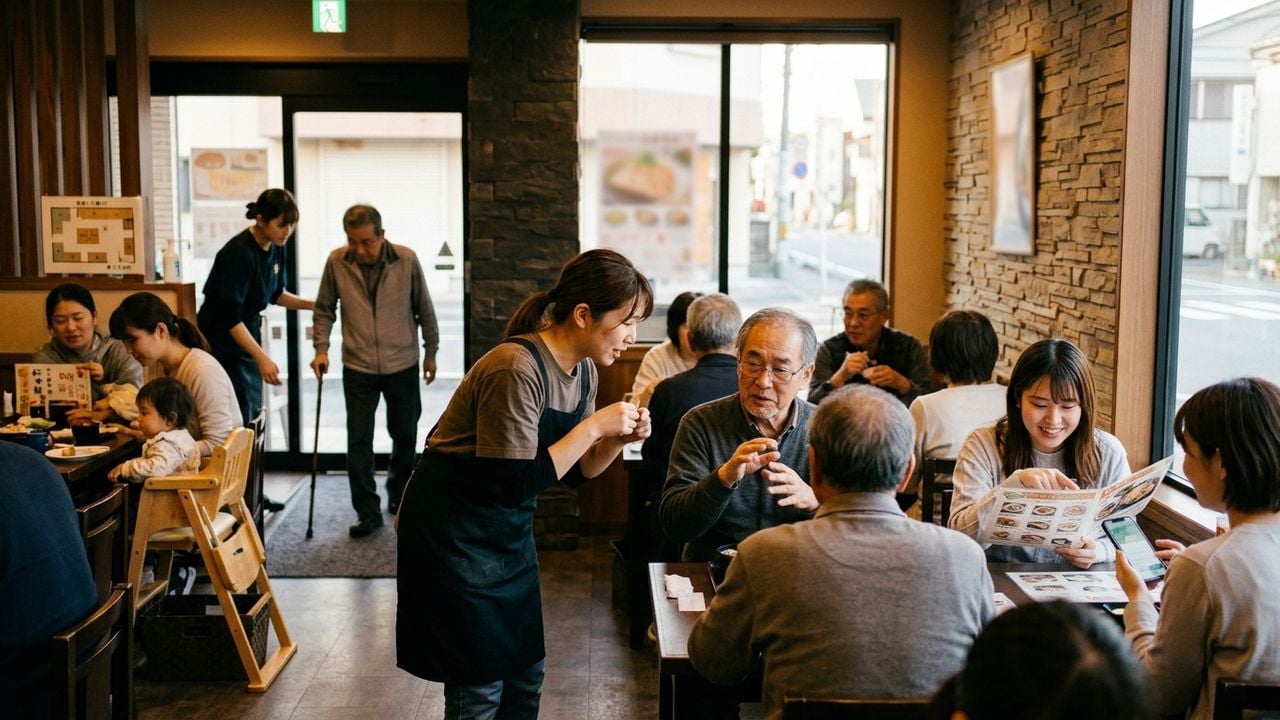
Itadaki has 18 seats in total, configured to welcome a wide range of visitors. There are five counter seats ideal for solo diners and couples, a sofa table for five (great for families or travel groups), a table for four, and two tables for two. All table seats feature sofa-style cushioned seating — not the hard wooden chairs you find at many lunch spots.
This matters more than it might seem. For families with young children, the sofa seating means little ones can sit comfortably without sliding off a chair. Past guests have used the sofa tables for bottle feeding and even for napping infants beside them during the meal. We're a lunch-only restaurant, and we want that lunch to feel genuinely relaxed — not rushed.
Solo diners will find the counter seats particularly welcoming. Business travelers visiting Nagoya for Toyota-related industry meetings or MICE events have told us the counter is the ideal spot for a focused, satisfying solo lunch. If you're curious how Itadaki fits into a business trip itinerary, you might enjoy reading about how we welcome international business guests behind the scenes.
6. Practical Transparency — We Tell You What You Need to Know Before You Arrive
One of the anxieties I hear most often from international visitors is uncertainty: Will it be sold out? Do I need a reservation? Can I pay by card?
Here's the straightforward answer to each of these:
- The Horai Wagyu gyudon is limited to 10 bowls per day. It does sell out, especially on weekends and public holidays. Reservation via Tabelog is the surest way to secure your bowl.
- The Mikawa Beef gyudon is always available for walk-in guests who haven't reserved.
- Payment: Credit cards, Apple Pay, and Google Pay are all accepted. You don't need to worry about finding an ATM before your visit.
- Opening hours: We serve lunch only — 11:00 to 15:00, with last order at 14:30. We're open Saturday, Sunday, Monday, and Tuesday (closed Wednesday through Friday). On public holidays, we open at 9:00. Please check our monthly business calendar on Instagram before visiting, as irregular closures do occasionally apply.
- Access: We're a 4-minute walk from Yabacho Station Exit 4 on the Meijo Subway Line, and also reachable on foot from Sakae, Kamimaezu, and Osu Kannon stations.
We share this information openly because we believe you deserve to plan your visit with confidence — no unpleasant surprises when you arrive.
7. The Menu Doubles as a Story
The final way Itadaki welcomes guests with diverse needs is perhaps the most unexpected: the multilingual menu isn't just a list of dishes. It's a narrative.
Each section explains where the ingredients come from — the Horai Wagyu raised by just three farms in Aichi's Okumikawa region, the Nagoya Cochin eggs from Yamada Poultry Farm, the white soy sauce from Hekinan City that forms the base of our signature magic sauce. Guests who read through the menu often tell us they felt like they understood why they were eating what they were eating — and that context made the meal significantly more meaningful.
If you're visiting Nagoya as part of a broader Japan itinerary — perhaps combining a day at Osu Kannon Temple with a longer trip through Aichi's historic districts — that storytelling context also gives you something worth sharing. Our guests regularly tell us the bowl became a talking point for the rest of their trip.
For those exploring the Osu area in kimono, or making the most of a full day in the district, we've also written about how to pair a kimono day in Osu with lunch at Itadaki — in case that matches your plans.
Planning Your Visit
The question that started this article — "Will I be able to order and enjoy the meal without Japanese?" — has a clear answer: yes, absolutely. The multilingual menu, the five-step eating guide, the approachable seating layout, the clear allergen information, and a team that genuinely enjoys welcoming guests from around the world are all there waiting for you.
Itadaki is located on the 2nd floor at 4-1-20 Osu, Naka-ku, Nagoya. We're open for lunch only on Saturdays, Sundays, Mondays, and Tuesdays (and public holidays, from 9:00). If you'd like to secure a Horai Wagyu bowl — limited to 10 per day — reserving via Tabelog is highly recommended.
For our complete menu, access details, and store information, visit our official page at https://itadaki8.com/english/.
You've read how Itadaki handles the language barrier, the allergen questions, the seating, and the sold-out wagyu — now the only remaining step is actually going. With only 10 Horai Wagyu bowls available each day, securing your reservation before you arrive is the one thing that makes the whole visit stress-free.