Step-by-Step: Fitting Itadaki Into Your Asian Games Match Day
 gotowp
The 2026 Asian Games are finally here. You've got your ticket. You know which venue you're heading to. And somewhere in the back of your mind, you're already thinking: What's going to make this trip a story worth telling?
The match itself — of course. But in our experience, the meals around it often become the moments people talk about longest. The friend who asks "What did you eat in Nagoya?" and ends up genuinely stunned by the answer. The photo that stops the scroll. The bowl that made you forget, just for a moment, that you were about to cheer for your country.
This is a practical, step-by-step guide to fitting a lunch at Itadaki into your Asian Games match day — designed for visitors who want more than just a meal between the hotel and the stadium.
Who This Is For
- ✅ Asian Games spectators with morning or early-afternoon time before an evening event
- ✅ Travelers who want a shareable, story-worthy lunch experience — not just a convenient bite
- ✅ Wagyu enthusiasts curious about rare Aichi beef beyond the usual Kobe or Matsusaka brands
- ✅ Visitors staying in or near Nagoya city center who want to make every hour count
- ✅ Anyone who believes the best travel stories are built around food as much as sport
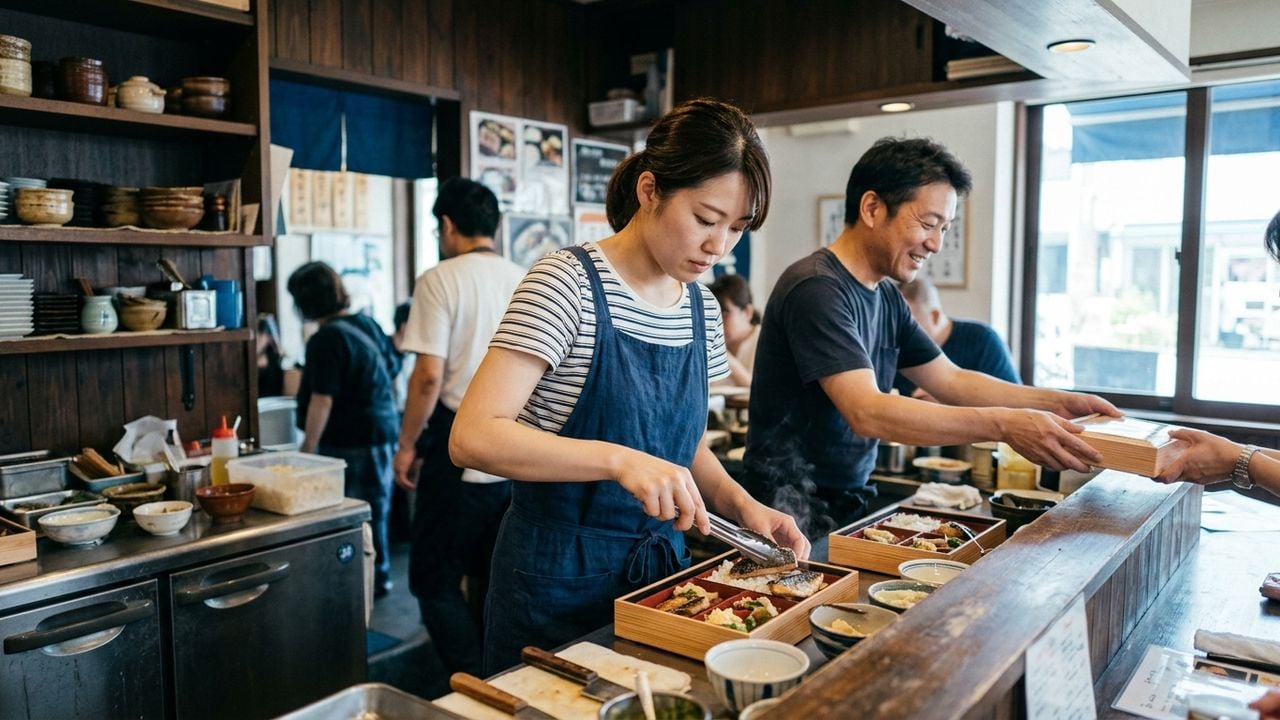
Why Match Day Lunch Is the Moment That Gets Remembered
There's a particular energy to an Asian Games match day — the anticipation building, the flags, the sense that something memorable is about to happen. Most visitors spend that pre-game window grabbing something quick near the venue. And that's completely fine.
But if you have an opening in the late morning or early afternoon, that window is actually one of the most valuable hours of your trip. Venues fill up fast. Nearby restaurants get overwhelmed. And the food you remember from a sports event is rarely the food you ate at the venue.
Itadaki operates lunch-only, from 11:00 to 15:00 on its scheduled business days (Saturday, Sunday, Monday, and Tuesday — and from 9:00 on public holidays). For many match-day schedules, this window aligns well with a pre-game lunch, especially for evening events. The key is planning a few steps ahead.
You've checked the open days, but Itadaki's actual schedule for Asian Games month — including any irregular closures — is only confirmed on Instagram. The monthly business calendar is posted there, so you can plan your match day timing around the real schedule. A quick check now saves a wasted trip.
Step 1 — Check the Calendar Before You Plan Anything Else
Itadaki is open on a fixed weekly schedule: Saturday, Sunday, Monday, and Tuesday, 11:00–15:00. On public holidays, the kitchen opens earlier at 9:00. Irregular closures do happen, so the monthly business calendar is posted on Itadaki's official Instagram — check it before you finalize your match day plans.
If your match falls on a Wednesday, Thursday, or Friday, Itadaki is closed on those days. In that case, consider building your Itadaki lunch into the day before or after the event — which often works out better anyway, since travel days and pre-match mornings can be flexible.
Step 2 — Reserve the Horai Wagyu Before It's Gone
Here's the detail that changes everything: Itadaki's signature Horai Wagyu gyudon is limited to just 10 bowls per day. Not 10 per seating — 10 total. Horai Wagyu is produced by only 3 farms in all of Japan, with just 300 heads raised annually. During Asian Games season, when Nagoya's visitor numbers are at their highest, those 10 bowls can be spoken for well before noon.
Reservation via Tabelog is the only way to secure your bowl in advance. If you're planning to visit during a busy match weekend, booking a day or two ahead is strongly recommended. Walk-ins are welcome, but the Horai Wagyu availability cannot be guaranteed without a reservation.
The Mikawa Beef gyudon — Itadaki's everyday offering — is always available, and it's a genuinely exceptional dish in its own right. But if the Horai Wagyu is part of the story you want to tell, reserve it.
✓ Key Takeaways
- Itadaki is open Saturday, Sunday, Monday, and Tuesday — always confirm the monthly schedule on Instagram before your match day.
- Horai Wagyu is limited to 10 bowls daily. During Asian Games peak periods, a Tabelog reservation is essential.
- Lunch service runs 11:00–15:00 (last order 14:30), making it ideal for pre-game or post-sightseeing timing.
The 10-bowl daily limit on Horai Wagyu is the one variable this guide can't control for you — if it sells out before you arrive, the story changes. Tabelog reservations are the only way to secure your bowl in advance for a specific date. It takes a few minutes to set up.
Step 3 — Build Your Route Around Yabacho Station
Itadaki is located in Osu, a 4-minute walk from Yabacho Station Exit 4 on the Meijo Subway Line. The Meijo Line runs in a loop connecting many of Nagoya's key points — which means getting to Itadaki from most central hotels or from Nagoya Station is straightforward, usually under 15 minutes by subway.
A practical match day route might look like this: arrive at Itadaki around 11:30 or noon, take 45–60 minutes for lunch, then head toward your venue with plenty of time to spare for evening events. For afternoon matches, an early 11:00 opening (or 9:00 on public holidays) gives you the option of an early lunch before crowds build.
One detail worth knowing: Itadaki is on the 2nd floor, accessible by staircase. There is no elevator in the building. If you're traveling with heavy luggage or a stroller, it's worth keeping this in mind when planning your timing.
If you're curious how other visitors have woven a lunch stop into a packed Nagoya itinerary, this step-by-step guide to fitting Itadaki into a Shirakawa-go day trip shows how the timing works in practice.
Step 4 — Let the Story Build Itself at the Table
The bowl arrives, and this is where the match day narrative takes an unexpected turn. What you're looking at isn't what most people picture when they hear "gyudon." The Horai Wagyu is arranged over a bed of Aichi no Kaori rice, a raw Nagoya Cochin egg yolk centered on the beef, shiso leaves alongside, pickled Atsumi radish on the side. It looks — and this is genuinely the first thing most guests reach for their phone.
Then the five-step eating guide arrives with the bowl, walking you through the experience: separate the egg white into the miso soup, place the yolk over the beef, taste the wagyu in its purest form first, then mix, then layer condiments — pickled ginger, nori, chirimen jako, the house 8-spice blend — and finally a finish with wasabi. Each step changes the flavor completely.
One guest put it simply:
"The rare wagyu was unlike anything I've ever tasted — a life-changing culinary experience."
That kind of reaction comes partly from the beef itself — fed on sake lees from Horaisen Sora, one of Aichi's finest breweries, giving it a character that's genuinely distinct from other wagyu. And partly from the story: 300 heads a year, across 3 farms, in a region most visitors have never heard of. When your friends back home ask what you ate in Nagoya, you won't be searching for words.
The English menu and photographic step-by-step guide mean the experience is clear from the moment you sit down — no uncertainty, no pointing at an untranslated board. For visitors who've already tried their share of wagyu on this trip, the comparison tends to be immediate and memorable.
For more on what the Asian Games lunch experience looks like from a guest's perspective, this article covers 5 reasons Itadaki fits naturally into an Asian Games Nagoya visit.
Step 5 — Leave Time for Osu Before You Head to the Venue
Osu is the kind of neighborhood that rewards even 30 minutes of wandering. Osu Kannon Temple is a 5-minute walk from Itadaki, the shopping street stretches in every direction, and Hisaya-odori Garden Flarie — a free-admission garden with six themed sections, often beautiful in late summer — is just 3 minutes from Yabacho Station. It's a natural place to walk off lunch and take a few more photos before heading toward your match.
The combination — a visually striking bowl of rare wagyu in a traditional ceramic dish, followed by a stroll through a neighborhood that mixes Buddhist temples with cosplay shops and craft beer — is the kind of afternoon that generates content well after the final whistle.
That's really the point. The Asian Games will give you the event. Osu and Itadaki give you the story that surrounds it.
Practical Details at a Glance
- Open days: Saturday, Sunday, Monday, Tuesday (+ public holidays from 9:00)
- Hours: 11:00–15:00 (last order 14:30)
- Horai Wagyu: Limited to 10 bowls daily — reserve via Tabelog
- Access: 4-minute walk from Yabacho Station Exit 4 (Meijo Line)
- Menus available in: English, Simplified Chinese, Korean
- Seating: 18 seats, all sofa-style table or counter seats — no private rooms
- Payment: Cards, Apple Pay, and Google Pay accepted
For our complete menu, access details, and store information, visit our official page at https://itadaki8.com/english/.
Your match day itinerary is taking shape — venue, transport, timing. The one piece left is the lunch that becomes the story you tell after the final whistle. Tabelog reservations open the door; the 10 bowls close fast on busy weekends.