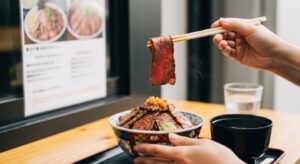
Horai Wagyu vs Kobe Beef: Which Rare Wagyu Deserves Your Trip?
 gotowp
Not long ago, a guest sent us a message that I think about often. They had visited Itadaki after carefully researching Nagoya's food scene, and they wrote simply: "I traveled to Nagoya specifically to eat here — it was 100% worth it." What struck me wasn't just the compliment — it was the word specifically. They hadn't stumbled upon us. They had made a deliberate choice, and they wanted to tell us it was the right one.
That kind of intentional travel — choosing a destination for a single, specific culinary experience — is something I deeply respect. And it raises a question I hear from guests regularly, usually before they've made that decision: "I've already had Kobe beef. Should I bother with Horai Wagyu? And is it actually safe to eat rare?"
Those are exactly the right questions. Let me answer them honestly.
Who This Is For
- ✅ Travelers who have already experienced Kobe or Matsusaka beef and are wondering what comes next
- ✅ Anyone curious about rare-style wagyu but uncertain about food safety
- ✅ Repeat visitors to Japan searching for an authentic, non-touristy culinary discovery in Nagoya
- ✅ Foodies who want the story behind the ingredient, not just the brand name
- ✅ Visitors planning a Nagoya lunch stop before or after Shirakawa-go, Takayama, or Gifu day trips
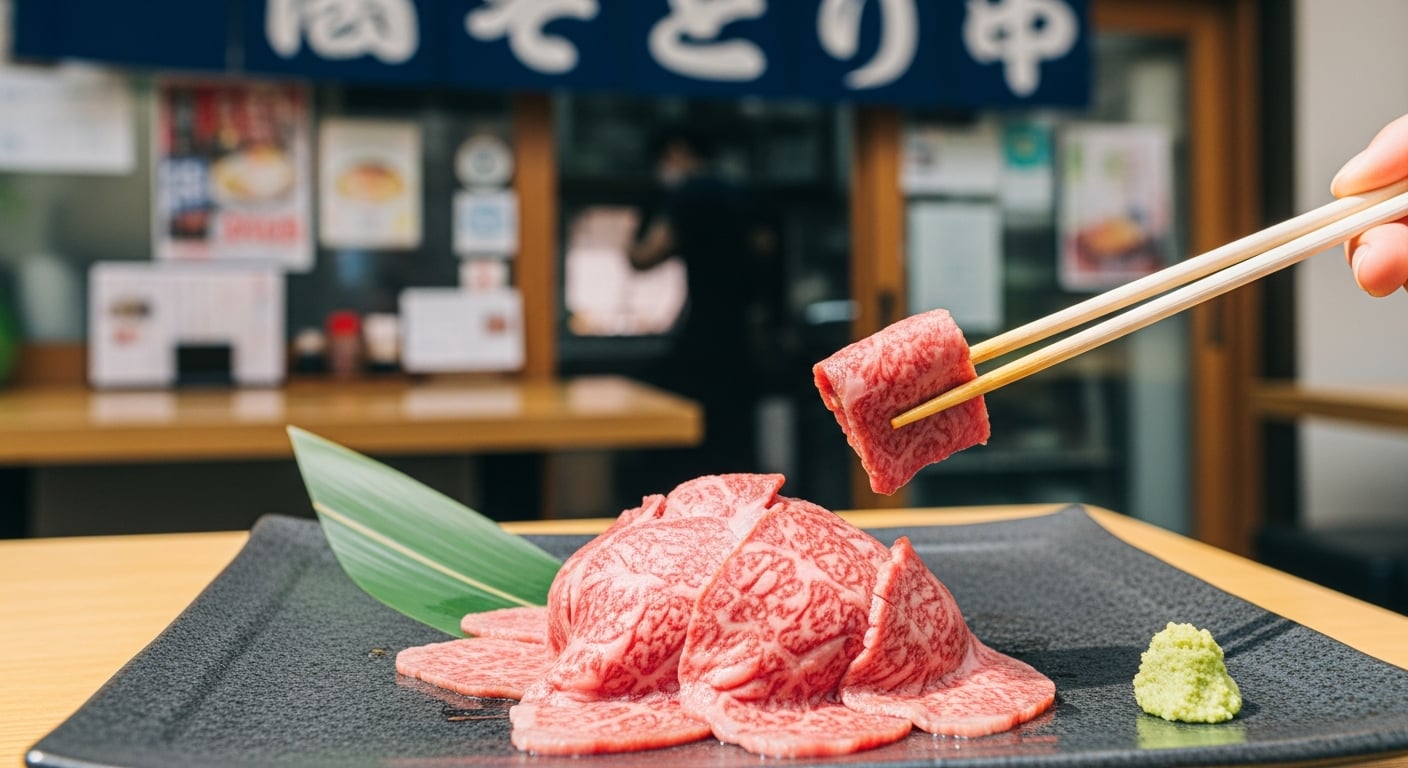
What Makes Kobe Beef What It Is — And What It Isn't
Kobe beef is extraordinary. There's no argument there. It's Tajima-strain Japanese Black wagyu raised in Hyogo Prefecture under strict certification standards, graded A4 or above, and famous globally for its intense marbling and melt-in-the-mouth texture. If you've eaten it, you understand why it commands the price it does.
But Kobe beef's greatest strength — its global recognition — also shapes how most people encounter it. In many cases, visitors experience Kobe beef in high-end teppanyaki restaurants designed for international guests, through preparations that are theatrical and impressive, but not always intimate. The beef is center stage, and the surrounding experience is built around its reputation.
That's not a criticism. It's simply a context. And context matters when you're deciding where to spend one of your limited Japan lunches.
Horai Wagyu: 300 Heads a Year, and a Story Unlike Any Other
Horai Wagyu is Japanese Black wagyu raised in the Okumikawa mountains of Aichi Prefecture, produced by only 3 farms in Japan with just 300 heads raised annually. To put that number in perspective: there are approximately 500,000 wagyu cattle in Japan. Horai Wagyu represents a fraction of a fraction.
What makes Horai Wagyu distinct isn't just its rarity. It's what those cattle eat. The farmers use sake lees from Horaisen Sora — one of Aichi's most respected premium sake breweries — as part of the feeding regimen. This creates a wagyu with a character you won't find in heavily marbled breeds: a balance of clean lean meat flavor and gentle, refined fat. It doesn't overwhelm the palate. It introduces itself quietly and stays with you.
For guests who have eaten Kobe beef and found themselves wanting something with more texture, more nuance, and a more personal story, Horai Wagyu often becomes the answer they didn't know they were looking for.
✓ Key Takeaways
- Kobe beef is celebrated for its global reputation and intense marbling — exceptional, but widely accessible through many venues in Japan.
- Horai Wagyu is produced by only 3 farms in all of Japan, with 300 heads annually — its rarity is factual, not a marketing story.
- The two wagyu offer genuinely different flavor profiles: Kobe tends toward richness, Horai toward balance and character.
The Question Every Western Visitor Asks: Is Rare-Style Wagyu Safe?
This is the part of the conversation I take most seriously, because I understand exactly where the concern comes from.
If you grew up in the United States, the United Kingdom, Australia, or most of Western Europe, you've been taught — correctly, within that context — that undercooked beef carries risks. Public health authorities in those countries advise against consuming beef that hasn't been cooked to a safe internal temperature, because surface contamination from E. coli or other bacteria can become a genuine hazard.
So when you see a bowl of wagyu that looks rare, it's natural to hesitate. That hesitation comes from a reasonable place, and I'd rather explain the full picture than dismiss the concern.
Here is what actually happens at Itadaki.
We use a proprietary two-stage cooking technique developed specifically for our Rare Wagyu Gyudon. This process heats the beef to over 70°C at the core — the threshold required by Japan's Ministry of Health, Labour and Welfare to ensure complete food safety. The Japanese government's food safety standards for beef preparation are among the most rigorous in the world, and every bowl we serve fully meets those standards.
What the technique achieves is this: the beef looks and feels rare. The texture is silky, tender, and unlike anything you'll experience with fully cooked wagyu. But internally, the heat has done its work completely. You are not eating raw beef. You are eating beef that has been cooked with extraordinary precision — to the exact point where safety is guaranteed and texture is preserved.
This is not a workaround. It is a culinary technique developed through genuine expertise, by a team that holds a Certified Food Sanitation Supervisor qualification and operates under a Licensed Restaurant Operator permit issued by the Aichi Prefecture Public Health Center. Food safety is not an afterthought at Itadaki. It is the foundation of the entire concept.
We also source exclusively from Aichi Prefecture farms — Horai Wagyu and Mikawa Beef — both raised under rigorous quality control by producers we know and work with directly. The integrity of the ingredient matters from the first day of the animal's life to the moment it arrives in your bowl.
"I traveled to Nagoya specifically to eat here — it was 100% worth it."
Guest review
That review was written by someone who had done their research, weighed the question of whether rare-style wagyu was worth the trip, and made a deliberate choice. I hope what I've described above gives you the same confidence they arrived with.
So Which Wagyu Deserves Your Trip?
Here's my honest answer, based on what I've seen from the guests who walk through our door.
If you haven't tried Kobe beef yet: Go. It's an important experience, and there's a reason it's famous. You won't regret it.
If you've already had Kobe, Matsusaka, or Omi beef: Horai Wagyu at Itadaki offers something genuinely different — not in a "this is better" sense, but in a "this is a completely different story" sense. A different region, a different character, a different preparation method, and a different culinary concept that exists nowhere else in the world.
If food safety is your primary concern: Our two-stage cooking technique means you can enjoy the rare-style experience with complete confidence. You are not being asked to take a risk. You are being invited into a carefully engineered culinary moment that is impossible to replicate elsewhere — and entirely safe.
The Horai Wagyu Rare Gyudon (Shinkoccho, 100g beef with Aichi no Kaori rice, ¥2,700) is strictly limited to 10 bowls per day. It's not a manufactured scarcity — it's a reflection of how few of these cattle exist. If Horai Wagyu is your goal, reserving in advance via Tabelog is the most reliable way to guarantee your bowl. When adding your reservation notes, paste the following into the memo field: 鳳来牛希望 (this tells us you'd like the Horai Wagyu).
For walk-in guests, or anyone who prefers to plan more loosely, our Mikawa Beef Rare Gyudon is always available — prepared with the same two-stage cooking technique and the same commitment to Aichi Prefecture ingredients.
Planning Your Visit to Itadaki in Osu, Nagoya
Itadaki is located on the 2nd floor at 4-1-20 Osu, Naka-ku, Nagoya — a 4-minute walk from Yabacho Station Exit 4 on the Meijo Subway Line. From Nagoya Station, the easiest route is the Higashiyama Line to Sakae, then a transfer to the Meijo Line to Yabacho — approximately 10 minutes in total.
Look for the sign reading 元祖レア牛丼 頂 (Ganso Rea Gyudon Itadaki) at street level and take the stairs to the 2nd floor. We are open for lunch only: 11:00–15:00 on Saturdays, Sundays, Mondays, and Tuesdays, and 09:00–15:00 on public holidays. Last order is 30 minutes before closing. We do not offer dinner service.
Our printed menu is available in English, Simplified Chinese, and Korean, and includes a five-step visual guide for enjoying the Rare Wagyu Gyudon — so you won't need Japanese to navigate the experience comfortably.
For our complete menu, access details, and store information, visit our official page at https://itadaki8.com/english/
If Horai Wagyu is on your Japan food list, we'd be honored to be the place where you try it. We look forward to welcoming you.