When You Rent Kimono in Osu, Add Itadaki to Your Route
 gotowp
Here's a fact that surprises many visitors planning a kimono day in Osu: the most talked-about lunch spot in the district limits its signature dish to just 10 bowls per day. Not per hour — per day. And on busy weekends when kimono rentals are fully booked and the shopping street is buzzing, those 10 bowls can be gone well before noon.
That dish is the Rare Wagyu Gyudon at Itadaki — the original rare wagyu gyudon specialty restaurant tucked on the 2nd floor in the heart of Osu. If you're spending the day in kimono, there's no better pairing than a bowl of ultra-rare Aichi wagyu between temple visits and shopping. But timing, and a little preparation, makes all the difference.
This guide is specifically for kimono-day visitors who want to make Itadaki a seamless part of their route — without the disappointment of arriving to find Horai Wagyu already sold out.
Who This Is For
- ✅ Visitors renting kimono in Osu who want a memorable lunch to complete the day
- ✅ Travelers planning a short stay in Nagoya who cannot afford a wasted trip
- ✅ Anyone wondering whether Horai Wagyu will sell out before they arrive
- ✅ First-time users of Japanese reservation platforms like Tabelog who are worried about language barriers
- ✅ Visitors who want step-by-step guidance on exactly when and how to visit Itadaki
Why Kimono Day in Osu and Itadaki Are a Natural Match
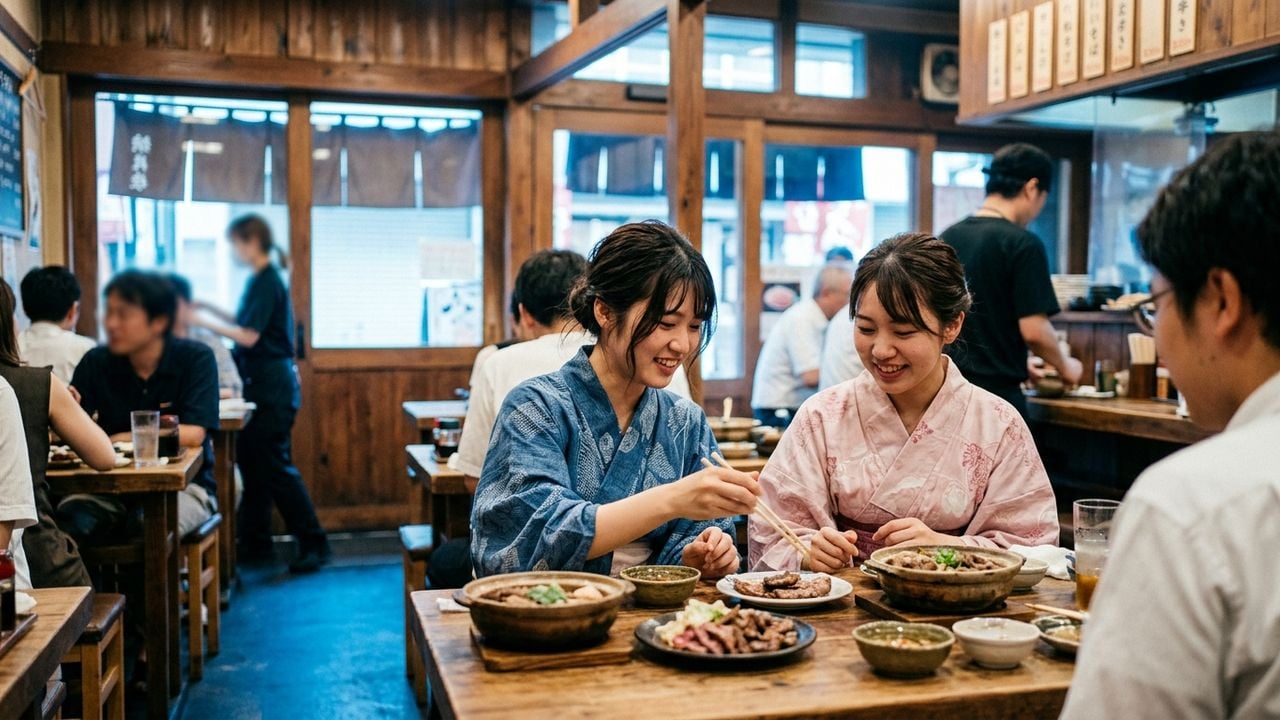
Osu is one of Nagoya's most visually layered districts — Edo-era temples sit a few steps from anime shops, and traditional sweets stands share the street with Taiwanese snack stalls. When you add kimono to the picture, the whole neighborhood becomes a kind of living photograph. And Itadaki fits naturally into that atmosphere.
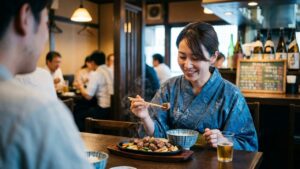
The restaurant is located just a 4-minute walk from Yabacho Station Exit 4 (Meijo Subway Line), on the 2nd floor of a building on Osu's main stretch. The entrance is marked with a sign reading 元祖レア牛丼 頂 — look for it at street level and take the stairs up. Kimono guests are warmly welcomed; the sofa-style table seating is comfortable even in traditional dress, and the relaxed lunch atmosphere suits the pace of a kimono day perfectly.
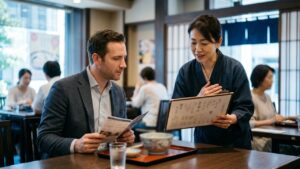
Founder Masayuki Goto — who has spent 18 years in the food and beverage industry and launched Itadaki in April 2022 — designed the restaurant with international guests in mind from the very beginning. A printed multilingual menu in English, Chinese, and Korean is available at every table, and the menu includes a visual "How to Enjoy Rare Gyudon" guide in five steps. You won't need Japanese to navigate the experience.
For a beautifully curated guide to combining kimono photography, shopping, and Itadaki lunch in a single Osu afternoon, see our dedicated Perfect Osu Kimono Day route guide with Itadaki lunch.
You're planning the timing of your kimono day and wondering whether Horai Wagyu will still be available when you arrive — that window of 10 bowls makes every hour matter. Itadaki's monthly business calendar tells you exactly which dates are open before you finalize your kimono rental booking. The schedule is updated each month on Instagram and takes under a minute to check.
The Real Problem: 10 Bowls, Limited Hours, and One Shot to Get It Right
Let's talk honestly about the constraint that catches so many visitors off guard.
Horai Wagyu — the signature beef at Itadaki — is produced by only 3 farms in Japan, with just 300 heads raised annually. Out of approximately 500,000 wagyu cattle in Japan, only 300 are Horai Wagyu. These cattle are raised in the Okumikawa region of Aichi Prefecture and fed on sake lees from Horaisen Sora, a renowned local premium sake. The result is a wagyu with a rare flavor profile: simultaneously delicate marbling and lean meat character, unlike any other wagyu you may have tried before.
Because of this extreme scarcity, Itadaki can only serve 10 bowls of Horai Wagyu per day. Itadaki operates lunch-only (11:00–15:00, open Saturday, Sunday, Monday, and Tuesday), and during peak hours on weekends — precisely when kimono rental shops are busiest — those 10 bowls are gone faster than most visitors expect.
If you arrive at 12:30 on a Sunday after a morning of kimono photographs near Osu Kannon Temple, there is a real chance the Horai Wagyu is no longer available. That's not a scare tactic — it's simply an honest reflection of the ingredient's rarity.
The good news: there is a clear way to guarantee your bowl.
✓ Key Takeaways
- Horai Wagyu is strictly limited to 10 bowls per day — walk-ins during peak weekend hours often miss out
- Itadaki is open lunch-only on Saturdays, Sundays, Mondays, and Tuesdays (11:00–15:00); check Instagram monthly for the business calendar
- A simple reservation via Tabelog Online — with one Japanese phrase in the notes — guarantees your bowl
You now know that 鳳来牛希望 in the Tabelog notes field is what stands between you and a guaranteed Horai Wagyu bowl — but the reservation itself still needs to be made. Tabelog Online lets you select your date, time, and party size in English, and your bowl will be waiting when you arrive from your morning in kimono. The reservation takes a few minutes and removes the one variable you can't control on the day.
Your Top 3 Strategies, Ranked by Reliability
Think of this as a ranked approach to securing the Horai Wagyu experience on your kimono day. Choose the strategy that fits your travel style.
#1 — Reserve in Advance via Tabelog Online (Most Reliable)
Tabelog is Japan's most widely used restaurant reservation platform — and while it may be unfamiliar to international visitors, reservations can be made entirely in English on the Tabelog website. The process is straightforward: select your date and time, fill in your details in English, and the system will process your booking.
The one critical step: in the notes or special requests field, copy and paste the following Japanese phrase:
鳳来牛希望
This phrase (pronounced "Hourai-gyu kibou") means "I would like the Horai Wagyu." Because Horai Wagyu allocation is managed separately from general reservations, including this phrase in your notes ensures the kitchen sets aside a bowl specifically for you. Without it, a standard reservation does not automatically guarantee Horai Wagyu availability.
For a kimono day specifically, reserving a slot around 11:30 or noon works well — it gives you a full morning for photography and temple visits around Osu Kannon, and you arrive at Itadaki when the kitchen is at its freshest.
#2 — Arrive Right at 11:00 Opening (Walk-In Option)
If your schedule doesn't allow for advance planning, arriving when Itadaki opens at 11:00 is your best walk-in strategy. At that moment, all 10 Horai Wagyu bowls are available. Kimono shops in Osu typically open between 9:00 and 10:00, and many offer quick dressing times of 30–45 minutes — meaning a 10:00 kimono appointment puts you in perfect position to walk to Itadaki right at opening.
This option requires flexibility in your morning, but for visitors who prefer spontaneity over planning, it's a reliable alternative.
#3 — Enjoy Mikawa Beef Rare Gyudon (Always Available)
If Horai Wagyu is sold out when you arrive, Itadaki's second signature — the Mikawa Beef Rare Gyudon — is always available and prepared using the exact same proprietary two-stage cooking technique. Mikawa Beef is sourced from Aichi's Mikawa region and uses only the uchimomo lean cut, creating a distinctly different but equally exquisite experience.
The Mikawa Beef Gyudon starts from ¥1,800 for the standard size (Fumoto: 100g beef, 200g rice). Many guests who ordered this on their first visit returned specifically for Horai Wagyu on their second — which tells you something about the quality of both.
"The five-step eating guide made the dish even more enjoyable and memorable."
Guest review
That five-step guide — separating the Nagoya Cochin egg yolk, enjoying the wagyu in its purest form first, mixing the yolk for richness, adding condiments, and finishing with wasabi — is printed on the multilingual menu and works equally well whether you're enjoying Horai Wagyu or Mikawa Beef. It transforms a lunch into something you'll find yourself describing to friends long after the trip.
What to Expect When You Arrive in Kimono
Itadaki has 18 seats in total — including counter seats ideal for solo visitors and sofa tables that comfortably fit groups of two, four, or five. The sofa seating is genuinely relaxed, which matters when you're wearing a kimono and prefer not to perch on a rigid chair through a full lunch.
The full multilingual menu covers every dish, ingredient, and option with photos and English descriptions. You can point to what you want, ask questions through a translation app, or simply trust the five-step guide and let the dish unfold. There is no pressure to rush — the lunch atmosphere at Itadaki is unhurried by design.
Do note that Itadaki is located on the 2nd floor, accessed by a staircase. If you are accompanied by a stroller or have mobility considerations, staff may be able to assist depending on availability at the time — though this cannot be guaranteed.
And yes — you are absolutely welcome to dine in kimono. Itadaki's guests have included cosplay enthusiasts, visitors fresh from Osu Kannon Temple ceremonies, and travelers in full traditional dress. The atmosphere is warm, welcoming, and unpretentious. For more on what to do with the hours before and after your Itadaki lunch during a kimono day, the full kimono day itinerary from morning to afternoon in Osu is a helpful companion read.
"The lunch was the highlight of my Nagoya trip — I'm telling all my friends about it."
Guest review
Practical Details for Your Kimono Day Visit
Here's everything you need at a glance before you go:
- Open days: Saturday, Sunday, Monday, Tuesday (check monthly schedule on Instagram for irregular closures)
- Hours: 11:00–15:00 (last order 14:30)
- Nearest station: Yabacho Station Exit 4 (Meijo Subway Line), 4-minute walk
- Sign to look for: 元祖レア牛丼 頂 at street level; stairs to 2nd floor
- Reservation: Tabelog Online (reservations in English); include 鳳来牛希望 in notes for Horai Wagyu
- Horai Wagyu (Shinkoccho, standard size): 100g beef, 200g rice, ¥2,700 — limited to 10 bowls daily
- Mikawa Beef (Fumoto, standard size): 100g beef, 200g rice, ¥1,800 — always available
- No dinner service: lunch only
Itadaki has been featured on 8 major Japanese TV programs including NHK, and is recognized as the originator of the Rare Wagyu Gyudon concept — a culinary category that didn't exist before Goto created it. Every ingredient on the table comes from Aichi Prefecture, making each bowl a quiet celebration of the region you're exploring in kimono that day.
A kimono day in Osu is already one of Nagoya's most beautiful experiences. Itadaki is the part of that day that becomes the story you'll still be telling six months later.
For our complete menu, access details, and store information, visit our official page at https://itadaki8.com/english/
Your kimono day in Osu is set — the route, the temples, the shopping street. The one piece left is confirming that bowl of Horai Wagyu will actually be there when you arrive. A Tabelog reservation with 鳳来牛希望 in the notes secures it, so the only thing you need to focus on that morning is which photo spot to visit first.