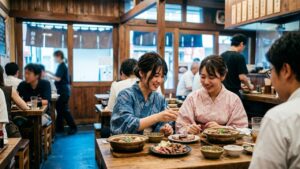
How I Made My Osu Kimono Day Perfect With Itadaki Lunch
 gotowp
A guest messaged us on Instagram a few weeks ago with a photo I still think about. She was wearing a pale indigo kimono, standing in front of Osu Kannon Temple, holding a bowl of our Horai Wagyu Rare Gyudon. The caption on her post had over 400 likes. She wrote: "My followers keep asking where this is."
That moment captures something I've noticed more and more — visitors who choose a kimono day in Osu aren't just looking for photographs. They're building a story. The kimono is the opening chapter. The streets of Osu are the setting. And increasingly, the lunch becomes the scene everyone remembers.
This guide is for anyone planning a kimono day in Osu who wants to come home with something beyond beautiful photos — a full story, with a meal at the center of it that gives your followers a reason to stop scrolling.
Who This Is For
- ✅ Travelers renting kimono in Osu and looking for a lunch that matches the day's visual and emotional quality
- ✅ Repeat Japan visitors who want shareable content that goes beyond "sushi in Tokyo" or "Kobe beef in Osaka"
- ✅ Visitors building a day that flows naturally from sightseeing to dining — without changing the atmosphere
- ✅ Anyone curious whether a wagyu gyudon bowl can genuinely be Instagram-worthy and story-worthy at once
- ✅ Travelers stopping in Nagoya on a longer itinerary — including those heading to Shirakawa-go or Takayama the following day
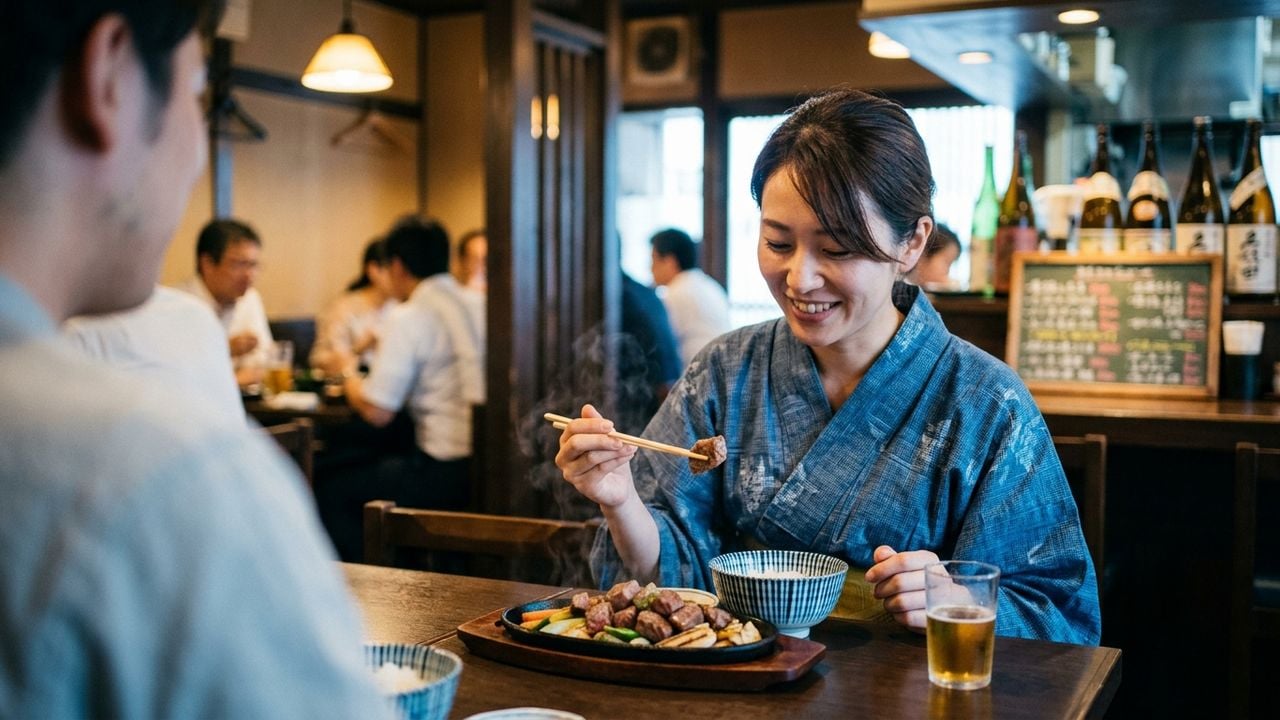
Step 1: Choose Your Kimono Timing With the Lunch in Mind
Most kimono rental shops in Osu open around 10:00. Itadaki opens at 11:00 on weekends and Mondays and Tuesdays. This timing is almost designed to work together — you have just enough time to dress, walk to Osu Kannon Temple for early-morning photos when the crowds are thin, and arrive at Itadaki right at opening.
Arriving early matters more than it might seem. Our Horai Wagyu — the star of the bowl — is strictly limited to 10 servings per day. It's produced by only 3 farms in Japan, with just 300 heads raised annually. Once those 10 bowls are gone, they're gone. Arriving at 11:00 gives you the best chance of securing one without a prior reservation. If you want to guarantee it, reserving in advance via Tabelog and noting 鳳来牛希望 in the comments is the surest approach.
For kimono spots close to Itadaki, our earlier post on Instagrammable Osu kimono spots with nearby lunch options maps out the best photo locations and how they connect to us on foot — worth a read before you plan your route.
You've mapped out the kimono route and you know the bowl is worth capturing — but Itadaki operates on a limited schedule with irregular closures that won't show up on a standard search. The monthly business calendar, updated regularly, tells you exactly which days we're open before you build your Osu day around us. One minute on Instagram is all it takes.
Step 2: Plan the Photo Route That Ends at Our Door
Osu is generous with backdrops. The stone lanterns lining Osu Kannon Temple's approach photograph beautifully in morning light. The covered arcade of Osu Shopping Street gives you that warm, lantern-lit atmosphere even on overcast days. Banshoji Temple, just a few minutes further, is quieter and less photographed — ideal if you want something your followers haven't seen fifty times before.
The walk from any of these spots to Itadaki takes between five and ten minutes on foot. We're located on the 2nd floor at 4-1-20 Osu — look for the sign reading 元祖レア牛丼 頂 at street level, and take the stairs up. The neighborhood between Osu Kannon and our entrance is itself a beautiful stretch of street-level Nagoya, with narrow lanes and older shopfronts that photograph well in kimono.
Hisaya-odori Garden Flarie, a free-admission urban garden just three minutes from Yabacho Station (the same station as Itadaki, Exit 4), is another option worth building into your route — especially if you want greenery and architectural contrast alongside the traditional Osu streetscape.
Step 3: Understand Why the Bowl Itself Becomes the Story
Here's where most lunch guides stop at "it looks great on Instagram" and move on. I want to go a step further, because the visual is only half of what makes this shareable.
When your followers see the bowl — the marbled wagyu arranged over rice, a golden Nagoya Cochin egg yolk resting at the center, served in traditional Japanese ceramic — they'll ask: "What is that?" And you'll have an answer worth giving.
Horai Wagyu is raised in Okumikawa, deep in Aichi's inland mountains, on a feed that includes sake lees from Horaisen Sora — one of Aichi's most respected sake breweries. There are roughly 500,000 wagyu cattle raised in Japan. Only 300 of them are Horai Wagyu. The texture — what we call "rare-style" — is achieved through a proprietary two-stage cooking technique that heats the beef to over 70°C at the core, meeting Japan's Ministry of Health, Labour and Welfare food safety standards, while preserving the tender, silky mouthfeel that makes it unlike any gyudon you've had before.
That story — 300 out of 500,000 — is what your caption writes itself around. The photo earns the stop-scroll. The story earns the saved post.
✓ Key Takeaways
- Arrive at Itadaki at 11:00 opening on your kimono day — Horai Wagyu is limited to 10 bowls daily, and early arrival maximizes your chance of securing one
- The photo route from Osu Kannon Temple to Itadaki is walkable in kimono, with photogenic streets in between
- The bowl's story — 300 Horai Wagyu heads raised annually in Aichi — gives your Instagram post a narrative that goes well beyond the image
Horai Wagyu is limited to 10 bowls a day — and a kimono day in Osu tends to draw guests who arrive at peak lunch hours. If securing this bowl is the centerpiece of your shareable story, a reservation removes the one variable that could leave you with Mikawa Beef instead (which is equally exquisite, but a different story to tell). Reserving via Tabelog takes a few minutes, and noting 鳳来牛希望 in the comments flags your Horai Wagyu request directly.
Step 4: Experience the Five Steps — and Capture Each One
What makes Itadaki's dish unusually photogenic isn't just the opening presentation — it's that the bowl transforms as you eat it. We provide every guest with a five-step visual guide, and each step genuinely looks different from the last.
Step one: the raw Nagoya Cochin egg arrives whole on the bowl. You separate the white into the miso soup and rest the golden yolk on top of the wagyu — that's the shot most guests capture first. Step two: the wagyu in its pure form, before mixing. Step three: the yolk broken, folding into the beef, creating a rich amber glaze over the rice. Step four: the condiments — pickled ginger from Kimura Farm in Inazawa, dried seaweed from Mikawa Bay, chirimen jako, the original 8-spice blend — added in turns, each shifting the flavor and the visual. Step five: a final lift of wasabi to finish.
You're not photographing one dish. You're photographing a sequence. That's something very few single lunch experiences offer, and it's part of why guests come back to share the full series on their feed or stories.
Everything on the table — every garnish, every condiment, every grain of rice — comes from Aichi Prefecture. The rice is Aichi no Kaori, grown locally. The miso soup uses Hatcho miso from Okazaki. The shiso leaves are Aikei No.1, from Toyohashi. The pickled radish comes from the Atsumi Peninsula. When you tell your followers this, you're not just describing a bowl of food. You're describing an entire region, distilled into one meal.
"Perfect lunch during our Nagoya stay before our Shirakawa-go trip the following day."
Guest review
That review stays with me because it captures something true about how Itadaki fits into a larger Japan story. Nagoya is often a transit point on longer itineraries — the night before Shirakawa-go, the stop between Tokyo and Kyoto. But a lunch like this reframes Nagoya from "the city I passed through" to "the city where I had that bowl." The meal becomes a landmark in the trip, not just a meal.
For those pairing a kimono day with broader Nagoya exploration, the approach of weaving Osu's traditional atmosphere into a full afternoon narrative is something we've also written about in our guide to comparing kimono photo spots in Osu with traditional Kyoto sites — useful context if you're deciding where Osu fits in your broader Japan itinerary.
Step 5: Leave With Something to Share — and a Story Ready to Tell
By the time you finish the five steps and set down your chopsticks, you have photographs across multiple moments, a story about one of Japan's rarest wagyu breeds, and an experience that genuinely differentiates your Japan content from the crowd.
Itadaki has been featured on 8 major Japanese TV programs, including NHK — recognized as the originator of "Rare Wagyu Gyudon" as a culinary concept. But what I find more meaningful than the TV appearances is the steady flow of guests who tell us they discovered us through a friend's Instagram post, traveled to Nagoya specifically for this bowl, and left with their own story to share.
The kimono day in Osu is already a compelling travel narrative. Adding a lunch at Itadaki — a world's-first culinary concept, with ultra-rare Aichi ingredients, presented in five photographic stages — turns it into the kind of day that answers the question "What was the highlight of your Japan trip?" without any hesitation.
We're open Saturday, Sunday, Monday, and Tuesday from 11:00 to 15:00 (last order 14:30), and on public holidays from 09:00 to 15:00. Irregular closures do happen — our monthly business calendar is always updated on Instagram, so it's worth checking before your visit day.
For our complete menu, access details, and store information, visit our official page at https://itadaki8.com/english/
You've read through every step — the timing, the photo route, the five-stage bowl, the story behind 300 Horai Wagyu heads a year. The next move is straightforward: lock in your seat before someone else takes the last bowl on the day you've chosen. Reservations are made through Tabelog Online, in English, and take only a few minutes.