Behind the Scenes: Hosting MICE Guests at Itadaki
 gotowp
You've attended the conference sessions. You've toured the factory floor. You've sat through the formal dinner. And now, with a rare free hour before your next commitment, you're standing on a Nagoya street corner asking the same question that every business traveler eventually asks: Where do the locals actually go for lunch?
Not the hotel buffet. Not the izakaya your colleague booked from a search result. Something real. Something worth talking about when you're back home and someone asks, "What was Nagoya like?"
That's the exact moment many of our MICE guests describe right before they found Itadaki.
Who This Is For
- ✅ Business travelers visiting Nagoya for conferences, factory tours, or MICE events who want a memorable lunch beyond the hotel restaurant
- ✅ Repeat visitors to Japan who have already done Tokyo and Kyoto and are actively looking for an authentic local discovery
- ✅ Anyone curious whether Nagoya's food scene holds a genuine hidden gem — not just a guidebook recommendation
- ✅ Travelers from Hong Kong, Taiwan, Singapore, and beyond who want a story worth sharing, not just a meal worth eating
The Hidden Gem Question Every MICE Traveler Asks
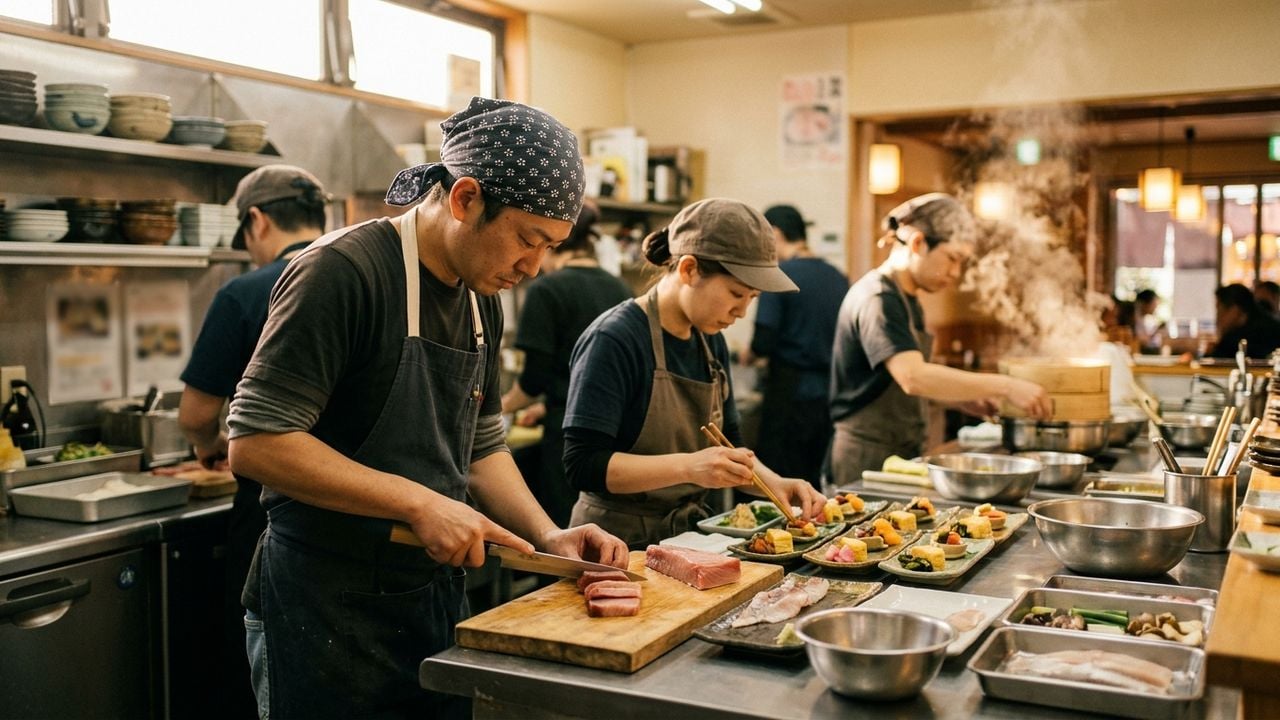
Here's something I've noticed about the guests who come to Itadaki on business trips: they almost always arrive with a version of the same backstory. They've visited Japan before — sometimes many times. They know Kobe beef. They know Matsusaka. They've done the famous restaurants that every guidebook recommends. And this time, they want something different.
One guest put it this way after finishing their bowl: "I've had Kobe beef and Matsusaka beef, but Horai Wagyu at Itadaki was on another level."
That kind of reaction doesn't come from a well-worn tourist trail. It comes from actually stepping off it.
Nagoya is often the city that repeat Japan visitors overlook — or treat as nothing more than a shinkansen stop between Tokyo and Kyoto. But for anyone willing to spend even a single lunch hour exploring, the Osu district offers the kind of discovery that doesn't appear in mainstream English guidebooks. It's where you find specialty restaurants doing one thing with complete dedication. It's where Japanese food enthusiasts say, quietly, "This is where I really eat."
Itadaki sits in the middle of that world — on the second floor of a building in Osu, quietly protected as a local secret by the people who know it best. Four minutes from Yabacho Station on the Meijo Line. Easy to reach from any MICE venue in central Nagoya.
If you're planning a MICE trip to Nagoya and wondering whether Horai Wagyu will still be available when you arrive — that's the exact question worth settling before your schedule locks in. Our monthly business calendar tells you exactly which dates we're open, so you can align your free lunch hour without guesswork. One check on Instagram is all it takes.
What Makes Itadaki the Lunch That MICE Guests Remember
Founder Masayuki Goto didn't set out to build a restaurant for business travelers. He set out to answer a question that had been bothering him for years: why, in a country with premium katsudon, premium kaisendon, and premium oyakodon, was the gyudon — Japan's beloved beef bowl — still stuck in the world of fast-food chains?
The answer he built is Itadaki: the originator of Rare Wagyu Gyudon. Every ingredient sourced from Aichi Prefecture. A proprietary two-stage cooking technique that achieves a rare-style mouthfeel while fully meeting Japan's Ministry of Health, Labour and Welfare food safety standards. And at the heart of it, a beef that most visitors — even seasoned Japan travelers — have never heard of.
Horai Wagyu. Produced by only three farms in Japan. Just 300 heads raised annually in Okumikawa, Aichi Prefecture, fed on the sake lees of Horaisen Sora — a premium local sake. Out of approximately 500,000 wagyu cattle raised in Japan each year, only 300 are Horai Wagyu. That's not a marketing story. That's the actual supply.
For MICE guests who travel internationally and have high standards for what counts as a memorable meal, this is exactly the kind of specificity that resonates. It's a dish with a verifiable story, prepared with documented craft, by a team that has been recognized on eight major Japanese television programs, including NHK, as the originator of an entirely new culinary concept.
✓ Key Takeaways
- Itadaki is a 4-minute walk from Yabacho Station (Meijo Line), making it straightforwardly accessible from Nagoya's main MICE and business districts
- Horai Wagyu — available in limited quantities daily — is one of Japan's rarest wagyu breeds, unknown to most international travelers and unavailable at chain restaurants or typical tourist spots
- The rare-style preparation is achieved through a proprietary two-stage cooking method that fully meets Japanese food safety standards, so there's no need to hesitate
The Horai Wagyu is limited to 10 bowls per day — and MICE schedules don't leave room for "sold out" surprises. Reserving your seat in advance via Tabelog means your lunch hour is already settled before you land in Nagoya. It takes about two minutes to complete.
How MICE Guests Typically Experience an Itadaki Lunch
Business schedules are rarely flexible. That's something we understand completely, and it shapes how Itadaki operates. Lunch service runs from 11:00 to 15:00 (last order 30 minutes before closing) on Saturdays, Sundays, Mondays, and Tuesdays — and on public holidays, doors open at 9:00. With 18 seats — including counter seating for solo diners and comfortable sofa-style tables for small groups — the space works equally well for a solo business traveler with 45 minutes to spare and a group of four colleagues looking for a shared experience.
The dish itself is designed to be experienced in five deliberate steps, guided by a multilingual printed guide available in English, Simplified Chinese, and Korean. Start by separating the raw Nagoya Cochin egg — white into the miso soup, yolk placed atop the beef. Taste the wagyu first in its purest form. Then introduce the egg yolk. Then explore the complimentary condiments: pickled ginger, dried nori seaweed, chirimen jako, Itadaki's original 8-spice blend. Finish with wasabi. The whole process turns a simple bowl into something closer to a tasting experience — something to talk through with the colleagues sitting across from you.
Guests who book in advance via Tabelog secure not just a seat, but access to the Horai Wagyu option, which is strictly limited to 10 bowls per day and regularly sells out during peak hours. For MICE visitors with a tight schedule, that reservation matters more than almost anything else.
"I've had Kobe beef and Matsusaka beef, but Horai Wagyu at Itadaki was on another level."
— Guest review
The Discovery You Bring Home
There's a particular satisfaction that comes from finding something before everyone else does. For repeat Japan travelers — especially those from Hong Kong, Taiwan, and Singapore who have already covered the Golden Route multiple times — that feeling is increasingly what shapes an itinerary. Not the next famous spot. The next genuine find.
Itadaki is that kind of find. It doesn't appear in the major English travel aggregators. It's not on the tourist brochure map. It's the place your Japanese colleague would take you if you asked, sincerely, where they actually eat.
The name "Itadaki" itself comes from itadakimasu — the expression of gratitude spoken before every meal in Japan. It's Goto's way of saying that the food here is a gift: from the Aichi farmers who raised the cattle, from the land that grew the rice, from the craft that transformed it all into something worth sitting down for. How Itadaki prepares to welcome international business guests reflects that same philosophy — every detail thought through, every guest genuinely welcomed.
For MICE participants, that philosophy translates into something practical: a lunch that stands apart from every other business meal on the trip, gives you something specific and real to talk about, and takes no more time than a restaurant booking you could make right now.
September 2026 brings the Asian Games to Nagoya — and with them, a global gathering of delegates, athletes' families, and business visitors who will be moving through this city in exactly the same way you might be. The Osu district will be busier than ever. How Itadaki is preparing for Asian Games 2026 gives a sense of how we're thinking about that moment — and why early reservation is especially worth it in the months ahead.
For our complete menu, access details, and store information, visit our official page at https://itadaki8.com/english/
You came to Nagoya for business — but the lunch you'll remember is the one you planned for yourself. With only 10 bowls of Horai Wagyu served each day, the window is narrow and the schedule fills. Secure your seat now and arrive knowing the discovery is already waiting.