Can I Wear Kimono When Dining at Itadaki in Osu?
 gotowp
September in Nagoya has a particular kind of energy. The summer heat begins to soften, and Osu district — already one of the city's most visually alive neighbourhoods — fills with visitors dressed in a striking mix of contemporary fashion, cosplay, and traditional kimono. If you're spending the day exploring Osu Kannon Temple or strolling the covered shopping street in a rented kimono, you may well find yourself wondering: Can I walk straight into Itadaki like this? And, perhaps more urgently: Will I actually be able to order once I'm inside?
The short answer to both questions is yes — and this article explains exactly what to expect.
Who This Is For
- ✅ Visitors who have booked a kimono rental in Osu and want to plan lunch around it
- ✅ Travelers concerned about language barriers at authentic local restaurants
- ✅ Anyone who has never tried rare-style wagyu and wants to know how the ordering process works
- ✅ Visitors with dietary questions or allergen concerns who want clear answers before they arrive
- ✅ First-time visitors to Nagoya who discovered Itadaki through a travel guide or Google Maps
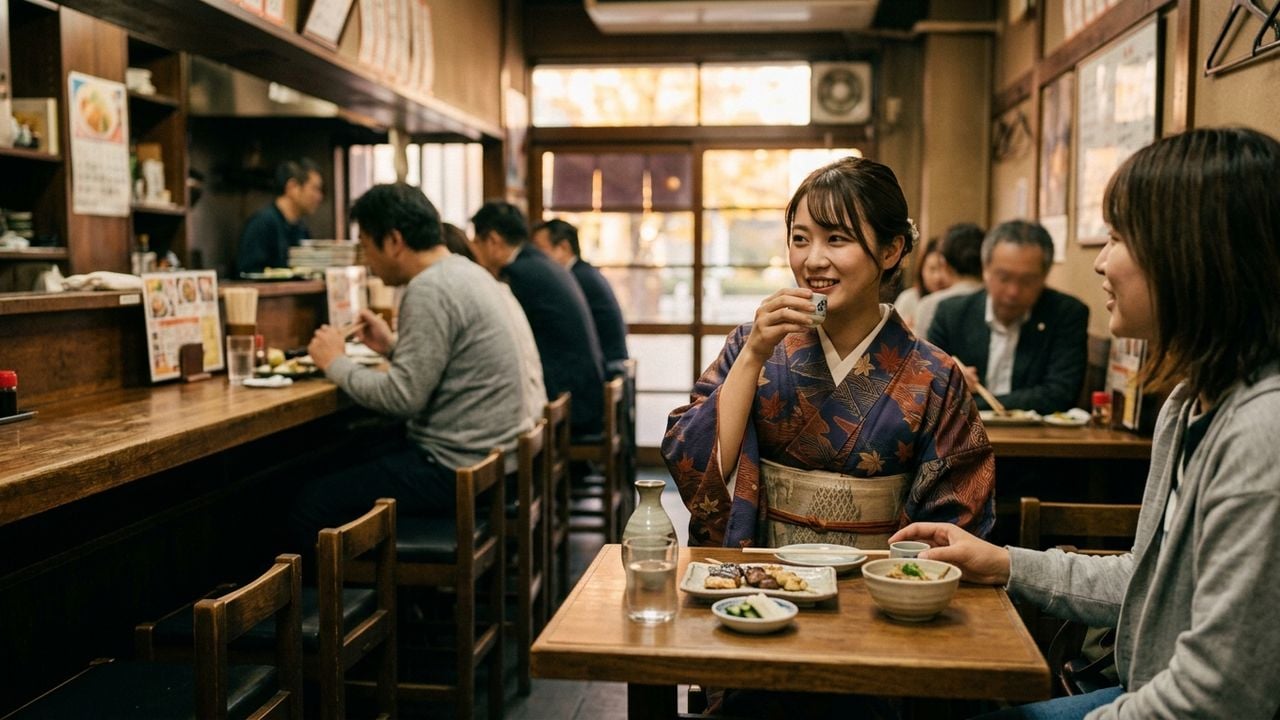
Is Kimono Attire Welcome at Itadaki?
Absolutely. There is no dress code at Itadaki, and kimono guests are genuinely welcomed. The restaurant's sofa-style seating was chosen specifically because it is comfortable for extended dining — and that comfort extends to guests in full kimono, yukata, or any other traditional attire. Past visitors have arrived directly from kimono rental shops in Osu, and the relaxed, unhurried atmosphere of a lunch-only restaurant means there is no rush to leave once you are seated.
The space seats 18 guests across counter seats, two-person sofa tables, a four-person table, and a five-person sofa table — all designed with comfort in mind. For those managing wide sleeves or a formal obi sash, the sofa seating gives you the room to settle in properly, which is something counter seating at busier restaurants rarely allows.
If you are already planning a kimono day in Osu and want to see how other guests have built their route, here's how to add Itadaki to your Osu kimono route — including practical timing tips.
You've confirmed that kimono is welcome and the English menu handles the language side — but Itadaki's business days shift monthly, and a kimono rental day needs precise timing. Our Instagram shows the current monthly schedule so you can match your rental booking to a day Itadaki is actually open. Takes under a minute to check.
What Happens When I Don't Speak Japanese — Will I Be Able to Order?
This is the question that stops many international visitors from stepping through the door at authentic local restaurants — and it is a completely understandable concern. The fear of not understanding a menu, not being able to ask about allergens, or simply not knowing how to eat an unfamiliar dish can push even adventurous travelers toward familiar chain restaurants. That would be a genuine shame, and it is something founder Masayuki Goto thought carefully about when opening Itadaki in 2022.
At Itadaki, the printed menu is available in English, Simplified Chinese, and Korean. Each version includes photographs of every dish, clearly listed prices, and descriptions of the key ingredients. You can point to what you want — and the staff will understand immediately. Translation apps work comfortably in the restaurant as well, should you need to communicate something more specific.
Beyond the menu itself, every order of the Rare Wagyu Gyudon comes with a multilingual visual guide: a five-step instruction card titled "How to Enjoy Rare Gyudon." It walks you through separating the Nagoya Cochin egg (the white goes into the miso soup; the yolk stays atop the beef), tasting the wagyu in its purest form first, mixing the yolk for a richer bite, adding the complimentary condiments at your own pace, and finishing with wasabi for a clean, refreshing note. No guesswork, no awkward uncertainty — just the dish, unfolding exactly as it was designed.
One guest put it simply:
"The five-step eating guide made the dish even more enjoyable and memorable."
Guest review via Google
That reaction reflects exactly what Goto intended: the guide is not a workaround for language — it is part of the experience itself, turning a bowl of wagyu into a deliberate, multi-stage culinary journey.
✓ Key Takeaways
- Kimono guests are welcome with no dress code restrictions, and sofa seating is comfortable for traditional attire.
- Menus are available in English, Simplified Chinese, and Korean — with photos and prices clearly displayed.
- The five-step visual eating guide removes all uncertainty about how to enjoy the rare gyudon.
Now you know the five-step guide removes the uncertainty and the menu is in English — the remaining variable is whether Horai Wagyu will still be available when you arrive. Only 10 bowls are offered each day, and a kimono rental morning often means arriving later rather than earlier. Securing your seat via Tabelog reservation removes that risk entirely.
What If I Have Allergen Questions — Can I Communicate Them?
Itadaki's multilingual menu includes ingredient information, and pointing to specific items is straightforward. That said, it is worth knowing a few things in advance so there are no surprises at the table.
Soy and wheat are present in the soy sauce and miso used throughout the menu. The Nagoya Cochin egg comes with every gyudon as standard, but can be omitted by requesting it at the time of order (the English menu notes this clearly). The complimentary tabletop toppings include chirimen jako (dried whitebait), which contains sesame — guests with sesame allergies should simply skip that particular topping. Itadaki's original 8-spice blend, by contrast, does not contain sesame.
For guests with severe or complex allergies, it is worth noting that the kitchen is a small environment, and full cross-contamination control cannot be guaranteed. Informing staff at the time of reservation is the most reliable approach. Itadaki does not currently hold Halal certification, so guests with strict Halal requirements may wish to plan accordingly.
None of this is unusual for a small specialty restaurant — and having the allergen information available in writing, in your language, before you sit down makes a meaningful difference to how relaxed the meal actually feels.
Do I Need to Say or Do Anything Special When I Arrive in Kimono?
No special protocol is needed. Simply arrive, and the staff will seat you. If you have a reservation via Tabelog, give the name on the booking — the process is the same regardless of what you are wearing.
One practical note for kimono guests: Itadaki is located on the second floor of its building in Osu, accessed by a staircase. The staircase is manageable in kimono, though guests in particularly formal or restrictive styles may want to take it slowly. Staff are present and welcoming at the entrance.
It is also worth knowing that Horai Wagyu — Itadaki's signature ultra-rare beef, produced by just three farms in Aichi with only 300 heads raised annually — is limited to 10 bowls per day. If your kimono day includes a late morning start (which is common when rental shops require returns by late afternoon), arriving closer to opening at 11:00 gives you the best chance of securing a bowl. A reservation via Tabelog is the most reliable way to guarantee your seat, particularly during the autumn season when Nagoya is especially popular with visitors.
For visitors combining a kimono day with other Osu sightseeing, this account of a full Osu kimono day with Itadaki lunch gives a realistic sense of how to pace the visit.
What Should I Expect From the Experience Itself?
The Rare Wagyu Gyudon at Itadaki is, at its core, a bowl of rice with carefully prepared wagyu beef and a raw Nagoya Cochin egg — but the experience it delivers is considerably more layered than that description suggests. Every ingredient on the table is sourced from Aichi Prefecture: the rice, the miso, the pickled radish from the Atsumi Peninsula, the shiso leaves from Toyohashi, the seaweed from Mikawa Bay. The complimentary condiments — pickled ginger, dried nori, chirimen jako, and Itadaki's own 8-spice blend — are not afterthoughts. They are there to transform the bowl at different stages of the meal, guided by the five-step card in whatever language you need.
The atmosphere is calm and unhurried. Itadaki operates only during lunch hours (11:00 to 15:00 on Saturdays, Sundays, Mondays, and Tuesdays, with last order at 14:30), which means the pace of service is never rushed. For guests spending the day in kimono, that unhurried quality matters — it gives you time to sit comfortably, enjoy the meal as it was intended, and leave feeling like the lunch was genuinely part of the day rather than a quick stop between sightseeing.
The dish is also visually striking — presented in traditional Japanese ceramic ware, with the deep colour of the wagyu, the golden yolk, and the green shiso leaves creating a composition that photographs beautifully if you want to document the moment.
For our complete menu, access details, and store information, visit our official page at https://itadaki8.com/english/
A kimono day in Osu already takes planning — rental timing, temple visits, the walk through the shopping street. Adding a lunch reservation here means that one part of the day is settled, confirmed, and waiting for you. Tabelog reservations take a few minutes and are available in English.