Nagoya Lunch vs Takayama Lunch: Which Experience to Choose
 gotowp
You've been staring at your Japan itinerary for weeks. Takayama is on the list — the preserved merchant streets, the morning markets, the ryokan breakfast photos that flood Instagram every autumn. But you're also spending time in Nagoya, and something in you wants that meal to count too. Not just as fuel between train stations, but as a story.
Here's the real dilemma most travelers run into: both Nagoya and Takayama offer genuine culinary experiences, but they deliver completely different kinds of stories. And the question isn't really "which is better" — it's "which story do you want to tell?"
This article breaks down what each city actually offers for lunch, what kind of content and memories each experience tends to produce, and how to decide based on what you actually want to carry home — not just in your stomach, but on your camera roll and in your conversations for years to come.
Who This Is For
- ✅ Travelers who want at least one meal from their Japan trip to become a story worth sharing
- ✅ Anyone planning a Nagoya-Takayama itinerary and wondering how to allocate their "special lunch" moment
- ✅ Repeat Japan visitors who've already done sushi in Tokyo and Kobe beef in Osaka, and want something genuinely new
- ✅ Travelers who care about visual presentation, unique concepts, and the narrative behind a dish
- ✅ Those heading to Shirakawa-go or Takayama via Nagoya who want to make the most of both stops
What Takayama Offers — And What It Doesn't
Takayama is beautiful. That's not in dispute. The Sanmachi Suji district, with its dark wooden merchant houses and sake breweries, creates a backdrop that practically photographs itself. Lunch there often means Hida beef sushi, mitarashi dango by the river, or a bowl of Hida-style ramen in a centuries-old building.
The story Takayama tells is essentially: This is old Japan, preserved. That's genuinely powerful — and it photographs extraordinarily well. You'll come away with moody wooden-building shots, river reflections, and a bowl of something rustic and regional.
But here's what experienced Japan travelers often say after their first Takayama visit: the food is atmospheric, but the dish itself rarely surprises them. Hida beef served as sushi or nigiri is delicious. It's not, however, a concept that exists only in Takayama, and the story behind it — while rooted in the region — is already well-covered in English travel guides. Your followers may well have already seen it.
The visual appeal of Takayama is in the setting more than the dish. Which means if it rains, or the crowds are heavy, that story becomes harder to tell.
You're weighing two cities and trying to figure out which lunch will actually become a story — not just a satisfying meal. The monthly schedule at Itadaki determines exactly which days that Nagoya experience is even available, and it changes each month. Checking the current business calendar on Instagram takes about 30 seconds and tells you whether your travel dates align.
What Nagoya Offers — And Why Osu Changes the Equation
Nagoya's lunch scene gets underestimated, which is part of what makes it interesting. While the city is famous within Japan for its distinctive food culture — miso katsu, kishimen noodles, morning sets — the more compelling discovery for international travelers is what's happening at the edge of mainstream awareness.
In the Osu district, a neighborhood that locals describe as Nagoya's most layered and surprising, there's a specialty restaurant that opened in 2022 with a concept that had never existed before: Rare Wagyu Gyudon. Not a variation on an existing dish. Not a regional interpretation. A genuinely new culinary category — the gyudon, Japan's humble everyday beef bowl, reimagined as a fine dining experience using ultra-rare Aichi wagyu.
That restaurant is Itadaki.
What makes the Nagoya story more shareable isn't just the dish — it's the layers underneath it. The beef, Horai Wagyu, is produced by only 3 farms in Japan with just 300 heads raised annually. It's fed on sake lees from Horaisen Sora, a renowned local premium sake. Out of approximately 500,000 wagyu cattle in Japan, these 300 represent something genuinely singular. That's not marketing language — it's a fact that, when you tell it to your friends or caption it on Instagram, makes people stop scrolling.
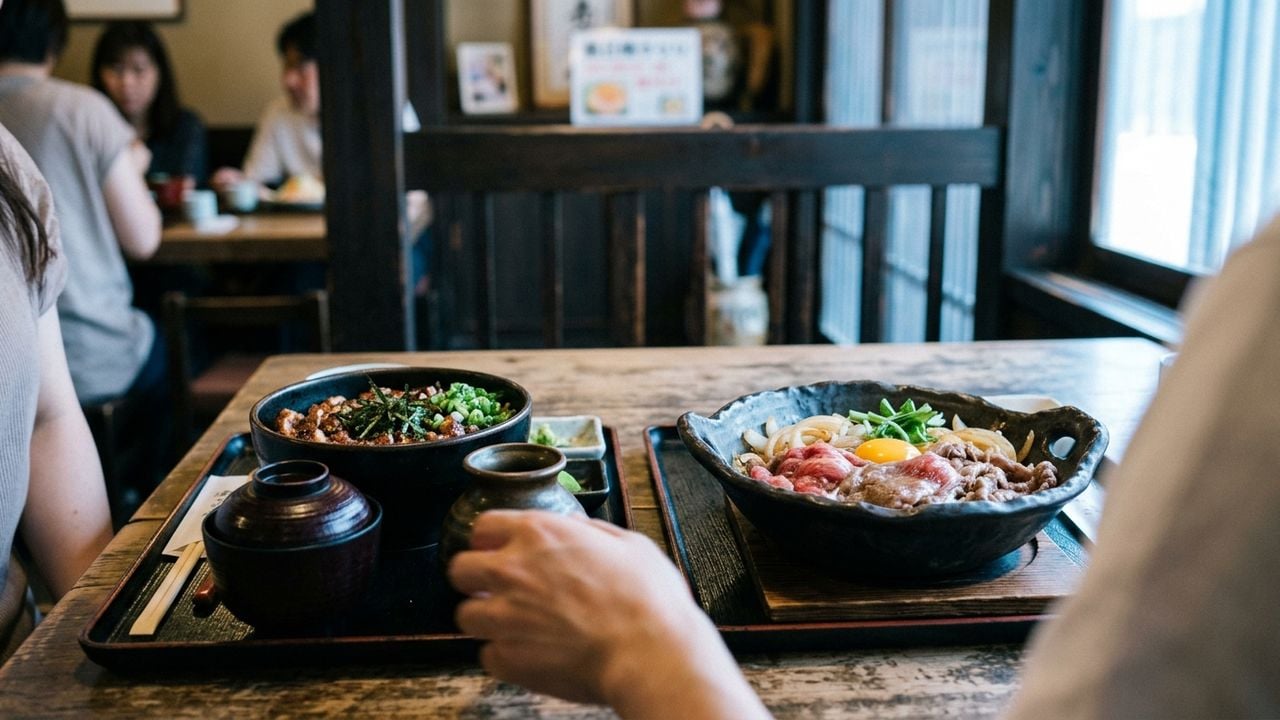
And the dish itself is visually unlike anything most travelers have photographed. Rare-style wagyu arranged over steamed Aichi rice, a golden Nagoya Cochin egg yolk resting on top, served in a traditional ceramic bowl with a full set of Aichi-sourced condiments. When the light hits it right — and the presentation is deliberate enough that it usually does — it's the kind of photo that draws the question: What is that?
That question is the beginning of a story.
✓ Key Takeaways
- Takayama's lunch story is largely about setting and atmosphere — beautiful, but increasingly familiar to repeat Japan travelers.
- Nagoya's Osu district offers something rarer: a concept that was invented here, using ingredients that exist almost nowhere else, making your story genuinely exclusive.
- Horai Wagyu — 300 heads annually across 3 farms — gives the Nagoya experience a factual narrative that travels beautifully on social media.
You've now seen why the Horai Wagyu bowl — 300 heads annually, the story behind every plate — is the part of this comparison that's hardest to replicate anywhere else. That bowl is capped at 10 per day, and walk-in timing is unpredictable. Securing it in advance via Tabelog is the one step that turns this from "maybe" into a confirmed chapter of your Japan trip.
The Story Test: Which Lunch Will Your Followers Ask About?
Here's a practical way to think about this. Imagine posting two photos side by side. One is a beautifully plated Hida beef nigiri in front of a Sanmachi Suji building. The other is Itadaki's Rare Wagyu Gyudon — the golden yolk, the marbled rare wagyu, the handcrafted ceramic bowl, the visual warmth of every Aichi ingredient in one frame.
Both are beautiful. But which one generates the comment: "Wait — what IS that? Where was this?"
The Nagoya bowl wins that exchange, almost every time, because it's unfamiliar. Most of your followers have seen wagyu. They haven't seen wagyu served rare-style in a gyudon, with an egg yolk on top, in a concept that was invented four years ago by a Nagoya restaurateur who spent 18 years in the industry before asking: "Why doesn't premium gyudon exist?"
That backstory — Masayuki Goto founding Itadaki after seeing Aichi farmers struggle during the pandemic, sourcing everything within the prefecture, developing a proprietary two-stage cooking technique to make rare wagyu safe without losing texture — is the kind of origin story that makes a meal mean something beyond the plate.
"The lunch was the highlight of my Nagoya trip — I'm telling all my friends about it."
— Guest review
That's not a review of Takayama. That's a review of Itadaki. And it reflects what happens when a meal has enough story to outlast the trip itself.
When to Choose Each — A Practical Framework
This isn't about declaring a winner. Both cities deserve time. But if you're choosing where to invest your one truly memorable lunch, here's how to think about it:
Choose Takayama if: The atmosphere and setting are central to what you're photographing. You want your Japan trip content to include the preserved old-town aesthetic. You're traveling with someone who prefers familiar, well-documented dishes. You have multiple days in the region and can treat Takayama lunch as one of several memorable meals rather than the standout one.
Choose Nagoya (Itadaki) if: You want a dish and a story that almost no one else in your circle has encountered. You've already done the well-known wagyu brands and want to discover Japan's next chapter. You're after something visually distinctive with a genuine concept behind it — not just beautiful, but explainable in one captivating sentence. You're staying in Nagoya before or after a Takayama or Shirakawa-go trip and want both experiences to be memorable in different ways.
If you're taking the highway bus from Nagoya to Takayama — a popular route among travelers combining both cities — a morning lunch at Itadaki before your departure makes the day into something that has two chapters, not one. Osu in the morning, Hida mountains by afternoon. The contrast alone becomes part of the story. If you're planning that kind of day, you might find it useful to read about how other travelers have structured the Nagoya lunch before the Takayama bus journey.
And if Inuyama is part of your itinerary — another day-trip destination from Nagoya — the same logic applies: comparing Inuyama and Nagoya Osu for depth of discovery is a question more and more repeat visitors are asking.
A Note on Practicality: What to Know Before You Go
Itadaki is open for lunch only — Tuesday, Saturday, Sunday, and Monday, from 11:00 to 15:00 (last order 14:30). On public holidays, doors open at 9:00. It's a 4-minute walk from Yabacho Station Exit 4 on the Meijo Subway Line, and also within easy reach from Sakae, Kamimaezu, and Osu Kannon stations.
The menu is fully available in English, with a five-step visual guide showing exactly how to enjoy the dish — so no Japanese is needed to navigate the experience confidently. All 18 seats feature sofa-style seating, which makes for an unusually relaxed lunch atmosphere.
One important planning note: the Horai Wagyu option is limited to 10 bowls per day. If that's the bowl you want to photograph and share, reservation via Tabelog is strongly recommended. When booking, paste 鳳来牛希望 into the notes field to request Horai Wagyu specifically. Walk-in guests can always order the Mikawa Beef Rare Gyudon, which is prepared with the same technique and is equally striking on camera.
For our complete menu, access details, and store information, visit our official page at https://itadaki8.com/english/
The Takeaway
Takayama is worth every hour of the journey. Its atmosphere is irreplaceable, and its food culture is genuine. But if what you're after is a lunch that becomes the sentence — the one you say when someone asks "what was the best meal of your trip?" — the edge belongs to an experience that was invented somewhere, by someone, with a reason.
In Nagoya's Osu district, that reason is still being told, one bowl at a time.
After reading this, you have a clear picture: the Nagoya experience offers the rarer story — a concept invented here, an ingredient found almost nowhere else, a dish your followers will genuinely ask about. The next step is straightforward: reserve the Horai Wagyu Gyudon before the 10 daily bowls fill up, so the story you came here to tell is waiting for you when you arrive.