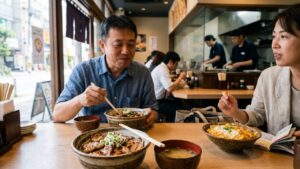
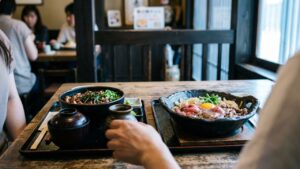
10 Things to Know About Lunching in Nagoya Before Shirakawa-go
 gotowp
You've booked your Shirakawa-go trip. The ryokan is waiting, the gassho-zukuri farmhouses are ready to take your breath away, and your camera roll is about to get very full. But then comes the quiet question that many travelers only think about the night before: What do we do for lunch in Nagoya before we leave?
It's a moment most itineraries treat as an afterthought — a quick bite before catching the bus. But what if that Nagoya lunch could become, unexpectedly, one of the most memorable parts of your entire Japan trip? Not just food to fuel the journey, but a story you carry home alongside your Shirakawa-go photos?
That shift — from "lunch stop" to "once-in-a-lifetime culinary experience" — is exactly what this guide is about. Here are 10 things worth knowing before you sit down for lunch in Nagoya on the day you head to Shirakawa-go.
Who This Is For
- ✅ Travelers planning a Nagoya-to-Shirakawa-go itinerary who want their lunch to be more than a convenience stop
- ✅ Wagyu enthusiasts who've tried Kobe or Matsusaka beef and are ready to discover what else Japan's beef culture has to offer
- ✅ Repeat Japan visitors who want a genuine discovery — something most tourists haven't found yet
- ✅ Anyone who believes the best travel stories come from meals, not just sightseeing
- ✅ Foodies who want a dish with a real backstory, not just a beautiful plate
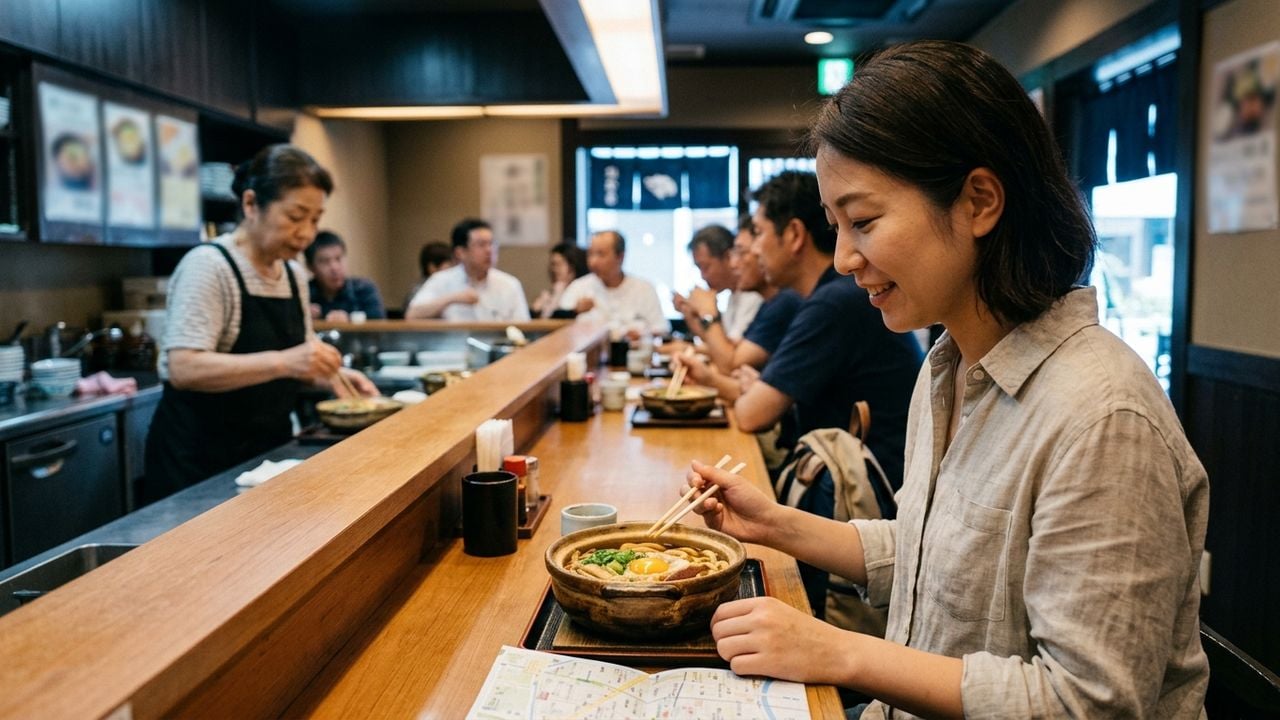
1. Nagoya Is a Destination Lunch City — Not Just a Transit Hub
Most Shirakawa-go itineraries route through Nagoya by shinkansen, then onward by highway bus from Nagoya Station or Shin-Gifu. That transit time creates a natural window — usually two to three hours — that many travelers spend in a coffee shop or convenience store near the station.
What fewer people realize is that Nagoya has its own serious food culture — one that's largely unknown outside Japan. This is the city that gave the world miso katsu, hitsumabushi, and tebasaki. But lately, it's also become home to a culinary concept that exists nowhere else on earth: the Rare Wagyu Gyudon.
You're mapping out the timing between Nagoya and Shirakawa-go, and the last thing you want is to arrive and find out Horai Wagyu sold out — or that the restaurant is closed on that particular day. Itadaki operates on a monthly schedule with occasional irregular closures, and the only place to confirm the current calendar is the official Instagram. A quick check before you finalize your itinerary takes less than a minute.
Check Itadaki's Monthly Schedule Before You Finalize Your Day
2. There Is a Dish Here That Was Invented Nowhere Else
Think about the major donburi categories in Japan. Katsudon has premium versions. Oyakodon has its high-end interpretations. Kaisendon can be extraordinary. But gyudon — the humble beef bowl — had always belonged to the fast-food lane. Until Masayuki Goto asked a simple question: Why not?
In April 2022, Goto opened Itadaki in Osu, Nagoya, introducing what he called Rare Wagyu Gyudon — the world's first specialty restaurant devoted to a rare-style wagyu beef bowl. The concept didn't exist before. It was invented here. And that, more than any marketing claim, is what makes it genuinely once-in-a-lifetime: you cannot eat this anywhere else in the world.
If you want to understand what makes Horai Wagyu — the star ingredient — so extraordinary, this deep dive into 10 facts about Horai Wagyu covers everything before your visit.
3. The Wagyu Itself Is One of Japan's Rarest — With a Story Worth Telling
Among the roughly 500,000 wagyu raised in Japan each year, Horai Wagyu accounts for just 300 heads annually, raised across only 3 farms in Okumikawa, Aichi Prefecture. What makes it distinct is its feeding method: the cattle are raised on sake lees from Horaisen Sora, a renowned local premium sake. This creates a flavor profile that's different from the heavily marbled wagyu most travelers associate with Japan — lighter, more nuanced, with a lean meat character that holds its own alongside the richness.
That story — 300 out of 500,000 — is the kind of detail that turns a lunch into a dinner table conversation months later. It's the difference between "we had wagyu in Japan" and "we had wagyu that barely exists."
4. "Rare" Doesn't Mean Unsafe — It Means a Technique No One Else Has
The first instinct of many Western travelers when they hear "rare wagyu" is a reasonable one: Is it safe? The answer at Itadaki is a clear yes — and here's why that matters.
Goto developed a proprietary two-stage cooking technique that heats the beef to over 70°C at the core, fully meeting Japan's Ministry of Health, Labour and Welfare food safety standards. The result is beef that delivers a rare-style mouthfeel — silky, tender, almost dissolving — while being completely safe to eat. This technique is Itadaki's intellectual property. You won't find it replicated elsewhere, because it took years of development to get right.
✓ Key Takeaways
- Nagoya's transit window before Shirakawa-go is long enough for a meaningful lunch — not just a snack
- Itadaki's Rare Wagyu Gyudon is a culinary concept invented at this location, available nowhere else in the world
- Horai Wagyu, the signature ingredient, is one of Japan's rarest: 300 heads per year across 3 farms, fed on premium sake lees
Horai Wagyu is limited to 10 bowls a day — and a Shirakawa-go travel day tends to be exactly the kind of peak-timing situation where those 10 go fast. A reservation via Tabelog locks in your bowl before the day begins, so the only thing left to decide is whether to go Shinkoccho, Cho-ten, or Zettcho. You can reserve in English, and it takes just a few minutes.
5. Every Ingredient Tells the Story of Aichi — Not Just the Beef
One of the things that separates Itadaki from other wagyu experiences is its commitment to a single prefecture: everything on the bowl comes from Aichi. The rice is Aichi no Kaori, grown locally. The egg is a Nagoya Cochin egg from Yamada Poultry Farm. The miso soup uses Hatcho miso from Okazaki City. The pickles are Atsumi Ichō-zuke from the Atsumi Peninsula. The shiso leaves come from Toyohashi.
This isn't sourcing by convenience. It's a deliberate choice to present Aichi's food culture as a complete, coherent story — one that most international visitors have never encountered, because Nagoya rarely gets the food spotlight it deserves.
6. The Five-Step Eating Guide Changes How You Experience the Bowl
When the bowl arrives, you'll find a printed guide — available in English, Simplified Chinese, and Korean — that walks you through five steps: separating the Nagoya Cochin egg yolk onto the beef and the white into the miso soup, tasting the wagyu first in its purest form, then mixing the yolk in, then adding condiments like pickled ginger, dried seaweed from Mikawa Bay, and the original 8-spice blend, and finally finishing with wasabi.
It sounds structured, but it feels like a journey. Each step genuinely delivers a different flavour experience from the same bowl.
"The five-step eating guide made the dish even more enjoyable and memorable."
"Perfect lunch during our Nagoya stay before our Shirakawa-go trip the following day."
7. Horai Wagyu Is Limited to 10 Bowls Per Day — Plan Accordingly
Because of the extreme scarcity of Horai Wagyu, Itadaki limits it to 10 bowls per day. On busy days — and the days before popular Shirakawa-go travel windows are often busy — those bowls can be gone before noon.
The practical solution is to reserve in advance via Tabelog Online. When you make your reservation, paste the following phrase into the notes field: 鳳来牛希望 (this tells the kitchen you're requesting Horai Wagyu). Reservations can be made in English on the Tabelog website. If you're a walk-in, arriving right at the 11:00 opening gives you the best chance without a reservation. Mikawa Beef Rare Gyudon is always available for walk-in guests and prepared with the same two-stage technique.
8. Getting There Is Easier Than Osu's Winding Streets Suggest
Itadaki is located at 4-1-20 Osu, 2nd floor, in Naka-ku, Nagoya. The most direct route from Nagoya Station is the Higashiyama Line to Sakae, then a transfer to the Meijo Line, getting off at Yabacho — approximately 10 minutes total. From Yabacho Station Exit 4, it's a 4-minute walk. At street level, look for the sign reading 元祖レア牛丼 頂 (Ganso Rea Gyudon Itadaki) and take the stairs to the second floor.
The Osu district can feel like a maze on first visit, but Yabacho Station Exit 4 is the cleanest entry point. Nearby landmarks include Osu Kannon Temple and the main Osu Shopping Street entrance — both visible from the street.
For full navigation details and the Google Maps link, the official Itadaki English page has everything you need.
9. The Timing Works Perfectly With a Shirakawa-go Itinerary
Highway buses from Nagoya to Shirakawa-go typically depart from Meitetsu Bus Center, adjacent to Nagoya Station, in the early-to-mid afternoon. An 11:00 arrival at Itadaki gives you enough time for a relaxed lunch — typically 45 to 60 minutes — before heading back toward Nagoya Station for your bus. The Yabacho-to-Nagoya Station subway ride takes around 10 minutes.
If you're planning your day around this combination, this guide on whether Itadaki works as a pre-Shirakawa-go lunch spot covers the timing in practical detail — including which bus options fit which lunch windows.
Itadaki is open Tuesday through Monday (closed Wednesday, Thursday, and Friday), with service from 11:00 to 15:00, last order at 14:30. On public holidays, it opens at 9:00. Because the schedule includes irregular closures, checking the monthly calendar on the official Instagram before your trip is always a good idea.
10. The Experience Becomes the Story You Take to Shirakawa-go
Here's what tends to happen when travelers plan this combination: they arrive in Nagoya thinking of the lunch as practical fuel. They leave Itadaki with something else entirely — a specific story, a name (Horai Wagyu), a number (300 heads a year), and a taste that's still on their mind when they're standing in front of a gassho-zukuri farmhouse that afternoon.
That's not hyperbole. It's the natural result of a dish with a genuine backstory, served in a place that invented its own culinary category. The Shirakawa-go landscape is stunning. But a trip made entirely of landscapes is just scenery. A trip that includes at least one meal you couldn't have had anywhere else — that's a trip with a story.
Goto named his restaurant Itadaki after itadakimasu — the Japanese expression of gratitude spoken before a meal. It's a reminder that food is a gift: from farmers, from land, from craft. That philosophy shapes every bowl, from the 300-head Horai Wagyu to the Aichi no Kaori rice beneath it.
For our complete menu, access details, and store information, visit our official page at https://itadaki8.com/english/
The 10 things in this article add up to one practical conclusion: the window between arriving in Nagoya and boarding the Shirakawa-go bus is exactly the right length for a lunch that becomes the story of your trip — if you plan it now rather than the morning of. Securing your Horai Wagyu reservation takes a few minutes and means one less thing to worry about on the day itself.