Osu Cosplay Lunch vs Akihabara Anime Dining: A True Comparison
 gotowp
A few weeks ago, a guest stopped by Itadaki in full cosplay — an elaborate ensemble that had clearly taken hours to put together. Before sitting down, she asked me something I hadn't expected: "I almost went to Akihabara for lunch today instead. Was coming to Osu the right call?"
It's a question I found genuinely interesting. Both Osu and Akihabara draw anime and cosplay enthusiasts from around the world. Both districts have a reputation for subculture energy, retro shops, and a kind of cheerful, anything-goes atmosphere. But when it comes to lunch — the meal that fuels a full day of exploration — the two neighborhoods are far more different than most visitors realize.
This comparison isn't about which district is "better." It's about helping you plan your day honestly, so you leave with exactly the experience you came for.
Who This Is For
- ✅ Cosplay and anime fans deciding whether to make Nagoya part of their Japan itinerary
- ✅ Visitors who want to know what's genuinely different about Osu vs Akihabara as lunch destinations
- ✅ Travelers wondering whether Horai Wagyu will sell out before they arrive — and how to avoid missing it
- ✅ World Cosplay Summit participants or Osu festival visitors planning a sit-down lunch around their event schedule
- ✅ Anyone curious whether the rare wagyu gyudon experience at Itadaki is worth a detour from Tokyo
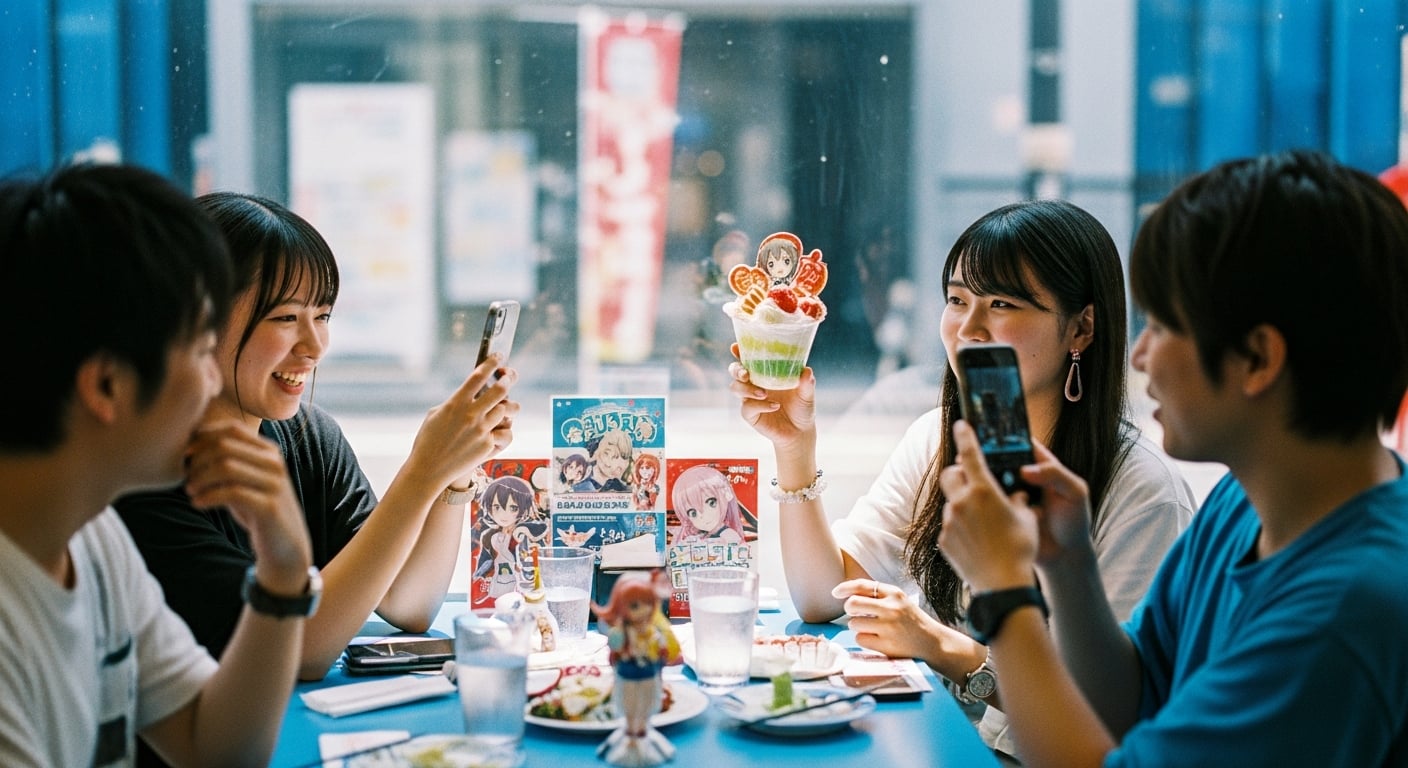
The Atmosphere: Subculture Energy, Two Very Different Flavors
Akihabara is globally famous — a neon-lit, multi-story labyrinth of electronics, figurines, maid cafés, and otaku merchandise that has defined the anime dining scene for decades. The lunch options there have evolved to match: themed restaurants with character menus, maid café lunch sets, and concept eateries where the entertainment is often as important as the food itself. It's a maximalist experience, intentionally designed for visitors.
Osu is something different. Yes, it has maid cafés and anime shops — the district is home to Nagoya's largest concentration of subculture retailers. But Osu is also a 400-year-old merchant district built around Osu Kannon Temple, one of Central Japan's most important Buddhist sites. The energy here is layered: traditional and modern, local and international, spiritual and playful. You'll find a grandmother selling sembei next door to a vintage game shop, and a cosplayer posing for photos in front of a 300-year-old stone lantern.
For lunch, this layering matters. Osu's dining scene is not primarily built for tourists — it grew organically from the neighborhood itself. That means you'll find restaurants focused on doing one thing exceptionally well, rather than packaging an experience for maximum visual impact. If you're curious about what Osu's anime-adjacent restaurant scene actually looks like beyond maid cafés, the variety might surprise you.
You're weighing Osu against Akihabara, but the detail that could actually make or break the trip is whether Horai Wagyu will be available when you arrive. Our monthly business calendar — including any irregular closures — is updated on Instagram so you can confirm open days before you travel. Takes ten seconds to check.
Food Quality: Themed Experience vs Culinary Craft
Here is where the comparison becomes most honest. Akihabara's themed dining is genuinely fun — but the food itself is rarely the point. Maid café omurice, character bento boxes, and concept restaurant plates are designed around visual presentation and atmosphere. Repeat visitors to Japan almost universally report that the culinary standard at Akihabara lunch spots is secondary to the experience of being there.
Osu's lunch culture trends in a different direction. Specialty restaurants here tend to focus intensely on a single dish or technique — the kind of place that a Japanese foodie would seek out, not stumble across. Itadaki is a clear example of this: a restaurant that invented an entirely new category of Japanese cuisine by reimagining the humble gyudon as a rare-style wagyu experience using ingredients sourced exclusively from Aichi Prefecture.
That culinary specificity creates a different kind of memory. One guest put it simply after her visit:
"The staff were welcoming and made us feel at home even without perfect Japanese."
Guest visiting from overseas
That warmth, combined with a dish that has a genuine story behind it — ultra-rare Horai Wagyu, 300 heads raised annually across just 3 farms in Japan, fed on sake lees from a renowned local brewery — produces a lunch experience that lingers long after the meal ends. It's the kind of story you bring home, not just a photo.
For cosplayers and anime fans curious about whether Itadaki actually welcomes guests in costume, the answer is straightforwardly yes — and the full details on visiting Itadaki in cosplay are worth reading before your trip.
✓ Key Takeaways
- Akihabara anime dining prioritizes themed atmosphere; Osu lunch spots like Itadaki prioritize culinary craft and ingredient storytelling.
- Osu's subculture energy is real but layered with 400 years of neighborhood history — a different atmosphere from Akihabara's purpose-built tourist district feel.
- Horai Wagyu is limited to 10 bowls per day — if this is your target, knowing how to reserve in advance is the single most important thing to plan before you arrive.
You now know that Horai Wagyu is limited to 10 bowls per day and that adding 鳳来牛希望 to your reservation notes is the step most visitors miss. Tabelog Online is where that reservation is made — in English, with a notes field ready for that phrase. No Japanese required to complete the booking.
The Critical Planning Factor: Will Horai Wagyu Sell Out Before You Get There?
This is the question that matters most for visitors who have made the decision to come to Osu specifically for Itadaki's rare wagyu gyudon.
Horai Wagyu is not a marketing story. It is genuinely one of Japan's rarest wagyu brands — 300 heads raised annually across just 3 farms in Okumikawa, Aichi Prefecture. Out of approximately 500,000 wagyu cattle in Japan, these 300 represent something exceptional: Japanese black wagyu fed on sake lees from Horaisen Sora, a premium local sake, producing a flavor profile that is distinctly lighter and more nuanced than heavily marbled wagyu brands. Itadaki prepares it using a proprietary two-stage cooking technique that reaches over 70°C at the core — fully meeting Japan's Ministry of Health, Labour and Welfare food safety standards — while preserving a rare-style mouthfeel.
Because of this rarity, Horai Wagyu is limited to 10 bowls per day. Walk-in guests arriving at peak lunch hours — particularly on weekends and public holidays — regularly find it sold out.
If Horai Wagyu is the reason you're coming to Osu, here is the plan that gives you the highest chance of success:
Option 1: Reserve via Tabelog Online (Recommended)
Tabelog is Japan's leading restaurant reservation platform. Reservations can be made in English. When completing your booking, copy and paste the following phrase into the notes or requests field: 鳳来牛希望 (pronounced: Hōraigyu kibō). This tells our team that you specifically want Horai Wagyu reserved for your visit. Without this note, your bowl is not guaranteed even with a reservation.
Option 2: Walk In at 11:00 Opening
If you prefer not to reserve in advance, arriving right at 11:00 when we open maximizes your chance of securing a Horai Wagyu bowl. The first guests through the door almost always get first access to the daily allocation.
Option 3: Enjoy Mikawa Beef Rare Gyudon (Always Available)
If Horai Wagyu has sold out by the time you arrive, our Mikawa Beef Rare Gyudon is always available — prepared with the same two-stage cooking technique and sourced from Aichi's Mikawa region. It is our second signature dish in its own right, not a consolation option. Starting from ¥1,800 for the standard Fumoto size, it offers the same rare-style wagyu experience that makes Itadaki unique.
One more practical note: Itadaki is open only on Saturday, Sunday, Monday, and Tuesday (11:00–15:00), with public holidays opening at 09:00. Wednesday, Thursday, and Friday are closed. Irregular closures do occasionally apply. Our monthly business calendar is posted on our official Instagram — it takes thirty seconds to check and can save you a wasted journey.
Access: Akihabara Is Familiar, Osu Requires a Little Planning
For visitors already staying in Tokyo, Akihabara is a subway ride away. The familiarity of the Tokyo transit system and the density of English signage make it an easy lunch destination to reach without advance planning.
Osu requires a deliberate choice — and that is part of what makes it rewarding. From Nagoya Station, the route is straightforward: take the Higashiyama Line to Sakae, transfer to the Meijo Line, and exit at Yabacho Station Exit 4. Itadaki is a four-minute walk from there. The total journey from Nagoya Station takes approximately ten minutes.
Look for the Japanese sign reading 元祖レア牛丼 頂 at street level — Itadaki is on the 2nd floor, so it is easy to walk past if you're not looking up. Osu Kannon Temple and the main Osu Shopping Street entrance are nearby landmarks if you need to orient yourself.
For visitors combining an Osu lunch with broader Nagoya sightseeing, the step-by-step guide to pairing Nagoya Castle, Osu Kannon, and Itadaki in one day lays out a well-tested itinerary worth bookmarking.
The Honest Verdict: Which Should You Choose?
If you are in Tokyo with a half-day free and want an immersive, high-energy themed dining experience surrounded by anime merchandise and maid café culture, Akihabara delivers exactly what it promises. It is purpose-built for that experience, and it does it well.
If you are in Nagoya — or willing to come to Nagoya — and you want a lunch that becomes the culinary story of your Japan trip, Osu is the answer. Not because it competes with Akihabara on the same terms, but because it offers something that Akihabara cannot: a neighborhood with genuine layered character, and a restaurant like Itadaki where the dish itself carries a story worth telling long after you've returned home.
300 heads of Horai Wagyu raised annually in Japan. A culinary concept invented here, in Osu, Nagoya. A five-step eating guide that turns a bowl of rice and beef into a deliberate journey through Aichi Prefecture's finest ingredients. That is not a themed experience — it is the real thing.
For our complete menu, access details, and store information, visit our official page at https://itadaki8.com/english/
The comparison is clear — and if Osu is where you're heading, the one thing left to do is secure your Horai Wagyu before the 10 daily bowls are gone. Reserve through Tabelog Online now, paste 鳳来牛希望 in the notes field, and your bowl will be waiting when you walk in at 11:00.